London: (By Chris Powell)The next general election will be no ordinary democratic contest. Not the usual swing of the pendulum this way or that. It will be a key moment in the history of our democracy – and it could be less than three years away.
Be in no doubt: populists represent a new and terrifying threat to the kind of free elections and free society we cherish but now take for granted. As Donald Trump declared at a pre-election rally in July 2024: “In four years you don’t have to vote again. We’ll have it fixed so good, you’re not going to have to vote.” Or, as his fellow populist Recep Tayyip Erdoğan, the Turkish president, said: “Democracy is like a tram. You ride it until you arrive at your destination, then you step off.”
Yet, here in the UK, where is the urgently needed counterplan on a huge scale to thwart and head off such an existential threat? It is simply not in place, nor does it appear to be even at the planning stage. We are at a very dangerous moment. We simply cannot afford to allow Nigel Farage’s Reform UK to have a free run and become established and entrenched as a credible potential government in the minds of disenchanted voters. The longer they go unchallenged, the more unthreatening and risk-free they will seem to voters. Just hoping that Reform and Farage implode, or that the right-wing vote will somehow fracture, is potentially suicidal for our freedom and democracy.
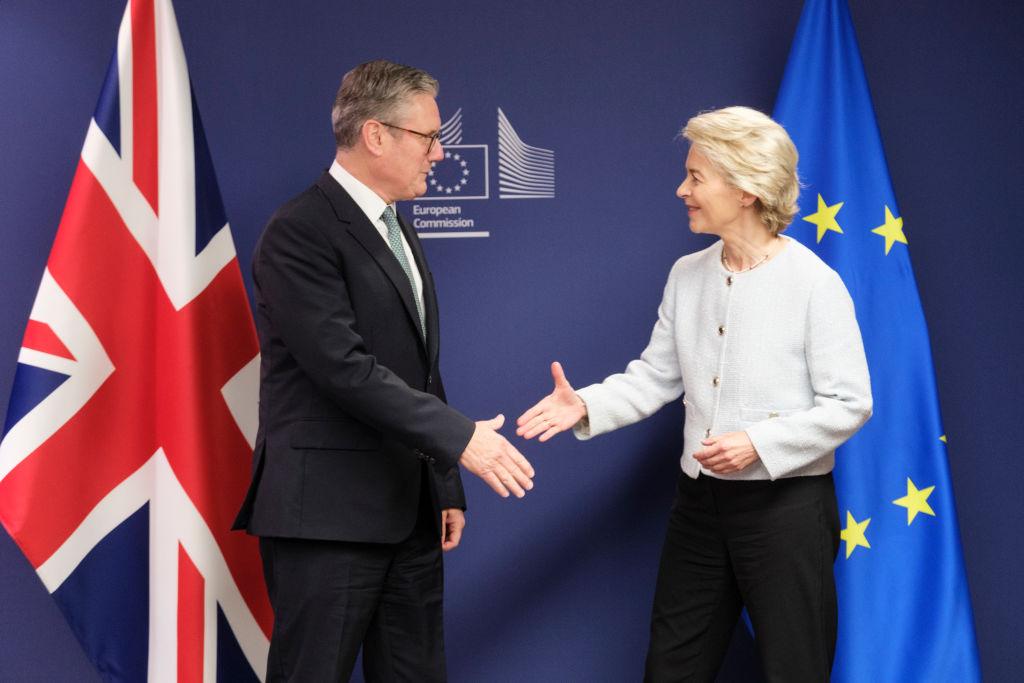
The Labour party has taken some small steps to counter Reform. Keir Starmer has at last begun to talk about a closer relationship with Europe, and more broadly challenge the disastrous failure that is Brexit. Presentationally, we have recently seen the first decent Starmer videos on TikTok. But it is small-scale and the narrative surrounding this government has more often been about its own failings and internal conflicts than the battle it faces against a populist surge.
If this goes on, the threat will grow. It is already doing just that on the international stage. The new US foreign policy strategy aims to support European populist parties. That is frightening. The 50-year-old Conservative Political Action Conference, reinvigorated by hard-right influencer Steve Bannon, brings populist parties in the US and Europe together to combine their electoral experiences and share initiatives. But what is there from the anti-populist side at European level? Nothing.
In September 1995, Tony Blair and his team met at my home for their first election planning meeting. All the key players were involved. New Labour was ahead in the polls. But we did not just hope that the Tories under John Major would continue to decline. We planned scrupulously for a complete reorientation, to signal a real break from the past by Labour: new strategy, new branding, new policy, new presentation, new organisation. This kind of no-holds-barred thinking is needed. A fundamental reset.
Once elected, several populists have faced accusations of rigging democratic political systems to make it nearly impossible for them ever to lose. Viktor Orbán in Hungary, Erdoğan in Turkey, Narendra Modi in India, now Trump in the US, Robert Fico in Slovakia and Andrej Babis in the Czech Republic all seem to adopt the same game plan.
Since he came to power in 2010, Orbán has changed the voting system to benefit himself. The judiciary became accountable solely to him; they appear to freely throw opponents in jail. Last year Erdoğan jailed his presidential opponent, Ekrem İmamoglu, who was ahead in the polls, and demanded he serve a 2,000-year sentence.
Some populists have been accused of meddling with national broadcasters, by appointing cronies to their board. They deny opposition parties equal rights to promote themselves, so they have no chance. This is the populist playbook. What chance then for our elections, our free speech? How will the BBC and independent media fare? An independent judiciary?