Tajammul Gurmani
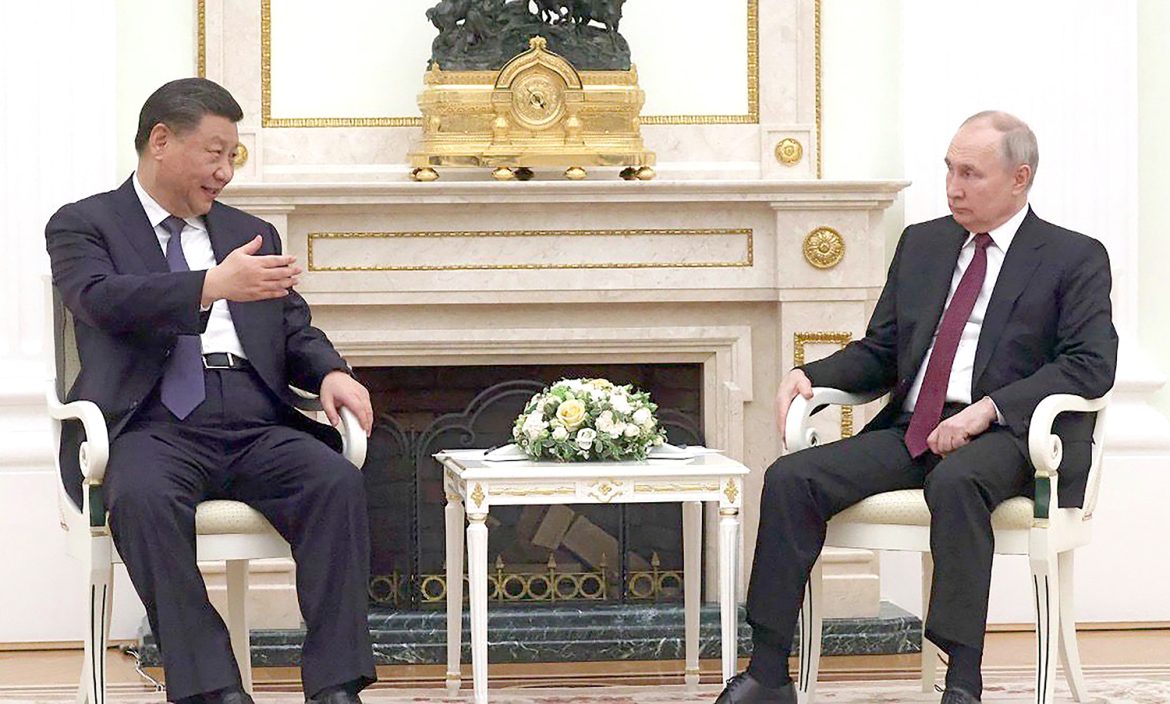
Beijing — Chinese President Xi Jinping and Russian President Vladimir Putin emerged from their latest summit in Beijing with a broad show of political unity, expanding cooperation in trade, security and global diplomacy, while also revealing limits in their economic partnership.
The meeting, held against the backdrop of continuing tensions with the United States and the war in Ukraine, produced a lengthy joint statement condemning what both leaders described as Western “hegemonic” policies and calling for a more “multipolar world order.”
Strategic Unity Against the West
The two leaders sharply criticised American foreign and military policy, particularly missile defense systems, sanctions and Western backing for Ukraine. Beijing and Moscow said the “root causes” of the Ukraine conflict needed to be addressed language widely interpreted as support for Russia’s longstanding opposition to NATO expansion.
Both governments also condemned recent American and Israeli military actions in the Middle East and warned that instability around the Strait of Hormuz could threaten global trade and energy supplies.
Expanding Military and Technology Cooperation. A key outcome of the summit was an agreement to deepen military coordination and strategic cooperation. Reports said the joint declaration included plans for expanded defense collaboration, alongside agreements covering artificial intelligence, media cooperation and technology exchanges.
The summit comes amid growing Western scrutiny of China’s relationship with Russia during the Ukraine war. Reuters separately reported allegations that Chinese facilities may have trained Russian troops, claims firmly denied by the Kremlin. Strengthen
trade and energy remained central themes of the talks. bilateral trade between China and Russia has continued to grow despite western sanctions on Moscow, with Russian officials highlighting rising oil exports to China this year.
More than 40 agreements were reportedly signed during the visit, spanning energy, digital technology, agriculture and logistics. Major Gas Deal Still Unresolved
despite the warm rhetoric, the summit failed to deliver a breakthrough on the long-delayed Power of Siberia 2 gas pipeline, a project Moscow sees as crucial for redirecting gas exports from Europe to Asia.
Negotiations reportedly stalled over pricing, financing and supply terms, exposing underlying tensions in the increasingly unequal relationship between the two countries. Analysts note that Russia has become more economically dependent on China since the Ukraine war began. The summit was also rich in symbolism. Coming shortly after high-level US China contacts, the meeting allowed Beijing to demonstrate that it can maintain ties with both Washington and Moscow while still presenting itself as a global power center independent of the West. For Putin, the visit reinforced Russia’s strategic pivot toward Asia as Moscow remains isolated from much of Europe.
Xi, meanwhile, used the occasion to underline China’s vision of a reshaped international order less dominated by the United States.