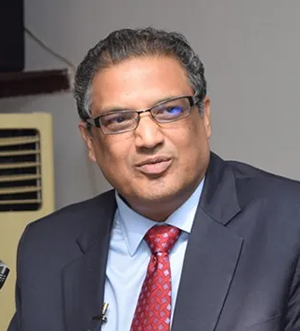
Suhail Warraiech
Who will have the last laugh?For now, the laughter has died down and the guffaws have ceased; those who initiated the conversation are dispirited, while the recipients are bewildered and anxious. Everyone is in a state of suspense. Recall that just a month ago, there were celebrations akin to the radiance of a full moon a honeymoon phase was in full swing yet the storm that had long been brewing beneath the festivities has finally erupted, dealing a shock to the government’s allies. Now, everyone is busy trying to absorb this shock and devise ways to neutralize its impact. Raising an issue, proposing a plan, or sounding a whistle may create a stir, but the direction the matter takes and its ultimate outcome are what truly matter; no matter how novel the initiative, the real issue hinges on the result. That is why the crucial question remains. “Who will have the last laugh?”
When the political climate is clear, it is easy for those in power to walk on dry ground however, amidst a storm of wind and rain, politicians must tread very carefully through the mud, relying on their experience to avoid slipping. The weather had been perfectly fine, yet suddenly from out of nowhere the rain has poured down. Now, within every political camp and faction, strategies are being deliberated on how to navigate the rain and mud. It appears that every party involved is interpreting the Urdu concept of “bhugat” (bearing the consequences) in its own way: the ruling coalition partners are already facing the fallout; the ‘Pipelay’ (PPP) are bracing themselves for the consequences; the ‘Noonies’ (PML-N) are intent on making others pay the price; and the ‘Insafis’ (PTI) are eager to make the initiators of this move as well as their political opponents suffer the repercussions.
President Zardari is a staunch Sindhi, yet he views Sindh and Pakistan as two parts of the same body, drawing on experience, he made a calculated decision to work in tandem with the power brokers. He may well be the last Sindhi leader to resist a decision made by the establishment. However, if his politics, leadership, or honour are at stake, he could easily shed the mantle of reconciliation and wear the suit of armour for defence. After all, one cannot endure eleven years of continuous imprisonment without a mindset of resistance. Embers of that resistance surely still smoulder within him, as Rana Sanaullah put it, the issue for the People’s Party is not one of ego but of survival so if pushed too far, the situation could escalate into open conflict born of desperation. The other major party to this issue is Nawaz Sharif. The ‘Noon’ camp is currently maintaining a strategic silence, yet they do not hesitate to reveal that they were repeatedly urged to initiate a dialogue on the creation of new provinces; however, they were unwilling to take the lead on this matter, which is why the issue was eventually raised from a platform other than theirs.
Historically, the leadership of the ‘Noon’ faction (PML-N) is considered the most experienced; while Nawaz Sharif has played a decisive role in foreign and economic affairs, he has also maintained working relationships with every successive head of the establishment since the era of General Zia-ul-Haq. Although these relationships have occasionally seen ups and downs, he generally formulates strategy in consultation with his brother, Shehbaz Sharif. Having moved past the bitterness of the past, he is now convinced that conflict between the establishment and the government harms the state; consequently, he is unlikely to take any rash or adventurous decisions, though fully aligning with the establishment on this specific issue might also prove difficult for him. Thanks to his brother serving as Prime Minister, Nawaz Sharif commands enough stature within the system to ensure his views are heard attentively making it difficult for them to be outright dismissed.
Outside the government, two other political factions are significant regarding the issue of new provinces; for the supporters of ‘Prisoner No. 804,’ even the slightest rift between government allies and the establishment is a cause for optimism. Tehreek-e-Insaf has traditionally supported the creation of new provinces; should it align with the establishment on this issue at such a critical juncture, the ruling coalition parties would be weakened, potentially opening new avenues for the party and its leader. While the granting of “leeway” could ostensibly play a decisive role, the core issue remains that even if the matter is resolved by transferring ‘Prisoner No. 804’ to a hospital or granting minor amenities there appears to be absolutely no prospect of providing Imran Khan with major relief in the form of release or a return to active politics. The reason for this is that granting Imran extraordinary concessions could trigger the collapse of the entire existing system. The establishment would not want to create a threat to its own system for the sake of forming new provinces; this implies that Imran Khan might get a mere “toffee” in exchange for new provinces, rather than a lavish lunch or dinner. The question remains: will the Tehreek-e-Insaf be compelled to accept this weak deal, or will it persist in adamant resistance and wait for a more opportune moment?
Maulana Fazlur Rehman is a significant figure in both religious and parliamentary politics, yet he, too, does not currently support the creation of new provinces. Ostensibly, most politicians are reacting with hesitation and avoidance, whereas signals favouring priority and urgency are being received from the establishment; politicians, however, aim to strategically steer the matter toward postponement and delay. The situation has reached a point where, no matter how often the “Noonies” (PML-N) insist that “all is well” offering a kind of verbal opiate for temporary solace once the smoke begins to rise, failing to extinguish the spark spells disaster.
The creation of new provinces is currently the sole topic of discussion in every political gathering across the country. The reaction to the proposal of separating Karachi from Sindh mirrors the intense backlash seen in Sindh’s recent political history regarding the construction of the Kala bagh Dam and the six canals projects that had to be scrapped despite the pressure to proceed. Yet, during this year’s budget process, through reconciliation and dialogue, both Punjab and Sindh willingly handed over a substantial portion of their development budgets to the federal government.
This marked a departure from past attitudes; when the approach was cordial and a detailed dialogue took place regarding provincial concerns and priorities, both Sindh and Punjab unhesitatingly did what had not even been expected of them. Coercion does not resolve delicate and sensitive matters; instead, it exacerbates them.
The current system, in which the state and politics operate in tandem, resembles a wall, each brick reinforces the others, yet removing a single brick renders the entire structure hollow, making it vulnerable to collapse from even the slightest push. There is a risk that, in their attempts to bring about each other’s downfall, they might all ultimately face ruin. It must be remembered that internal discord is precisely what precipitates the system’s collapse.