Staff Reporter
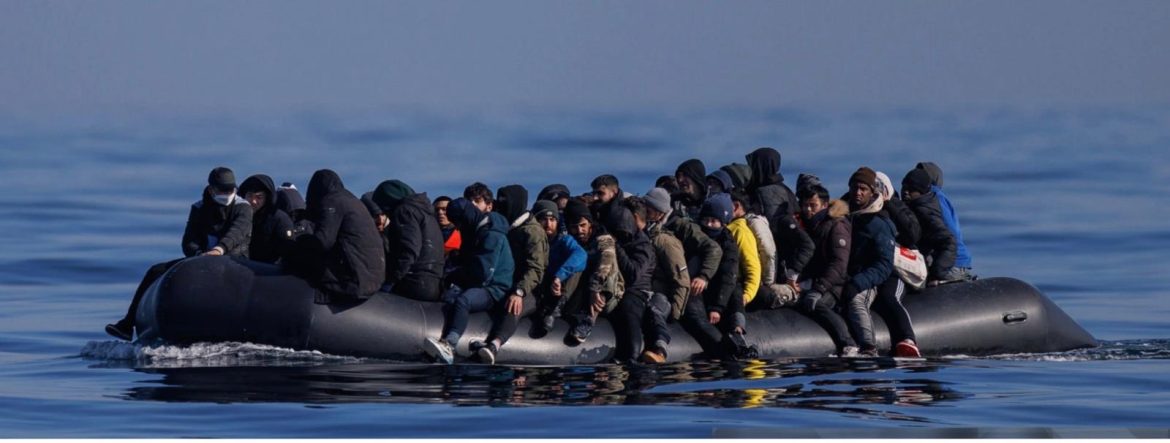
Scotland has seen a noticeable increase in the number of asylum seekers in recent years, prompting discussion across political, social, and community spheres. While the issue is often framed in terms of local impact, experts stress that the reasons behind the trend are largely global.
At its core, the rise in asylum seekers is linked to ongoing conflicts, political instability, and economic hardship in various parts of the world. Individuals and families fleeing war-torn regions, persecution, or extreme poverty often undertake dangerous journeys in search of safety. The United Kingdom, including Scotland, remains a destination due to its reputation for stability, legal protections, and established asylum processes.
Scotland, in particular, has become a key location for dispersal. Under UK policy, asylum seekers are distributed across different regions rather than concentrated solely in London and the southeast of England. Cities such as Glasgow have long been involved in this system, providing housing and support services. As a result, Scotland hosts a proportion of the UK’s asylum population.
Another contributing factor is the availability of accommodation. Local authorities and private contractors working with the UK government have identified housing capacity in certain Scottish areas, making them suitable for relocation. This logistical element, rather than choice by asylum seekers themselves, often determines where individuals are placed.
Community response has been mixed but often supportive. Many local organisations and volunteers have stepped in to assist newcomers with integration, language learning, and access to services. However, concerns have also been raised about pressure on housing, healthcare, and public services, particularly in areas already facing economic challenges.
Political debate continues over how asylum policy is managed at the national level. The Scottish Government has repeatedly called for a more humane and devolved approach, while the UK Government maintains control over immigration and asylum decisions.
The situation in Scotland reflects a broader international pattern. As long as global crises persist, migration pressures are unlikely to ease. The focus, they suggest, will remain on balancing humanitarian responsibilities with local capacity.
For now, Scotland’s role in the UK’s asylum system highlights both the complexity of migration and the interconnected nature of global and local issues.
Immigration
Tories call EHRC chair’s comments a ‘disgrace’ after she warns ‘demonisation of migrants’ bad for UK
Political Reporter
Greens broadly welcome animal welfare strategy but urge PM to follow Wales in banning greyhound racing. The Green party has broadly welcomed the government’s animal welfare strategy. In a statement, the Green MP Adrian Ramsay said. There is much to welcome in the animal welfare strategy, but it must have real teeth to deliver for animals. Ministers must set clear timescales to phase out crates and cages, properly support farmers through the transition and not allow imports that don’t meet UK standards. I welcome the action on snares, hunting and puppy farming. Puppy legislation must end breeding for extreme, unhealthy traits in dogs. The strategy could go further for animals, particularly by ending greyhound racing, as the Welsh government is doing.
Ending the use of farrowing crates and cages – as we called for in the cross-party letter I organised – is particularly crucial for tackling cruelty, and the strategy must set out how and when this will happen.
Six UK immigration officers charged with money laundering offences
PA News
London
Six immigration officers have been charged with offences after an investigation into alleged thefts from migrants and money laundering.
Five of the officers are facing charges including conspiracy to steal and misconduct in public office, the Crown Prosecution Service (CPS) said on Tuesday. All six have been charged with money laundering offences.
Besmir Matera, 36, Lee-Ann Evanson, 42, John Bernthal, 53, Ben Edwardes, 45, Jack Mitchell, 33, and David Grundy, 43, will appear at Westminster magistrates court on 29 January.
Malcolm McHaffie, the head of the CPS special crime division, said the charges followed a Home Office investigation into alleged thefts from migrants and money laundering between August 2021 and November 2022.
“Our prosecutors have worked to establish that there is sufficient evidence to bring the case to court and that it is in the public interest to pursue criminal proceedings. We have worked closely with the Home Office’s anti-corruption criminal investigations unit as they carried out their investigation,” McHaffie said.
Matera, of Reigate, Surrey, is charged with conspiracy to steal; misconduct in public office; concealing, disguising, converting, transferring or removing criminal property; obtaining leave to enter to remain in the UK by deception; and three counts of possession of an identity document with improper intention.
Evanson, of Bracknell, Berkshire, Bernthal, of Welling, south-east London, Edwardes, of Bexleyheath, south-east London, and Mitchell, of Dover, Kent, are each charged with conspiracy to steal, misconduct in public office and concealing, disguising, converting, transferring or removing criminal property.
Grundy, of Croydon, south London, is charged with concealing, disguising, converting, transferring or removing criminal property.
Tesla boss Elon Musk has said H-1B visas were being “gamed” by “some outsourcing companies”, but the solution was stopping the abuse and not dismantling the system.
Roughly 70% of these visas – that allow US companies to hire skilled foreign workers – are used by Indian citizens working in sectors like technology and medicine.
In September, US President Donald Trump added a $100,000 (£74,000) fee for applicants to the H-1B visa programme, sparking anxiety among Indian workers and employers.
Musk was speaking to Indian entrepreneur Nikhil Kamath on his podcast, released on Sunday evening, and also touched on a range of other issues from tariffs to immigration.
During the conversation Musk maintained that America has “long benefitted” from talented Indian migrant workers, but acknowledged concerns about the “misuse” of the H-1B visa programme.
H-1B visas are given out through a lottery, and outsourcing and staffing firms have often been accused of manipulating the system using tactics such as submitting multiple entries for the same worker, or using the visa to hire low-cost contract workers rather than for specialty occupations.
“We need to stop the gaming of the system,” Musk said.
“But I’m certainly not in the school of thought that we should shut down the H-1B programme…which some on the Right are. I think they don’t realise that that would actually be very bad.”
According to data released this month by a think tank, H-1B visa approvals for Indian outsourcing companies have fallen to the lowest level in a decade.
In this financial year, the top seven Indian companies had only 4,573 H-1B petitions approved for initial employment, a 70% drop from 2015 and 37% fewer than 2024, according to the National Foundation for American Policy (NFAP).
Trump’s policies “could lead to higher denial rates and other problems for employers”, the NFAP report warned.
Besides H-1B visas, Musk also spoke about Trump’s decision to use tariffs as a centrepiece of his economic policy during his second term.
Musk said he had “unsuccessfully” tried to dissuade Trump from raising tariffs, which he said, “create distortions in markets”. But “the President has made it clear he loves tariffs”.
Earlier this year, the US imposed 50% tariffs on Indian goods, including a 25% penalty for buying Russian oil.
While several other countries have inked trade deals with the US , Indian goods exports to the US continue to attract some of the steepest levies in the world.
Negotiations for a trade deal between the two countries are under way, with the goal of concluding an agreement by the end of this year.
Track UK’s latest migration numbers – including asylum, visas and small boats
*The figure for net migration will not sum exactly to the total of immigration minus emigration, because it is published as a rounded figure by the Office for National Statistics (ONS).
Figures from government or other official sources used in this report can be revised retrospectively between publications. This page only displays data as it is presented in the latest release.
ONS figures for immigration and emigration are update twice per year.
Small boats figures from the Home Office are updated daily. Asylum, returns and visa figures from the Home Office are updated every three months.
The number of people appealing against a refused asylum decision is updated every three months by the Ministry of Justice at a different time to other government figures on asylum.
Immigration, emigration and net migration
Figures for net migration come from the ONS and use the internationally recognised definition of a long-term migrant: “a person who moves to a country other than that of their usual residence for at least a year.”
Visas for legal migration
Data for total entries via visas only includes those granted. It does not include people coming to the UK on a visitor visa or those on a transit visa – whose final destination is not the UK.
Visa figures do not show if or when an individual arrived in the UK, but marks the point at which they were granted permission to do so.
If someone was granted more than one visa within the year shown, each one is counted separately.
The work category refers to new individuals linked to visas and permits, or the extension of an existing permission. This includes sub-categories such as seasonal, health and care, domestic and youth mobility visas.
Study visas include all sponsored individuals by approved education providers in the UK, and those on short-term study visas.
Family visas lets someone come to the UK or stay longer so they can live with close family members who are already here. It includes joining a spouse, partner, child or parent, or coming to care for a relative.
The Other category refers to miscellaneous visas outside the categories of work, family and study. It includes humanitarian routes such as the Ukraine Sponsorship Scheme and the British National Overseas route.
It also includes family permits for people from countries in the European Union or European Economic Area.
A council attempted to hire an outside contractor to remove flags from lampposts after its staff faced verbal abuse.
West Dunbartonshire Council workers refused to take down the flags hanging after experiencing “unacceptable” levels of abuse from members of the public.
The local authority then issued a tender for the work, only for no bids to be received.
Flags – including saltires – were put up in towns and cities across Scotland earlier this year after a social media campaign by a group behind anti-asylum seeker protests. It followed a similar campaign in England linked to rows over immigration.
More stories from Glasgow & West Scotland
More stories from Scotland
Last week, it was revealed workers have been threatened while removing flags from lampposts to put up Christmas lights in Aberdeen.
West Dunbartonshire Council said the removal of flags from the area “was suspended following verbal abuse experienced by the officers undertaking the work.”
As a result, the council then sought out external contractors to complete the work.
Flying flags on lampposts is banned under the terms of the Roads (Scotland) Act 1984.
A West Dunbartonshire Council spokesperson said: “The abuse of Council operatives while they are undertaking their duties is completely unacceptable.
“We would encourage anyone who witnesses this type of behaviour or is subject to abuse to contact Police Scotland.
“We will continue to explore options for the removal of these items.”
In September, Aberdeenshire Council was among the councils that suspended the removal of flags from lampposts after workers faced regular threats and intimidation.
Protests ahead of the arrival of the first detainees at a reopened immigration removal centre have taken place.
Campsfield House, near Oxford Airport, was shut in 2018 after years of problems, including riots, escapes and complaints about conditions.
The Coalition to Close Campsfield, whose supporters gathered at Carfax in the city centre and outside the facility, described the reopening as a “terrible step backwards”.
But a Home Office spokesperson said it would “boost the UK’s immigration detention capacity, supporting a higher pace of removals of those with no right to be in the UK”.
“We remain committed to ensuring safety and security in all detention facilities, and we take the welfare of people in our care very seriously,” they said.
The government said Campsfield House would be used to accommodate “a mixture of time-served foreign national offenders and immigration offenders” before they were removed from the UK.
It has undergone a £70m refurbishment, involving the creation of about 160 bed spaces, with further expansion in future for up to 400 beds.
The site’s operator Mitie was recently given a six-year contract to run the centre.
The plans have also been opposed by MPs, residents and charities, as well as Oxford City Council.
Coalition to Close Campsfield supporter Bill MacKeith said: “It is awful that now we’ll see suffering and abuse at this site again.
“It is truly shocking that this is being imposed on those who will be detained and on local people, all of whose elected representative bodies have long opposed it.”
He said utilising Campsfield “ignores evidence, public opinion and basic humanity”.
Another protest took place outside the centre on 22 November.
In a statement Asylum Welcome joint CEO Dr Hari Reed said: “As the first detainees arrive at Campsfield, we feel deeply sorry that people are once again being locked up in a system that causes profound harm.
“There is no such thing as a humane immigration detention centre.”
The charity said it was piloting a three-month visiting service so that “people are not left completely isolated and forgotten”.
Pilo Moreno, a former Campsfield detainee supported by Asylum Welcome, said: “That place is designed to take your humanity away.