Amr khalifa
EGYPT
At a time when there is an increasing need to embed the values of tolerance and reject extremist rhetoric, the Sufi school emerges as a vital intellectual and spiritual resource that fosters social and human peace. In this context, Sheikh Muhammad Shams al-Din Nehru al-Kasnazani, the global leader of the Qadiriyya Kasnazaniyya Order, has shed light on the foundational principles that have driven the expansion of the Order and the growth of its spiritual and humanitarian presence across the globe.
Sheikh Nehru al-Kasnazani emphasized that the spiritual and educational approach adopted by the Qadiriyya Kasnazaniyya Order is rooted in moderation, love for others, and the promotion of peaceful coexistence among all human beings, regardless of their diverse cultures or religions. He explained that authentic Islamic Sufism represents the ultimate model of religious balance and enlightened thought standing in stark contrast to extremism, rigidity, and the deviant ideologies that seek personal gain in the name of religion.
Love and Compassion:
The Essence of the Islamic Message
The head of the Qadiriyya Kasnazaniyya Order noted that the Order’s commitment to spreading the principles of “moderate, Prophetic Islam” a faith built upon compassion, tolerance, and respect for human dignity has been the primary factor enabling it to transcend geographical borders and carry its spiritual message to multicultural societies worldwide. Elaborating on the philosophy of Sufism, he stated:
“Sufism is not merely a collection of devotional rituals or spiritual litanies practiced by a seeker in seclusion; rather, it is a comprehensive educational and ethical framework aimed at refining the soul, elevating human conduct, and fostering values of peace and love in one’s daily interactions. These ethical principles constitute the essence of the eternal Islamic message, which calls for goodness, mutual understanding, and the rejection of hatred.”
He noted that the Qadiriyya-Kasnazaniyya Order serves as a bridge for cultural dialogue, introducing the true nature of Islamic Sufism—a spiritual and ethical school that contributes to the development of a balanced human character and deepens an individual’s connection to both their Creator and their society. This, in turn, has a positive impact on social and intellectual stability—all in keeping with the path established by the late Sheikh Muhammad al-Muhammad al-Kasnazani.
Sheikh Muhammad Shams al-Din Nehru al-Kasnazani highlighted the historic and pioneering role played by the late Sheikh Muhammad al-Muhammad al-Kasnazani—the former head of the Order in establishing this enlightened approach and solidifying its foundations. He described him as a man of profound humanitarian vision and balanced thought, through which he was able to introduce the Qadiriyya-Kasnazaniyya Order and the true essence of Sufism to diverse peoples and societies.
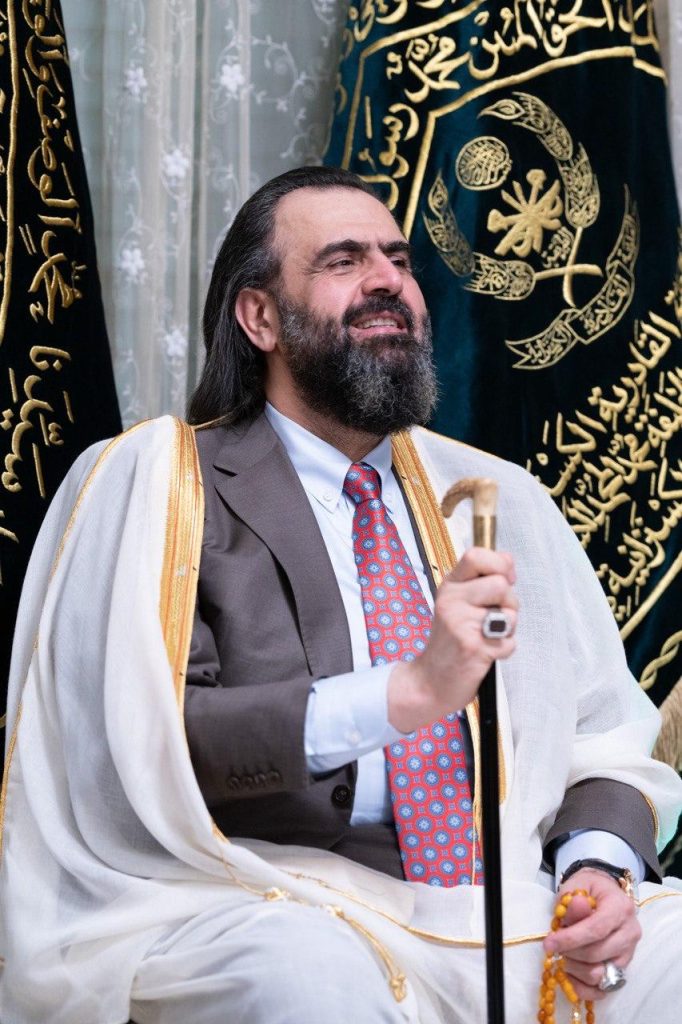
He further pointed out that the late Sheikh was a significant point of reference for researchers, intellectuals, and those interested in spiritual and Islamic studies from across the globe. His open-mindedness and the depth of his educational philosophy attracted prominent thinkers, which directly contributed to strengthening the Order’s international presence and establishing its standing within the global intellectual landscape. Confronting Extremist Ideology and Building the Future
The head of the Order emphasized that the current era marked by various intellectual challenges across the globe requires a concerted effort to highlight the true, radiant image of Islamic Sufism. He asserted that Sufism possesses the spiritual and intellectual tools necessary to counter extremist rhetoric and destructive ideologies, by fostering a sound and enlightened religious consciousness, and by upholding the principles of accepting others and peaceful coexistence.
The leader of the Kasnazaniyya reaffirmed the commitment of the Qadiriyya-Kasnazaniyya Order to its mission of love and tolerance. He underscored its adherence to the moderate path established by its sheikhs, and its ongoing work to disseminate the teachings of Islamic Sufism in a way that promotes peace and rapprochement among peoples.
“The Qadiriyya-Kasnazaniyya”: One of the World’s Largest Sufi Orders
The Qadiriyya-Kasnazaniyya is one of the largest and most prominent Sufi orders, branching from the Qadiriyya tradition—which traces its lineage back to the “Sheikh of Islam,” Sheikh Abd al-Qadir al-Jilani (may Allah be pleased with him). The Order is distinguished by its extensive spiritual and social presence across many nations in both the Islamic and Western worlds.
The origins of the Kasnazaniyya Order are rooted in a noble lineage; its spiritual chain of transmission (sanad) extends through the Qadiriyya tradition, reaching back to Imam Ali ibn Abi Talib (may Allah honor his countenance) and the Prophet Muhammad (peace be upon him). Within this noble family, the leadership and the role of (sheikh)are passed down through a succession of spiritual masters who have dedicated significant effort to spreading the call to faith and providing spiritual guidance. Features of the Approach and Spiritual Training within the Order
The Kasnazani Order’s methodology is rooted in a commitment to the authentic Islamic path. It consistently emphasizes that Sufism is a matter of conduct, ethics, and values all derived from the Holy Quran and the noble Sunnah of the Prophet.
Expansion and Renewal in the Modern Era
In recent decades, the Order has experienced widespread growth across Iraq, Egypt, Jordan, the Gulf states, and North Africa, alongside the establishment of numerous centers throughout Europe and North America.
The Order has undergone significant development and institutional organization. Its leadership has integrated traditional Sufi discourse with modern communication methods and established religious, social, and cultural centers. This has attracted a large number of young people, disciples, and those seeking spiritual clarity. Furthermore, the Order places a strong emphasis on education and social services, maintaining “takiyas” (Sufi lodges) and charitable institutions dedicated to providing food, serving the community, and promoting a moderate form of Islamic culture.