


India’s interior minister has vowed to further implement a contentious common civil code for states governed by the ruling Hindu nationalist party, a move expected to stoke concern among minority Muslims.
India’s 1.4 billion people are subject to a common criminal law, but rules on personal matters such as marriage, divorce and inheritance vary based on the customary traditions of different communities and faiths.
he introduction of a Uniform Civil Code (UCC) to replace those diverse rules has been a long-standing goal of Prime Minister Narendra Modi’s ruling Bharatiya Janata Party (BJP).
At least four states have implemented the UCC so far.
“We have introduced the UCC in several states… I am confident that we will implement (it) in all 21 states governed by the BJP-led National Democratic Alliance by 2029,” Home Minister Amit Shah said on Sunday.
The campaign for a standardised civil code has raised concerns, especially among Muslim citizens, who say such a move would infringe on their religious freedoms.
Supporters say the UCC gives Muslim women the same rights as others by ending polygamy, setting equal property inheritance rights for sons and daughters, and requiring divorce processes to take place before a civil court.
India, the world’s most populous country, is majority Hindu. It is also home to an estimated 220 million Muslims, giving it the world’s third-largest Muslim population.
India’s next national elections are due in 2029, after Modi won a third successive term in 2024, when he was forced into a coalition government.

Staff Reporter
All Israeli settlements in the West Bank are illegal under international law. The UK sanctions come as Israel plans to develop 1,200 new homes in the occupied territory.
Britain is preparing to take a tougher line against Israel by imposing trade restrictions on goods produced in Israeli settlements in the occupied West Bank a move that threatens to further strain already tense relations between London and Jerusalem.
But what exactly is Britain trying to achieve and does this amount to a trade war with Israel?
The short answer is No the restrictions are aimed at settlements, not Israel as a whole
The UK Government’s new measures are focused specifically on goods produced in Israeli settlements in the West Bank, rather than a blanket ban on British trade with Israel.
Foreign Secretary Ed Miliband has argued that the policy is designed to oppose settlement expansion and protect the possibility of a future two state solution, in which Israel and a sovereign Palestinian state exist alongside one another. The move comes amid growing British concern about Israel’s expansion of settlements, particularly plans for development in the strategically sensitive E1 area of the West Bank.
Britain and other governments fear that further construction there could effectively split the West Bank in two, making the creation of a viable Palestinian state considerably more difficult.
Why does Britain regard the settlements as a problem?
The UK, like much of the international community, considers Israeli settlements in the occupied West Bank to be contrary to international law.
British ministers argue that allowing trade with settlements can help sustain an activity they believe undermines Palestinian territorial viability and the prospects for peace.
The Government has therefore framed the restrictions not as punishment of Israel itself, but as an attempt to put economic pressure on settlement activity.
Previous British measures have already targeted individual Israeli settlers and illegal outposts. The proposed trade restrictions would go further by covering goods from settlements more broadly.
Is this connected to the war in Gaza?
Yes but there is an important distinction.
Britain’s policy towards Israel has hardened considerably amid the continuing conflict and humanitarian crisis surrounding Gaza. However, the latest trade restrictions are primarily focused on settlements in the West Bank, rather than being a general trade embargo imposed because of Israel’s military campaign in Gaza.
Britain has separately restricted certain arms export licences where it assessed there was a clear risk that equipment could be used in serious breaches of international humanitarian law in Gaza.
That means it would be misleading to describe the latest announcement simply as Britain “sanctioning Israel over Gaza”.
How much British trade is actually at stake?
The economic impact could be relatively small.
UK Government figures show total trade in goods and services between Britain and Israel was around £6 billion in the year to the end of 2025. British exports were £3.5 billion, while imports from Israel were £2.5 billion. Only a fraction of that trade is expected to be affected by restrictions specifically targeting settlement goods.
That is why the measure is likely to have greater political and diplomatic significance than economic impact.
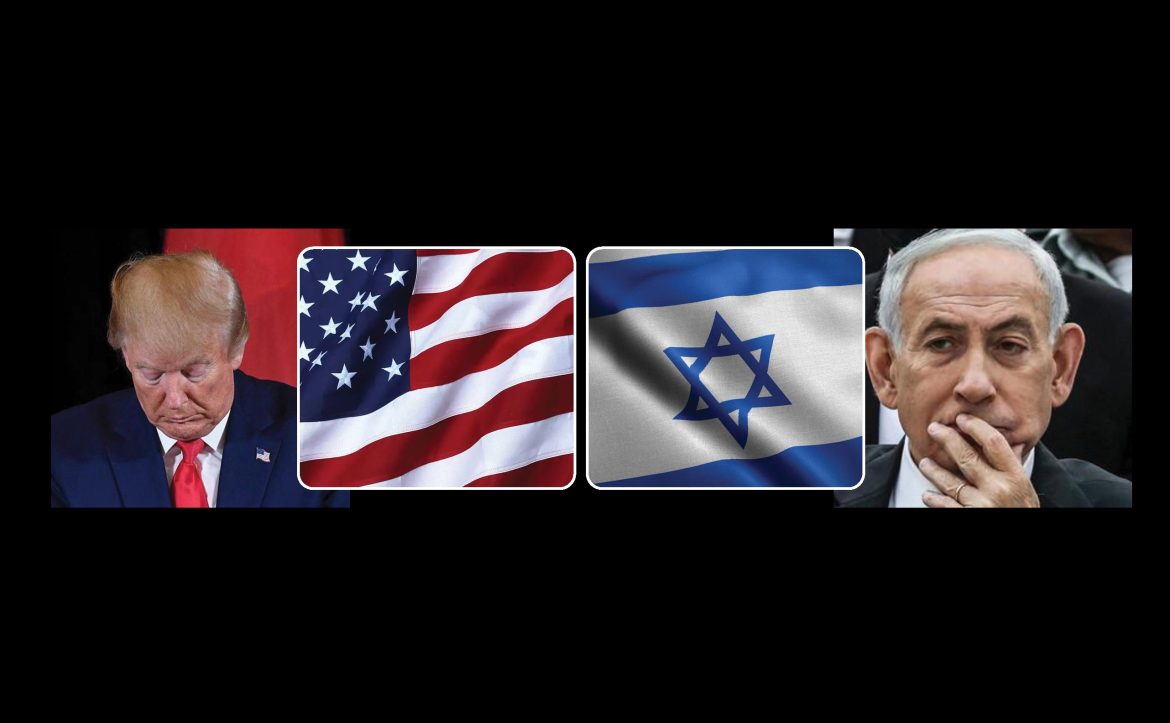
Israel and America are furious
The move has already triggered a sharp response from Israeli officials.
Israeli President Isaac Herzog warned that British sanctions against settlements would put Britain on the “wrong side of history”, while Israeli ministers have threatened retaliation.
The United States has also criticised the British approach, with US Ambassador to Israel Mike Huckabee warning of possible consequences.
For Britain, that creates a delicate diplomatic balancing act: London wants to maintain its wider relationship with Israel while simultaneously putting pressure on the Israeli government over settlement expansion and Palestinian rights.
So what is Britain hoping to achieve?
There are three main objectives.
First, pressure Israel over settlement expansion. Britain wants to make clear that it will not treat settlement activity as normal economic activity.
Second, protect the two state solution. The Government argues that continued settlement expansion risks making a geographically viable Palestinian state impossible.
Third, send a political message. Even if the economic consequences are limited, restricting settlement trade demonstrates that Britain is prepared to attach consequences to policies it believes undermine international law and the prospects of peace.
The UK Government insists that it remains committed to trade with Israel generally. The measure is therefore better understood as a targeted sanction against settlement activity, rather than a wholesale economic boycott of Israel.
Could this escalate?
That is the big question.
Britain’s move comes as several Western countries have been reassessing their relationships with Israel following the Gaza war and the expansion of settlements.
Critics in Britain argue that the policy is symbolic and risks damaging relations with a key Middle Eastern ally without changing Israeli policy. Supporters counter that failing to act would allow settlement expansion to continue unchecked.
Either way, the announcement marks a significant shift in Britain’s approach.
The message from London is becoming increasingly clear: Britain wants to maintain its relationship with Israel but it is no longer prepared to treat Israeli settlement expansion as business as usual.
Earlier, Israeli and US officials warned the UK over the plans – Israel’s President Isaac Herzog called them a “grave miscalculation”
The Israeli Foreign Minster has announced that Israel will close the British consulate in East Jerusalem, which plays a key role in Britain’s diplomatic affairs regarding the West Bank and the Palestinian territories. In addition, Israel has not only announced the closure of the consulate but has also taken further steps, including the announcement of the withdrawal of British representatives from the US-led coordination center for Gaza, the decision to end British training of Palestinian Authority security forces, and a ban on entry into Israel of some British politicians, MEPs and others, including former British leader Jeremy Corbyn. Israel described this move as interference in its internal affairs and political pressure, which is why it has taken retaliatory measures against the consulate and other British activities.
In addition to the UK, Canada, the UK, France, Spain, Ireland, Norway, Sweden, Denmark and others issued a joint statement, demanding that Israel stop settlement construction, expressing concern over the issuance of tenders for the E1 settlement project, and announcing support for restrictions on trade in settlement products. According to foreign media, Canada, the UK, France, Spain, Ireland, Norway, Sweden, Denmark, Finland, Iceland, Poland and Portugal have said in a joint statement that the Israeli government’s actions in the West Bank are harming the prospects for a two-state solution.

Our Political editor
Pakistan has secured a significant legal victory in its long-running dispute with India over the Indus Waters Treaty (IWT) after the Court of Arbitration at The Hague ruled that the 1960 treaty remains in force and cannot be unilaterally suspended or placed in “abeyance.”
The ruling, issued on Aug. 31, also ordered interim restrictions on certain construction activities at India’s Ratle Hydroelectric Plant in Jammu and Kashmir while related proceedings continue.
Pakistan welcomed the unanimous decision as a reaffirmation of international law and the treaty’s continuing legal force. Islamabad argues that India’s April 2025 decision to suspend the treaty cannot remove India’s obligations under the agreement.
But the immediate consequence of the ruling is not the automatic restoration of normal India-Pakistan water relations.
India has rejected the decision, maintaining that the arbitration court has no jurisdiction and describing it as illegally constituted. New Delhi continues to maintain that the treaty is in abeyance.
What happens next?
The legal battle will continue.
The latest decision principally settles the question of the treaty’s status and provides interim measures, it does not end every technical dispute over India’s Kishenganga and Ratle projects. Further proceedings concerning compliance with the treaty remain ahead.
The Ratle project faces additional scrutiny.
The arbitration court has restricted certain construction activities at Ratle. A separate World Bank-appointed Neutral Expert is expected to issue a final decision concerning the projects’ compliance with the treaty in July 2027.
Pakistan will likely intensify diplomatic pressure on India.
Islamabad can use the ruling to argue before the international community that the treaty remains legally binding and that disputes over the Indus river system should be resolved through the mechanisms established by the treaty.
India-Pakistan tensions may nevertheless remain high.
This is the biggest complication. An international ruling has legal significance, but its practical impact depends heavily on India’s willingness to participate in the treaty’s mechanisms. India has already said it will not recognise the authority of this arbitration process.
Water could become an even more important diplomatic issue.
For Pakistan, the stakes are enormous: the Indus river system is fundamental to its agriculture and water security. The treaty has survived wars and decades of hostility, making the present confrontation particularly significant.
A victory but not yet a final solution
Pakistan’s victory is therefore best understood as a major legal and diplomatic win rather than an immediate guarantee of increased water flows. The ruling strengthens Pakistan’s position that the Indus Waters Treaty remains operational under international law. However, India’s rejection means that the next phase is likely to involve a mixture of legal proceedings, diplomatic pressure and negotiations, rather than an immediate return to the pre 2025 situation.
The crucial test will come over the next year, particularly as the Ratle and Kishenganga disputes move through the remaining technical and legal processes. The Neutral Expert’s expected July 2027 decision could become another major milestone.

Tajammul Gurmani
Formal MOU signing ceremony’ US vice President JD Vance not to travel to Switzerland today on Friday. The White House has confirmed that US Vice President JD Vance will not travel to Switzerland on Friday for talks with Iranian officials, but his future course of action will be announced once more details are available.
A White House spokesman told reporters on Thursday evening that, as ‘Vice President JD Vance said in his news conference, the technical negotiations have not yet been finalized and the US delegation is prepared to depart as soon as possible, but the operational and logistical aspects of these negotiations have not been finalized. Therefore, for these reasons, the Vice President will not be able to go to Switzerland on Friday.
Another senior Pakistani diplomatic source said that Pakistan had an understanding that this event would be held and the formal signing of the Memorandum of Understanding by the US, Iran and Pakistan (as mediators) would take place here in Bergen-Schweiz, and that is why Pakistan had made extensive arrangements.
It may be recalled that earlier on Thursday, while talking to journalists, the US Vice President had said that he was ready to go to Switzerland, but the exact details were not yet known, and the visit could take place on Saturday or Sunday.
Tajammul Gurmani
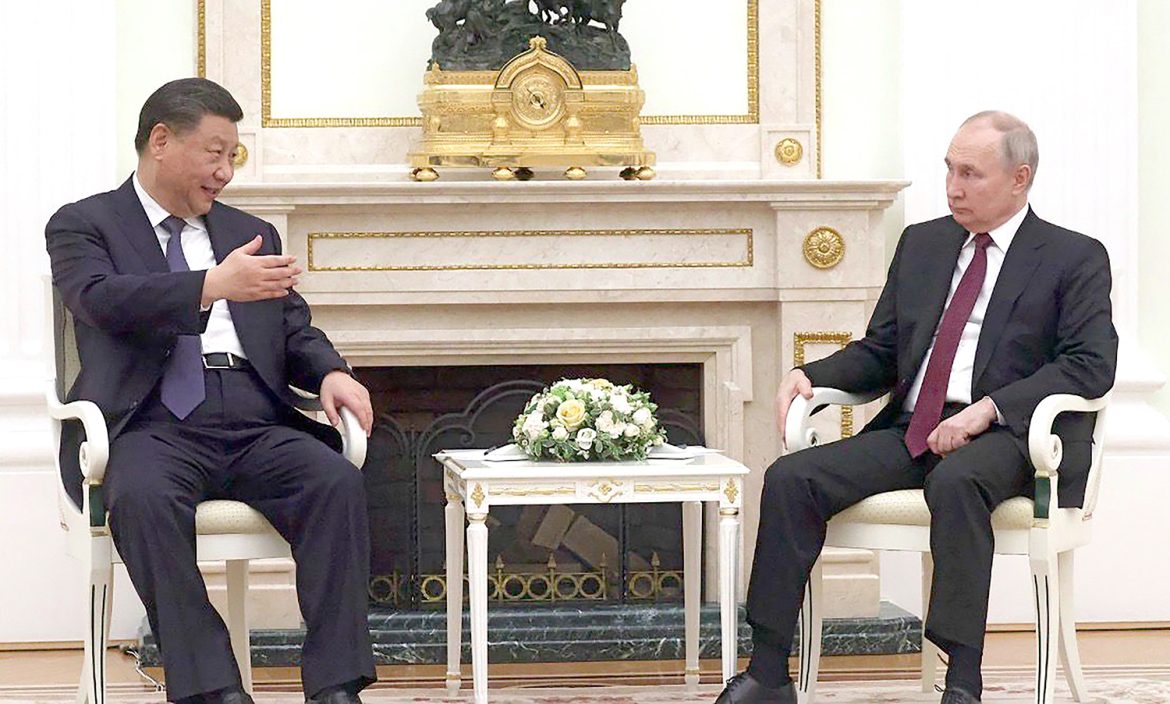
Beijing — Chinese President Xi Jinping and Russian President Vladimir Putin emerged from their latest summit in Beijing with a broad show of political unity, expanding cooperation in trade, security and global diplomacy, while also revealing limits in their economic partnership.
The meeting, held against the backdrop of continuing tensions with the United States and the war in Ukraine, produced a lengthy joint statement condemning what both leaders described as Western “hegemonic” policies and calling for a more “multipolar world order.”
Strategic Unity Against the West
The two leaders sharply criticised American foreign and military policy, particularly missile defense systems, sanctions and Western backing for Ukraine. Beijing and Moscow said the “root causes” of the Ukraine conflict needed to be addressed language widely interpreted as support for Russia’s longstanding opposition to NATO expansion.
Both governments also condemned recent American and Israeli military actions in the Middle East and warned that instability around the Strait of Hormuz could threaten global trade and energy supplies.
Expanding Military and Technology Cooperation. A key outcome of the summit was an agreement to deepen military coordination and strategic cooperation. Reports said the joint declaration included plans for expanded defense collaboration, alongside agreements covering artificial intelligence, media cooperation and technology exchanges.
The summit comes amid growing Western scrutiny of China’s relationship with Russia during the Ukraine war. Reuters separately reported allegations that Chinese facilities may have trained Russian troops, claims firmly denied by the Kremlin. Strengthen
trade and energy remained central themes of the talks. bilateral trade between China and Russia has continued to grow despite western sanctions on Moscow, with Russian officials highlighting rising oil exports to China this year.
More than 40 agreements were reportedly signed during the visit, spanning energy, digital technology, agriculture and logistics. Major Gas Deal Still Unresolved
despite the warm rhetoric, the summit failed to deliver a breakthrough on the long-delayed Power of Siberia 2 gas pipeline, a project Moscow sees as crucial for redirecting gas exports from Europe to Asia.
Negotiations reportedly stalled over pricing, financing and supply terms, exposing underlying tensions in the increasingly unequal relationship between the two countries. Analysts note that Russia has become more economically dependent on China since the Ukraine war began. The summit was also rich in symbolism. Coming shortly after high-level US China contacts, the meeting allowed Beijing to demonstrate that it can maintain ties with both Washington and Moscow while still presenting itself as a global power center independent of the West. For Putin, the visit reinforced Russia’s strategic pivot toward Asia as Moscow remains isolated from much of Europe.
Xi, meanwhile, used the occasion to underline China’s vision of a reshaped international order less dominated by the United States.

When Raja Liaquat Ali Khan died in the Keran region of Indian-administered Kashmir, there was a major problem before the funeral. The Keran region is divided between India and Pakistan by the Neelum River, which is a few meters wide. Liaquat’s parents and siblings moved to Pakistan-administered Kashmir in 1990 when the armed insurgency began and settled there. They were shown the body from across the river and could not even attend the funeral. His sister cried that what kind of division is this if I can’t even pay my last request to my brother’s body.
(with thanks to BBC)


By Staff Reporter
Of the 100-plus countries that trade with Iran, China is its biggest export partner. In the year to October 2025, it bought more than $14bn (£10.4bn) of products from Iran, according to figures from Trade Data Monitor which are based on statistics from the Islamic Republic of Iran Customs Administration. China is followed by Iraq, which received $10.5bn worth of goods from its neighbour. Iran also counts the United Arab Emirates and Turkey among its largest customers.
In fact, exports from Iran to Turkey jumped substantially from $4.7bn in 2024 to $7.3bn last year. Almost all of Iran’s top 10 exports are fuel-related – it is one of the world’s largest oil producers. It also ships food to other nations, including pistachios and tomatoes. But this is currently subject to legal challenge – with the US Supreme Court due to rule as soon as Wednesday. On Monday Trump said the US would be “screwed” if these tariffs aren’t upheld.
Although, according to sources, all countries except a few will continue to trade with Iran anyway.

Second one-day international, Naya Raipur
India 358-5: Gaikwad 105 (83), Kohli 102 (93); Jansen 2-63
South Africa 362-6: Markram 110 (98); Arshdeep 2-54
South Africa won by four wickets
South Africa completed the joint-highest chase in the history of one-day internationals in India as they passed a target of 359 to win by four wickets in Naya Raipur.
Aiden Markram hit 110 from the top of the order, while Matthew Breetzke and Dewald Brevis both made half-centuries as the tourists beat India with four balls to spare.
Virat Kohli and Ruturaj Gaikwad had both made centuries in the home side’s innings, but having closed on 358-6, they were unable to defend their score as South Africa completed the joint sixth highest chase in the format’s history to level the three-match series at 1-1.
India lost a 20th consecutive toss as KL Rahul’s side were put into bat by their opponents, but would have been confident of victory after Kohli and Gaikwad put on 195 for the third wicket.
Kohli extended his lead at the top of the ODI century scoring charts, making his 53rd hundred in the format having hit 135 in the first match of the series, while Gaikwad’s 105 was his first three-figure score in 50-over internationals.
Gaikwad was caught by Tony de Zorzi off Marco Jansen, while Kohli was taken by Markram of Lungi Ngidi for 102, before Rahul struck an unbeaten 66 to finish India’s innings strongly.
South Africa lost Quinton de Kock for eight, caught by Washington Sundar off Arshdeep Singh, in the fifth over of their reply, but Markam put on partnerships of 101 with captain Temba Bavuma (46) and 70 with Breetzke (68).
Markram was caught by Gaikward at the end of Harshit Rana’s 30th over, but Brevis arrived at the crease to hit a 34-ball 54.
The 22-year-old was dismissed when he hit Kuldeep Yadav to Yashasvi Jaiswal, before Breetzke and Marco Jansen were dismissed by Prasidh Krishna and Arshdeep in the space of five balls.
But Corbin Bosch steadied South African nerves, striking an unbeaten 29 from 15 balls, including a match-winning four, as his side reached 362-6 to seal a remarkable victory.
The series concludes in Visakhapatnam on Saturday, before a five-match T20 series.

India has scrapped an order making it mandatory for smartphone makers to preload a state-run cyber safety app on new phones after a public furore.
The order gave smartphone makers 90 days to pre-load new phones with its new Sanchar Saathi app which could not be “disabled or restricted”, sparking privacy and surveillance concerns.
The government argued the move was necessary to verify the authenticity of handsets, but cybersecurity experts said it impinged on citizens’ right to privacy.
Withdrawing the order on Wednesday, the government cited the app’s “increasing acceptance”. It came after Apple and Samsung had reportedly resisted the directive to pre-install it on their devices.
So far 14 million users have downloaded the app, reporting 2,000 frauds daily, and on Tuesday alone 600,000 new users registered – a tenfold spike, according to India’s telecom ministry.
But the order – passed last week but made public on Monday – to make the registration mandatory had led to a major backlash from several cybersecurity experts.
Smartphone giants like Apple and Samsung also resisted the directive to pre-install the app on their phones.
Sources told the BBC the companies were concerned the directive was issued without prior consultation and challenged user privacy norms.
While the order has now been withdrawn, India’s Minister of Communications Jyotiraditya Scindia dismissed concerns that the app could be used to increase surveillance.
“Snooping is neither possible nor will it happen with the Sanchar Saathi safety app,” Scindia said.
The government’s decision to reverse the order was welcomed by digital advocacy groups.
“This is a welcome development, but we are still awaiting the full text of the legal order that should accompany this announcement, including any revised directions under the Cyber Security Rules, 2024,” the Internet Freedom Foundation said on X.
“For now, we should treat this as cautious optimism, not closure, until the formal legal direction is published and independently confirmed.”
