Sajjad Azhar
Islamabad
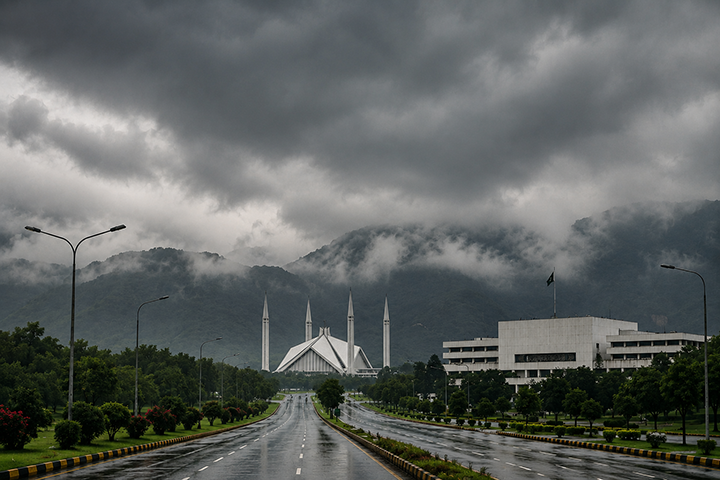
Pakistan’s federal capital is experiencing more than just the suffocating humidity of the monsoon season. According to political observers and informed sources in Islamabad, the country’s political atmosphere has also become increasingly tense, with growing speculation about changes within the power structure.
The recent transfer of several senior administrative officials in Rawalpindi and Attock has attracted considerable attention in political circles. Many analysts view these reshuffles as more than routine bureaucratic changes, suggesting they may reflect widening differences between the ruling Pakistan Muslim League-Nawaz (PML-N) government and the country’s security establishment.
Officials familiar with the administrative structure note that many of the transferred officers had remained in influential positions for several years and were widely perceived to enjoy strong backing from powerful quarters. Their sudden removal has therefore fuelled speculation that the relationship between Islamabad’s civilian leadership and Rawalpindi’s military establishment may no longer be as smooth as it once appeared.
Some commentators have attributed the transfers to governance issues or corruption allegations. Others, however, argue that if such concerns had been the primary reason, the officials would likely not have remained in office for such an extended period. They believe the timing and scale of the reshuffle indicate broader political considerations.
Political analysts also suggest that elements within the security establishment are dissatisfied with the government’s performance, particularly in the areas of governance and the economy. Despite being given political space, critics argue that the government has struggled to deliver visible improvements. They also point out that former Prime Minister Imran Khan continues to command significant public support, a factor some interpret as a political setback for the ruling coalition.
Government circles, however, maintain that persistent security challenges in Balochistan and Khyber Pakhtunkhwa have discouraged foreign investment and slowed economic recovery. They argue that these external pressures have significantly limited the government’s ability to achieve stronger economic results.
Observers also point to reports of differing approaches between the civilian government and the military establishment on issues relating to Kashmir. Meanwhile, recent political developments, including the Pakistan Peoples Party’s performance in Gilgit-Baltistan and speculation surrounding the upcoming elections in Azad Jammu and Kashmir, have further intensified discussion about possible political realignments.
Among the names circulating in political discussions as potential alternatives for future leadership are Interior Minister Mohsin Naqvi and Pakistan Peoples Party Chairman Bilawal Bhutto Zardari. There is also speculation that the PPP could eventually become part of the federal cabinet as part of a broader political arrangement, accompanied by changes in several key ministries.
At present, none of these reports or rumours has been officially confirmed. However, political observers agree that the coming days could prove significant for Pakistan’s political landscape. For now, Islamabad remains not only under the grip of monsoon humidity but also an atmosphere of growing political uncertainty.