Analysis
Wajahat Ali Khan
For almost three years, the Israeli-Palestinian conflict has confronted the international community with a question that diplomacy has repeatedly failed to answer: how long can the world condemn suffering without taking meaningful action to stop it?
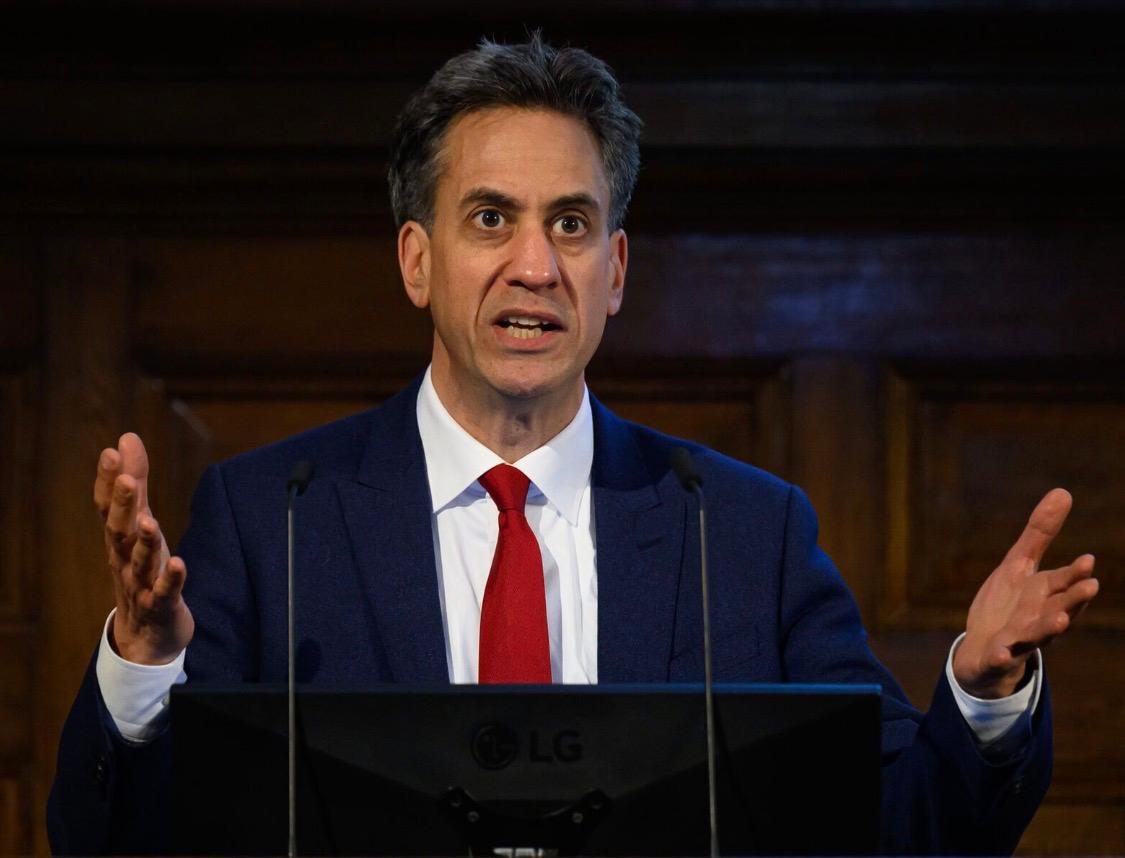
Britain’s latest language is unusually direct. Foreign Secretary Ed Miliband has described the situation in Gaza and the West Bank as “a stain on the conscience of the world”, while accusing Israeli settlers in the occupied West Bank of ethnic cleansing and pointing to evidence of war crimes in Gaza. The government has also declared Israel’s continued occupation of Palestinian territory unlawful.
The significance lies not merely in the rhetoric, but in the change in British policy accompanying it.
Prime Minister Andy Burnham told the UN General Assembly that Israel’s security and its right to defend itself against threats, including from Iran, remained important to Britain. But he added that this could not justify the Israeli government’s actions in Gaza and the West Bank. He cited the number of deaths, including children, the inadequate flow of humanitarian aid and the danger posed by expanding settlements to the possibility of a Palestinian state.
Britain has subsequently banned trade in goods from Israeli settlements and sanctioned people involved in settlement construction. The measures have been coordinated with a group of other countries, including France and Canada.
From words to consequences
This is where Britain’s position becomes more consequential. For decades, British governments have supported a two-state solution while maintaining close diplomatic and security relations with Israel. The new approach argues that defending the prospect of two states requires confronting developments that Britain believes are making such an outcome increasingly difficult.
The British government has particularly focused on the proposed E1 settlement project in the West Bank. Burnham told the UN that the project could divide the West Bank and make a viable Palestinian state harder to achieve.
At the UN Security Council this week, Britain’s deputy permanent representative, Kate Foster, similarly warned that the two-state solution was being threatened by facts created on the ground.
But Britain’s tougher language has also produced a diplomatic cost. Israel has announced plans to close the British consulate in East Jerusalem after Britain, France and Canada moved against settlement imports.
There is an important distinction between condemning Israeli government policy and hostility towards Israeli or Jewish people. Britain has continued to condemn the Hamas attack of 7 October 2023 and has reaffirmed Israel’s security as a legitimate concern. Burnham explicitly repeated that position at the UN.
Equally, recognising Israel’s security concerns cannot mean ignoring Palestinian civilian suffering. International humanitarian law is supposed to place limits on the conduct of war regardless of the identity of the victims or perpetrators.
That is why Britain’s new language matters beyond Britain itself. A country with historic responsibilities in the region is now arguing that silence, when civilian suffering and settlement expansion continue, is not a neutral position.
Yet words alone will not resolve the conflict. Humanitarian access, protection of civilians, accountability for alleged violations, the release of hostages, an end to settlement expansion and a credible political route towards Palestinian self-determination all require sustained diplomatic pressure.
The deeper test for Britain is therefore not whether it can produce stronger statements. It is whether its policies consistently match those statements.
For Palestinians, the issue is survival, dignity and political self-determination. For Israelis, it is security and protection from attacks. For the international community, the challenge is to uphold both principles without allowing one to become an excuse for denying the other.
Britain’s blunt statement has therefore moved the argument beyond the familiar language of “deep concern”. The question now is whether the international community will turn its conscience into consistent action.
23