PA News
London
Six immigration officers have been charged with offences after an investigation into alleged thefts from migrants and money laundering.
Five of the officers are facing charges including conspiracy to steal and misconduct in public office, the Crown Prosecution Service (CPS) said on Tuesday. All six have been charged with money laundering offences.
Besmir Matera, 36, Lee-Ann Evanson, 42, John Bernthal, 53, Ben Edwardes, 45, Jack Mitchell, 33, and David Grundy, 43, will appear at Westminster magistrates court on 29 January.
Malcolm McHaffie, the head of the CPS special crime division, said the charges followed a Home Office investigation into alleged thefts from migrants and money laundering between August 2021 and November 2022.
“Our prosecutors have worked to establish that there is sufficient evidence to bring the case to court and that it is in the public interest to pursue criminal proceedings. We have worked closely with the Home Office’s anti-corruption criminal investigations unit as they carried out their investigation,” McHaffie said.
Matera, of Reigate, Surrey, is charged with conspiracy to steal; misconduct in public office; concealing, disguising, converting, transferring or removing criminal property; obtaining leave to enter to remain in the UK by deception; and three counts of possession of an identity document with improper intention.
Evanson, of Bracknell, Berkshire, Bernthal, of Welling, south-east London, Edwardes, of Bexleyheath, south-east London, and Mitchell, of Dover, Kent, are each charged with conspiracy to steal, misconduct in public office and concealing, disguising, converting, transferring or removing criminal property.
Grundy, of Croydon, south London, is charged with concealing, disguising, converting, transferring or removing criminal property.
London Post
Community harmony has long been one of the United Kingdom’s quiet strengths. In towns and cities across the country, people of different cultures, faiths, and backgrounds live side by side, contributing to a society that is diverse, dynamic, and resilient. Yet in recent years, this harmony has been tested by economic pressures, political polarisation, misinformation, and global conflicts that spill into local discourse. Preserving and strengthening social cohesion is no longer optional—it is a national necessity.
At the heart of community harmony lies trust: trust in neighbours, in institutions, and in the idea that differences can coexist without fear. When trust erodes, divisions deepen. We see this in the rise of online hate, the stereotyping of communities, and the temptation to assign blame to “the other” during times of uncertainty. Such tendencies may be loud, but they are not representative of the majority, who continue to value fairness, decency, and mutual respect.
Local communities play a crucial role in countering division. Schools that encourage dialogue, councils that support inclusive initiatives, faith groups that open their doors, and volunteers who bring people together through sport, culture, and service all help to build everyday connections. These interactions—often small and informal—are powerful. They humanise difference and remind us that shared concerns, from the cost of living to safe streets, outweigh perceived divides.
The media and political leadership also bear responsibility. Language matters. Sensationalism and scapegoating may win short-term attention, but they do long-term damage to social fabric. Leaders who speak responsibly, challenge misinformation, and emphasise shared values set the tone for public discourse. Community harmony cannot thrive in an environment of constant outrage and suspicion. Ultimately, harmony is not about ignoring differences; it is about managing them with empathy and fairness. The UK’s diversity is a reality, not a problem to be solved. When inclusion is treated as a strength and dialogue as a habit, communities become more resilient to fear and extremism.
In an increasingly complex world, the UK’s future stability depends on the everyday choices of its people—to listen rather than assume, to engage rather than withdraw, and to stand up for one another. Community harmony is not built by slogans or policies alone, but by a shared commitment to live together with respect.
It is tempting to believe that community harmony is something governments create, councils manage, or institutions enforce. In reality, harmony in society is shaped far closer to home. It is built—or broken—by the everyday actions, attitudes, and choices of ordinary people. Every community, and every individual within it, carries responsibility for the peace and cohesion of society.
Harmony does not mean uniformity. Communities are made up of people with different beliefs, cultures, and opinions, and disagreement is natural. The challenge is not to eliminate difference, but to handle it with respect. When individuals choose empathy over hostility and dialogue over confrontation, they contribute to an environment where differences do not become divisions.
Small actions matter more than grand declarations. Greeting a neighbour, listening without judgement, correcting misinformation rather than spreading it, and standing up against prejudice in everyday settings all help to shape social attitudes. When silence allows intolerance to grow, harmony weakens. Responsibility lies not only in avoiding harm, but in actively promoting understanding. Communities also have a duty to look inward. It is easy to blame outsiders for social tensions, yet lasting harmony requires self-reflection. Are we welcoming? Are we fair? Are we willing to share space, opportunity, and voice? Strong communities are those that balance pride in their identity with openness to others.
Leadership matters, but it cannot replace personal responsibility. Laws can discourage discrimination, and policies can promote inclusion, but they cannot force kindness or mutual respect. These values must be practised daily—in schools, workplaces, places of worship, online spaces, and homes. A society where harmony exists only on paper is fragile; one where it lives in behaviour is resilient.
Ultimately, harmony is a shared civic duty. It thrives when people recognise that social peace is not someone else’s job. Each act of respect strengthens the whole; each act of intolerance weakens it. If communities want a stable and hopeful future, they must accept a simple truth: harmony belongs to everyone, and so does the responsibility to protect it.
Proposed changes to UK ILR include longer qualifying periods for some migrants
Staff Reporter
London
Under the proposed “Earned Settlement” model announced in late 2025, the standard qualifying period for Indefinite Leave to Remain (ILR) would increase from five years to a baseline of 10 years. This reform, first introduced in a May 2025 white paper and further detailed in a November 2025 consultation, aims to shift settlement from an automatic right to a status that must be “earned” through economic contribution and integration.
The proposed changes include varying timelines based on specific migrant categories and circumstances: Extended Qualifying Periods Low-Paid/Medium-Skilled Workers: Migrants in roles skilled below degree level (below RQF Level 6), including many in health and social care, could face a 15-year qualifying period.
Refugees: Those on “core protection” status could see their standard path to settlement extended to 20 years. Benefit Recipients: Claiming public funds for less than 12 months could add five years (total 15 years), while reliance for more than 12 months could add 10 years (total 20 years). Irregular Entry or Overstaying: Individuals who entered the UK illegally or overstayed for more than six months could face a wait of up to 30 years. Maintained or Reduced Periods: High Earners: Those earning over £50,270 for three years may still qualify after five years, while those earning over £125,140 could qualify in three years. Global Talent and Innovators: These routes would generally maintain a three-year path to settlement.Family and Hong Kong BN(O): Immediate family members of British citizens and those on the Hong Kong BN(O) visa are expected to retain their five-year pathway.
Public Service: Doctors, nurses, and teachers in specified public sector roles may still be eligible for settlement after five years.
Key Deadlines and StatusThe Home Office is conducting a formal consultation, “A Fairer Pathway to Settlement,” which is open until February 12, 2026. If adopted, the new rules are planned for implementation starting in April 2026. Current Status: These changes are not yet law; existing five-year and 10-year (long residence) ILR routes remain in place until the rules are officially amended. Retrospectivity: The government has proposed applying these changes to everyone currently in the UK who has not yet received ILR, though transitional arrangements for those already on a path to settlement are under review.
By Wajahat Ali Khan
London
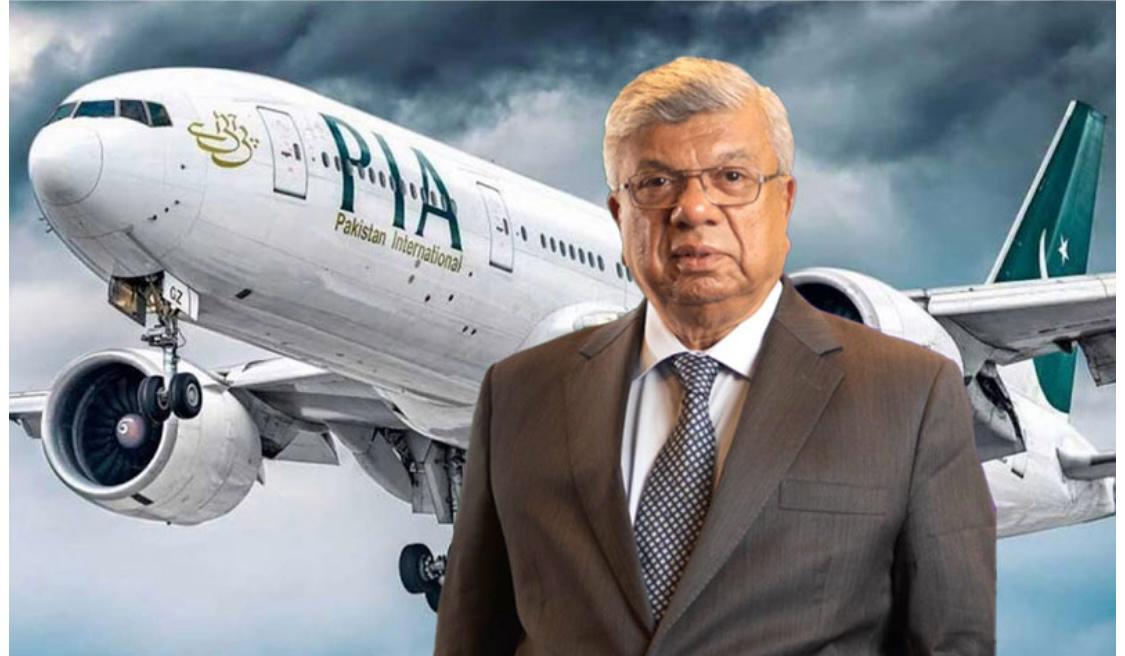
The sale of Pakistan International Airlines (PIA) is not a sudden policy whim nor an isolated economic decision. It is the inevitable outcome of decades of mismanagement, political interference, mounting financial losses, and a changing global aviation landscape that Pakistan could no longer afford to ignore.
Once a symbol of national pride, PIA was among Asia’s leading airlines in the 1960s. It trained crews for foreign carriers, pioneered routes, and represented a confident, outward-looking Pakistan. Today, however, the airline stands as a textbook case of how state-owned enterprises collapse when commercial logic is sacrificed at the altar of politics.
A History of Financial Bleeding: PIA had been running on losses for years, accumulating massive debt that ran into hundreds of billions of rupees. These losses were not caused by market forces alone but by chronic inefficiency: overstaffing, poor fleet management, outdated systems, and non-competitive operations. Successive governments continued to inject taxpayer money to keep the airline afloat, turning PIA into a permanent burden on the national exchequer.
In a country struggling with fiscal deficits, inflation, and external debt, subsidizing a loss-making airline became economically indefensible. Every bailout meant fewer resources for health, education, and social welfare.
Political Interference and Governance Failure
Perhaps the biggest reason behind PIA’s downfall was political interference. Appointments were often made on political grounds rather than merit. Routes were opened or closed for political convenience, not profitability. Decision-making was slow and inconsistent, tied to changing governments and bureaucratic control rather than professional airline management.
No private airline can survive under such conditions—yet PIA was expected to compete globally while carrying the dead weight of political influence at home.
Global Aviation Standards and Safety Issues: PIA’s troubles deepened when international aviation authorities raised serious concerns about safety and licensing standards. The temporary ban on PIA flights to key destinations badly damaged its reputation, reduced revenue streams, and pushed passengers toward foreign carriers. Trust, once lost in aviation, is extremely difficult to regain.
For an airline already struggling financially, this reputational blow proved devastating.
IMF Pressure and Economic Reality
Pakistan’s broader economic situation also played a decisive role. International lenders, particularly the IMF, consistently urged structural reforms, including the privatization or restructuring of state-owned enterprises. PIA topped that list.
Selling the airline—or at least transferring its management to the private sector—was seen as a way to stop financial hemorrhaging, improve efficiency, and signal seriousness about economic reform.
Privatization as a Last Resort, Not a First Choice
Critics argue that selling a national airline is an admission of failure—and they are not entirely wrong. But it is also an admission of reality. The choice was not between keeping PIA as a proud national carrier or selling it cheaply; the real choice was between reform through privatization or eventual collapse through neglect.
Private ownership brings commercial discipline, professional management, and accountability—qualities that PIA lacked under state control. While privatization is no magic wand, it offers a chance to rebuild the airline on sustainable lines.
A Lesson Beyond PIA:The sale of PIA should serve as a national lesson. Institutions do not fail overnight; they decay slowly when incompetence is protected, losses are normalized, and accountability is absent. If Pakistan wishes to avoid repeating this story, it must rethink how it runs public enterprises—placing merit over politics and performance over patronage.
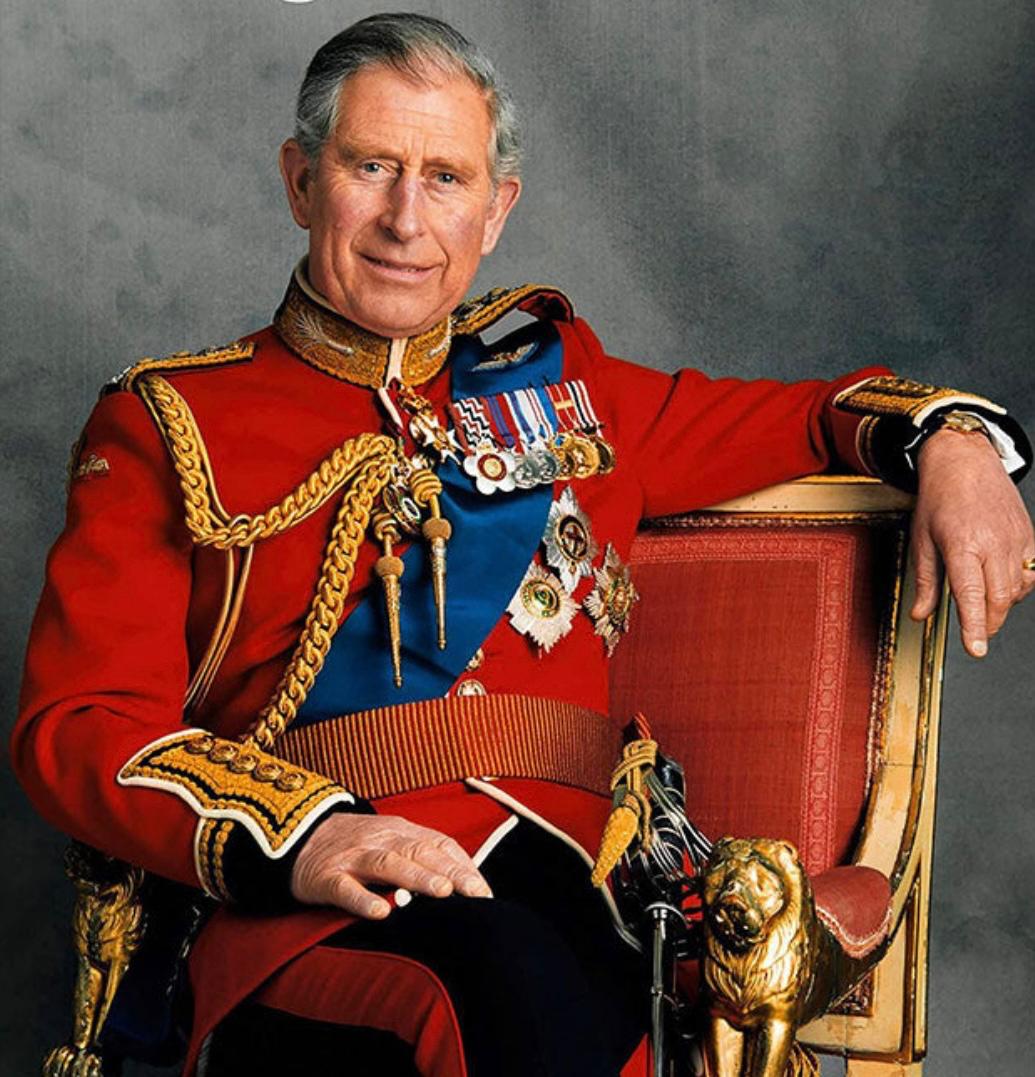
King Charles has used his Christmas message to call on communities to come together in an increasingly divided world, urging them to get “to know our neighbours”.
His traditional speech, recorded in Westminster Abbey, called on themes of unity and respect in a time of global conflict.
“Indeed as our world seems to spin ever faster, our journey may pause to quieten our minds, in TS Eliot’s words, ‘at the still point of the turning world’ and allow ourselves to renew,” he said. The speech included a call for quiet and calm as “our world seems to spin ever faster”, with King Charles quoting poet TS Eliot’s words about finding the “still point of the turning world”.
A royal aide said this was a reference to the social impact of new technologies on communities, and that people might consider a “digital detox”.
For the second year, the message was delivered in a location away from a royal palace, the King using a chapel in the abbey to talk about life’s “pilgrimage” and the lessons for current times.
In front of Christmas trees originally used for the Princess of Wales’s carol concert at the Abbey, he spoke of the importance of community cohesion and bridging divides.
“As I meet people of different faiths, I find it enormously encouraging to hear how much we have in common,” said the King, speaking under the chapel’s famous vaulted ceiling.
“With the great diversity of our communities we can find the strength to ensure that right triumphs over wrong.” He praised the wartime generation’s “courage and sacrifice” and their togetherness in the face of adversity, with the broadcast showing pictures of this year’s commemorations marking 80 years since the end of World War Two in Europe and the Far East. “These are the values which have shaped our country. “As we hear of division, both at home and abroad, they are the values of which we must never lose sight,” said the King.
Happy Birthday to Quaid e Azam Mohammad Ali Jinnah from “The London Post”
Happy 148th Birth anniversary of Mohammad Ali Jinnah December 25, 1876 – September 11, 1948) was a 20th century lawyer, politician, statesman and the founder of Pakistan. He is popularly and officially known in Pakistan as Quaid-e-Azam (“Great Leader”) and Baba-e-Qaum (“Father of the Nation”).
The first Governor-General of Pakistan, Jinnah worked to establish the new nation’s government and policies, and to aid the millions of Muslim refugees who had emigrated from India. He also called for minority rights in Pakistan and personally supervised the establishment of refugee camps for those who had fled the new nation of India after the separation. Jinnah died at age 71 in September 1948, just over a year after Pakistan gained independence from the British Raj. He left a deep and respected legacy in Pakistan, though he is less well thought of in India. According to his biographer, Stanley Wolpert, he remains Pakistan’s greatest leader.
Al-Mustafa Welfare Trust Hosts Interfaith Christmas Celebration at Lahore Church
Lahore
Al-Mustafa Welfare Trust, in partnership with Gyan Book Gallery, hosted an interfaith Christmas celebration at a local church in Lahore to promote religious harmony and express solidarity with the Christian community.
The event drew leading figures from a range of faiths and professions, and saw strong participation from women and children. Gifts were distributed among young attendees, while songs and short speeches highlighted themes of unity, tolerance and mutual respect. The evening concluded with a communal dinner. Proceedings were conducted by Aftab Javed.
Those attending included historian Hassan Jafar Zaidi, senior poet Nazeer Qaiser, Al-Mustafa’s Head of Media and Public Relations Muhammad Nawaz Kharl, Dr Amjad Tufail, Dar-e-Najaf Zaibi, Tauqeer Ahmed Sharifi, Muhammad Abbas Mirza, Muhammad Ali Sabri, Shabnam Mirza, David Percy, Mumtaz Rashid Lahori, Farooq Sahar, Salman Rasool Ashraf, Naseer Ahmed Naseer, Sohail Sani and Minza Sahar.

Local Government Secretary Steve Reed has written to all council leaders in England warning them not to introduce four-day working weeks.
As reported by the Telegraph, the letter is understood to say that “council staff undertaking part-time work for full-time pay without compelling justification would be considered an indicator, among a wide range of factors, of potential failure”. He added that he hoped he had made the government’s policy “unambiguously clear to all councils”.
A Labour source said “Voters deserve high standards and hard work from local councils, and seeing council staff working a four-day week just won’t cut it.”
“They should get on with the job and make sure residents get the best service possible five days a week,” the source added. In the letter to the councils, which was reported by The Telegraph, external, Reed says that local authorities should not be offering “full-time pay for part-time work”. Reed previously expressed his “deep disappointment” in the first UK council to adopt a four-day working week.
South Cambridgeshire District Council, which is led by the Liberal Democrats, became the first to make a permanent move to a four-day week in July after it began trialling a shorter working week in 2023. Reed said there had been a decline in performance in the council’s housing service and he asked how the local authority would “mitigate” this.
The government can intervene in any council if it is deemed to be failing. Last year Prime Minister Sir Keir Starmer also rejected civil servants’ demands for a four-day working week. Critics of a four-day week say it would reduce productivity and slow economic growth but others disagree.
A trial in the Scottish public sector this year found an increase in productivity and improvements in staff well-being. The Autonomy Institute, which was commissioned by the Scottish government to co-ordinate the pilot, found that 98% of staff judged morale and motivation to have improved. Helen Catt & George Wright
BBC Political Correspondent

Prof Masood Akhtar Hazarvi
The most astonishing and profound irony of the modern age is that while human beings have achieved extraordinary victories in science and technology, they appear more restless and anxious than ever when faced with the most fundamental questions about their own existence. Humanity has measured the vastness of the universe and torn apart the veil of the atom. Artificial intelligence has created machines that do not merely follow commands but can understand, analyze, and even make decisions. Yet despite all this, human beings still do not know what the true purpose of life is, where noble ethics and higher values originate from, and how spiritual peace and inner contentment can be attained. In reality, ignoring these questions amid the noise of material progress is the greatest intellectual and ideological failure of our time.
This is why global surveys confirm that distance from religion and atheistic tendencies are increasing rapidly. According to recent Gallup International surveys, the proportion of people openly identifying as atheists worldwide has reached a significant level. This trend is especially pronounced in Western and industrial societies where, despite material abundance, the younger generation is facing problems such as mental stress, anxiety, and suicide. Ironically, long-term research conducted by institutions such as Harvard and Duke Universities indicates that individuals who believe in God generally enjoy better mental balance, experience life as more meaningful, and remain far more protected from severe psychological crises. This situation clearly points to the spiritual vacuum that materialism and atheism have created within the modern human soul.
From an Islamic perspective, the relationship between reason and divine revelation has never been one of conflict; rather, it has always been one of harmony and mutual completion. The very style of the Qur’an is based on reflection, contemplation, and observation. Time and again, human beings are invited to ponder over the creation of the heavens and the earth, the rise and fall of history, and the depths of their own inner selves. Questions such as “Do you not use your reason?” appear repeatedly in the Qur’an. However, this invitation is not toward a reason that considers itself absolute and all-knowing, but toward a sound intellect that recognizes its own limits. In Islam, the greatness of reason reaches its peak when it humbly accepts that there are certain questions whose ultimate answers lie beyond its limited domain. It is precisely at this point that revelation does not reject reason but elevates it, granting meaning and direction to its questions. As Allama Iqbal beautifully expressed:
It is good that reason stands guard beside the heart, But sometimes it should also be left on its own.
Islamic history is filled with shining examples of this living dialogue. In the early centuries, the Mu‘tazilites emphasized the supremacy of reason, while the Ash‘arites highlighted the primacy of revelation, yet both schools agreed that there is no real contradiction between sound reason and divine revelation. Al-Farabi and Ibn Sina sought to integrate Greek philosophy into the framework of Islamic thought; Imam al-Ghazali defined the limits of philosophy and declared reason to be a servant of revelation; and Ibn Rushd strongly defended the harmony between reason and revelation. This intellectual struggle formed the soul of Islam’s Golden Age, resulting in revolutionary advances in mathematics, astronomy, medicine, and physics—advances upon which modern science itself was built. Ibn al-Haytham’s optical research, Al-Khwarizmi’s algebra, and Ibn Sina’s medical works testify to the fact that Islam never regarded knowledge as a threat but rather as a means to understand the signs of the Creator.
In the Indian subcontinent, the great thinker Allama Muhammad Iqbal carried this tradition forward by giving it a new intellectual language for the modern era. In his view, reason is a great power in its own right, but without the guidance of revelation, it becomes entangled in its own complexities. In Iqbal’s poetry, both the flight of reason and its limitations are clearly visible. As he says:
The one who searched the pathways of the stars Could not journey within the world of his own thoughts. So entangled was he in the twists of his own wisdom That he could never decide what truly was gain or loss.
At its core, the fundamental flaw of modern atheism lies in treating reason as absolute and self-sufficient. Within this worldview, the universe becomes a purposeless accident, human beings mere biological coincidences, and morality a temporary construct shaped by social interests. As a result, concepts such as sacrifice, selflessness, and justice lose their objective foundation. The strongest argument of atheism is often presented as the “problem of evil”: if God is all-powerful and merciful, why is there suffering in the world? Yet this very question is itself proof of the moral consciousness within human beings. For if there were no objective standard of good and evil, suffering could not even be recognized as a “problem.” Islam does not regard suffering as meaningless; rather, it sees it as a test, a means of spiritual growth, and a process of character formation. Life is not merely about physical comfort but about moral struggle through which a human being comes to recognize their true self.
The idea of an inherent conflict between science and religion is itself a historical and intellectual misunderstanding. Islam has never considered science an enemy. The real issue is not science, but scientism—the belief that the scientific method alone is the ultimate measure of reality. Science can explain the “how” of phenomena, but the “why” lies beyond its scope. In this context, modern humans, despite countless digital connections, suffer from deep loneliness. There is an abundance of information, but a shortage of wisdom; many comforts, but little contentment. Faith fills this void because it grants life meaning, protects reason from arrogance, introduces knowledge to purpose, and links intellectual and practical freedom with responsibility. Belief in God, therefore, is not the enemy of reason but its closest companion.
Against this backdrop of intellectual struggle, the dialogue held on 20 December 2025 at the Constitution Club in New Delhi acquired exceptional significance. A serious and dignified discussion on the “existence of God” took place between Javed Akhtar, a prominent representative of atheism, and the young Muslim scholar Mufti Shamail Ahmed Nadvi. This dialogue was, in essence, a continuation of centuries-old Islamic intellectual tradition, where arguments such as contingency, the limits of science, human free will, and moral responsibility were presented with grace and rational rigor. Atheism is not a new challenge, nor is Islam a weak tradition. In every era, atheists bring forth their questions, and in every era, those questions have been answered in accordance with the intellectual demands of the time. When dialogue remains alive, reasoning remains strong, and the tone remains respectful, Islamic thought not only defends its own existence but also provides guidance to the age. This harmony between reason and revelation is the greatest hope of our time—a hope that grants inner peace to individuals, moral balance to society, and survival to civilization itself.

Wajahat Ali Khan
Generally, there is a majority opinion in Pakistan that sometimes more and sometimes less, but intelligence agencies have always played a role in domestic politics. This thought is certainly correct to a large extent. Without going into the discussion of the implications of this happening and what its disadvantages or benefits were, we should take a look at the interference or role of agencies in politics in some developed and developing countries of the world.
The fact is that in most countries, their own intelligence agencies influence politics to some extent, whether directly or indirectly, mainly The ideological role or work of intelligence agencies is to deal with terrorism, espionage and external threats for national security, and to provide secret information to government policymakers, that is, in principle, they are not part of the political process but are considered a pillar of state security. In many countries, agencies are seen to have an informal relationship with politics in various ways, for example, influencing policy. Sometimes agencies shape government decisions, foreign policy or security policy through the information or analysis they provide, and this is considered a normal and legal role. Agencies also monitor political parties, keep a close eye on domestic and foreign media, and try to influence elections and play a role in weakening or strengthening governments, but such matters are usually considered controversial, illegal or undemocratic.
For example, the UK is a country with strong democratic and parliamentary oversight, so in our country where we have been living for decades, intelligence agencies cannot formally interfere in politics, as is the same constitutional principle in Pakistan. However, a few points are important to understand their role. For example, there are three key agencies in the UK. MI5 deals with internal security, terrorism and espionage, MI6 deals with intelligence abroad andGCHQ carries out cyber security and electronic intelligence, and the reports of these three agencies influence the decisions of the Prime Minister, the Cabinet and the National Security Council and are indirectly related to the field of politics but are considered legal and necessary.
Although there is strict oversight of intelligence agencies in the UK, there are some incidents in history that have sparked debates in this regard, such as the accusations that MI5 monitored left-wing leaders during the Cold War in the 1970s and 1980s because they were at risk of communist influence, these incidents are still a subject of debate today, although the official policy was that surveillance should only be on the basis of national security. Then, before the invasion of Iraq, there was intense political criticism of the intelligence reports (Weapons of Mass Destruction). Critics said that the government presented intelligence data according to its political judgment. There is also a common perception that the agencies do the same work behind the scenes as the agencies of third world countries do “in front of the scenes”.
The American CIA The CIA does not directly run American politics, but its influence on American foreign policy is indirect and sometimes very clear in practice. For example, the CIA briefs the American President and the National Security Council daily. These reports are about enemy countries, global threats, terrorist groups and global political changes, and on the basis of this information, American foreign policy is formed in the form of wars, negotiations, sanctions, alliances, etc.
That is, the CIA does not make policy, but its role in determining the direction of policy is the most important. Historically, the CIA has played a practical role in many major events. For example,covert operations in several countries during the Cold War to stop communist governments, intelligence activities in enemy countries, and providing secret assistance to allied countries. Although all these tasks were part of foreign policy, and the CIA also implemented them practically, that is, it works as an “instrument” of foreign policy, not a maker!
The same situation is also in Pakistan’s neighbouring country, India, where RAW cannot formally interfere in the internal political affairs of the Indian government, but according to historical and media reports, its role has been in some external and internal sensitive matters. Some reports indicate that the IB or RAW made attempts to influence internal politics, especially in the 1970s–80s, in view of the fear of insurgency or communism in some states interference in political affairs and internal surveillance.
During the 2004–2009 parliamentary and state elections, the IB prepared several reports on the risks of communal or provincial violence in the elections. These were mostly security alerts and advisories, but in reality, they were direct interference in the elections. Similarly, during the 2010–2014 insurgency and political surveillance in the North-Eastern states, when insurgency and separatist movements were going on in North-East India, such as Assam, Nagaland, etc., the IB and RAW provided information to the government so that the state governments could control the situation. However, the best way to give the impression that agencies around the world are not interfering in political matters is to give the government a script based on internal and external information, which it is necessary for the government to implement without fail!