Saif Ali Khan
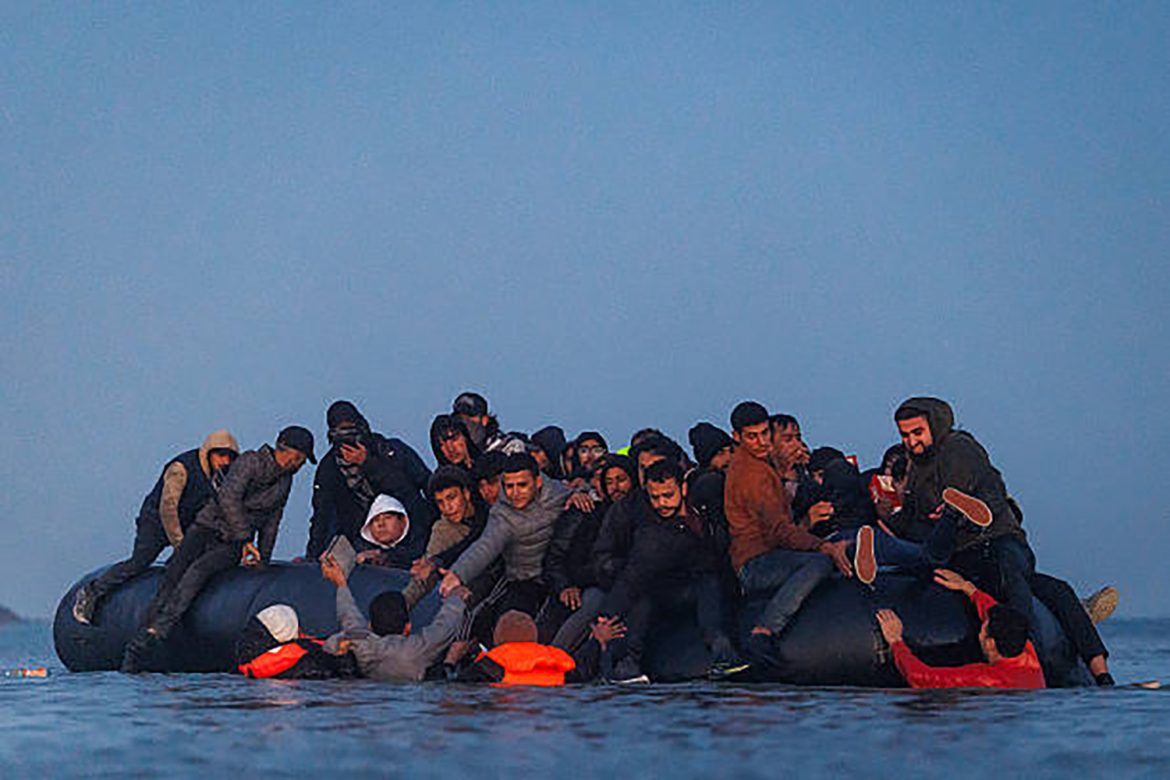
The toughest shake-up of the legal migration system in nearly half a century already launched, designed to reward those who contribute and play by the rules. Current UK immigration policies and laws impose extremely strict restrictions on individuals living in the country illegally, making automatic settlement after 10 years unavailable. Recent legal overhauls and the Illegal Migration Act prevent those who enter illegally from settling, with policies emphasizing prompt removal and extending standard qualifying periods for all migrants.
There is no automatic Indefinite Leave to Remain (ILR) for living in the UK illegally for 10 years. For legal migrants, the government has proposed raising the standard ILR waiting period from 5 to 10 years, but this does not apply to periods of unlawful residence. The 20-Year Rule: The only established route for undocumented migrants to regularize their status based strictly on long residence requires living in the UK continuously for 20 years unlawfully. If successful, these grants limited leave to remain, not immediate settlement.
Under regulations introduced in 2025, any individual applying for British citizenship who previously entered the UK illegally (or without required clearance/ETAs via dangerous journeys) will normally have their application refused. The legislation mandates that anyone arriving in the UK illegally will be detained and promptly removed to either their home country or a safe third country.
London Post
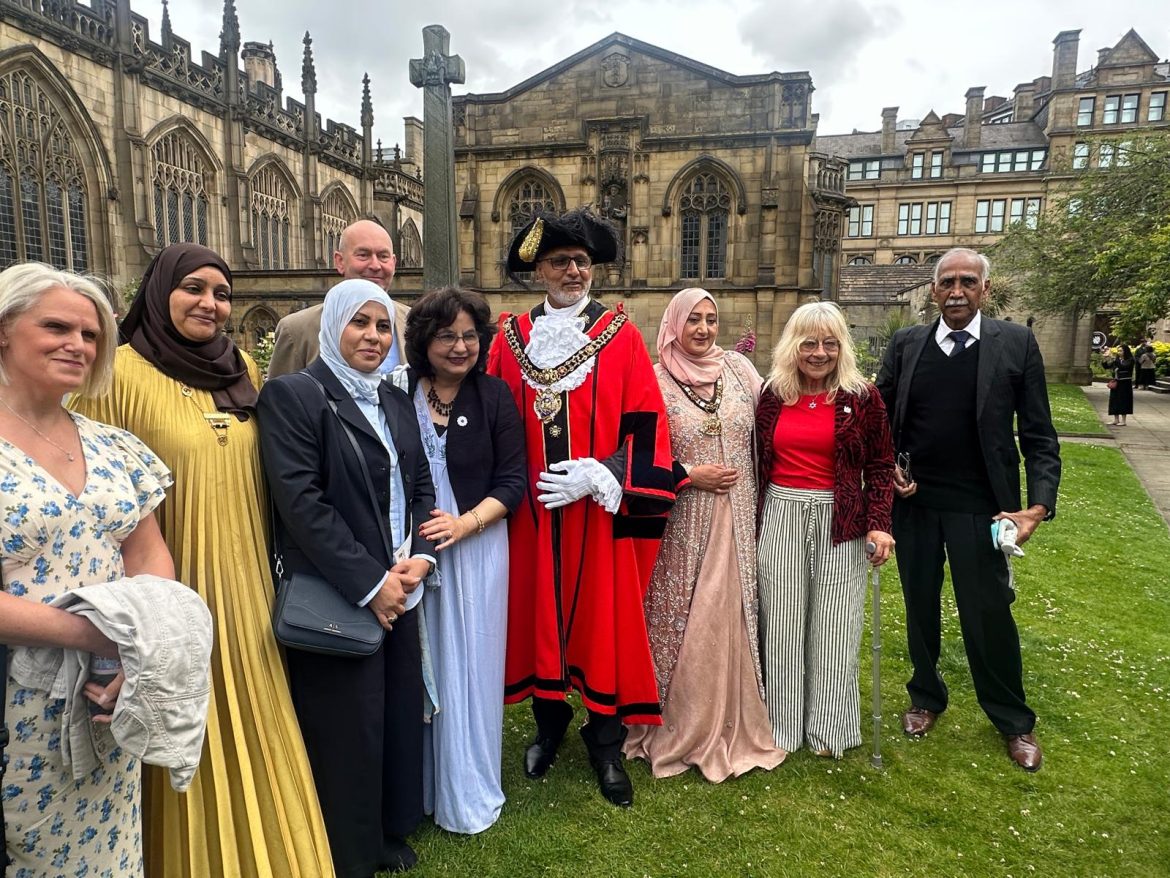
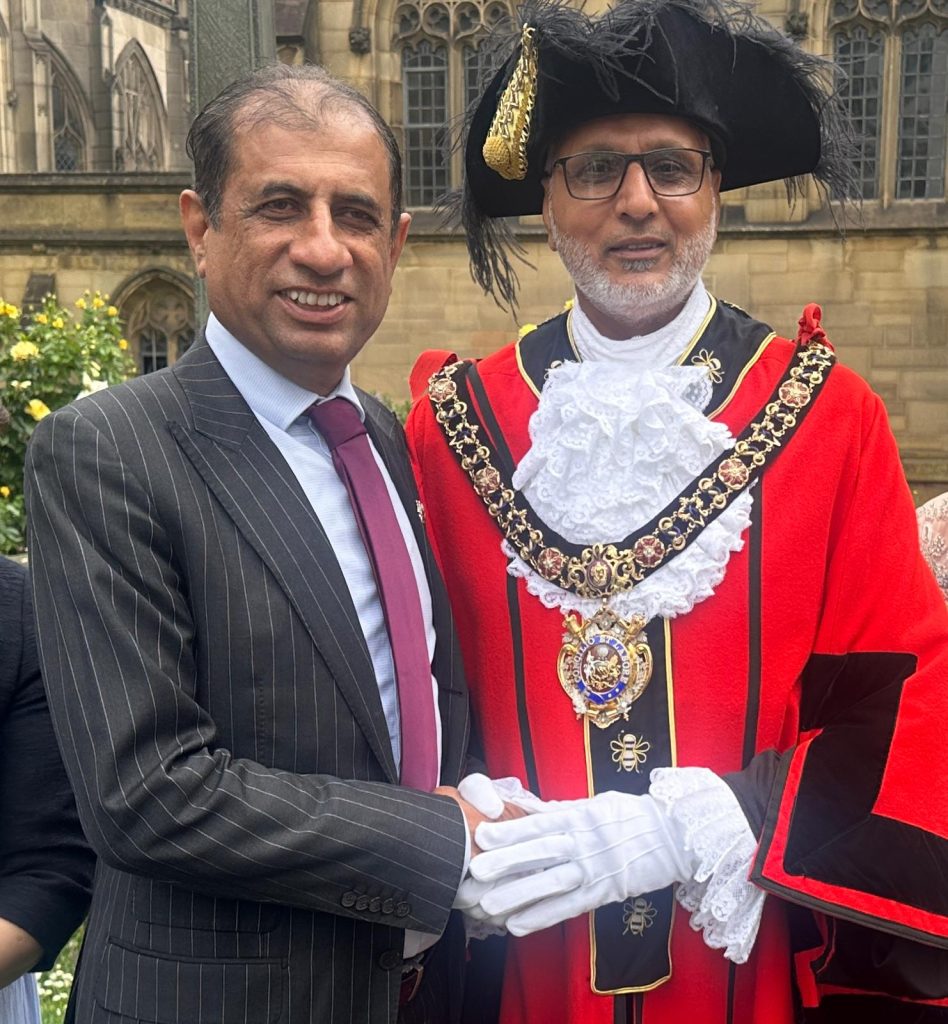
Lord Mayor Shaukat Ali Attends Civic Service at Manchester Cathedral
Tajammul Gurmani
Manchester
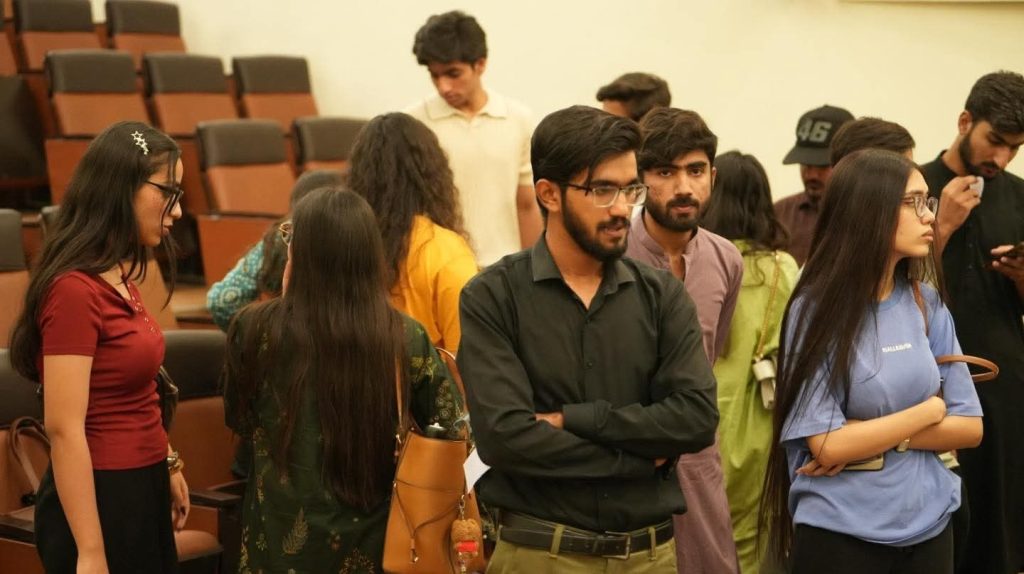
The Lord Mayor of Manchester, Cllr. Shaukat Ali, attended the annual Civic Service held at Manchester Cathedral. Civic, community, faith leaders, and residents from across the city attended the event. Among the guests were MP Afzal Khan, the Consul General of Pakistan, Imtiaz Feroz Gondal, Deputy Lord Mayor Cllr. Jill Lovecy, Cllr. Ahmed Ali, Cllr. Naeemul Hassan, Chairman Central Masjid Victoria Park Hammad Khan, Haroon Khatana, Muhammad Jamil, Dr Younas Perwaz, and representatives from various community organisations and public institutions. The event was also attended by members of the Pakistani community and people from all walks of life.
Representatives of different faith communities addressed the gathering. Canon Charles Kwaku-Odoi represented the Christian community, Stuart Parsons the Buddhist community, Dr Sarswati Sinha the Hindu community, Mrs Manjari Patel the Jain community, Rabbi Warren Elf the Jewish community, Sukbhir Singh the Sikh community, and MP Afzal Khan spoke on behalf of the Muslim community. The speakers expressed their pleasure at attending the ceremony and welcomed Lord Mayor Shaukat Ali on behalf of their respective communities and Manchester Cathedral. They also conveyed their best wishes to the Lord Mayor.
A Muslim Qari recited verses from the Holy Quran before the formal proceedings began. The Civic Service concluded with religious hymns, music, national anthem and special prayers for the city, its people and the country. The event highlighted the importance of collaboration, understanding and civic responsibility in building a vibrant and united Manchester. Talking to the media, MP Afzal Khan said that it is a privilege for the Pakistani community that the fifth Pakistani Lord Mayor will represent the city as Lord Mayor, and this credit goes to the Labour Party. I hope Cllr. Shaukat Ali will work hard for the development of the city as well as the welfare of the people.

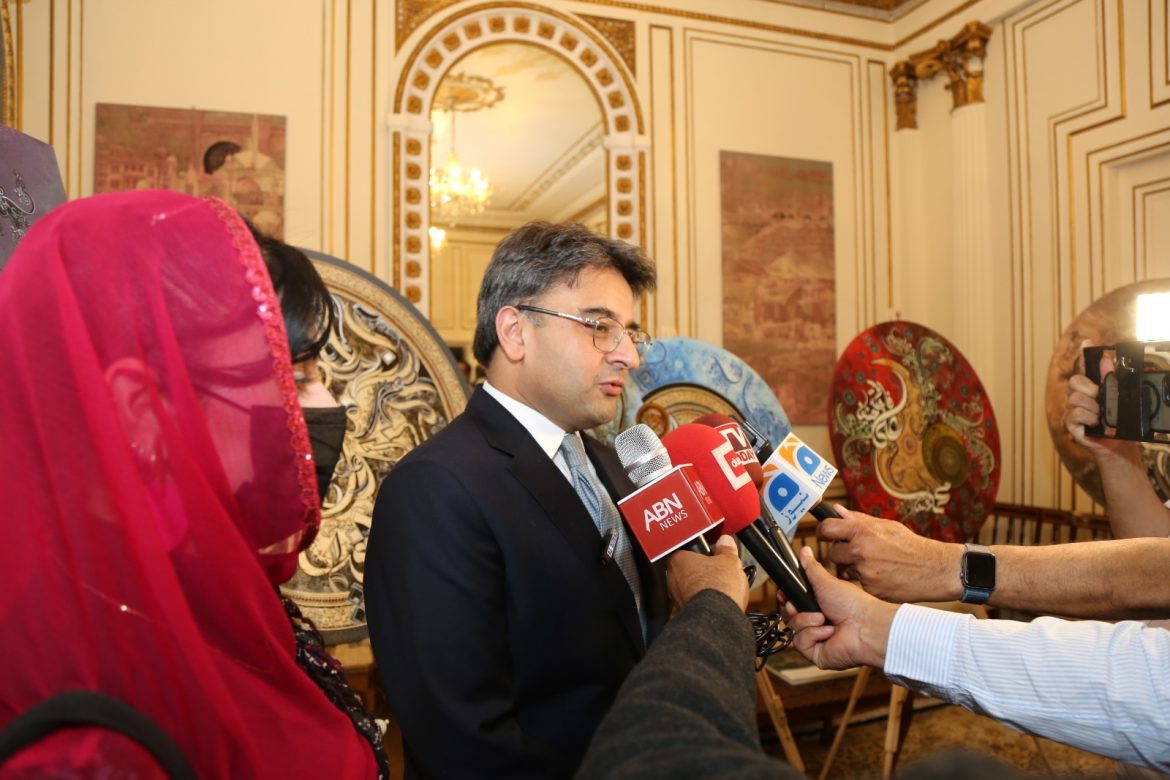
High Commission of Pakistan UK hosted an Islamic Calligraphy Exhibition
Staff reporter
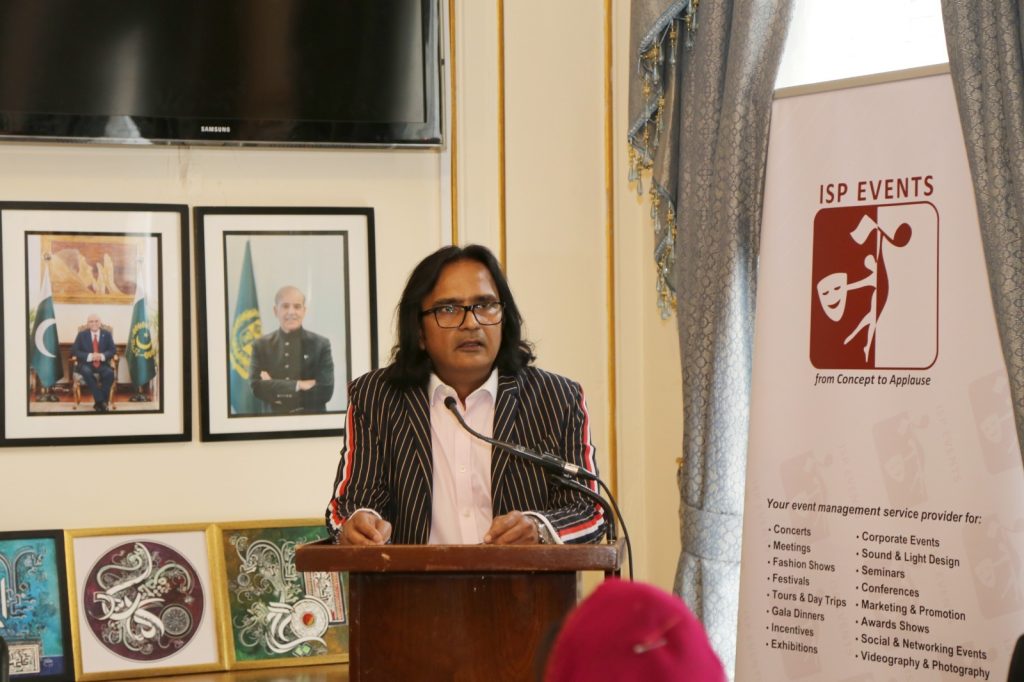
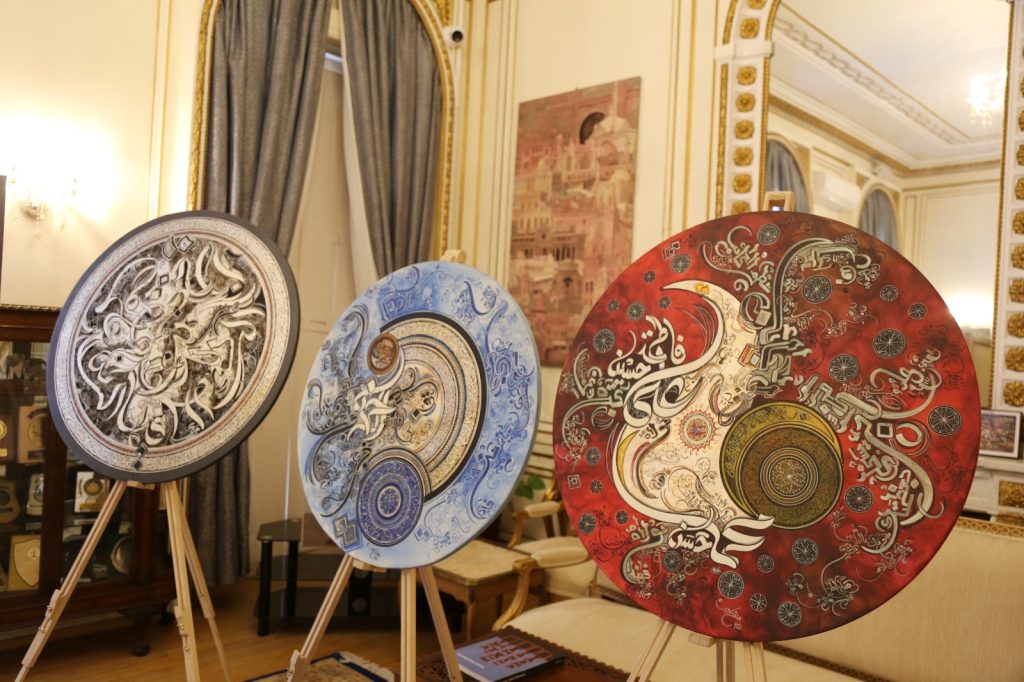
The High Commission hosted Islamic calligraphy exhibition and interactive session with young contemporary Pakistani artist Ms Ayesha Kamal in collaboration with ISP Events and Forum for International relations development (FIRD).
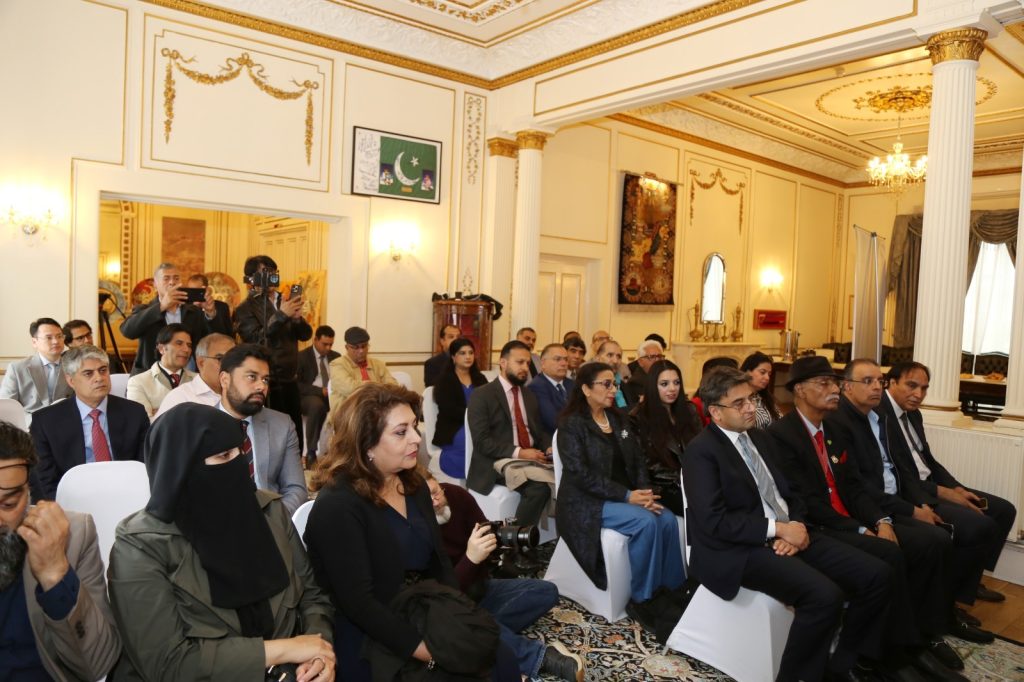
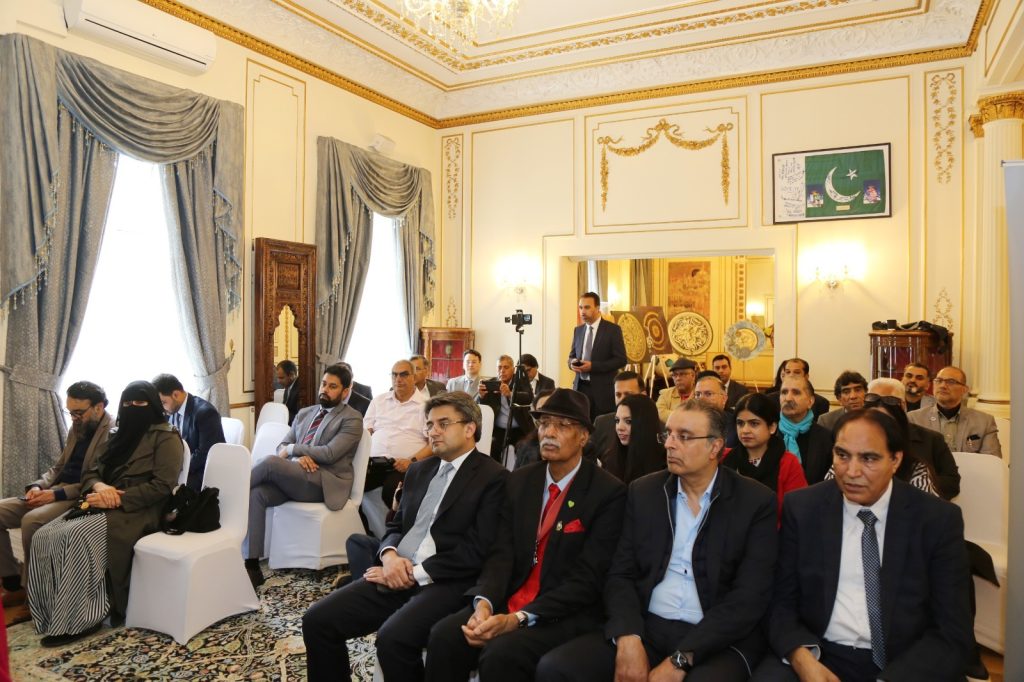
The exhibition was attended by British Parliamentarian, British – Pakistanis, media representatives and officers of the High Commission. Acting High Commissioner, Mr Haseeb bin Aziz, in his remarks appreciated the depiction of Quranic Verses in unique and attractive style by Ms. Ayesha Kamal and promoting the Islamic culture abroad. He also thanked the Pakistani diaspora in taking interest and supporting young Pakistani artists to display their talent overseas. During the interactive session moderated by CEO ISP Events Mr. Faisal Shaukat, discussions were held about the artist’s motivation and inspiration for Islamic calligraphy, the process of visualising and painting pieces and the importance of portraying the rich Islamic culture and art abroad. Ms Ayesha Kamal highly appreciated the support provided by Pakistan High Commission, London for her first ever exhibition in United Kingdom and thanked the participants for their keen interest in her work.

Al Mustafa Holds Free Eye Camp at Beaconhouse National University Lahore
Bureau Report
Lahore
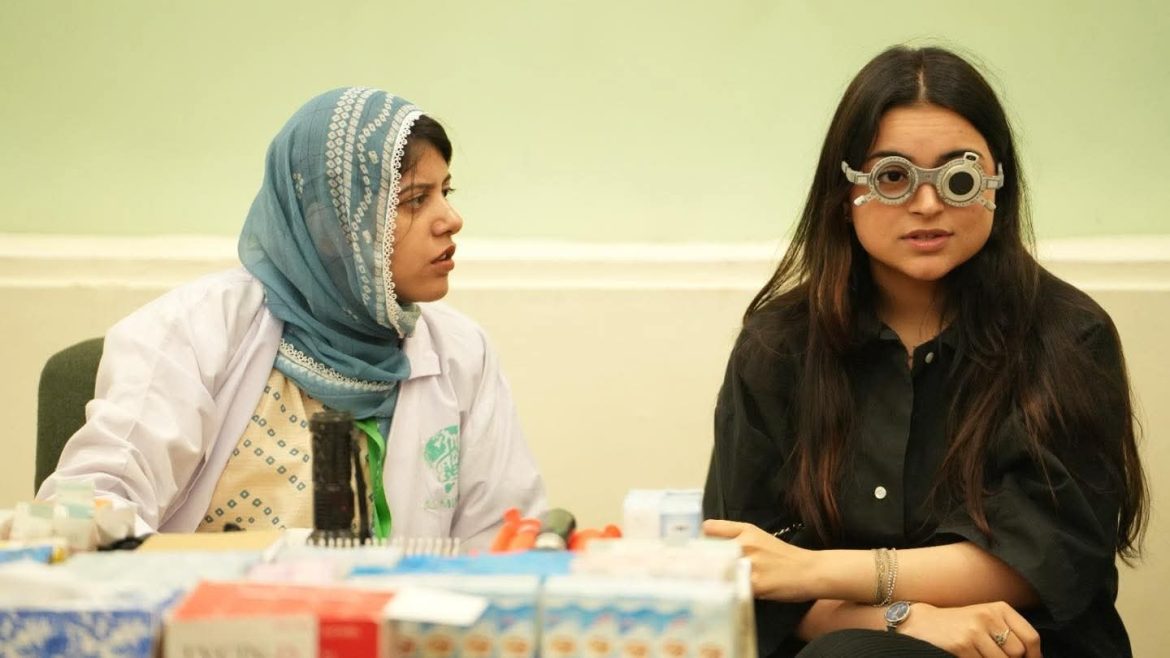
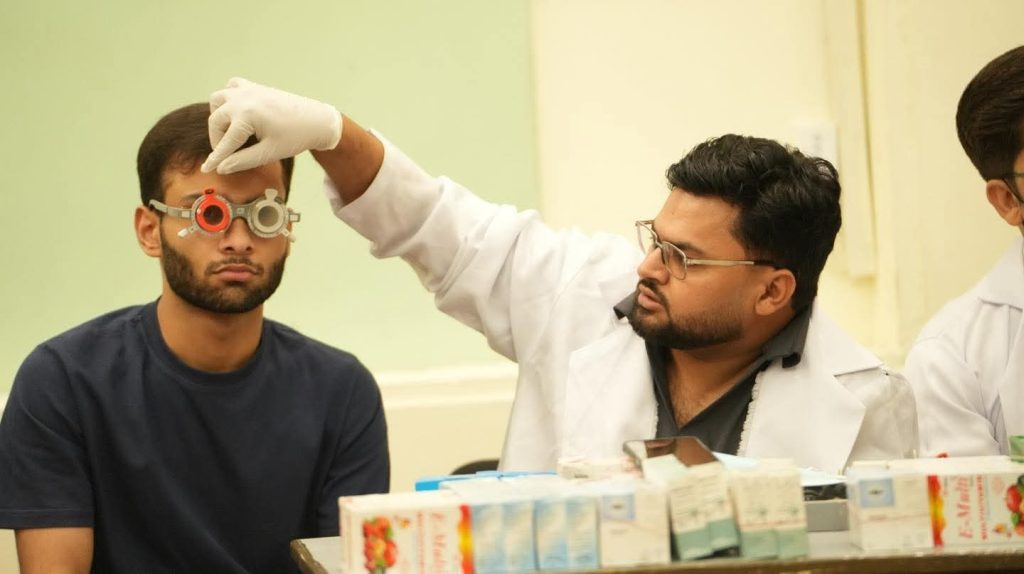
Al Mustafa Welfare Trust organized a free eye camp at Beaconhouse National University (BNU), Lahore, providing comprehensive eye care services to students, faculty members, and university staff.
During the camp, participants received free eye examinations conducted by qualified professionals. Necessary medicines were distributed free of charge, while prescription glasses were provided to those diagnosed with vision problems. The initiative also included awareness sessions on eye health, preventive care, and the importance of regular eye check-ups.
A large number of students, teachers, and administrative staff benefited from the camp and appreciated Al Mustafa Welfare Trust’s efforts to promote eye health and improve access to essential healthcare services.
Speaking on the occasion, representatives of Al Mustafa Welfare Trust reiterated the organisation’s commitment to its mission, “Light for All,” aimed at preventing avoidable blindness and restoring vision to those in need.
“Healthy eyesight is the foundation of a brighter future,” a spokesperson said, emphasizing that vision is one of life’s greatest blessings and that protecting it is a shared responsibility.
Through its ongoing eye care programmes, Al Mustafa Welfare Trust continues to bring hope and light to thousands of people across Pakistan and beyond, encouraging philanthropists and members of the public to support the noble cause of restoring sight to those living in darkness.Photo Caption: Students and staff undergo free eye examinations during the Al Mustafa Welfare Trust Eye Camp at Beaconhouse National University, Lahore.

DSP Headquarters Visits Al-Mustafa Welfare Trust, Praises Charitable Work
Bureau Report
Lahore
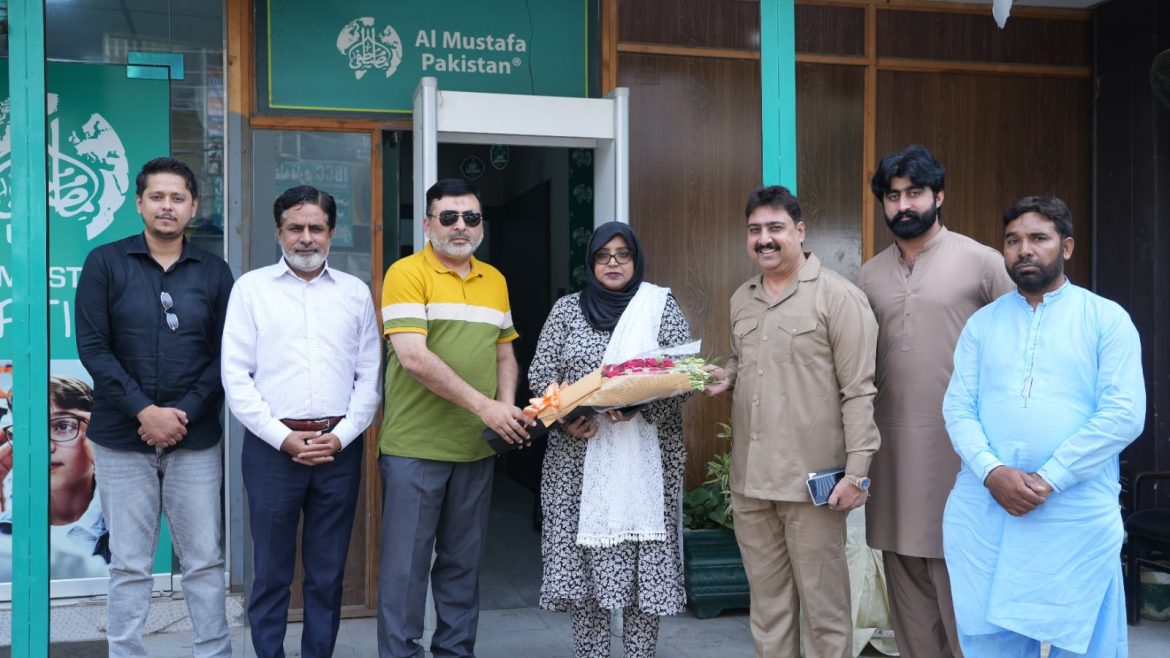
Senior police official DSP Headquarters Faisal and PSO Irfan Gujar paid a special visit today to the central office of Al-Mustafa Welfare Trust Pakistan. The distinguished guests toured the Trust’s langar (community kitchen), where meals were being distributed to needy and deserving people, and commended the organization’s service to humanity.
The delegation later visited Al-Mustafa Eye Hospital and held a meeting with the Trust’s Managing Director, Ms. Nusrat Saleem. During the meeting, they engaged in a detailed discussion about Al-Mustafa Welfare Trust’s ongoing welfare, medical, educational, and social projects across Pakistan.
The visitors highly appreciated the Trust’s public service, transparency, and ongoing efforts for the welfare of the underprivileged. They particularly praised the vision and humanitarian mission of the Trust’s chairman, Mr. Abdur Razaq Sajid, who has dedicated the organization to serving Pakistan’s deprived and needy communities.
DSP Faisal and PSO Irfan expressed their conviction that Al-Mustafa’s services set a bright example for society and prayed for continued success for the institution, its leadership, and the entire team so that their work for humanity may continue with the same zeal and sincerity.
“The Naked Sage and the King of Kings: A Forgotten Dialogue in Taxila”
Sajjad Azhar
Ancient historical traditions and philosophical narratives from the Indian subcontinent recount a striking encounter between the Macedonian conqueror and an Indian ascetic philosopher known in various sources as “Muni Kalyan,” also identified in Greek accounts as Kalanos.
The year is believed to be 326 BC. Alexander, after advancing deep into the Indian subcontinent and reaching Taxila under the hospitality of King Ambhi, is said to have become increasingly intrigued not only by conquest but by the spiritual and philosophical traditions of the region. Historical narratives suggest that rather than focusing solely on military expansion, he developed a deep curiosity about ascetics, sages, and the philosophy of liberation from desire.
According to tradition, King Ambhi arranged for Alexander to meet Muni Kalyan, a reclusive ascetic residing in a forested hermitage near the Margalla region, historically referred to as “Acha Nagar.” The philosopher reportedly refused royal summons, stating that he met only those who had renounced worldly symbols of power. Eventually, Alexander himself is said to have traveled to meet him.
During this legendary encounter, Muni Kalyan is believed to have advised Alexander that true happiness lies not in conquering the world, but in conquering the self. When Alexander asked how such inner conquest could be achieved, the philosopher reportedly replied that subduing desire is more difficult than defeating armies, adding that “one conquered desire is greater than conquering a hundred thousand soldiers.”
Sources across traditions differ in interpretation: Hindu scholars have described Muni Kalyan as a Brahmin ascetic, while ancient Jain texts associate him with Jain monastic traditions. Greek historians, including accounts attributed to , , and , refer to a figure named Calanus (Kalanos), a naked ascetic who accompanied Alexander westward.
In this broader historical narrative, Alexander—who had been educated by —is portrayed as deeply influenced by philosophical inquiry. Some traditions suggest that Alexander invited the ascetic to join his court so that Greek thinkers might better understand Eastern philosophy.
The story reaches its dramatic conclusion in Persia, where the aged ascetic, reportedly over seventy years old and weakened by illness, is said to have chosen voluntary death by fire, symbolizing liberation from the physical world. Before his death, he is believed to have told Alexander that they would meet again in Babylon.
Strikingly, historical records confirm that Alexander died in Babylon only months later at the age of 32, though mainstream historians attribute his death to illness. The parallel between the ascetic’s prediction and Alexander’s fate has long intrigued historians and storytellers alike.
Some modern interpretations even raise the question of whether Alexander’s decision to halt his Indian campaign and turn back from the Hyphasis River was influenced not only by military exhaustion but also by the philosophical impact of Eastern ascetic thought.
While historians continue to debate the extent of this influence, the encounter between Alexander and Muni Kalyan remains one of the most compelling symbolic intersections of Greek and Indian intellectual traditions—where conquest meets renunciation, and empire meets introspection.

Hamid Mir
It is a strange government, those with whom it negotiates and then enters into a written agreement, after some time it declares them terrorists. It bans them. The issue of the Azad Jammu and Kashmir government banning the Jammu and Kashmir Joint Public Action Committee is raising many questions about the government itself. I have a document in front of me. This is an agreement signed between the government and the Jammu and Kashmir Joint Public Action Committee on October 4, 2025, which is signed by five ministers of the current federal government, the current Prime Minister of Azad Kashmir, Faisal Mumtaz Rathore, and three leaders of the Action Committee, Raja Amjad, Shaukat Nawaz Mir and Anjum Zaman Awan. The ministers who signed this agreement are now declaring the Action Committee as terrorists. People are asking me why this government did not realize eight months ago that the members of the Action Committee are terrorists and anti-nationals? Now this matter has reached the British Parliament. Imran Hussain, the head of the Kashmir group in the British Parliament, has sent a joint letter to the Pakistani government, signed by 30 other members, expressing concern over the situation in Azad Kashmir. India has always been unhappy with Imran Hussain and his Kashmir group because they have always raised their voice against India’s atrocities on the Kashmiris.
Today, the same Imran Hussain is expressing regret over the situation in Azad Kashmir. Will Imran Hussain also be called an Indian agent now? In the past one year, Pakistan has forced India to retreat in the military and diplomatic fields, but now such wrong political decisions are being made that India will try to take advantage of. The current unrest in Azad Jammu and Kashmir needs to be understood in a historical context. Whenever someone raises their voice for their rights in this region, they are considered a foreign agent. At every important juncture of the freedom movement, the Kashmiri leadership starts fighting among themselves and their struggle is negatively affected. Don’t forget that Pakistan was established on August 14, 1947, and the current Kashmiri freedom movement began on July 13, 1931. July 13 is still observed as Kashmir Martyrs’ Day. The Kashmiri resistance had already begun before the establishment of Pakistan.
On October 24, 1947, the first interim government of Azad Kashmir, headed by Sardar Ibrahim Khan, announced that our main goal was to free the entire state from the domination of the Dogra dynasty. Unfortunately, the Kashmiri leadership started fighting among themselves within a few months of the formation of the government in Azad Kashmir. In 1948, when the head of the Muslim Conference, Chaudhry Ghulam Abbas, was released from Jammu jail and came to Pakistan, his quarrel with Sardar Ibrahim began. Chaudhry Ghulam Abbas was a refugee. Sardar Ibrahim was a local. Chaudhry Ghulam Abbas led the Muslim Conference. Sardar Ibrahim had the government of Azad Kashmir. The then Prime Minister of Pakistan, Liaquat Ali Khan, supported Chaudhry Ghulam Abbas and in 1950, Sardar Ibrahim’s government was abolished. The Muslim Conference split into three factions. One faction was that of Chaudhry Ghulam Abbas, who was the representative of the refugees of Jammu. The second faction was that of Sardar Ibrahim, who was influential among the local tribes, and the third faction was that of Mirwaiz Yousaf Shah, who was a representative of the refugees of the Kashmir Valley. After the end of his rule, Sardar Ibrahim established his own parallel government in some areas of Azad Kashmir. Chaudhry Ghulam Abbas held a rally against him in Rawalpindi, where Sardar Ibrahim’s supporters rioted and a Kashmiri refugee, Khwaja Ghulam Din Wani, was killed. Prime Minister of Pakistan Liaquat Ali Khan ordered a military operation in Rawalakot to end Sardar Ibrahim’s parallel government.
Fighting broke out between the army and the local tribes. This fighting continued for a long time. The governments that came after Liaquat Ali Khan’s assassination made peace with Sardar Ibrahim Khan and he regained power. Another rebellion in Poonch took place in 1955. In this rebellion, Colonel Khan Muhammad Khan, known as the Khan of Mang, established his government in the garden. The reason for this rebellion was the breach of promises made by the local administration. Later, the Khan of Ming arrested him. He was declared a foreign agent, but no charges could be proven against him in court. In 1958, General Ayub Khan declared martial law and Sardar Ibrahim Khan’s government was abolished and a Kashmiri refugee, KH Khurshid, was made the president of the state. KH Khurshid could not stay with Ayub Khan for long. When Mrs. Fatima Jinnah contested the presidential election against Ayub Khan, KH Khurshid was the supervisor of the election campaign of the Motherland. Another refugee, Maqbool Butt, who migrated to Pakistan from occupied Kashmir, also participated in the election campaign of the Motherland, but after the defeat of the Motherland, he became disillusioned with Pakistani politics. He believed that the only way to free the state of Jammu and Kashmir from Indian occupation was through armed resistance. He went to Srinagar to organize armed resistance and was arrested there. In 1968, he escaped from Srinagar jail and returned to Azad Kashmir, where he was arrested here.
He was declared an Indian spy and tortured. After the hijacking of the Indian plane Ganga in 1971, he and other comrades were tortured in the royal fort of Lahore. The court did not prove his accusation of being an Indian spy. After his honorable release, he was offered the presidency of Azad Kashmir by Prime Minister Zulfikar Ali Bhutto, but he rejected the presidency and returned to occupied Kashmir. He was arrested there again and was hanged in Delhi’s Tihar Jail in 1984. His body is still buried in Tihar Jail. Maqbool Butt’s tragedy is actually the tragedy of the Kashmir freedom movement. India has always called him an agent of Pakistan and Pakistan has called him an Indian agent. The starting point of the recent unrest seen in Azad Kashmir is the Indian move of August 5, 2019, when the special status of occupied Kashmir was abolished and Pakistan could not do anything.
On September 7, 2019, the JKLF protested in Rawalakot and started a long march towards the Line of Control, which was stopped by shelling on the protesters. Then on October 23, 2019, there was a huge protest in Muzaffarabad, which was stopped by shelling and lathi charge. It is worth thinking that these protests started against India, but how did they later turn towards the Pakistani rulers? In 2022, this unrest took the form of a public rights movement, which was actually a distrust of the leadership of political parties, because at that time, the Tehreek-e-Insaf government in Azad Kashmir also called the Action Committee a foreign agent. The rulers of Pakistan and the Kashmiri leadership should learn from their mistakes. Don’t fight each other. Come back to negotiations. Stop calling each other foreign agents. If the Kashmiri people and the Pakistani rulers get into trouble, India will benefit. What can we say about the Public Action Committee, which is being called Indian agents today, who signed an agreement with these Indian agents just eight months ago? Tomorrow you will again hold talks with the same Action Committee, which was declared terrorists. This is not only a tragedy for Kashmir but also for Pakistani politicians, who have been calling each other enemies of the country at different times and then become allies of each other.

Prof Fatima Zaman
Equality is not merely an aspiration, it is the indispensable foundation upon which a truly fair, prosperous, and cohesive society must be built. Every individual, irrespective of their race, ethnicity, faith, gender, socioeconomic background, or personal circumstance, is deserving of equal opportunity, equal dignity, and equal respect. When people feel genuinely valued when they are seen, heard, and included they are far more likely to invest in their communities, to contribute meaningfully to public life, and to help shape a nation that works for everyone.
To promote equality in its truest sense is to ensure that access to quality education, meaningful employment, comprehensive healthcare, and the freedom to fulfil one’s potential are not privileges reserved for the fortunate few, but fundamental rights extended to all. It means dismantling the structural barriers that have historically prevented certain groups from thriving, and replacing them with systems, policies, and cultures that actively celebrate talent wherever it is found and in whomever it resides.
Britain has long stood as one of the world’s most diverse and multicultural nations a place where people of different backgrounds, cultures, religions, languages, and traditions have built their lives side by side, generation after generation. This diversity is not incidental to Britain’s identity; it is central to it. It is one of the country’s most profound and enduring strengths. The mosaic of communities that make up modern Britain brings with it a richness of thought, creativity, resilience, and perspective that no homogeneous society could replicate.
Yet diversity alone is not sufficient. To build the stronger, more prosperous, and more equitable future that Britain’s people deserve, communities must continue to advance with intention and with conviction in the spirit of equality, humanity, and unity. These are not abstract ideals. They are practical commitments that must be lived out in homes, workplaces, schools, and public spaces every single day.
At the heart of a healthy and humane society lies the simple but powerful practice of compassion. Humanity, in its purest form, is the willingness to recognise the dignity in others to extend kindness, understanding, and support not only to those we know, but to those whose lives and circumstances may differ greatly from our own. In a world characterised by rapid change, economic uncertainty, deepening social pressures, and the quiet weight of personal hardship that so many carry, this quality of empathy has never been more essential.
Communities that practise humanity create environments in which people feel safe, respected, and genuinely cared for. Acts of neighbourly kindness, voluntary service, community-led projects, and grassroots social initiatives may appear modest in isolation, but collectively they form the connective tissue of a compassionate society. They remind us that behind every statistic, every policy debate, and every news headline, there are real human beings with real needs, real hopes, and real contributions to make.
Unity, it must be understood, is not uniformity. A united society does not require its members to think alike, look alike, or abandon the traditions and identities that give their lives meaning and beauty. On the contrary, true unity is found in the deliberate and joyful embrace of difference in the willingness to sit alongside someone whose experience of the world is entirely unlike your own, to listen with genuine curiosity, and to recognise that their perspective enriches rather than threatens your own.
Britain’s remarkable cultural heritage has been shaped, layer upon layer, by the contributions of people from countless different backgrounds. Each culture that has taken root in this nation has brought with it unique traditions, distinct artistic expressions, culinary heritage, intellectual traditions, and deeply held values. These contributions do not dilute British identity they deepen it, expand it, and make it more resilient. By fostering mutual respect, by learning from one another with openness and humility, and by refusing to allow difference to harden into division, communities can forge relationships of genuine strength and lasting solidarity.
Across every region and corner of Britain, there are living examples of this spirit in action. Community centres, faith organisations, charities, schools, and local voluntary groups regularly bring people together through cultural celebrations, educational programmes, interfaith dialogues, and shared social endeavours. These initiatives do more than fill calendars they break down stereotypes, challenge prejudice, create authentic human connections, and lay the groundwork for a more just and inclusive society. Every shared meal, every collaborative project, every conversation that crosses a cultural boundary is a quiet act of nation-building.
Parents, educators, community leaders, faith figures, and public institutions all share in this responsibility. None can do it alone. Together, they can create the conditions in which every young person regardless of where they come from or what they look like grows up knowing that they belong, that they matter, and that their contribution is both needed and valued. Britain’s greatest strength has never resided in geography, economic might, or political influence alone. It has always resided in its people. In the nurse who shows up for a twelve-hour shift and still finds time for a kind word. In the community organiser who brings twenty families together around a shared concern. In the teacher who sees potential in a child that the child has not yet seen in themselves. In the neighbour who checks on the elderly woman next door. In the young professional who volunteers at the weekend because they believe in something larger than themselves.
By championing equality in every institution and interaction, by practising humanity in every community and household, and by nurturing unity across every divide of culture, faith, or background, the people of Britain can collectively build something truly extraordinary a nation that is not only more prosperous and more capable, but more decent, more compassionate, and more genuinely united.
The future belongs to those who are willing to build it together. And together, people of every culture, every faith, every background, and every generation can move Britain forward creating a nation that is stronger, fairer, and more luminous for all who call it home, for generations yet to come.
Community Food Support: Bringing People Together Through Compassion and Unity

Dr. Shahzad Qureshi
Across Britain, community groups, charities, faith organisations, and volunteers are making a significant difference by providing food and support to homeless and vulnerable people. These efforts are about much more than offering a meal; they represent compassion, dignity, and the power of communities working together for the common good. In a diverse society like Britain, such initiatives play a vital role in strengthening unity and promoting social inclusion.
Homelessness remains a challenge in many towns and cities across the country. For those experiencing hardship, access to a warm meal can provide not only nourishment but also hope and reassurance. Community food programmes, soup kitchens, food banks, and outreach services help ensure that no one is left behind. Volunteers from different backgrounds, cultures, and faiths come together with a shared purpose: to support those in need and make a positive impact on society.
One of the most inspiring aspects of these community efforts is the way they bring people together. Individuals who may never have met otherwise work side by side, preparing meals, distributing food, and offering friendship to those facing difficult circumstances. These acts of kindness help break down barriers and create understanding between people from different walks of life. They demonstrate that humanity and compassion are values shared by all communities.
Providing food to homeless people also promotes dignity and respect. Many individuals experiencing homelessness face isolation and social exclusion. A welcoming smile, a warm meal, and a conversation can remind them that they are valued members of society. Community volunteers often provide not only food but also emotional support, helping people feel connected and cared for. These simple gestures can have a profound impact on a person’s wellbeing and confidence.
Britain’s multicultural society is one of its greatest strengths. Community food initiatives often reflect this diversity, with people from various ethnic, cultural, and religious backgrounds contributing their time and resources. By working together, communities demonstrate that despite differences in language, culture, or belief, everyone can unite around the shared goal of helping others. This spirit of cooperation strengthens social bonds and encourages mutual respect.
The importance of community work extends beyond those who receive assistance. Volunteers themselves gain valuable experiences, develop new friendships, and deepen their understanding of the challenges faced by others. Young people learn the importance of social responsibility and active citizenship through involvement in charitable activities. These experiences help build a more caring and inclusive society for future generations.
In times of economic uncertainty and social change, community solidarity becomes even more important. The collective effort to support homeless people through food programmes sends a powerful message that Britain is strongest when its people work together. Every contribution, whether large or small, helps create positive change and strengthens the fabric of society. By providing food, offering compassion, and building connections, community organisations and volunteers are helping to create a more united Britain. Their work reminds us that kindness knows no boundaries and that through cooperation, understanding, and humanity, communities can make a lasting difference in the lives of those who need it most.

Ramsha Shahid
There is an old saying among lawyers that every piece of legislation begins life as a solution and ends life as a filing cabinet. The Children’s Wellbeing and Schools Act 2026 has not yet reached the filing-cabinet stage, but Parliament has certainly given it a sporting chance. Presented by the Government as a package of practical reforms designed to improve children’s lives, reduce family costs and strengthen safeguarding, the Act has generated headlines for free breakfast clubs, expanded free school meals and restrictions on costly branded school uniforms. Yet to focus solely on these measures is rather like admiring the curtains while ignoring the architecture of the house. The real significance of this legislation lies elsewhere.
The true story of the Act is not breakfast clubs, school meals or even uniforms. It is power. More specifically, it is about who possesses power over children, who exercises it and who ultimately decides what is in a child’s best interests. This is not a new debate. It has occupied philosophers, politicians and parents for centuries. Plato believed the state should play a central role in shaping future citizens. John Locke viewed parents as custodians rather than owners of their children, entrusted with the responsibility of nurturing and educating them until they reached maturity. He believed that parental authority existed to safeguard a child’s development, while individual liberty remained the ultimate destination of that guidance.. John Stuart Mill worried equally about the dangers of state overreach and the possibility of parental neglect. The Children’s Wellbeing and Schools Act does not explicitly choose between these competing traditions. Instead, it reflects a distinctly modern tendency: the belief that childhood is too important to be left entirely to either the family or the state alone.
At first glance, the legislation appears difficult to oppose. Few reasonable people would argue against protecting vulnerable children, improving educational outcomes or ensuring that pupils arrive at school having eaten breakfast. The Government estimates that some families may save up to £1,000 each year through the reforms. Given that certain school uniforms seem to be priced as though they were handcrafted by Renaissance artisans, one suspects many parents will welcome any intervention that lightens the financial burden. The political appeal of such measures is obvious. However, the practical benefits should not distract from the broader constitutional questions that the legislation quietly raises.
At the heart of the Act lies a simple but profound proposition: the state should know more about children than it does currently. The Government’s response is therefore understandable. If information was fragmented, then information should be shared. If agencies were disconnected, then agencies should communicate more effectively. If vulnerable children disappeared from view, then systems should be developed to ensure they remain visible. Yet every solution to a safeguarding problem creates a corresponding liberty question. Every mechanism that protects requires observation. Every intervention requires information. Every safeguard inevitably expands oversight. The state cannot protect children it cannot see, but it also cannot see them without extending its reach into areas that were previously considered private.
Nowhere is this tension more evident than in the reforms affecting home education. For decades, home-educating families have occupied an unusual place in British public life. To some observers they represent educational freedom, parental commitment and innovation. To others they represent an area where vulnerable children may become invisible to public authorities. The new legislation clearly reflects the latter concern. Through registration requirements and enhanced local authority oversight, the state is seeking a clearer understanding of children who are educated outside conventional school settings. Ministers argue that these measures are necessary to identify children who may otherwise be at risk. Critics argue that they represent another example of bureaucratic expansion. Whether one agrees or disagrees may depend largely upon one’s answer to a deceptively simple question: should the state be entitled to know how every child is educated?
Schools themselves are also likely to feel the effects of the legislation. For more than two decades, educational policy in England has been heavily influenced by the academy movement and the principle of institutional autonomy. The argument was straightforward. Schools should be trusted to innovate, adapt and improve outcomes without excessive interference from central government. The academy programme produced notable successes, but it also generated concerns about inconsistency and accountability. The new Act suggests that political attitudes may be changing. Greater emphasis is now being placed on teacher qualifications, national standards and regulatory oversight. While the language of autonomy remains, the direction of travel points unmistakably towards greater consistency and closer supervision.
This reflects a broader pattern in British public policy. Governments frequently oscillate between decentralisation and centralisation, between trust and regulation, between autonomy and accountability. One generation champions local discretion. The next worries about uneven outcomes. The generation after that commissions a review to reconcile the two. Educational policy has rarely escaped this cycle, and the Children’s Wellbeing and Schools Act may prove to be another turning point in this continuing conversation.
For all the debate surrounding uniforms, meals and school attendance, the Children’s Wellbeing and Schools Act 2026 is ultimately about something much larger. It reflects a society increasingly willing to ask government to intervene earlier, coordinate more closely and assume greater responsibility for children’s welfare. Whether one regards that development as enlightened progress or creeping paternalism will depend largely upon one’s political instincts. The debate now is not whether the state should play a role, but how large that role ought to be. As ever, that question is likely to remain contested long after the ink on the legislation has dried.