Zain Ali Khan
From 25 February the UK will begin enforcing pre-departure checks which require carriers to confirm that passengers have permission to travel. This has raised concerns that dual British nationals who only hold a foreign passport will be denied boarding or refused entry to the UK.
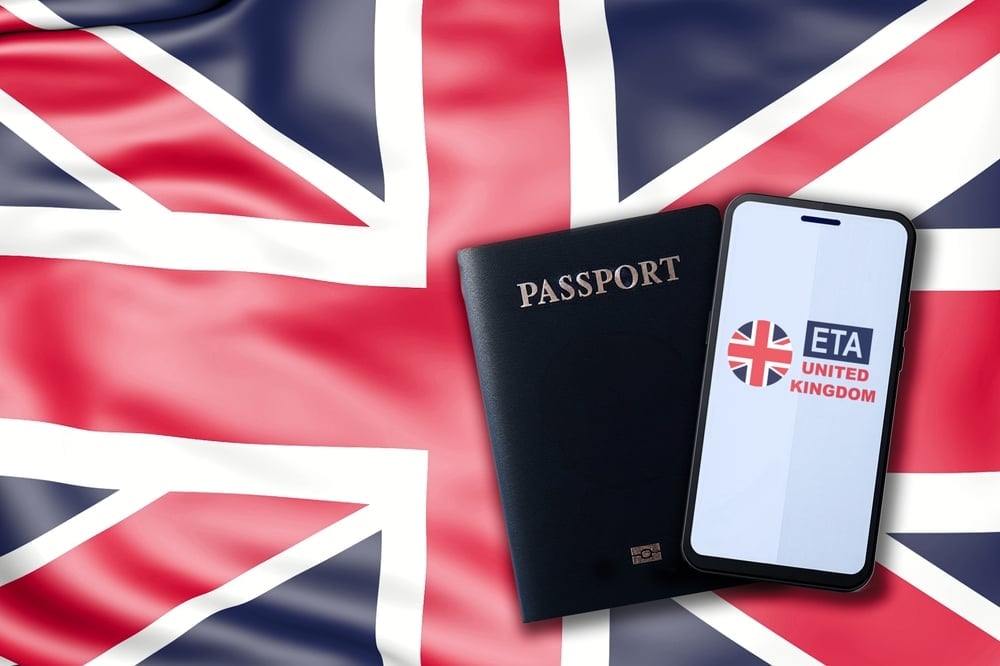
But there is a large population of dual UK/foreign nationals only holding a valid foreign national passport (referred to as dual nationals here) who have an existing electronic travel authorisation (also known as an ‘ETA’). This article looks at the status of that ETA, and how they can seek entry.
This is a sweeping change that will affect a lot of cohorts. Let’s take the example of a British citizen traveller who is also a national of a non-visa national country (i.e. someone who doesn’t need to apply for a visit visa in advance of their journey to the UK). They only hold a valid passport from the foreign country (with no certificate of entitlement), and they are coming to the UK for a visit from 25 February 2026. Let’s assume they are not intending to work or stay for longer than six months, etc., and generally would qualify for entry as a visitor were they not British. Are they going to be able to travel to the UK?
First let’s suppose they already have an ETA linked to their foreign passport. Until a few days ago, the UK ETA app allowed you to apply using a foreign passport even if you also declared that you were a British citizen, and such applications were granted. The ETA would support boarding. In a letter to ILPA on 17 December 2025, the Home Office reconfirmed that, all commercial aviation carriers flying directly to the UK are integrated into the iAPI (interactive advance passenger information) service and will be using the system to check permission to travel from 25 February 2026. As you are aware, carriers submit passenger data via the iAPI system, and for each submission, the Home Office returns a response confirming whether the passenger has valid permission to travel. Where carriers receive a ‘valid permission to travel’ response, no further proof is required.
The fact that the dual national has an ETA means that the airline is assured that there is no possibility they will receive a section 40 carrier charge, pursuant to the Immigration and Asylum Act 1999. This is the case even if we entirely set aside the fact that they are a British citizen, which is also a defence.
None of this should be construed as advice to dual nationals to travel to the UK using an ETA from 25 February, or to apply for one now. And indeed, the latter course is now impossible. The app asks the user to “Add any other nationalities you have, including any you have had in the past”. But with ‘British citizen’ having been quietly removed from the resulting dropdown menu in the last few days, this means that users must at this point stop the process, on pain of submitting false data in a government form which is inadvisable on any view. The looming ETA enforcement date has already deeply antagonised dual national British citizens living abroad. That cohort is large and their goodwill is a significant part of the UK’s international reach.
The Home Office’s decision to remove the British citizenship option from the app seems odd and may increase ETA applications from dual nationals, many of whom would have happily declared their British citizenship but had no way to do so, as the form contains no free text field.
London Post
As winter recedes and March beckons, Iran stands at a crossroads its political legitimacy shaken, its society scarred, and its foreign relations fraught with tension. The first days of March 2026 will not bring stability, but rather a continuation of competing pressures that define this moment in Iranian history. At home, the reverberations of the 2025–2026 protest movement remain profound. Beginning in late December, demonstrations against economic hardship, political repression and systemic corruption spread to every province, representing the largest grassroots mobilization since the 1979 revolution. Though a brutal crackdown has severely restricted street protests, defiance persists at a quieter but persistent level, with grief and dissent expressed in rooftops and private commemorations even as many fear further violence. The government’s response has been forceful: connections to the outside world were cut in a near-nationwide internet blackout that persisted for weeks, underscoring Tehran’s determination to suppress dissent even at the cost of economic disruption and social isolation. Economically, Iran’s chronic structural problems inflation, currency instability, energy shortages and mounting sanctions effects show no immediate sign of abating. Ordinary Iranians continue to wrestle with rising costs of living and diminishing prospects for employment or opportunity. These conditions both fuel discontent and constrain the state’s capacity to deliver basic services. In foreign policy, tensions with the United States and its allies loom large. Tehran’s recent letter to the United Nations emphasized a willingness to defend Iranian territory decisively against any military action. At the same time, fears of escalation have rattled global markets, lifting oil prices and stirring anxiety about supply disruptions through the Strait of Hormuz. The diplomatic chessboard remains complex: nuclear negotiations show sporadic movement but no breakthrough; Iran conducts joint naval maneuvers with Russia, signaling defiance of Western pressure while highlighting its reliance on geopolitical partners; and voices in Washington urge Tehran to negotiate before tensions worsen. On the domestic front, experts warn that Iran may be entering an era of persistent unrest, with economic grievances and legitimacy crises unlikely to be quelled solely by force. Iran’s early March is unlikely to bring calm. But it may instead mark a deeper turning point — the moment when simmering pressures, unresolved grievances and geopolitical risks coalesce into a broader reckoning for both rulers and the ruled.
How will Keir Starmer get out of the Epstein crisis?
Keir Starmer might navigate the political fallout from the Epstein Prince and Andrew crisis and what strategies he could use to steady his leadership and his government’s standing Starmer’s strongest defence and the one he’s already emphasised is a simple constitutional principle: “nobody is above the law.” He has repeatedly said this regarding Prince Andrew and the broader Epstein investigation, stressing that the law must apply equally to everyone. This reinforces his image as a leader committed to fairness and due process rather than political protectionism. By framing the government’s stance around law and justice not political damage control. Starmer can defuse accusations that he’s trying to silence scrutiny or shield powerful figures. Starmer has already acknowledged missteps most notably around the controversial appointment of Peter Mandelson as ambassador to the U.S. given Mandelson’s ties with Epstein and has apologised to victims and the public. This type of direct accountability, rare in politics, can help rebuild trust even among critics. Owning up to mistakes, rather than denying them, reduces ammunition for opponents and shows a willingness to learn a narrative more voters tend to respect.

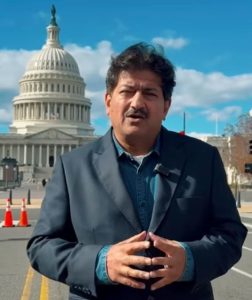
Hamid Mir
Sir Allama Muhammad Iqbal’s last collection of Urdu and Persian poetry, “Armaghan-e-Hijaz”, was published sometime after his death. A poem included in it became very famous, titled “Badhe Baloch Ki Advice to His Son”. Many of the poems in this poem show the way out of many of today’s problems and crises. For example, Iqbal said.
دیں ہاتھ سے دے کر اگر آزاد ہو ملت
ہے ایسی تجارت میں مسلمان کا خسارا
Last week, I happened to watch an intercollegiate poetry competition at Islamabad Model College for Girls, F-62. Only Allama Iqbal’s poems were to be recited in this competition. The mastery and accessibility of Iqbal’s poetry by teams of female students from different colleges was a pleasant surprise for me. A female student recited this poem.
افراد کے ہاتھوں میں ہے اقوام کی تقدیر
ہر فرد ہے ملت کے مقدر کا ستارا
As soon as I heard this poem, one of the judges of the poetry competition blurted out involuntarily. “Badhe Baloch Ki Nasheed” is the most popular poem here. Hearing this, I was thinking that Allama Iqbal talked about Balochistan and the Baloch from his sermon in Allahabad in 1930 to his last book. The Baloch intellectuals who used to go to Lahore to consult Allama Iqbal for freedom from British colonialism are today unaware of the relationship between Iqbal and Balochistan. When the competition was over, before the distribution of prizes among the winners, renowned researcher and Iqbal scholar Dr. Khurram Elahi delivered a speech. The students’ heartfelt affection and love for Allama Iqbal warmed their feelings so much that they became naked swords against Iqbal’s enemies and in one breath they gave a full answer to many objections raised against the poet of the East.
یہ نکتہ خوب کہا شیر شاہ سوری نے
کہ امتیاز قبائل تمام تر خواری
Dr. Khurram Elahi’s talk revealed that today there is a campaign against Allama Iqbal on social media based on baseless allegations. When he challenged the accusers to bring evidence, the accusers disappeared. After the prize distribution ceremony, the teachers at Islamabad Model College for Girls F6-II and Dr. Khurram Elahi had a detailed discussion on the campaign against Allama Iqbal on social media. A similar discussion took place a few days ago after the Kashmir seminar held at Fast University Islamabad, where Mushahid Hussain Syed and Sardar Masood Khan were also invited besides me. Here, a teacher asked me regarding the book of a Punjabi nationalist intellectual that Sher Shah Suri was the enemy of Punjab, why did Allama Iqbal support Sher Shah Suri in his poetry? In fact, Hazrat Iqbal said at one place.
I asked the teacher that Iqbal praised Sher Shah Suri’s point that discrimination based on tribes leads to nothing but humiliation. Where did the hostility towards Punjab come from? I asked that if Iqbal was an enemy of Punjab, why did he write a poem titled “Nanak” for Guru Nanak, which is included in Bang-e-Dara? I also asked that Iqbal and Quaid-e-Azam had also openly supported Bhagat Singh, the great hero of the freedom struggle against the British government, but some biased intellectuals of Punjab deliberately ignore this aspect. Then I also had to tell him that I have also read the book referred to, and the real reason for the criticism of Allama Iqbal in this book is that when he became a member of the Punjab Assembly in 1926, he demanded the implementation of agricultural tax because he was against the landlords and the majority of the landlords were members of the pro-British Unionist Party. The opposition to the Unionist Party was described as opposition to Punjab, just as today, if Maryam Nawaz’s government is criticized in Punjab, this criticism is described as hatred of Punjab. This conversation spread to Balochistan and a professor from Fast University said that you are absolutely right because the provincial government of Balochistan also considers every political opponent of its own as an opponent of Pakistan. I told him that during the Asma Jahangir Conference in Lahore a few days ago, there was applause during Akhtar Mengal’s speech, which made some powerful people in Islamabad angry with him. Akhtar Mengal had only said that Balochistan has gone far beyond the point of no return, so now you should raise the slogan of Udhar Tum Udhar Hum because you had raised this slogan earlier too. He meant Zulfikar Ali Bhutto, to whom this slogan is attributed. Akhtar Mengal also mentioned the 50-year-old disappearance of his brother Asadullah Mengal and said that the Missing Persons Inquiry Commission disposed of my elder brother’s case by saying that the address and mobile number of the relatives of the missing Asad Mengal could not be found, so this case was disposed of. Akhtar Mengal said in his speech that you have registered several cases against me and have included me in the exit control list. It is surprising that you do not know my address and phone number. The most noteworthy point is that former Prime Minister Zulfikar Ali Bhutto mentioned the disappearance of Asad Mengal in his book “Afwaah aur Haqiqat” which he wrote in jail before his death.
I have mentioned this book many times. In 1976, Asad Mengal was arrested from Karachi. The Prime Minister came to know about the disappearance of Attaullah Mengal’s son through newspapers. The then Army Chief General Tikka Khan told the Prime Minister that Asad Mengal was injured during the arrest and later died. His body was buried near Thatta. When the Prime Minister said that the body should be shown to his family, the Army Chief gave the message of his fellow generals to the Prime Minister that you should tell him that Asad Mengal had fled to Afghanistan. Asad Mengal’s father Attaullah Mengal was not given the address of his son’s grave until his death. He had never raised the slogan of separation. My last meeting with him was in Dubai. The old Baloch had told me that remember, we will not break Pakistan. If this country is damaged again, the same people who called us traitors yesterday and still call us traitors today will be responsible.

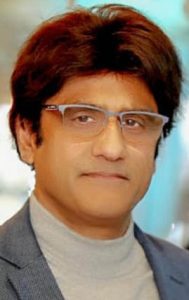
Wajahat Ali Khan
The question hanging over Buckingham Palace this week is not simply whether a scandal will embarrass the monarchy. It is whether the arrest of Prince Andrew marks another tremor in an institution already navigating a fragile modern age.
For centuries, the British royal family has survived wars, abdications, divorces and tabloid frenzies. The abdication crisis of Edward VIII in 1936 was once thought existential. The annus horribilis of Elizabeth II in 1992 seemed, at the time, like a reputational nadir. The tragic death of Princess Diana in 1997 forced a reckoning between palace protocol and public grief. Each episode left scars. None proved fatal.
But this moment feels different. Unlike romantic indiscretions or marital breakdowns, allegations tied to criminal conduct strike at something deeper than image: they test legitimacy. A constitutional monarchy rests not on executive power, but on consent on the belief that the Crown symbolises continuity, service, and moral steadiness above politics. When a senior royal becomes synonymous with legal jeopardy, the institution cannot fully insulate itself behind ceremony.
To be clear, the British monarchy is not a one-man enterprise. Since the accession of Charles III, there has been a visible effort to slim down the working roster and emphasise duty over grandeur. Public engagements, charitable patronage, and carefully calibrated media appearances are designed to project relevance in a skeptical age. The palace has learned sometimes painfully that proximity to controversy demands swift distancing.
That is the calculation now.
There are two reputational risks at play. The first is association. Critics argue that proximity to scandal suggests institutional complacency. Supporters counter that families, even royal ones, cannot choose every headline written about them. The second risk is generational. Younger Britons already express ambivalence about monarchy’s place in a modern democracy. For them, questions of accountability weigh heavily. A scandal perceived as evasion could harden that ambivalence into opposition.
And yet history counsels caution against premature obituaries. The monarchy’s resilience lies in its peculiar duality. It is at once personal and impersonal. Individual royals may rise or fall in popularity; the Crown endures. Public trust in the institution often diverges from approval ratings of specific family members. We have seen this separation before approval for the monarch steady even as individual princes falter.
The ultimate reputational impact will depend less on the arrest itself than on the response. Transparency, cooperation with legal authorities, and a clear delineation between personal conduct and public duty will matter far more than defensive rhetoric. Silence can protect dignity; it can also invite suspicion.
This is not merely palace drama. It is a test of how a 1,000-year-old institution adapts to a 24-hour news cycle and a public that demands accountability from every corner of power, symbolic or otherwise.
Will the royal family’s reputation be tarnished? Undoubtedly, in the short term. But tarnish is not corrosion. The British monarchy has weathered storms that seemed, at the time, insurmountable. Whether this episode becomes a footnote or a fracture depends not on headlines alone, but on whether the Crown proves once again that it understands the difference between privilege and responsibility.
Although, A constitutional monarch trying to balance duty with crisis management
King Charles publicly responded quickly after Prince Andrew was arrested, issuing a carefully worded statement saying he learned of the arrest with “the deepest concern” and emphasising that “the law must take its course.” He also pledged full support and cooperation with the investigation, while stressing that it wouldn’t be appropriate to comment further as the legal process unfolds. This approach reflects a traditional constitutional monarch’s stance: maintaining public neutrality and respect for judicial independence rather than defending a family member at all costs. Rather than retreating from public life, the King continued with scheduled engagements on the day of the arrest including audiences at St. James’s Palace and attending London Fashion Week underscoring an effort to keep the monarchy functioning “business as usual.”
Supporters see this as an attempt to reassure the nation that the monarchy remains steady. Critics, however, argue that continuing engagements without directly addressing public concerns can come off as evasive.
Therefore, King Charles is attempting to project calm and constitutional responsibility, stressing the rule of law and the monarchy’s ongoing functions. But public sentiment is mixed while some see his stance as appropriate leadership under strain, others feel the response so far has been too cautious or distant. How his role is judged in the longer term will likely depend on how the situation evolves and how effectively the monarchy is perceived to uphold transparency and accountability.

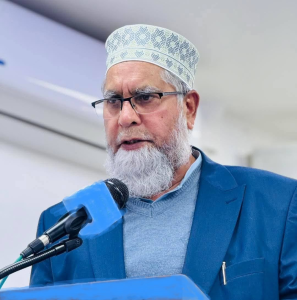
Prof Masood Akhtar Hazarvi
The blessed hours of Ramadan arrive each year to soften hearts, awaken consciences, and remind believers of their true moral identity. This year, as the crescent of Ramadan 1447 AH appeared, its faint light also fell upon the desolate streets of Gaza—upon neighborhoods buried beneath rubble and hopes fading into despair. There, the call to prayer is drowned out by explosions. At suhoor, tables are not spread in homes; instead, long queues form for basic rations. At iftar, while many of us experience spiritual calm alongside our supplications, in Gaza prayers are accompanied by the trembling sound of bombardment. This is not merely a Palestinian tragedy; it is a moral and spiritual trial for all humanity. The essential question is this: in the face of this catastrophe, are we human beings of conscience and faith, or are we silent spectators?
The war that began on 7 October 2023 has pushed the entire society of Gaza to the brink of devastation. Thousands killed, hundreds of thousands injured, families displaced, schools, hospitals, and places of worship destroyed—these are not signs of a temporary military clash but of systematic and prolonged ruin. Announcements of ceasefire have repeatedly sparked hope that bloodshed would end, yet the cycle of bullets and bombs continues unabated. When promises of truce fail to save human lives, they cease to be meaningful words and become instruments of political deception.
Relevant agencies of the United Nations have made it clear that Gaza has entered one of the gravest phases of humanitarian crisis. Food, water, medicine, and shelter—the four basic necessities of human survival—are in acute and persistent shortage. Malnutrition among children, deep psychological trauma, and pervasive fear have cast a shadow of uncertainty over an entire generation’s future. Families crowded into makeshift tents endure an unending ordeal where hunger and thirst are not chosen acts of spiritual discipline, but imposed collective punishment. While we give thanks for our iftar meals, thousands in Gaza long for a single piece of bread. This stark contrast pierces the heart of any sensitive believer. If this awareness fades, fasting risks becoming a mere ritual of hunger and thirst, stripped of its spiritual essence.
Humanitarian aid itself has been obstructed by blockade, political barriers, and security restrictions. Médecins Sans Frontières and other international relief organizations have repeatedly stated that restricted access, closed crossings, and severe security risks have rendered medical services nearly impossible. When ambulances cannot reach the wounded, when doctors’ movements depend on permits and checkpoints, the issue transcends warfare; it becomes an open collapse of humanitarian principles and the global conscience.
The UN Special Rapporteur Francesca Albanese, in a detailed report, described the situation in Gaza as presenting a serious risk of genocide, emphasizing that the international community cannot remain passive. In January 2024, the International Court of Justice issued provisional measures instructing Israel to prevent acts of genocide, ensure humanitarian protection, and facilitate aid access. The pressing question remains: how long will such judicial pronouncements and moral declarations remain confined to paper? When powerful states interpret international law according to political interest, justice itself becomes fragile, ambiguous, and ineffective.
The crisis in Gaza also exposes the double standards embedded within the global political order. In some regions, conflicts prompt immediate resolutions, sweeping sanctions, and intense diplomatic pressure. Yet in the case of Palestine, language is weighed cautiously, and decisions are measured against strategic interests. If human rights are applied selectively—dependent upon geography, ethnicity, religion, or economic calculus—they cease to be principles and become mere slogans. The paralysis of the Security Council and the politics of veto power reveal a system structured less around justice and more around asymmetrical power.
Ramadan teaches us empathy through hunger and thirst, so that we may understand the plight of the hungry, the orphaned, the displaced, and the oppressed. But in Gaza, hunger is not a voluntary spiritual exercise; it is enforced deprivation. This distinction alone should awaken us. If fasting does not connect us to the suffering of others and the wounds of the ummah, it risks degenerating into seasonal religiosity devoid of transformative meaning.
In this context, our collective and individual responsibilities are clear. First, moral clarity: to recognize truth, articulate it, name injustice for what it is, and maintain intellectual and emotional solidarity with the oppressed. Second, practical engagement: to channel financial and material assistance through credible institutions, to convey our message to policymakers through civic participation and the ballot, and to participate in lawful protest, advocacy, and principled boycott where appropriate. Third, intellectual formation: to educate the next generation in international law, human rights, colonial history, and collective Muslim consciousness—so that their engagement is grounded in knowledge, organization, and lawful strategy rather than fleeting slogans.
Emotional rhetoric may provide temporary relief, but history is ultimately written through disciplined, principled, and structured struggle.
The tragedy of Gaza reminds us that worldly powers, however formidable, are ultimately transient, while the call for justice endures. Oppression—however organized or militarized—rests upon injustice and falsehood, and therefore carries within it the seeds of eventual collapse. The true question is not what history will decide; it is where we stand within it: among silent observers, or alongside those who uphold justice and humanity.
Ramadan offers us an opportunity to revive conscience, recalibrate priorities, and integrate action with prayer. Prayer is the soul; action is its body. Worship without action loses its capacity to transform societies.
This crisis is not only about displaced families in Gaza; it is also a test of Muslim leadership, the credibility of international institutions, and the moral claims of modern civilization. If powerful states continue to manipulate international law, if Security Council resolutions remain hostage to veto politics, and if the human rights discourse persists in selective application, then the global order will cease to reflect rule of law and instead resemble a ruthless arena of power politics.
For this reason, Gaza demands not merely emotional sympathy but disciplined, legal, and ethical struggle—one that places principle above expediency, humanity above politics, and justice above all compromise. That is the true message of Ramadan, and that is the essential demand of faith.
Tajammul Gurmani:
Manchester:
Muslim vote bank has divided between Labour and Green, and recent surveys show that Reform is winning with a close margin during the by-election in Gorton and Denton constituency in Manchester. This seat became vacant after the resignation of Labour Member of Parliament Andrew Gwynne, citing health problems, the by-election for this seat will be held on 26 February 2026.
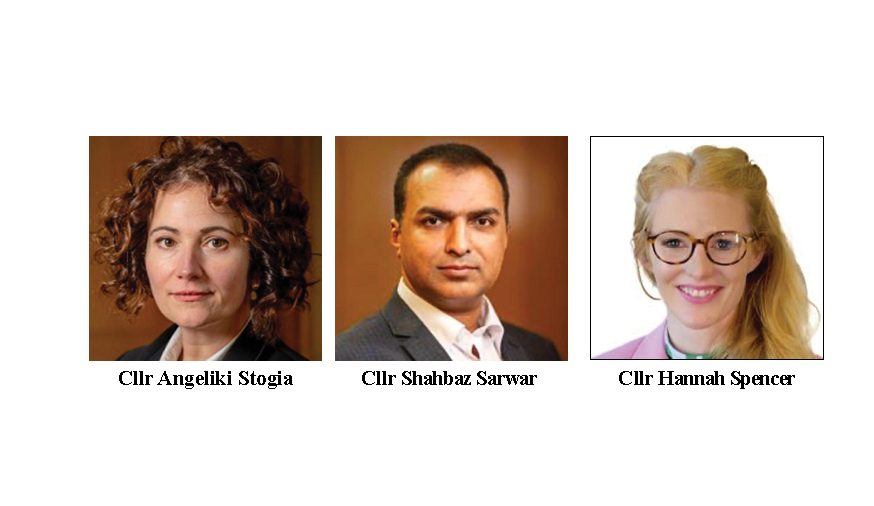
Manchester, the capital of the North West, is always considered a Labour Party stronghold, where elected MPs, Lord Mayor and councillors belong to the Labour Party. A large Muslim community residing here has always played an important role during past elections. It is the first time that the Labour Party is looking weak in this by-election. Political pundits say that there are certain reasons behind the weak position of the Labour Party. “The Labour Party chose a weak candidate, Angeliki Stogia, while Mayor of Greater Manchester and former MP Andy Burnham and Eamonn O’Brien, Leader of Bury Metropolitan Borough Council, along with some Muslim councillors including Cllr Abid Latif Chohan and Cllr Rab Nawaz Akbar, were also key players in the candidate race. However, finally Cllr Angeliki Stogia was eventually selected as the Labour official candidate for the by-election.” The Muslim vote bank has always been considered an important factor in parliamentary elections in Manchester, but in this recent by-election Muslims are not happy with the performance and policies of the Labour Party. Muslim political circles say that Muslims are unhappy with the Labour Government’s role in the Gaza war. According to their opinion, the current regime has not favoured the Palestinian stance, and it has started cracking down against people who were protesting in favour of the Palestinian cause. A recent incident happened when Angeliki Stogia and Deputy Leader of the Labour Party Lucy Powell faced a setback during a recent election campaign event. Lucy Powell was invited to a Pakistani community dinner at a local hotel on Stockport Road when pro-Palestine groups gathered outside the venue with Palestinian flags and anti-Labour placards and chanted slogans against Labour policies towards Gaza. The organisers also called the police to control the crowd, and some protesters entered the function and started protesting inside.
Muslim political circles say that they are not supporting the Labour Party in the by-election and that they will back the Green Party, while a large number of Muslim voters may not visit polling stations as a protest. On the other hand, some Muslim religious clerics and mosque committees are openly backing the Green Party candidate, Cllr Hannah Spencer. The Workers Party of Britain, led by George Galloway, did not stand a candidate in the Gorton and Denton by-election, stating that they took this decision in the best interest of working-class voters by helping to prevent splitting the vote against the right-wing Reform and Labour. It is also an important factor that Cllr Shahbaz Sarwar is representing the Workers Party, and insiders say that the party is also backing the Green Party candidate.
This correspondent also discussed with local Muslim leaders why the Labour Party is facing trouble in the recent by-election. Nasrallah Khan Mughal, former councillor and local Labour Party leader, said: “This is a by-election, and we cannot expect Muslims to vote for a single party. This is not about division; everybody has the right to choose, but I will cast my vote for Labour. The mosque is not a proper place for political campaigning or voting, and no single party should be supported from that platform. Muslims should avoid using the mosque platform for politics. I was elected three times as a councillor of Manchester City Council (MCC) but never went to mosques or shops for campaigning because I believe that religion and mosques should not be used for political purposes, even in this by-election. I am chair of Quba Mosque, Stockport Road, and we do not allow the Green Party to distribute leaflets during the Jummah congregation,” he observed. Another Muslim community leader, who is a trustee at Cheadle Mosque and supports the Green Party, speaking on condition of anonymity, said: “The only realistic option for Muslim voters to keep out Reform is to vote for the Green Party. However, there is a real danger that the Muslim vote will either not turn out in sufficient numbers or will be split between the Greens and Labour. Whilst there is a real dislike of Labour amongst most Muslim voters, there has been a strong push to support Labour from Muslim councillors and the MP. This will likely secure some Muslim votes. Analysis of all available odds indicates that the Greens are strong favourites, with Reform a close second and Labour a distant third. Based on this data, the only way to keep out Reform will be for Muslims to vote for the Greens.”
He also stressed that local leaders should educate the Muslim community on the particular importance of voting in this by-election, which will have a significant national impact irrespective of whether the Greens or Reform win here.
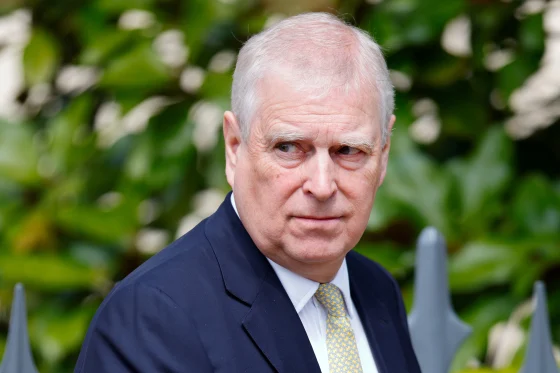
Former Prince Andrew Is Released After Being Arrested Amid Epstein Revelations
By our correspondent:
Andrew Mountbatten-Windsor, who is still under investigation, was seen leaving police custody on Thursday evening after being detained on suspicions of misconduct in public office.
The British police on Thursday evening released Andrew Mountbatten-Windsor, formerly known as Prince Andrew, after taking him into custody for several hours, intensifying a long-running crisis for the monarchy over his ties to the convicted sex offender Jeffrey Epstein.
The detention and questioning of Mr. Mountbatten-Windsor, once seen as a dashing war hero and the favorite son of Queen Elizabeth II, was a staggering blow for the monarchy. It was the first time in modern history that a member of the British royal family had been arrested. The last time was in 1649, when Charles I was executed for treason during the English Civil War.
UK donors-Supported Al Mustafa Pakistan Organises Free Eye Camp at GCU Lahore
Nawaz Kharal:
Lahore:
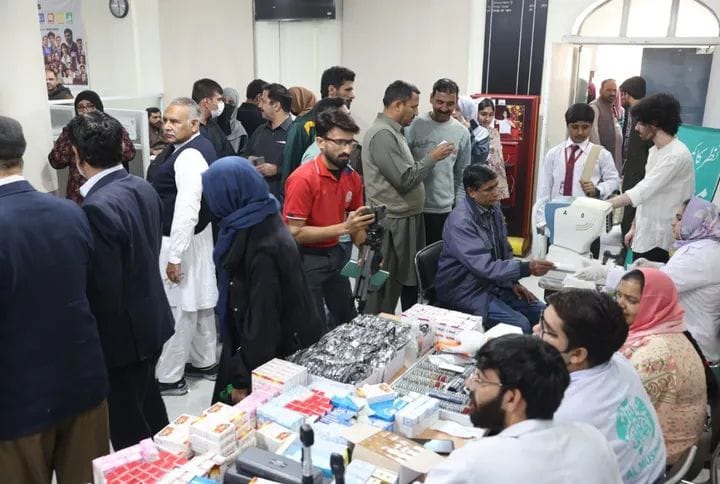
With the support of donors from the British Pakistani community, Al Mustafa Pakistan successfully held a Free Eye Camp at Government College University (GCU), Lahore, one of South Asia’s most prestigious educational institutions. The initiative provided vital eye care services to students, faculty, and university staff.
The inauguration ceremony was attended by Managing Director of Al Mustafa Pakistan, Ms. Nusrat Saleem, University Registrar Dr. Shaukat Ali, MS Al Mustafa Eye Hospital Dr. Khalid bin Aslam, Dr. Naeem Anwar Naumani, Muhammad Nawaz Kharral, and Ali Raza Kazmi, President of the University’s Al-Falah Society.
During the camp, a large number of students, faculty members, security personnel, and other staff received consultations, screenings, and corrective care. The event highlighted the growing role of overseas donors, particularly from the United Kingdom, in supporting sustainable healthcare initiatives in Pakistan.
Ms. Nusrat Saleem emphasised the importance of combining professional medical services with humanitarian outreach. “Through initiatives like this, we ensure that quality healthcare reaches everyone — from students in leading universities to underserved communities — thanks to the generosity of international supporters,” she said.
The camp exemplifies how diaspora-funded initiatives can create lasting impact, improving access to preventive healthcare while fostering community well-being and empowerment across Pakistan.
By Our Correspondent
Fasting was made obligatory in Islam in the year 2 AH (i.e. the second year of the Prophet Muhammad’s migration from Mecca to Medina), after which Muslims all over the world have been observing fasts. The date of the beginning of Ramadan is related to the lunar calendar, and these dates change every year on our common calendar. Usually, Ramadan moves back about 11 days each year compared to the previous year in the common calendar. The length of daylight hours varies from place to place in the world, depending on the distance from the equator. It is currently summer in the southern hemisphere, so the days are longer and the nights are shorter. This means that the fasting period will be longer in countries located in this hemisphere. In contrast, it is winter in the northern hemisphere, so the fasting period during Ramadan will be shorter than in warmer regions.

For example, in the Chilean city of Puerto Williams, often considered the southernmost city in the world, the fasting period will be approximately 14 and a half hours at the start of Ramadan this year. In contrast, in the Norwegian region of Longyearbyen, which is generally considered the world’s northernmost city, the fasting period at the beginning of Ramadan will be just over two and a half hours, but as the days progress, this period can increase to 12 and a half hours. In such remote areas, Muslims often adopt the fasting times practiced in Mecca. In the northern parts of the world, the longest fasts occur around June 21st and the shortest when Ramadan falls in December.
In the south it is the opposite, with fasts getting longer as Ramadan gradually progresses towards December and shorter towards June. In most parts of the Arab world, fasting hours will be between 12 and 13 hours, making Ramadan in 2026 the month with the most moderate fasting hours in recent years. In Mecca, the holiest city for Muslims, fasting will begin at approximately 06:50 local time at the start of Ramadan and end at 18:20 (11.5 hours), with this period increasing by half an hour as the holy month draws to a close. In Pakistan, the fasting period will initially be a little over 12 hours but will increase by about 40 minutes by the end of the month. In contrast, for Muslims living in the Southern Hemisphere, the period will be much longer.
For example, in Buenos Aires, the capital of Argentina, the period will be 13 hours and 15 minutes at the beginning of Ramadan. The same will be true in Auckland, New Zealand. In both cities, however, fasting hours will be shortened by about an hour by the end of the holy month. This is because the Southern Hemisphere will now be moving towards winter, meaning the length of daylight will be shorter.
However, fasting hours in the Northern Hemisphere will continue to change rapidly throughout the month. For example, in Greenland’s capital, Nuuk, Ramadan will start with about nine hours of fasting, and by the end of the month, this period will increase to more than 12 hours. This year’s fasting hours are much better than Ramadan in June or July, as the daylight hours are much longer in high latitudes during these months. In parts of Norway, Russia and Greenland, Muslims face fasting for up to 20 hours as Ramadan falls during the long summer days. In the Northern Hemisphere, fasting hours will be slightly shorter than last year and will continue to decrease overall each year until 2031. This is when the shortest day of the year, December 21, falls during Ramadan, and of course, in the Southern Hemisphere, fasting hours will increase each year until 2031.
UK Philanthropist Nina Mashriqi Visits Al Mustafa Welfare Trust Projects in Lahore
Bureau Report:
Lahore:
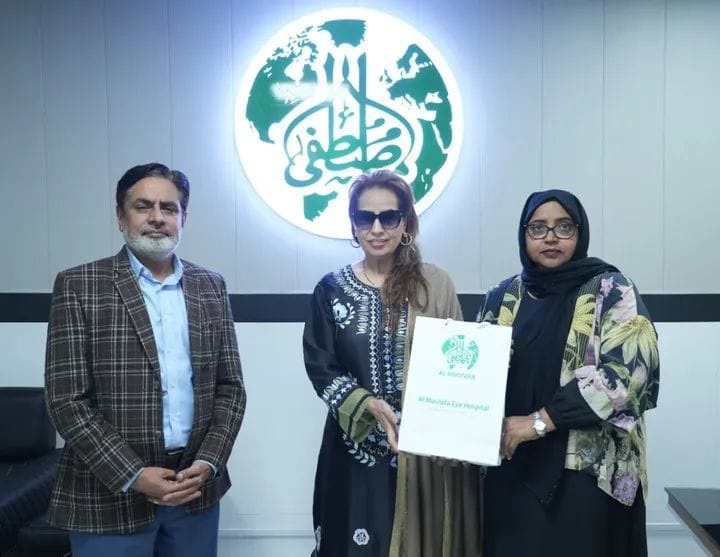
Renowned philanthropist and social activist Nina Mashriqi from Manchester, UK, granddaughter of the eminent mathematician and Khaksar Movement founder Allama Inayatullah Mashriqi, visited key welfare projects of Al Mustafa Pakistan in Lahore, including Al Mustafa Eye Hospital, Al Mustafa Dastarkhwan, and the Trust’s Head Office.
During the visit, Managing Director of Al Mustafa Pakistan, Ms. Nusrat Saleem, and MS Al Mustafa Eye Hospital, Dr. Khalid bin Aslam, provided Ms. Mashriqi with detailed briefings on the organisation’s ongoing humanitarian programmes, medical services, and community outreach initiatives.
Impressed by the scale and professionalism of the projects, Ms. Mashriqi praised Al Mustafa Welfare Trust’s systematic approach to serving humanity. She described the Trust’s mission as “highly commendable” and expressed her commitment to supporting its future initiatives.
Officials noted that the visit not only reflected confidence in the Trust’s work but also marked a positive step toward fostering international collaboration and expanding the scope of social welfare initiatives in Pakistan.