
Lucy Powell Labour MP for Manchester Central, Abid Chohan, Consulate general of Pakistan in Manchester Imtiaz Faroz Gondal and Ijaz Ahmed Malhi at the Iftar dinner hosted by Haroon Afzal Khatana President of Jehlum Forum UK
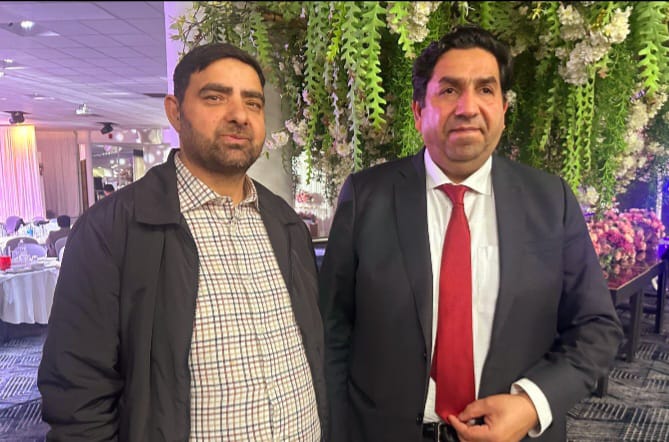

Lucy Powell Labour MP for Manchester Central, Abid Chohan, Consulate general of Pakistan in Manchester Imtiaz Faroz Gondal and Ijaz Ahmed Malhi at the Iftar dinner hosted by Haroon Afzal Khatana President of Jehlum Forum UK

Funeral of the wife of “Pakistan Muslim League UK’s” Information Secretary Iqbal Sandhu was performed at Hounslow Jamia Mosque Hounslow London. A large number of deceased relatives and friends attended the event to pay their respects. Here are some pictures from the event.









Analysis Wajahat Ali Khan:
The future of Palestine remains one of the most complex and consequential questions in global politics. More than a century after the fall of the Ottoman Empire and decades after the start of the modern Israeli Palestinian conflict, the issue remains unresolved shaped by war, diplomacy, regional power struggles, and shifting international alliances. The modern conflict traces back to the early 20th century under the British Mandate. The creation of the state of Israel in 1948 led to war with neighbouring Arab states and the displacement of hundreds of thousands of Palestinians an event Palestinians refer to as the Nakba (“catastrophe”). Since the 1967 Six-Day War, Israel has occupied the West Bank and East Jerusalem, territories Palestinians seek for a future state.
Efforts to resolve the conflict have included the Oslo Accords in the 1990s, which created the Palestinian Authority and aimed to pave the way for a two-state solution. However, final-status issues borders, refugees, settlements, Jerusalem, and security were never resolved. The Palestinian Authority, which administers parts of the West Bank. This internal division complicates diplomatic negotiations and weakens unified political representation. Meanwhile, Israeli settlement expansion in the West Bank continues to alter facts on the ground, making territorial compromise more difficult.
Regional dynamics also play a role. Arab states such as the United Arab Emirates and Bahrain normalized relations with Israel under the Abraham Accords, shifting regional priorities and reducing collective Arab diplomatic pressure cantered solely on Palestinian statehood. The internationally endorsed framework envisions an independent Palestinian state alongside Israel, roughly based on pre-1967 borders with land swaps. While still supported by many global actors, including the United Nations, critics argue that expanding settlements and political fragmentation make it increasingly difficult to implement. Some analysts argue that the situation is drifting toward a single state between the Jordan River and the Mediterranean Sea, where Israelis and Palestinians live under unequal legal and political systems. This scenario raises profound questions about democracy, citizenship, and rights.
The most likely short-term outcome may be continued instability: periodic escalations of violence, humanitarian crises in Gaza, and limited diplomatic breakthroughs. In Gaza, repeated conflicts have devastated infrastructure, while restrictions on movement and trade have limited economic growth. In the West Bank, economic dependency and mobility restrictions persist. International aid remains crucial but insufficient for long-term stability. A sustainable future will depend not only on political agreements but also on rebuilding trust, strengthening institutions, promoting economic opportunity, and addressing security concerns on both sides.
Global powers including the United States, the European Union, and regional actors continue to influence developments through diplomacy, aid, and military support. However, geopolitical rivalries often overshadow sustained peace efforts. The future of Palestine is uncertain and deeply intertwined with Israeli politics, regional realignments, and global diplomacy. While the vision of peaceful coexistence remains widely endorsed, political fragmentation, entrenched mistrust, and shifting regional priorities complicate progress. Ultimately, the trajectory will depend on leadership decisions, grassroots movements, regional stability, and international engagement. For now, Palestine’s future stands at a crossroads shaped as much by political will as by historical grievance.
Bureau report:
Manchester:
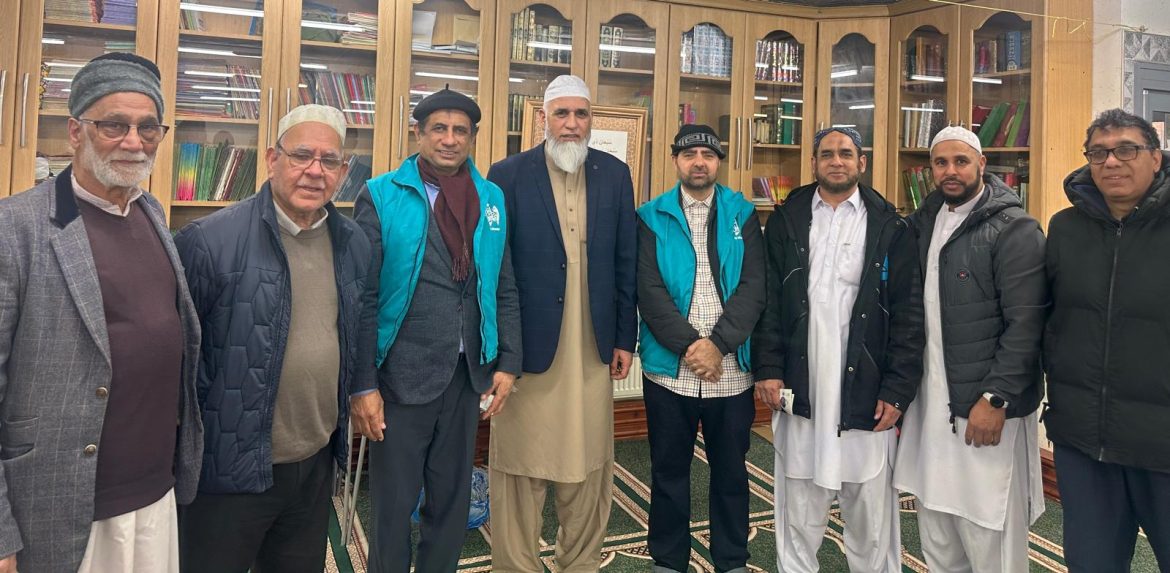
Al Mustafa Welfare Trust collected funds from Wythenshawe Mosque during the Taraweeh prayer. Local people donated generously for food aid for Yemen, Sudan and Gaza. Mosque trustee Yusuf Mirza, admin Zain Sarfraz and volunteers also supported Al Mustafa on the occasion.

News desk:
The UK government will stop issuing study visas to people from Afghanistan, Cameroon, Myanmar and Sudan from this month, Home Secretary Shabana Mahmood has said, as well as stopping skilled work visas to Afghans. The Home Office said the action was being taken due to what it said was widespread visa abuse. According to official figures, people from the four countries were the most likely to make an asylum claim after originally coming to the UK to study. “The government is clamping down on visa abuse so the UK can maintain its ability and proud tradition of helping those genuinely in need,” a government spokesperson added.
In its release, the government said asylum claims from people who had originally travelled to the UK legally – to do something like studying – had more than tripled between 2021 and 2025. Home Office figures showed that people claiming asylum off the back of a study visa make up 13% of all claims currently in the system.
Shabana Mahmood said she was “taking the unprecedented decision to refuse visas for those nationals seeking to exploit our generosity”. I will restore order and control to our borders.” The Home Office said a higher proportion of people than average from the four specified country cited destitution as part of their asylum claim, and there were 16,000 people from the four countries currently being supported. About 95% of Afghans who arrived in the UK on a study visa then applied for asylum since 2021, while applications by students from Myanmar increased 16-fold and claims by students from Cameroon and Sudan more than quadrupled.

By Ramsha Shahid:
London:
The housing crisis in England has emerged as one of the most significant social and legal challenges confronting policymakers in recent decades. Escalating rental prices, limited housing supply and deteriorating housing conditions have placed increasing pressure on both tenants and landlords. The private rented sector now accommodates approximately one fifth of households in England, making it a central component of the country’s housing system.¹
In recent years, the regulatory framework governing residential tenancies has undergone substantial transformation. Legislative developments including the expansion of statutory duties relating to fitness for human habitation, the implementation of Awaab’s Law and the proposed abolition of section 21 “no-fault” evictions have fundamentally altered the balance between landlord rights and tenant protection.
These reforms aim to enhance housing standards and provide greater security of tenure for tenants. However, they also raise important policy questions concerning the long-term sustainability of the private rented sector and the potential implications for housing supply.
This article examines the contemporary housing crisis in England by analysing the structural drivers of the housing shortage, the legal regulation of housing conditions and disrepair, and the evolving framework governing eviction proceedings in light of the proposed abolition of section 21 of the Housing Act 1988.
The housing crisis in England is not merely an economic phenomenon but a structural legal problem affecting the operation of housing law and the administration of justice. Housing construction has consistently failed to keep pace with population growth, urbanisation and household formation. As a consequence, demand for rental accommodation has increased significantly, contributing to sustained upward pressure on rents.
Recent data illustrates the scale of these pressures. Average private rents across the United Kingdom reached approximately £1,368 per month in late 2025, reflecting continued growth in rental costs across England, Wales and Scotland.² In England alone, average rents have exceeded £1,400 per month, demonstrating the continuing upward trajectory of housing costs in many regions.³
Housing affordability has deteriorated correspondingly. Analysis by the Office for National Statistics indicates that private renters in England now spend approximately 36.3 per cent of their household income on rent, significantly above the widely accepted affordability threshold of 30 per cent.⁴ In London, the financial burden is even more pronounced, with rental costs consuming nearly half of average disposable income in certain boroughs.⁵
The social consequences of these pressures are increasingly evident. Official figures indicate that approximately 176,000 children are currently living in temporary accommodation in England, representing one of the highest recorded levels.⁶ Local authorities are also facing escalating costs associated with homelessness, with projections suggesting that temporary accommodation expenditure may reach £4 billion annually by 2030.⁷
While these statistics illustrate the scale of the crisis, they also reveal deeper structural problems within the housing system. From a legal perspective, the housing shortage has intensified litigation within the private rented sector. Possession claims, housing disrepair proceedings and homelessness challenges have become increasingly common, placing additional strain on the judicial system and local authorities responsible for housing enforcement.
Similar housing pressures have been observed in other European jurisdictions where private rental markets have expanded rapidly. Countries such as Germany and the Netherlands have addressed comparable challenges through stronger rent regulation and increased social housing provision. The absence of similar structural measures in England has placed greater reliance on legal regulation of landlord-tenant relationships rather than systemic housing supply reform.
Moreover, the shortage of available housing inevitably alters the bargaining power between landlords and tenants. In a market where demand significantly exceeds supply, tenants may be reluctant to assert legal rights relating to disrepair or housing standards for fear of losing their accommodation. This reality complicates the assumption that statutory protections alone are sufficient to safeguard tenants in practice.
Alongside issues of affordability, the condition of rented housing has become an increasingly prominent concern. Reports of damp, mould and structural disrepair have generated significant public and legal scrutiny, particularly in relation to vulnerable tenants.
Historically, the legal obligations imposed upon landlords in relation to property condition were governed primarily by section 11 of the Landlord and Tenant Act 1985, which imposes a statutory duty upon landlords to maintain the structure and exterior of residential premises together with certain essential installations including heating, water supply and sanitation.⁸
However, the traditional disrepair regime focuses primarily on repair obligations rather than broader issues concerning the overall suitability of a dwelling for habitation. In response to these limitations, Parliament enacted the Homes (Fitness for Human Habitation) Act 2018, which inserted sections 9A–9C into the Landlord and Tenant Act 1985.
These provisions imply a covenant into residential tenancies that a dwelling must be fit for human habitation at the commencement of the tenancy and remain so throughout its duration.⁹
Section 10 of the Act provides guidance on the matters relevant in determining whether a property is fit for habitation, including structural stability, ventilation, natural lighting, drainage, sanitation and the presence of hazards affecting health and safety.¹⁰ Courts typically assess these factors with reference to the Housing Health and Safety Rating System (HHSRS) introduced under the Housing Act 2004.¹¹
Recent legislative developments have further strengthened this regulatory framework. Following the death of two-year-old Awaab Ishak in 2020 due to prolonged exposure to mould in social housing, Parliament enacted provisions commonly referred to as Awaab’s Law through the Social Housing (Regulation) Act 2023.¹²
While these reforms represent important progress in addressing housing conditions, the practical enforcement of such rights remains complex. Tenants often rely upon civil litigation to enforce statutory duties, which may require expert evidence, inspection reports and prolonged court proceedings. This creates an enforcement gap between the existence of legal rights and the practical ability of tenants to secure compliance.
While tenant protections have expanded significantly, landlords have simultaneously faced increasing regulatory and financial pressures.
Over the past decade, the procedural requirements governing residential tenancies have expanded considerably. These include obligations relating to tenancy deposit protection, prescribed information requirements, gas safety certification, energy performance certification and licensing schemes under local authority regulation.
Failure to comply with these procedural requirements may have significant legal consequences. For example, non-compliance with deposit protection rules may prevent a landlord from serving a valid section 21 notice. Similarly, failures relating to gas safety certification may create obstacles to possession proceedings.
For smaller landlords, many of whom manage properties without professional agents, navigating this expanding regulatory framework can be challenging. While enhanced regulation may be justified in order to protect tenants, policymakers must also consider whether increasing regulatory complexity may inadvertently discourage participation in the rental market, thereby reducing available housing supply.
Among the most controversial reforms in recent housing policy is the proposed abolition of section 21 “no-fault” evictions under the Housing Act 1988.
Section 21 historically enabled landlords to recover possession of a property at the end of an assured shorthold tenancy without establishing fault on the part of the tenant, provided that statutory notice requirements were satisfied.¹⁴
Supporters of the reform argue that section 21 contributed to insecurity within the private rented sector by allowing landlords to terminate tenancies without providing a substantive reason. Government statistics indicate that more than 30,000 section 21 eviction notices were issued in England within a single year, while over 11,000 households were ultimately removed from their homes by bailiffs following such notices.¹⁵
However, the abolition of section 21 raises significant practical concerns regarding the operation of possession proceedings. In the absence of a no-fault route to possession, landlords will be required to rely primarily upon section 8 of the Housing Act 1988, which requires landlords to establish statutory grounds for possession.
Section 8 claims often involve complex evidential disputes. Rent arrears claims require detailed rent schedules and payment histories, while antisocial behaviour claims may depend upon witness testimony from neighbours or managing agents.
The proposed reforms also introduce new statutory grounds for possession, including circumstances where the landlord intends to sell the property. While this ground is intended to replace some of the flexibility previously provided by section 21, its practical application may be contentious. Courts will likely require evidence demonstrating a genuine intention to sell, and disputes may arise where tenants argue that such claims are merely a pretext for recovering possession.
Moreover, the county court system already faces substantial delays in housing litigation. If possession proceedings increasingly rely upon fact-sensitive section 8 claims, the number of contested hearings may increase significantly, potentially exacerbating existing backlogs.
The transition from section 21 to a possession regime based primarily on section 8 will significantly alter the litigation landscape for housing disputes.
Under the existing framework, section 21 provided a relatively predictable route to possession provided that landlords complied with statutory requirements. Its abolition means that landlords must increasingly rely upon statutory grounds requiring factual evidence and judicial determination.
In practice, this may lead to a greater number of contested possession claims. Grounds such as antisocial behaviour, persistent rent arrears or the landlord’s intention to sell often involve evidential disputes that must be resolved through court proceedings.
This development may place additional pressure on the already overburdened county court system, raising questions regarding the capacity of courts to efficiently adjudicate an increasing volume of housing litigation.
The interaction between housing disrepair claims and possession proceedings is particularly significant in practice. Tenants facing possession proceedings frequently raise disrepair counterclaims, particularly where alleged housing defects have contributed to rent arrears.
Such counterclaims can significantly complicate possession proceedings. Courts must consider both the landlord’s entitlement to possession and the tenant’s allegations of statutory breach. Where disrepair is established, tenants may be entitled to damages or set-off against rent arrears.
For practitioners, this highlights the importance of identifying potential disrepair issues at an early stage in possession litigation.
Alongside statutory reform, the development of landlord and tenant law in England has also been significantly shaped by judicial interpretation of the regulatory framework governing residential tenancies. Appellate case law has clarified the consequences of non-compliance with procedural requirements relating to tenancy deposits and safety certification.
One of the most influential decisions in this area is Superstrike Ltd v Rodrigues. In that case, the Court of Appeal considered whether the statutory periodic tenancy arising under section 5 of the Housing Act 1988 following the expiry of a fixed-term assured shorthold tenancy constituted a new tenancy for the purposes of the tenancy deposit regime introduced by the Housing Act 2004. The court concluded that the statutory periodic tenancy did in fact constitute a new tenancy, with the result that landlords were required to comply afresh with the deposit protection requirements, including the service of prescribed information.¹⁹
The practical significance of Superstrike lies in the court’s recognition that statutory compliance requirements operate strictly within the framework of housing legislation. The decision had substantial implications for landlords who had assumed that deposits protected during the initial fixed term remained compliant when the tenancy continued on a periodic basis. In practice, the case led to a wave of litigation concerning defective deposit protection and the validity of section 21 notices, highlighting the extent to which procedural technicalities may determine the outcome of possession proceedings.
A similarly important clarification was provided by the Court of Appeal in Trecarrell House Ltd v Rouncefield.²⁰ The court was required to determine whether a landlord’s failure to provide a gas safety certificate prior to the tenant taking occupation permanently invalidated the landlord’s ability to rely upon section 21 of the Housing Act 1988. The majority of the Court of Appeal concluded that although compliance with the Gas Safety (Installation and Use) Regulations 1998 is mandatory, late service of the certificate does not permanently bar reliance upon section 21, provided that the certificate is ultimately served before the notice seeking possession is issued.
The decision in Trecarrell sought to balance strict regulatory compliance with practical fairness. Earlier county court decisions had suggested that failure to provide a gas safety certificate before occupation created an irreversible defect preventing the use of section 21 entirely. Such an approach risked producing disproportionate consequences for relatively minor procedural errors. The Court of Appeal therefore adopted a more pragmatic interpretation, permitting landlords to remedy the defect through subsequent compliance.
Taken together, these decisions demonstrate the increasingly technical nature of housing litigation in England. Possession claims are now frequently determined not only by the substantive relationship between landlord and tenant but also by strict adherence to an expanding network of procedural obligations imposed by housing legislation.
From a practitioner’s perspective, these cases underscore the importance of meticulous statutory compliance when managing residential tenancies. Even relatively minor procedural defects such as failures in deposit protection or safety certification may delay or invalidate possession proceedings. At the same time, the courts have shown a willingness to interpret regulatory provisions pragmatically where rigid enforcement would produce disproportionate outcomes.
Consequently, modern housing litigation increasingly requires careful navigation of both substantive landlord-tenant rights and the procedural compliance framework governing possession claims.
The housing crisis in England represents a complex intersection of economic pressures, regulatory reform and social policy considerations. While legislative developments such as Awaab’s Law and the proposed abolition of section 21 aim to strengthen tenant protections, they also raise significant questions regarding the practical operation of housing law within the court system.
The Renters’ Rights Bill represents one of the most ambitious attempts to reform the private rented sector in recent decades. However, its success will depend not only on legislative change but also on the capacity of courts, regulators and local authorities to enforce the new framework effectively.
Looking forward, housing litigation is likely to become increasingly complex and contested. Practitioners may encounter a growing number of disputes involving possession proceedings, disrepair claims and challenges relating to newly introduced statutory grounds for possession.
A balanced policy approach is therefore essential. Strengthening tenant protections must be accompanied by meaningful investment in housing supply, improved enforcement mechanisms and adequate resources for the courts.
Without addressing these structural issues, legal reform alone may prove insufficient to resolve the underlying causes of England’s housing crisis. It is therefore likely that the coming years will see an increase in housing litigation involving contested possession claims, disrepair counterclaims and judicial scrutiny of the new statutory grounds introduced under the Renters’ Rights reforms.

Bureau Report:
London:
Nuclear expert Joe Cirincione has said that I think the US-Iran war was not started to change the Iranian regime, but to bring about regime change in the US. Joe Cirincione previously served as vice president for national security and international policy at the Centre for American Progress in Washington, DC. For eight years, he was the director for non-proliferation at the Carnegie Endowment for International Peace, where he chaired and organised five annual Carnegie International Non-Proliferation Conferences. The 2005 conference included Cirincione’s presentation, “A Brief History of the Atomic Age.
He worked for nine years in the U.S. House of Representatives, beginning in 1985 as a professional staff member of the Committee on Armed Services. He also served as a staff member of the Committee on Government Operations and served as staff director of the bipartisan Military Reform Caucus.

By Wajahat Ali Khan
The United Kingdom has launched one of the most significant reforms of its asylum system in decades, replacing permanent refugee protection with a temporary status model aimed at reducing long-term migration and speeding up removals.
Under the new policy announced by Home Secretary Shabana Mahmood, all newly approved asylum seekers will now receive refugee status lasting 30 months, after which their cases will be reassessed to determine whether conditions in their home country remain unsafe. The change replaces the previous system that typically granted refugees five years’ protection leading to permanent settlement. The government says the reforms are designed to restore “order and control” to what ministers describe as an overstretched asylum system facing rising Channel crossings and mounting public costs.
Officials argue that refugees should return home once conflicts or dangers in their countries of origin have ended. The Home Office believes regular reviews will discourage irregular migration and reduce pressure on housing and public services. However, critics warn the move could create long-term uncertainty for thousands of families already rebuilding their lives in Britain. The Refugee Council and several charities have said repeated reviews may increase bureaucracy and cost hundreds of millions of pounds while making integration into work and communities more difficult. Alongside temporary refugee status, broader immigration reforms will extend the pathway to Indefinite Leave to Remain from five years to around ten years or more for many migrants and refugees.
Government policy documents also propose limiting automatic settlement rights and tightening access to financial support, replacing a legal duty to assist asylum seekers with a more discretionary system. The reforms follow earlier decisions to suspend parts of the refugee family reunion scheme, now facing legal challenges in the High Court. Campaigners argue the restrictions could separate children from parents and create significant humanitarian concerns. Ministers have additionally pledged faster asylum decisions and tougher returns policies, including cooperation agreements with European partners to reduce small-boat crossings across the English Channel.
The new asylum framework has sparked divisions within Parliament and the governing Labour Party itself. Supporters say stronger controls are necessary to maintain public confidence in immigration policy, while opponents argue the measures risk undermining Britain’s long-standing refugee protections. Analysts describe the overhaul as the largest shift in UK asylum policy since the post-war refugee system was established, moving the country toward a model of temporary protection like systems used in parts of Europe. The policy takes immediate effect for new applicants, with further immigration legislation expected later in 2026. Parliamentary debates and legal challenges are likely to determine how far the reforms can go and whether the new system achieves the government’s aim of reducing irregular migration while maintaining humanitarian commitments.

By: Erum Masood, Global Media, Journalist.:
On this special day, March 8th, we celebrate the incredible women who inspire and uplift us all across the globe. International Women’s Day shines a spotlight on their achievements, struggles, and the powerful impact of their empowering presence, inspiring future generations.
I’ve had the privilege of supporting women in Pakistan, Morocco, and the UK, especially where women are celebrated not just for their origins but also for their strength and spirit. Today, I honor a truly remarkable South Asian woman, Global Woman Mani Kohli MBE, whose journey and accomplishments speak volumes. Her deep roots in PINDI, Pakistan, remind us of our shared heritage and the importance of women supporting each other, regardless of where they come from. As a leading figure in the fashion world, she has styled stars across the UK, Asia, and the US, always making women feel beautiful from within rather than just on the outside. S
She’s also passionate about raising funds and inspiring women entrepreneurs and small businesses, encouraging others to contribute with love and enthusiasm.
Meeting her through the British Asian Fashion Network was a transformative experience—she has truly become my personal fashion mentor. I was privileged to celebrate her MBE with her children and inspiring women from around the world—women who exemplify strength, talent, and kindness.
Today, the PINE Global Community honors women like Ghinaa Khan, Sana Kardar, Rabia Amir, Musarrat Jabeen, Misha Irshad, Maham Masood, Fakiha Fatima, Vinessa Phoebe, and Ramsha Khokar, who support and uplift each other every day.
Let’s celebrate Mani Kohli MBE and these amazing women—not just for what they do but for who they are: mothers, sisters, daughters, friends, and true sources of inspiration.
They make me strive to be a better person every day, simply by being wonderful. Women’s giving isn’t just about gaining; it’s about sharing their time, love, and themselves to create a kinder, brighter world!!!

Interview:
by Amr Roshdy:
Cairo:
In Dismantling Extremist Discourse, Strengthening Societal Peace, Renewing Religious Concepts, and confronting unregulated Fatwas?
I. The Role of Fatwa Institutions in Dismantling Extremist Discourse and Confronting Radical Groups. Fatwa institutions stand at the frontline of the intellectual battle against extremism because they possess the one thing militant groups desperately try to claim: religious authority, Extremist organisations such as ISIS, al-Qaeda, Boko Haram, and the Taliban have consistently relied on distorted interpretations of sacred texts to recruit, mobilise, and justify violence. The most effective refutation of such misuse of religion, as decades of experience have shown, comes from within religion itself through authoritative, well-grounded counter-fatwas issued by qualified scholars who carry the trust of the Muslim community.
Egypt’s Dar al-Ifta has pioneered several institutional mechanisms in this regard. The most significant is the Observatory of Takfiri Fatwas and Extremist Views, established in 2014 as the first Islamic reference centre dedicated to monitoring, analysing, and responding to extremist interpretations worldwide.
The methodology of dismantlement operates on multiple levels:
Theological deconstruction: Fatwa institutions systematically expose how extremist fatwas deviate from classical scholarly consensus. They demonstrate, with full scholarly apparatus, that concepts like indiscriminate takfir (excommunicating Muslims), obligatory hijra to so-called caliphates, and justification of suicide bombings are categorically rejected by most of the Islamic scholarship across all schools of thought.
Collective authoritative declarations:
The power of a unified scholarly voice cannot be overstated. Pakistan’s Pagham-e-Pakistan 2018), signed by over 1,800 scholars from all schools of thought, categorically declared terrorism and suicide attacks haram. Pakistan’s President called it “a strong base for the stability of a moderate Islamic society” and a foundation for national narrative-building. Similarly, in Afghanistan in 2018, over 2,000 clerics issued a fatwa outlawing suicide bombing, which contributed to a brief but unprecedented Taliban ceasefire.
Transnational coordination:
The General Secretariat for Fatwa Authorities Worldwide, established in 2015, unites fatwa institutions across the globe under a single umbrella to amplify moderate voices and coordinate counter-extremism messaging. It operates as what may be described as a “soft power think-tank,” using research, dialogue, and publication rather than coercion to counter radical narratives.
II. How the Enlightened Fatwa Contributes to Strengthening Societal Peace
The relationship between fatwa and societal peace is not incidental—it is structural. Among the Maqasid al-Shariah (objectives of Islamic law) that is often overlooked is the objective of preserving peace (hifz al-amn). National stability and social harmony form the foundation for a harmonious and thriving Islamic way of life, serving as a prerequisite for the protection of the five essential daruriyyat: religion, life, intellect, lineage, and property.
The enlightened fatwa contributes to societal peace through several pathways:
First, providing religious legitimacy for public welfare measures. A striking example was the COVID-19 pandemic, when the General Secretariat for Fatwa Authorities Worldwide issued a transnational directive in March 2020 declaring that people “must follow medical instructions and stay away from gatherings.
Second, promoting interfaith coexistence and social cohesion. Dar al-Ifta has consistently issued fatwas encouraging positive relations with non-Muslims. In December 2024, The landmark Marrakesh Declaration of 2016, endorsed by over 300 Muslim scholars, affirmed the rights of religious minorities in Muslim-majority lands based on the Charter of Medina, providing a blueprint for Muslim governments to bolster coexistence.
Third, building consensus and resolving internal divisions. Fatwas issued by officially recognised bodies help generate agreement among Muslims on contentious issues, reducing the potential for internal communal strife.
Fourth, providing moral frameworks for governance and justice. The fatwa, when it operates within the framework of wasatiyya (moderation) and awareness of contemporary realities, becomes a guide not just for personal piety but for public ethics encouraging transparency, fighting corruption, and anchoring governance in principles of justice and human dignity.
Yet the movement of renewal, effectively stalled after the school of Imam Muhammad Abduh and his peers, only to be replaced by an extremist discourse that disregarded the essence and principles of religious teachings and focused on apparent issues instead.
The following concepts are among the most urgent in need of correction or renewal:
1. Takfir (Excommunication): The reckless, wholesale declaration of Muslims as disbelievers has been the single most dangerous tool in the extremist arsenal. It serves, as Dar al-Ifta’s Observatory noted in its first report, as “legal permits for killing which undermine the objectives of Islamic law”. The Amman Message (2004–2005), endorsed by 200 scholars from over 50 countries.
2. Jihad: The distortion of jihad from a complex, multi-layered concept encompassing the struggle against one’s own ego, the effort to build a just society, and defensive warfare under strict conditions into a blanket license for violence is one of the deepest corruptions of Islamic teaching.
3. The binary of Dar al-Islam and Dar al-Kufr: As I have written before, “It is no longer accepted to keep dividing the world’s countries into abode of Islam and abode of disbelief.”
4. The concept of qadar (predestination) and zuhd (asceticism): The misunderstanding of predestination as fatalism, and asceticism as disengagement from the world, has been detrimental to the ummah’s wellbeing and can impede any prospects of progress. As Dr. Hatem al-Haj has noted, we need to “reset our collective understanding of these concepts to the time of the Messenger and his Companions”.
5. Relations with non-Muslims:
The aberrant notion that Muslims should harbour hostility toward peaceful non-Muslims, refuse to greet them on their holidays, or refrain from civic engagement in pluralistic societies contradicts explicit Qur’anic injunctions and Prophetic practice.
6. The role of women: Extremist discourse has severely restricted women’s agency in ways that contradict both the letter and spirit of Islamic teaching. Renewal in this area requires returning to the comprehensive textual evidence and the practice of the early Muslim community.
7. Over-reporting of scholarly consensus (ijma’): This has stifled ijtihad-based renewal by treating debatable positions as settled. Imam Ahmad ibn Hanbal himself warned: “Whoever claimed a consensus has lied; maybe they disagreed”.
8. The shift from substance to form: Contemporary religious discourse has often prioritised technical formalities over spirituality and morality, minor details over major foundations. and exterior appearances over inner substance. The needed change of emphasis is, as scholars have noted, “not in any way an attempt to show disregard for the Shariah or for the Sunnah, but simply to rearrange the priorities of the religion into the proper order”.
IV. Confronting Unregulated and Aberrant Fatwas on Social Media
The explosion of social media has created what Egypt’s Grand Mufti has called “fatwa chaos” a situation where “people without any religious academic experience issue fatwas through TV channels or via social media networks like Facebook, Twitter, and YouTube”. Self-appointed preachers, social media influencers, and political opportunists.
Fatwa institutions have responded through a multi-pronged strategy:
Egypt’s Parliament passed the *Fatwa Regulation Law*, which clearly defines who has the right to issue public fatwas, restricting this authority to Egypt’s highest religious bodies: Al-Azhar’s Council of Senior Scholars, the Islamic Research Academy, the Ministry of Religious Endowments, and Dar al-Ifta. It criminalises the publication of fatwas from unauthorized sources, with penalties of up to six months in prison and fines of 100,000 Egyptian pounds. Dar al-Ifta has built a robust online presence with multilingual portals in Arabic, English, French, German, Urdu, Pashto, Swahili, Hausa, and other languages, disseminating authoritative fatwas, articles, and videos that counter both extremist rhetoric and Islamophobic narratives.
Mufti training and credentialing: The Fatwa Regulation Law mandates the establishment of a *Mufti Preparation Centre* to provide scientific training and qualifications, after which each mufti receives a diploma and license to issue fatwas on specified religious issues. No religious scholar is permitted to issue fatwas without this accreditation.
Egypt’s Grand Mufti has called for enhanced coordination among fatwa institutions and proposed the development of a Fatwa Code of Ethics to curb unregulated and arbitrary rulings, distinguishing between personal and public fatwas to safeguard the integrity of religious discourse. Proactive monitoring and rapid response: The observatories at Dar al-Ifta monitor over 150,000 websites worldwide for extremist content.
Egypt’s Dar al-Ifta and the General Secretariat for Fatwa Authorities Worldwide have emerged as global leaders in this endeavour, demonstrating that the most powerful weapon against the misuse of religion is the authentic, moderate, compassionate voice of religion itself. As the Prophet ﷺ indicated, a recurring divine provision for the preservation of this religion and the welfare of humanity.
