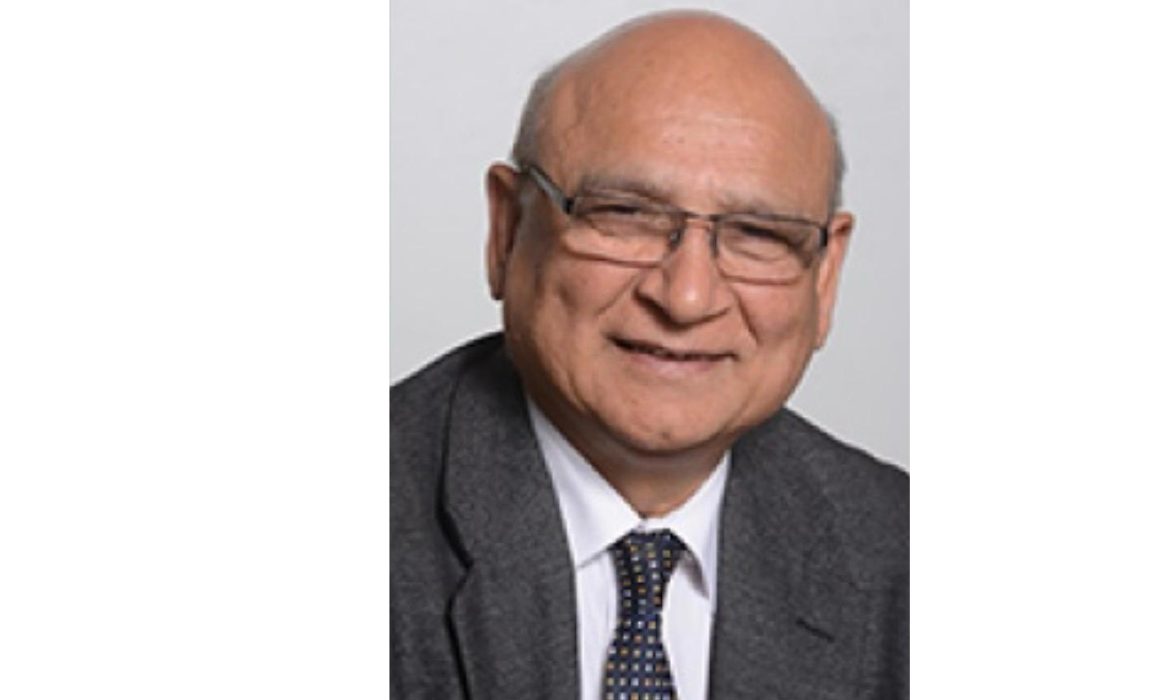
Ahmad Shahzad OBE
Chairman of Human Rights Society of
Pakistan UK
I write today not out of political partisanship, but out of deep concern for the direction in which the United States appears to be heading—and for the troubling silence of Congress in the face of conduct that undermines America’s most cherished values.
The White House, which should symbolize dignity, unity, and respect, has instead repeatedly engaged in rhetoric that many Americans and observers around the world view as demeaning and racially divisive. Recent remarks directed at President Barack Obama’s family have crossed a line that should concern anyone who believes in equality, decency, and respect for public service. What is most alarming, however, is not merely the rhetoric itself—but the lack of a clear and forceful response from Congress.
The United States has long positioned itself as a global champion of liberty, freedom, and human rights. That leadership is not based on power alone, but on moral authority. When offensive and divisive behavior from the highest office goes unanswered, it erodes international confidence in America’s commitment to those ideals and weakens its standing on the world stage.
Congress exists as a co-equal branch of government precisely to act as a safeguard against abuses of power and the erosion of democratic norms. Silence, hesitation, or political convenience in moments like these sends a dangerous message: that accountability is optional, and that values can be subordinated to partisan loyalty.
This is not a call for outrage for its own sake. It is a call for responsibility.
If conduct originating from the White House damages social cohesion at home and credibility abroad, then Congress has a constitutional and moral duty to respond—clearly, publicly, and without fear. The question Americans and global observers are now asking is simple:
How much damage to America’s moral standing is considered acceptable before accountability begins? Democracy does not fail all at once. It erodes gradually—through normalization of behavior once deemed unacceptable, and through silence when institutions should speak.
I urge members of Congress, regardless of party, to remember their oath to the Constitution, their responsibility to the public, and the legacy they leave behind.
History is watching.
News
Al Mustafa Pakistan Restores Sight to Hundreds in Free Eye Camp in Okara
Bureau Report:
Okara:
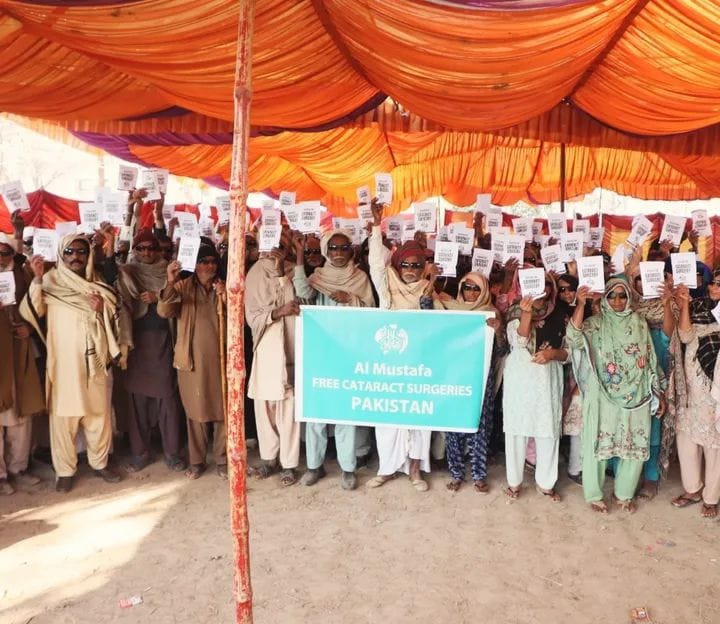
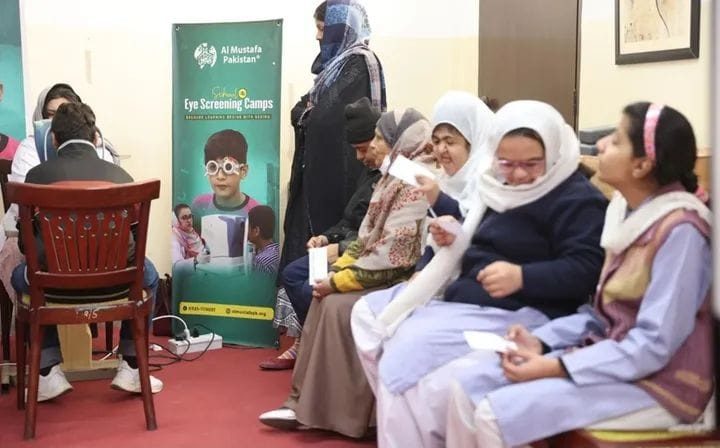
Supported by donors from the British Pakistani community, Al Mustafa Pakistan has successfully conducted a four-day free eye camp in rural Okara, restoring sight to hundreds of underprivileged patients and reinforcing the growing impact of diaspora-funded healthcare initiatives.
Held at BHU Lasharian, Tehsil Lasharian, from 8 to 11 February 2026, the camp delivered comprehensive eye care services to communities with limited access to specialist treatment. According to organisers, the initiative achieved:
295 successful cataract surgeries (145 women and 150 men)
1,624 OPD examinations (849 women and 775 men)
763 pairs of spectacles distributed to deserving patients
Medical teams provided free consultations, surgeries, and follow-up care, ensuring that patients received complete treatment without financial burden.
Officials said the project was made possible through the continued support of overseas donors, particularly from the United Kingdom, who remain actively engaged in funding sustainable healthcare programmes across Pakistan.
For many beneficiaries, the camp meant far more than medical treatment — it marked the return of independence, mobility, and dignity after years of living in darkness due to untreated cataracts.
Al Mustafa Pakistan stated that such initiatives reflect the powerful partnership between local healthcare teams and the global Pakistani diaspora, demonstrating how cross-border philanthropy can transform lives in underserved rural communities.
The organisation reaffirmed its commitment to expanding similar outreach programmes, ensuring that access to vision care — and the hope it brings — reaches every individual in need.
By Shokat Dar:
London:
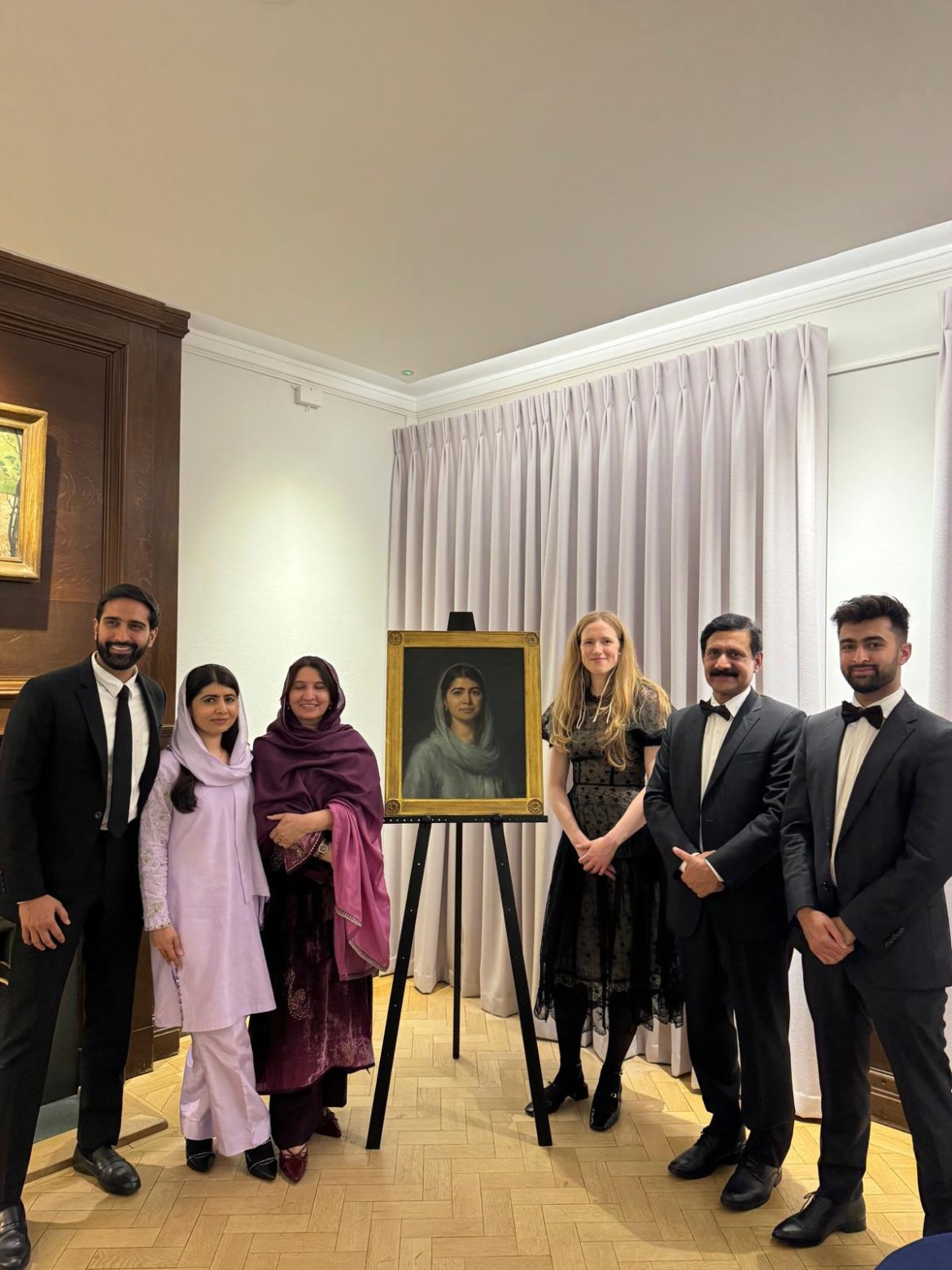
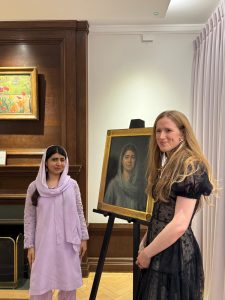
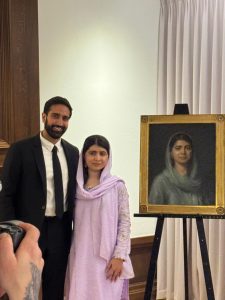
Another prestigious recognition for the Nobel Prize–winning Pakistani activist, Malala Yousafzai’s portrait has been unveiled at Oxford University’s Lady Margaret Hall, following Benazir Bhutto. A special ceremony was organized to mark the installation of the portrait, attended by a large number of academics and education experts.
Speaking on the occasion, Malala said that all countries should put pressure on the Taliban and avoid maintaining normal relations with them. She stated that the Taliban are oppressing half of their population by depriving girls and women of their rights. She urged the international community to act on the basis of human rights and said Muslim countries also have a responsibility to condemn the Taliban’s un-Islamic actions.
Malala emphasised that seeking knowledge is a part of faith, and no girl should be denied education in the name of religion. She described the ban on girls’ education in Afghanistan as an extremely dangerous situation, saying the Taliban are taking away girls’ fundamental right to education. According to her, preventing girls from studying goes against the message of Islam. She added that women are not being allowed to leave their homes or work, putting the future of children at risk.
Portrait sponsor Hamid Ismail said that displaying Malala’s portrait at such a prestigious university is an honor not only for Malala but also for Pakistan. He added that being selected to sponsor the portrait was a privilege for him.

Al Mustafa Pakistan Protects Children’s Vision, Safeguarding Education and Futures
Nawaz Kharal:
Lahore:
For thousands of children across Pakistan, the classroom is where dreams take shape—but for many, poor eyesight turns learning into a daily struggle. Words on the board can blur, lessons can fade, and children can be unfairly labelled as “slow” when all they need is a simple eye check.
Al Mustafa Pakistan is addressing this hidden barrier by providing professional eye exams, corrective glasses, and life-changing referrals for children who would otherwise go untested. The initiative ensures that every child has the opportunity to learn without limitations and regain confidence in their abilities. Officials emphasise that these eye camps are more than medical interventions—they are an investment in education, self-esteem, and a child’s future. “Your donation doesn’t just provide an eye exam. It protects learning, confidence, and opportunity,” they said. The programme has already transformed the lives of countless students, allowing them to fully participate in school, excel academically, and pursue their ambitions without visual constraints. Al Mustafa Pakistan calls on supporters, particularly from the international community and the UK diaspora, to contribute to this initiative and help bring sight and opportunity to every child in need.

Al Mustafa Pakistan Launches “Rebuild Pakistan” Project for Flood-Affected Families in Muzaffargarh
Bureau Report:
Muzaffargarh:
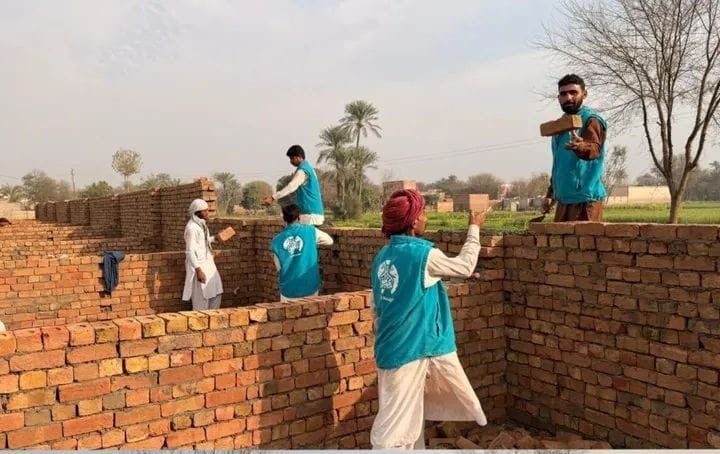
In response to the devastating floods of 2025, Al Mustafa Pakistan has launched the “Rebuild Pakistan” initiative in Tehsil Ali Pur, District Muzaffargarh, aimed at providing safe, dignified housing to displaced families.
The project focuses on rebuilding homes that meet modern living standards, with each unit featuring separate kitchens and bathrooms to ensure hygiene, privacy, and safety for residents. Alongside residential units, mosques are being constructed to restore the spiritual and communal life of affected communities.
Officials from Al Mustafa Pakistan emphasised that the initiative goes beyond bricks and mortar. “This project is about restoring hope, stability, and a secure future for families who lost everything in the floods,” they said.
The humanitarian project has received support from local and international donors, particularly from the UK-based Pakistani diaspora, who are actively contributing to the reconstruction efforts.
Al Mustafa Pakistan called on the wider community to participate in this life-changing work. “Your support can help complete more homes and reach more families in need. Together, we can rebuild lives,” the organisation stated.
Through “Rebuild Pakistan”, Al Mustafa Pakistan demonstrates a holistic approach to disaster relief, combining safe housing, spiritual restoration, and community empowerment for Pakistan’s most vulnerable families.
Staff reporter:
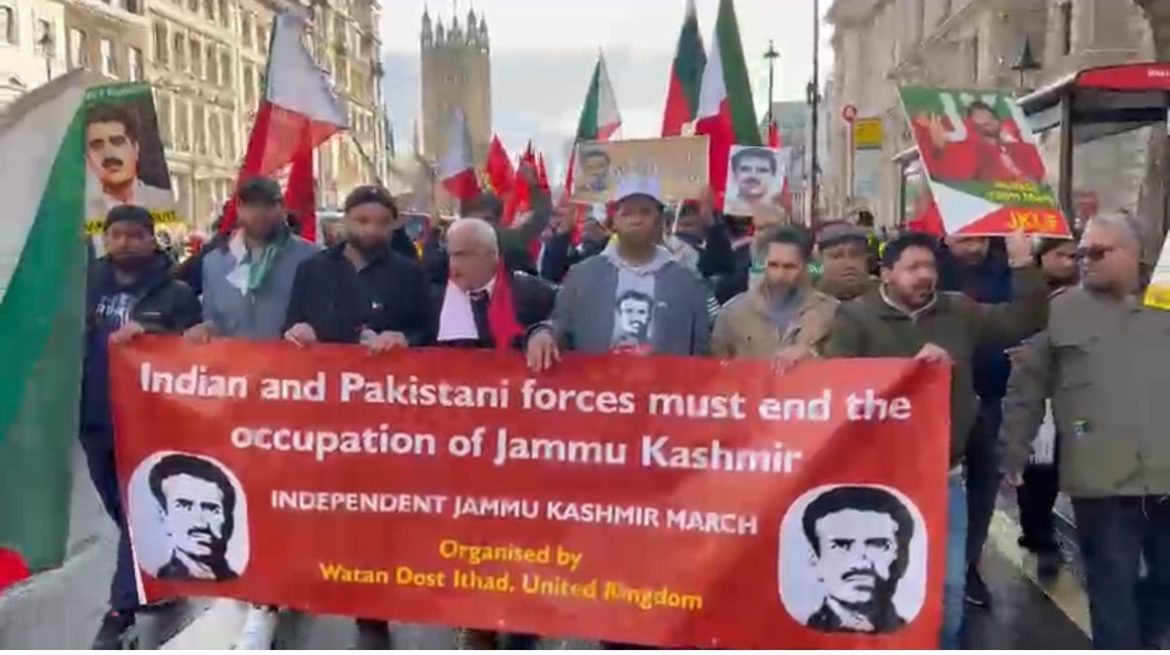
A peaceful protest march was held in London by British Kashmiris to mark the 42nd death anniversary of Maqbool Bhat, regarded by supporters as the “Father of the Nation” and a martyr of Kashmir. The march began at Parliament Square and proceeded to the Indian High Commission, where demonstrators paid tribute to Maqbool Bhat and chanted slogans in support of the people of Jammu and Kashmir and their right to self-determination.
Participants carried party flags, banners, and portraits of Maqbool Bhat. Protesters voiced opposition to what they described as India’s failure to fulfill historic commitments to the people of Jammu and Kashmir, as well as ongoing political repression and serious human rights concerns.
During the demonstration, political leaders and representatives of various organizations spoke to the media, highlighting Maqbool Bhat’s struggle, the current situation in Jammu and Kashmir, and the Kashmiri people’s demand for self-determination.
The march was led by leaders of the Jammu Kashmir Liberation Front, including Aftab Ahmed, Sardar Mehtab Ahmed, Sajid Rashid, Sabir Gul, Liaqat Lone, Tahseen Gilani, Shakeel Jarral, and Fareed Ayaz. JKNP was represented by Khawaja Hassan Mahmood, Sajid Shaheen, Saleem Yas, and Zia Ahmed. Comrade Irfan Yaqoob and Asif Khan attended on behalf of PRF/NSF, while Muhammad Yasir represented KFM.
Demonstrators condemned alleged illegal detentions, enforced disappearances, extrajudicial killings, violence against women, the use of pellet guns, and restrictions on freedom of expression. They called for the immediate release of political prisoners, including Yasin Malik and Shabbir Shah, the return of Maqbool Bhat’s remains to his family, and an end to human rights violation.
By Wajahat Ali Khan:
Ever since the creation of Pakistan, a debate has started as to whether Sir Allama Muhammad Iqbal had seen the dream of a separate country for the Muslims of India and then Quaid-e-Azam Muhammad Ali Jinnah brought this dream to fruition?
Pakistan’s textbooks, i.e., from school to university, stated that yes, this is true. In Pakistan, this thought of Allama Iqbal is officially proven by his Allahabad sermon on December 29, 1930, i.e., it is said that Allama Iqbal shed light in detail on the universality of Islam, the two-nation theory, a separate Muslim state, the role of the Islamic state, and the defensive fence of India in this historic speech. Iqbal said that Islam is a universal religion, it is for every nation, every sect, and for all times. He also analysed the European and Islamic ways of thinking about religion and gave a message to the Muslims of India to change their own destiny. Allama Iqbal was the first politician in India who presented the two-nation theory and Quaid-e-Azam brought it to fruition.


Allama Iqbal also said in his sermon that since many nationalities live in India and they are not ready to cooperate with each other; the Western style of government and democratic system cannot be introduced here. The Muslims of India have the right to live according to their traditions. After this, the poet of the East (Allama Iqbal) proposed a separate independent Islamic state comprising the Muslim majority areas of northwestern India and said, I want Punjab, the North-West Frontier Province, Sindh and Balochistan to be combined into one state. Independent government within or outside the British Empire seems to me the destiny of the Muslims of northwestern India. Allam Iqbal said to console the non-Muslims that Hindus should not be afraid of the establishment of a Muslim state because no specific religious government will be established in this state. Then, the founder of Pakistan, Quaid-e-Azam Muhammad Ali Jinnah, also agreed with the philosophy of Allama Iqbal in his presidential address in Lahore on March 23, 1940, about ten years after the Allahabad speech and explained the ideology of Pakistan in these words: “It is very difficult to understand why our Hindu friends do not understand the true nature of Islam and Hinduism. In the spiritual sense, these are not religions, but in reality, they are different social systems, and this desire is just a dream that Hindus and Muslims will ever be able to create a common nationality. Hindus and Muslims belong to two different religious philosophies, religious traditions and literature. They neither marry each other nor eat together. In fact, they belong to two different civilisations which are based on contradictory concepts. Their concepts about life are different. Hindus and Muslims belong to different historical sources. Their epic poems, heroes and historical achievements are different from each other. Often the hero of one nation is the enemy of another nation. Similarly, the victory of one is the defeat of the other.”
So, this is the point of view that historians and various writers wrote after the creation of Pakistan, keeping in mind the government’s thinking and needs, and this is the thinking of a stu
dent who has graduated from a university in Pakistan, but if we try to understand the truth of this important issue from a research perspective, slightly different facts come to light.
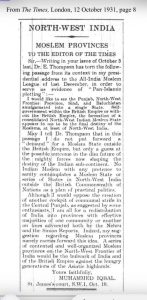
After the Allahabad speech, when pressure increased on Allama Iqbal that he had spoken of dividing India, he clarified his statement by saying, “I did not make any such suggestion.” Therefore, in this regard, Allama Iqbal wrote a statement or letter to “The British newspaper “Daily Times” on October 12, 1931. The original copy of which is being published, that’s here for the convenience for the readers.
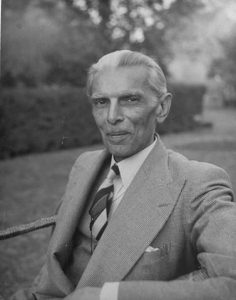
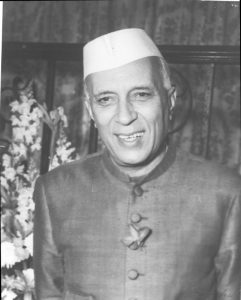
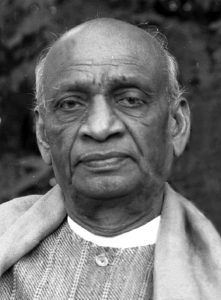
In addition, about twelve years ago I conducted a long Interview with Allama Iqbal’s son Dr Javed Iqbal at his residence in Lahore. He argued with me and in his numerous interviews with other media that, my father never gave any idea or dream of a separate country for Muslims from India. In fact, Javed Iqbal even said that Pakistan was not created by Allama Iqbal or Quaid-e-Azam, when I asked, then who do you think created Pakistan?” he replied bluntly, by Jawaharlal Nehru and Vallabhbhai Patel ! because Allama Iqbal’s idea was that a Muslim state could be created within India or British India, and Muhammad Ali Jinnah was also in agreement with the Cabinet Mission Plan. In the light of the Lahore Resolution of March 23, 1940, it was a unanimous demand of the Muslims of the subcontinent under the leadership of Quaid-e-Azam that all those areas where Muslims are in the majority should be given full provincial autonomy while remaining within the constitutional boundaries of India. The British rulers had also accepted this demand.
Dear readers, we have presented a different point of view with historical references from before the formation of Pakistan. If any reader disagrees with this, they can email us with logic and evidence. “The London Post” will publish it without any hesitation.

Explanation by Allama Iqbal published in “The Times” London on October 12, 1931 that I did not demand a separate Country for the Muslims of India
By our City
reporter
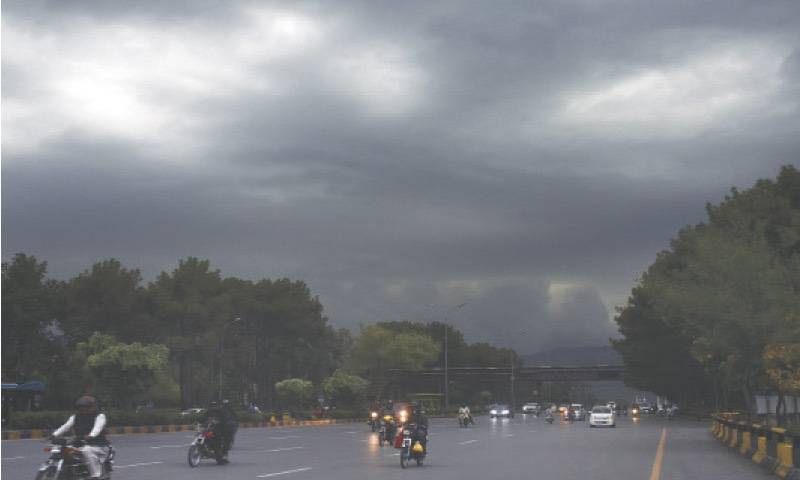
After relentless wet and gloomy conditions, wintry weather is set to return to parts of the UK with snow and ice in the forecast for many. Arctic air will accompany the change in conditions, dropping temperatures as many as six degrees below average. The Met Office has issued yellow warnings for snow and ice across Scotland and northern England from 16:00 Thursday to 12:00 Friday. Rain will fall as snow initially over higher ground before reaching to lower levels through Thursday night.
By Wajahat Ali Khan:
Ever since the creation of Pakistan, a debate has started as to whether Sir Allama Muhammad Iqbal had seen the dream of a separate country for the Muslims of India and then Quaid-e-Azam Muhammad Ali Jinnah brought this dream to fruition?
Pakistan’s textbooks, i.e., from school to university, stated that yes, this is true. In Pakistan, this thought of Allama Iqbal is officially proven by his Allahabad sermon on December 29, 1930, i.e., it is said that Allama Iqbal shed light in detail on the universality of Islam, the two-nation theory, a separate Muslim state, the role of the Islamic state, and the defensive fence of India in this historic speech. Iqbal said that Islam is a universal religion, it is for every nation, every sect, and for all times. He also analysed the European and Islamic ways of thinking about religion and gave a message to the Muslims of India to change their own destiny. Allama Iqbal was the first politician in India who presented the two-nation theory and Quaid-e-Azam brought it to fruition.
Allama Iqbal also said in his sermon that since many nationalities live in India and they are not ready to cooperate with each other; the Western style of government and democratic system cannot be introduced here. The Muslims of India have the right to live according to their traditions. After this, the poet of the East (Allama Iqbal) proposed a separate independent Islamic state comprising the Muslim majority areas of northwestern India and said, I want Punjab, the North-West Frontier Province, Sindh and Balochistan to be combined into one state. Independent government within or outside the British Empire seems to me the destiny of the Muslims of northwestern India. Allam Iqbal said to console the non-Muslims that Hindus should not be afraid of the establishment of a Muslim state because no specific religious government will be established in this state. Then, the founder of Pakistan, Quaid-e-Azam Muhammad Ali Jinnah, also agreed with the philosophy of Allama Iqbal in his presidential address in Lahore on March 23, 1940, about ten years after the Allahabad speech and explained the ideology of Pakistan in these words: “It is very difficult to understand why our Hindu friends do not understand the true nature of Islam and Hinduism. In the spiritual sense, these are not religions, but in reality, they are different social systems, and this desire is just a dream that Hindus and Muslims will ever be able to create a common nationality. Hindus and Muslims belong to two different religious philosophies, religious traditions and literature. They neither marry each other nor eat together. In fact, they belong to two different civilisations which are based on contradictory concepts. Their concepts about life are different. Hindus and Muslims belong to different historical sources. Their epic poems, heroes and historical achievements are different from each other. Often the hero of one nation is the enemy of another nation. Similarly, the victory of one is the defeat of the other.”


So, this is the point of view that historians and various writers wrote after the creation of Pakistan, keeping in mind the government’s thinking and needs, and this is the thinking of a stu
dent who has graduated from a university in Pakistan, but if we try to understand the truth of this important issue from a research perspective, slightly different facts come to light.
After the Allahabad speech, when pressure increased on Allama Iqbal that he had spoken of dividing India, he clarified his statement by saying, “I did not make any such suggestion.” Therefore, in this regard, Allama Iqbal wrote a statement or letter to “The British newspaper “Daily Times” on October 12, 1931. The original copy of which is being published, that’s here for the convenience for the readers.
In addition, about twelve years ago I conducted a long Interview with Allama Iqbal’s son Dr Javed Iqbal at his residence in Lahore. He argued with me and in his numerous interviews with other media that, my father never gave any idea or dream of a separate country for Muslims from India. In fact, Javed Iqbal even said that Pakistan was not created by Allama Iqbal or Quaid-e-Azam, when I asked, then who do you think created Pakistan?” he replied bluntly, by Jawaharlal Nehru and Vallabhbhai Patel ! because Allama Iqbal’s idea was that a Muslim state could be created within India or British India, and Muhammad Ali Jinnah was also in agreement with the Cabinet Mission Plan. In the light of the Lahore Resolution of March 23, 1940, it was a unanimous demand of the Muslims of the subcontinent under the leadership of Quaid-e-Azam that all those areas where Muslims are in the majority should be given full provincial autonomy while remaining within the constitutional boundaries of India. The British rulers had also accepted this demand.
Dear readers, we have presented a different point of view with historical references from before the formation of Pakistan. If any reader disagrees with this, they can email us with logic and evidence. “The London Post” will publish it without any hesitation.

Explanation by Allama Iqbal published in “The Times” London on October 12, 1931 that I did not demand a separate Country for the Muslims of India