Political Reporter
Greens broadly welcome animal welfare strategy but urge PM to follow Wales in banning greyhound racing. The Green party has broadly welcomed the government’s animal welfare strategy. In a statement, the Green MP Adrian Ramsay said. There is much to welcome in the animal welfare strategy, but it must have real teeth to deliver for animals. Ministers must set clear timescales to phase out crates and cages, properly support farmers through the transition and not allow imports that don’t meet UK standards. I welcome the action on snares, hunting and puppy farming. Puppy legislation must end breeding for extreme, unhealthy traits in dogs. The strategy could go further for animals, particularly by ending greyhound racing, as the Welsh government is doing.
Ending the use of farrowing crates and cages – as we called for in the cross-party letter I organised – is particularly crucial for tackling cruelty, and the strategy must set out how and when this will happen.
News
Six UK immigration officers charged with money laundering offences
PA News
London
Six immigration officers have been charged with offences after an investigation into alleged thefts from migrants and money laundering.
Five of the officers are facing charges including conspiracy to steal and misconduct in public office, the Crown Prosecution Service (CPS) said on Tuesday. All six have been charged with money laundering offences.
Besmir Matera, 36, Lee-Ann Evanson, 42, John Bernthal, 53, Ben Edwardes, 45, Jack Mitchell, 33, and David Grundy, 43, will appear at Westminster magistrates court on 29 January.
Malcolm McHaffie, the head of the CPS special crime division, said the charges followed a Home Office investigation into alleged thefts from migrants and money laundering between August 2021 and November 2022.
“Our prosecutors have worked to establish that there is sufficient evidence to bring the case to court and that it is in the public interest to pursue criminal proceedings. We have worked closely with the Home Office’s anti-corruption criminal investigations unit as they carried out their investigation,” McHaffie said.
Matera, of Reigate, Surrey, is charged with conspiracy to steal; misconduct in public office; concealing, disguising, converting, transferring or removing criminal property; obtaining leave to enter to remain in the UK by deception; and three counts of possession of an identity document with improper intention.
Evanson, of Bracknell, Berkshire, Bernthal, of Welling, south-east London, Edwardes, of Bexleyheath, south-east London, and Mitchell, of Dover, Kent, are each charged with conspiracy to steal, misconduct in public office and concealing, disguising, converting, transferring or removing criminal property.
Grundy, of Croydon, south London, is charged with concealing, disguising, converting, transferring or removing criminal property.
By Wajahat Ali Khan
London
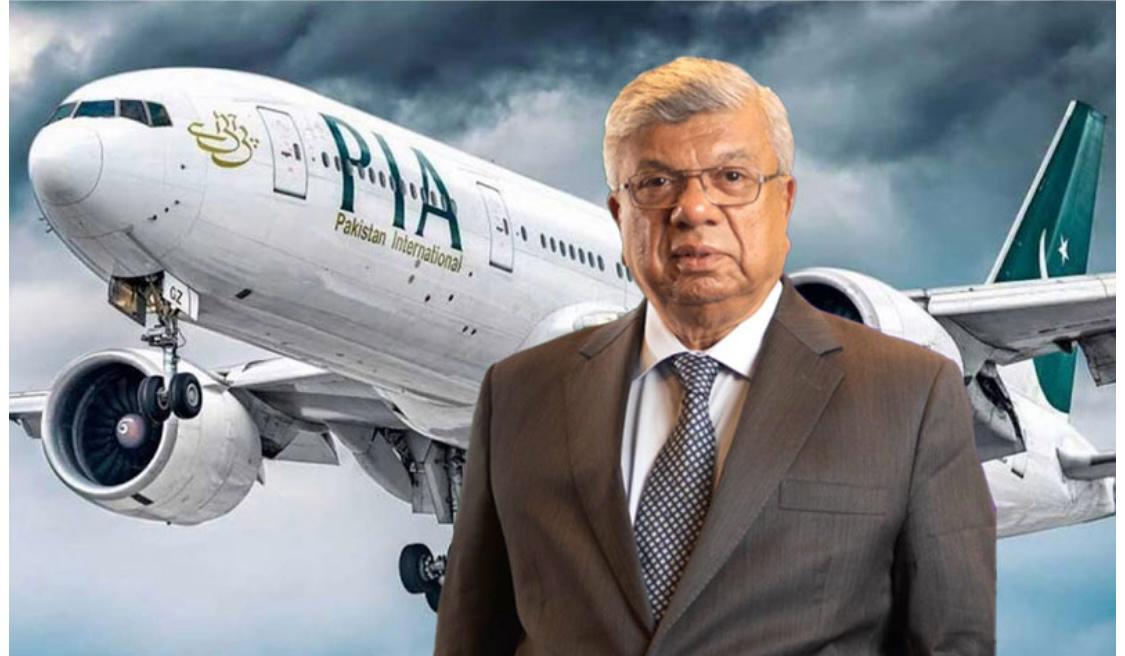
The sale of Pakistan International Airlines (PIA) is not a sudden policy whim nor an isolated economic decision. It is the inevitable outcome of decades of mismanagement, political interference, mounting financial losses, and a changing global aviation landscape that Pakistan could no longer afford to ignore.
Once a symbol of national pride, PIA was among Asia’s leading airlines in the 1960s. It trained crews for foreign carriers, pioneered routes, and represented a confident, outward-looking Pakistan. Today, however, the airline stands as a textbook case of how state-owned enterprises collapse when commercial logic is sacrificed at the altar of politics.
A History of Financial Bleeding: PIA had been running on losses for years, accumulating massive debt that ran into hundreds of billions of rupees. These losses were not caused by market forces alone but by chronic inefficiency: overstaffing, poor fleet management, outdated systems, and non-competitive operations. Successive governments continued to inject taxpayer money to keep the airline afloat, turning PIA into a permanent burden on the national exchequer.
In a country struggling with fiscal deficits, inflation, and external debt, subsidizing a loss-making airline became economically indefensible. Every bailout meant fewer resources for health, education, and social welfare.
Political Interference and Governance Failure
Perhaps the biggest reason behind PIA’s downfall was political interference. Appointments were often made on political grounds rather than merit. Routes were opened or closed for political convenience, not profitability. Decision-making was slow and inconsistent, tied to changing governments and bureaucratic control rather than professional airline management.
No private airline can survive under such conditions—yet PIA was expected to compete globally while carrying the dead weight of political influence at home.
Global Aviation Standards and Safety Issues: PIA’s troubles deepened when international aviation authorities raised serious concerns about safety and licensing standards. The temporary ban on PIA flights to key destinations badly damaged its reputation, reduced revenue streams, and pushed passengers toward foreign carriers. Trust, once lost in aviation, is extremely difficult to regain.
For an airline already struggling financially, this reputational blow proved devastating.
IMF Pressure and Economic Reality
Pakistan’s broader economic situation also played a decisive role. International lenders, particularly the IMF, consistently urged structural reforms, including the privatization or restructuring of state-owned enterprises. PIA topped that list.
Selling the airline—or at least transferring its management to the private sector—was seen as a way to stop financial hemorrhaging, improve efficiency, and signal seriousness about economic reform.
Privatization as a Last Resort, Not a First Choice
Critics argue that selling a national airline is an admission of failure—and they are not entirely wrong. But it is also an admission of reality. The choice was not between keeping PIA as a proud national carrier or selling it cheaply; the real choice was between reform through privatization or eventual collapse through neglect.
Private ownership brings commercial discipline, professional management, and accountability—qualities that PIA lacked under state control. While privatization is no magic wand, it offers a chance to rebuild the airline on sustainable lines.
A Lesson Beyond PIA:The sale of PIA should serve as a national lesson. Institutions do not fail overnight; they decay slowly when incompetence is protected, losses are normalized, and accountability is absent. If Pakistan wishes to avoid repeating this story, it must rethink how it runs public enterprises—placing merit over politics and performance over patronage.
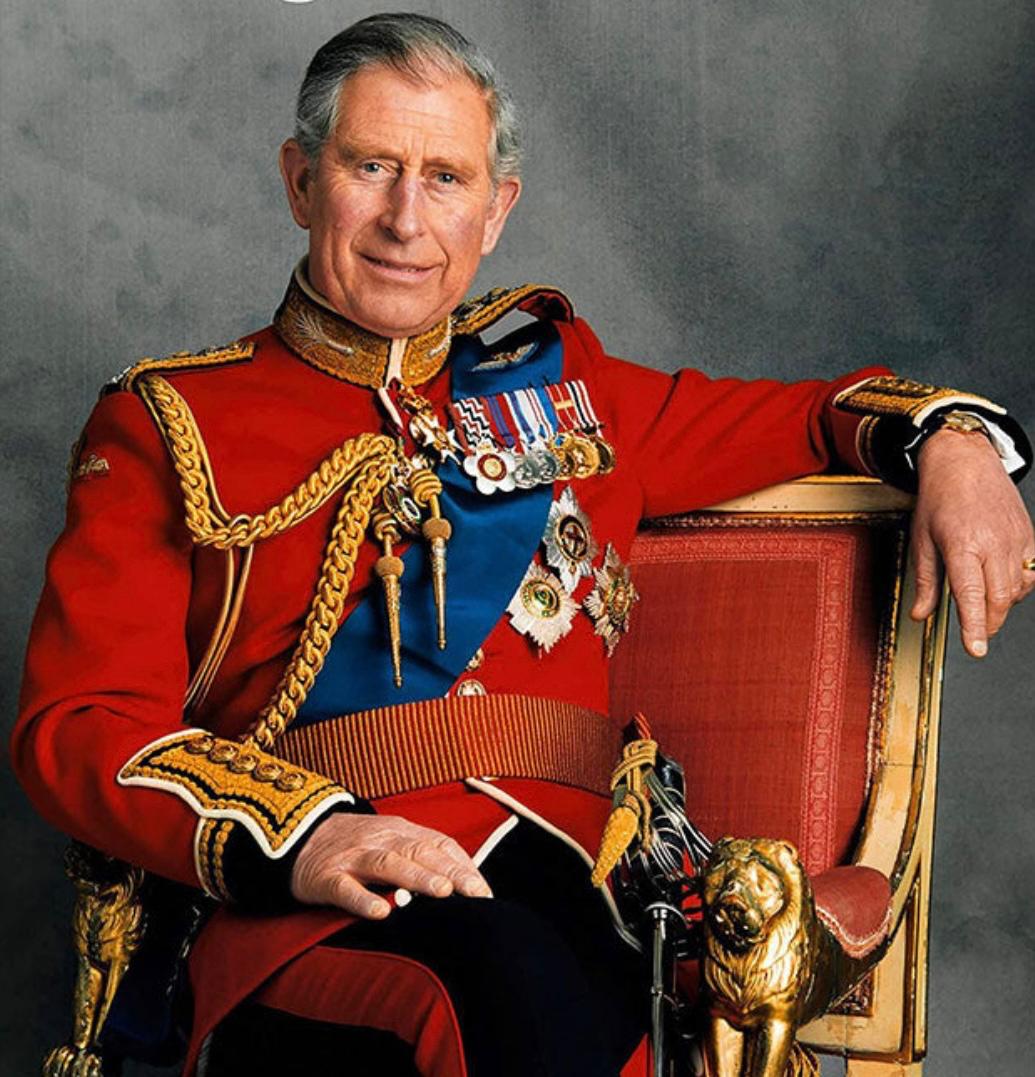
King Charles has used his Christmas message to call on communities to come together in an increasingly divided world, urging them to get “to know our neighbours”.
His traditional speech, recorded in Westminster Abbey, called on themes of unity and respect in a time of global conflict.
“Indeed as our world seems to spin ever faster, our journey may pause to quieten our minds, in TS Eliot’s words, ‘at the still point of the turning world’ and allow ourselves to renew,” he said. The speech included a call for quiet and calm as “our world seems to spin ever faster”, with King Charles quoting poet TS Eliot’s words about finding the “still point of the turning world”.
A royal aide said this was a reference to the social impact of new technologies on communities, and that people might consider a “digital detox”.
For the second year, the message was delivered in a location away from a royal palace, the King using a chapel in the abbey to talk about life’s “pilgrimage” and the lessons for current times.
In front of Christmas trees originally used for the Princess of Wales’s carol concert at the Abbey, he spoke of the importance of community cohesion and bridging divides.
“As I meet people of different faiths, I find it enormously encouraging to hear how much we have in common,” said the King, speaking under the chapel’s famous vaulted ceiling.
“With the great diversity of our communities we can find the strength to ensure that right triumphs over wrong.” He praised the wartime generation’s “courage and sacrifice” and their togetherness in the face of adversity, with the broadcast showing pictures of this year’s commemorations marking 80 years since the end of World War Two in Europe and the Far East. “These are the values which have shaped our country. “As we hear of division, both at home and abroad, they are the values of which we must never lose sight,” said the King.
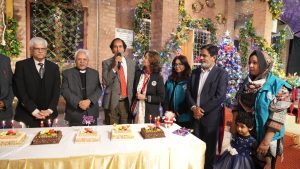
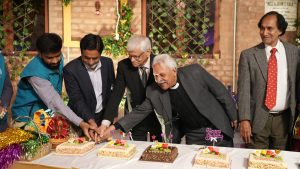
Al-Mustafa Welfare Trust Hosts Interfaith Christmas Celebration at Lahore Church
Lahore
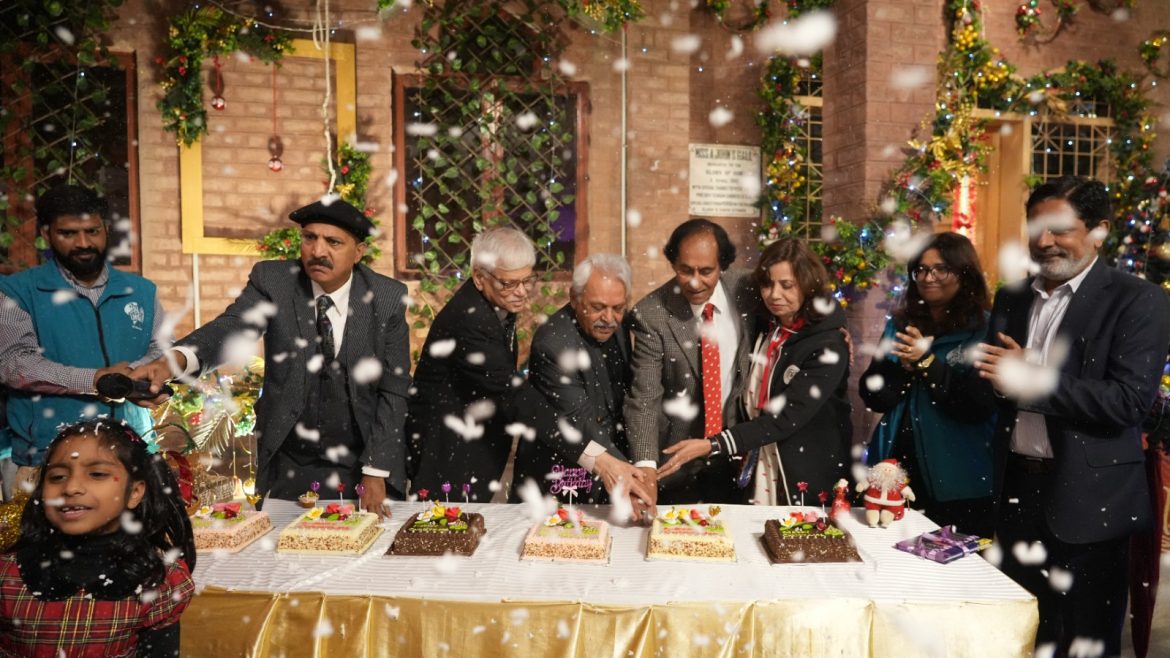
Al-Mustafa Welfare Trust, in partnership with Gyan Book Gallery, hosted an interfaith Christmas celebration at a local church in Lahore to promote religious harmony and express solidarity with the Christian community.
The event drew leading figures from a range of faiths and professions, and saw strong participation from women and children. Gifts were distributed among young attendees, while songs and short speeches highlighted themes of unity, tolerance and mutual respect. The evening concluded with a communal dinner. Proceedings were conducted by Aftab Javed.
Those attending included historian Hassan Jafar Zaidi, senior poet Nazeer Qaiser, Al-Mustafa’s Head of Media and Public Relations Muhammad Nawaz Kharl, Dr Amjad Tufail, Dar-e-Najaf Zaibi, Tauqeer Ahmed Sharifi, Muhammad Abbas Mirza, Muhammad Ali Sabri, Shabnam Mirza, David Percy, Mumtaz Rashid Lahori, Farooq Sahar, Salman Rasool Ashraf, Naseer Ahmed Naseer, Sohail Sani and Minza Sahar.

Local Government Secretary Steve Reed has written to all council leaders in England warning them not to introduce four-day working weeks.
As reported by the Telegraph, the letter is understood to say that “council staff undertaking part-time work for full-time pay without compelling justification would be considered an indicator, among a wide range of factors, of potential failure”. He added that he hoped he had made the government’s policy “unambiguously clear to all councils”.
A Labour source said “Voters deserve high standards and hard work from local councils, and seeing council staff working a four-day week just won’t cut it.”
“They should get on with the job and make sure residents get the best service possible five days a week,” the source added. In the letter to the councils, which was reported by The Telegraph, external, Reed says that local authorities should not be offering “full-time pay for part-time work”. Reed previously expressed his “deep disappointment” in the first UK council to adopt a four-day working week.
South Cambridgeshire District Council, which is led by the Liberal Democrats, became the first to make a permanent move to a four-day week in July after it began trialling a shorter working week in 2023. Reed said there had been a decline in performance in the council’s housing service and he asked how the local authority would “mitigate” this.
The government can intervene in any council if it is deemed to be failing. Last year Prime Minister Sir Keir Starmer also rejected civil servants’ demands for a four-day working week. Critics of a four-day week say it would reduce productivity and slow economic growth but others disagree.
A trial in the Scottish public sector this year found an increase in productivity and improvements in staff well-being. The Autonomy Institute, which was commissioned by the Scottish government to co-ordinate the pilot, found that 98% of staff judged morale and motivation to have improved. Helen Catt & George Wright
BBC Political Correspondent