Staff reporter
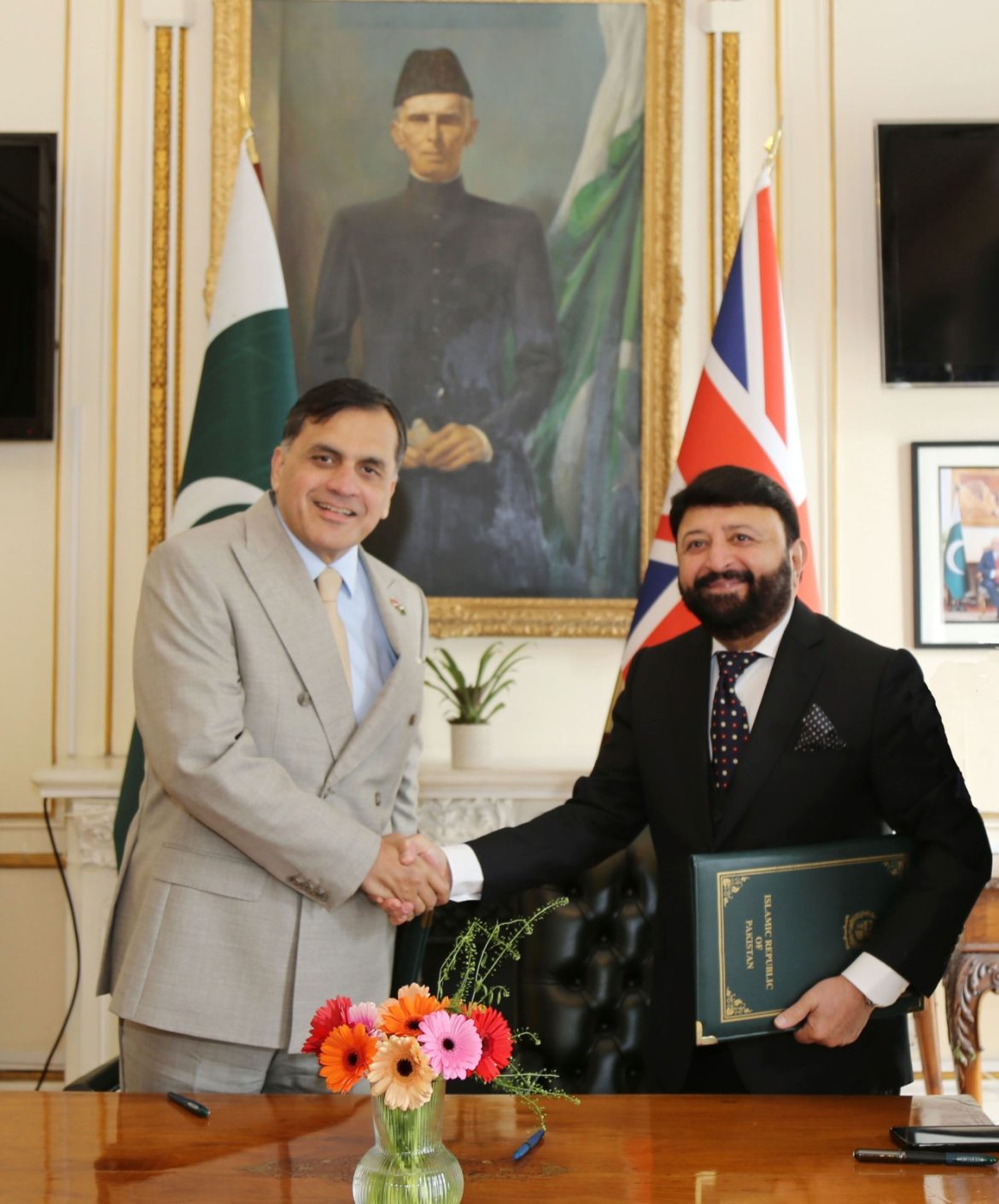
During a solemn ceremony held earlier this week in the High Commission for Pakistan, signed a landmark agreement with Gerrys Visa Services Ltd., designating the latter as the sole authorised partner for establishing a network of Facilitation Centres to provide Consular Services across the United Kingdom. The initiative has been undertaken in line with the approval of the Ministry of Foreign Affairs and aims to enhance the accessibility and efficiency of consular services for the Pakistani community throughout the country.
The initiative marks a major step forward in the High Commission’s commitment to serving the two million strong Pakistani diaspora in the UK. Under the agreement, Gerrys Visas Services Ltd. will operate the only authorized service centres nationwide, enabling overseas Pakistanis to access a wide range of consular services, including the processing of visas, passports, NADRA related documents, and attestation services.
Speaking on the occasion, the High Commissioner for Pakistan, Dr. Muhammad Faisal, stated, “this partnership is about putting overseas Pakistanis first. By decentralizing these essential services through authorized partners like Gerrys, we are eliminating the burden of long distance travel and making consular access faster, safer, and more convenient.”
At the same time, a key objective of the agreement is to combat the growing menace of unauthorized and fraudulent visa and NADRA facilitation centres operating across the UK, which have been charging exorbitant fees and perpetrating scams that harm vulnerable applicants. The new framework will also help prevent data pilferage by ensuring that personal information is no longer provided to unapproved entities.
Mr. Afzal Wali Muhammad, Chairman of Gerrys Visa Services Ltd., expressed that the company is honoured to be entrusted as the single authorised partner for this transformative project. He pledged to ensure world-class, transparent, and secure services for the Pakistani community across the UK.
The first Gerrys Visa Services Ltd. Facilitation Centre will be inaugurated in May 2026, with a phased expansion planned to establish a comprehensive presence across all major regions of the United Kingdom. Further details regarding locations, services, and appointment procedures will be announced in the coming weeks.
UK
Ahmad Shahzad OBE, Chairman Human Rights Society of Pakistan UK
Pakistan’s bold and visionary diplomacy has not only saved thousands of precious lives but has decisively averted a devastating war in the region. At a time of rising global tensions, Pakistan stepped forward as a responsible and peace-driven nation, opening the door to dialogue and an honourable, negotiated settlement.
The Human Rights Society of Pakistan proudly commends the Government of Pakistan and the leadership of the Pakistan Army for their unity, wisdom, and decisive action in bringing both parties to the negotiating table in Islamabad. This extraordinary achievement reflects strategic foresight, courage, and an unwavering commitment to peace over conflict.
Today, the world acknowledges and appreciates Pakistan’s sincere and tireless efforts for global peace. Pakistan has once again demonstrated that it is not only a key regional player but a principled nation that stands firmly for stability, dialogue, and humanity.
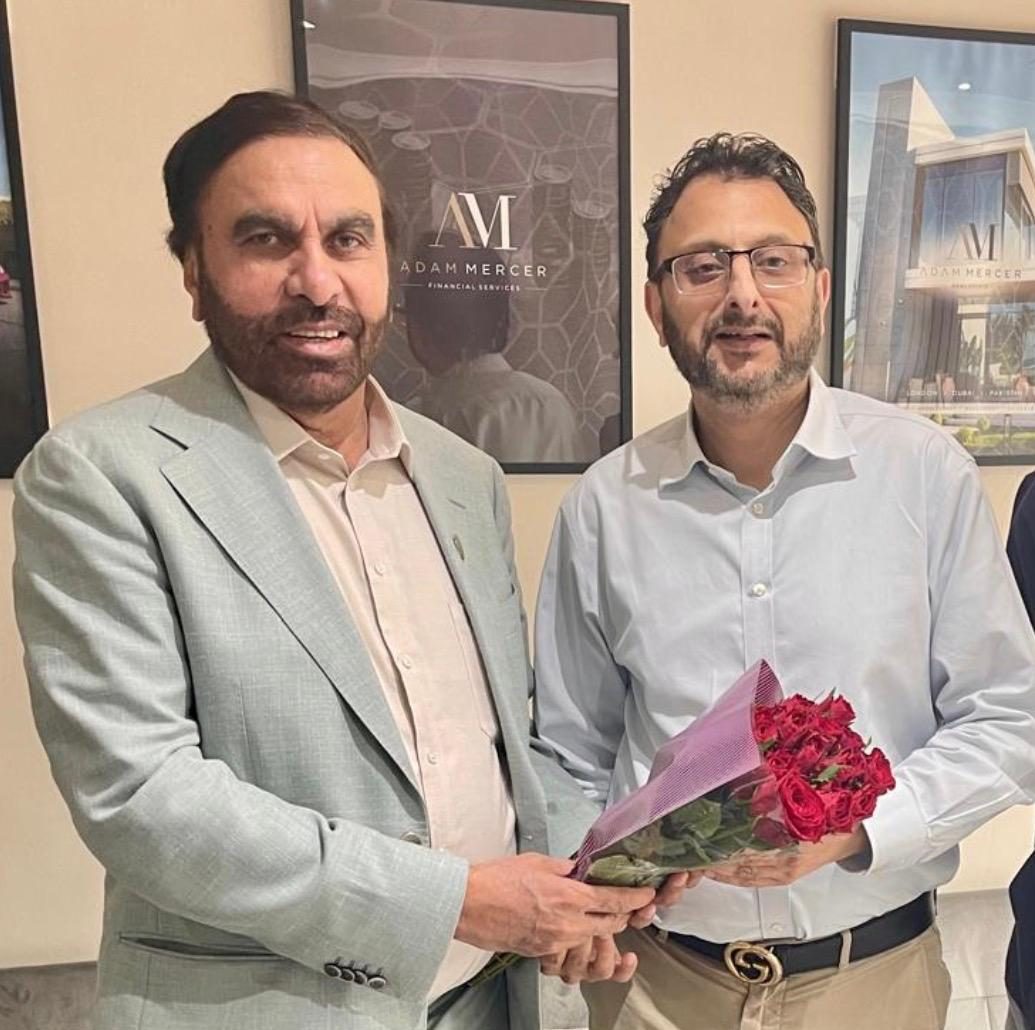
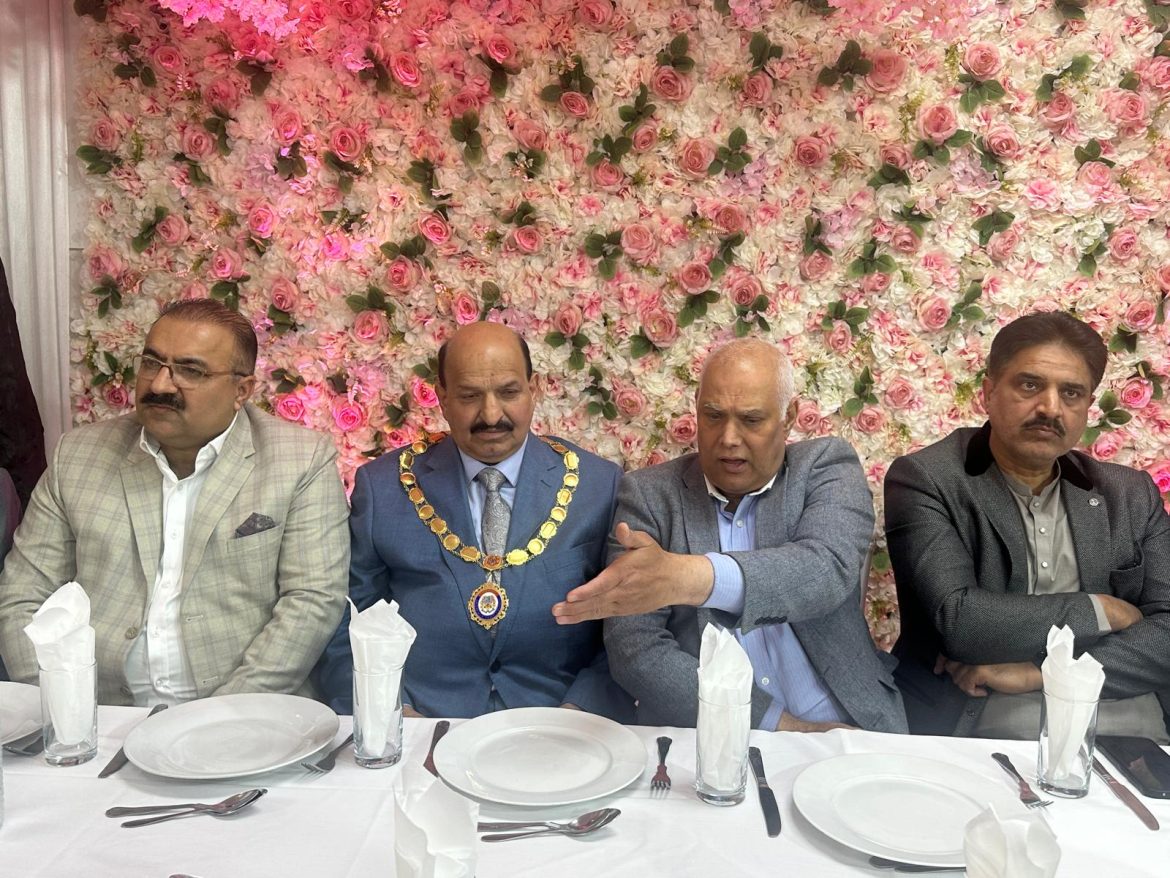
Abdulrazzaq Sajid, Chairman of AlMustafa Welfare Trust, presents a bouquet to Shafique Rehman, a prominent London socialite and General Secretary of Hounslow Jamia Mosque on his appointment as Advisor to the UK by the President of Azad Kashmir Chaudhry Latif Akbar
Recently, Raja Shaukat Hayat, the elder brother of the famous British socialite Raja Mazhar Hayat, passed away in Pakistan.
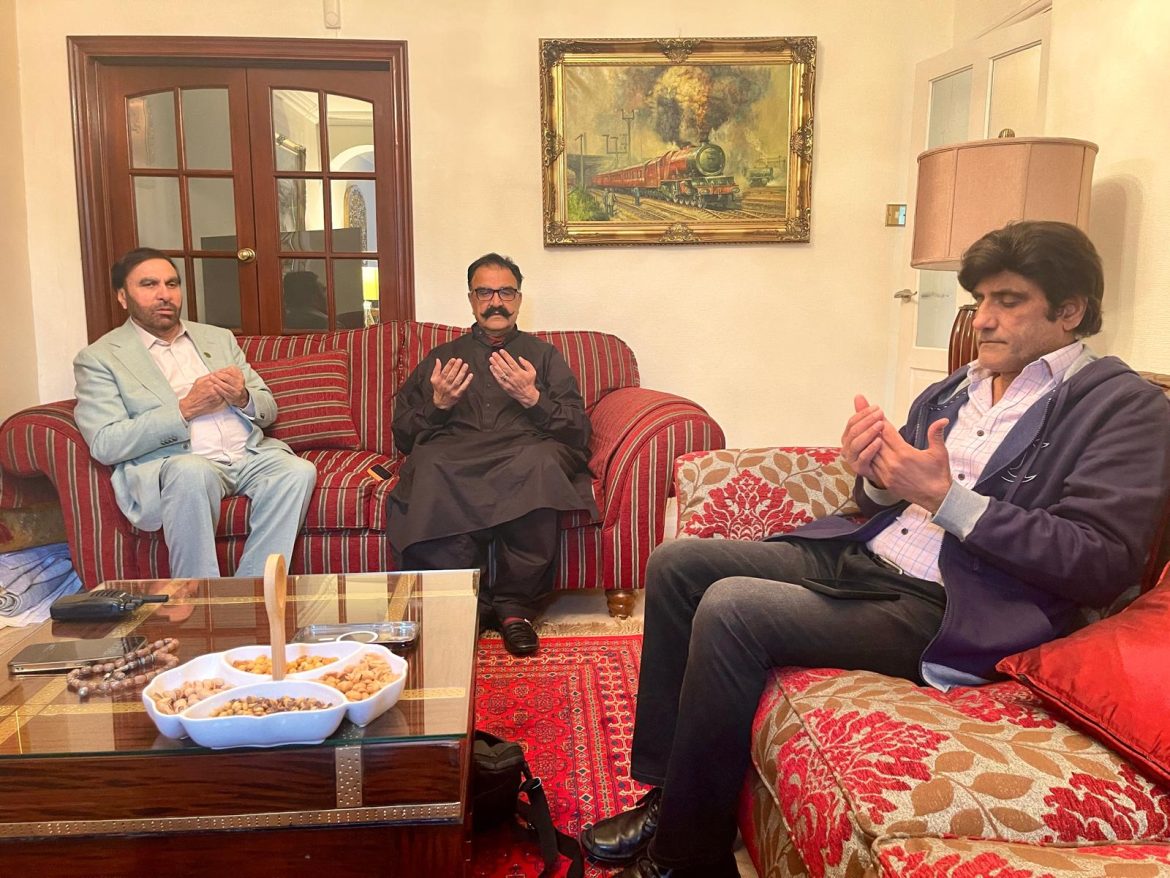
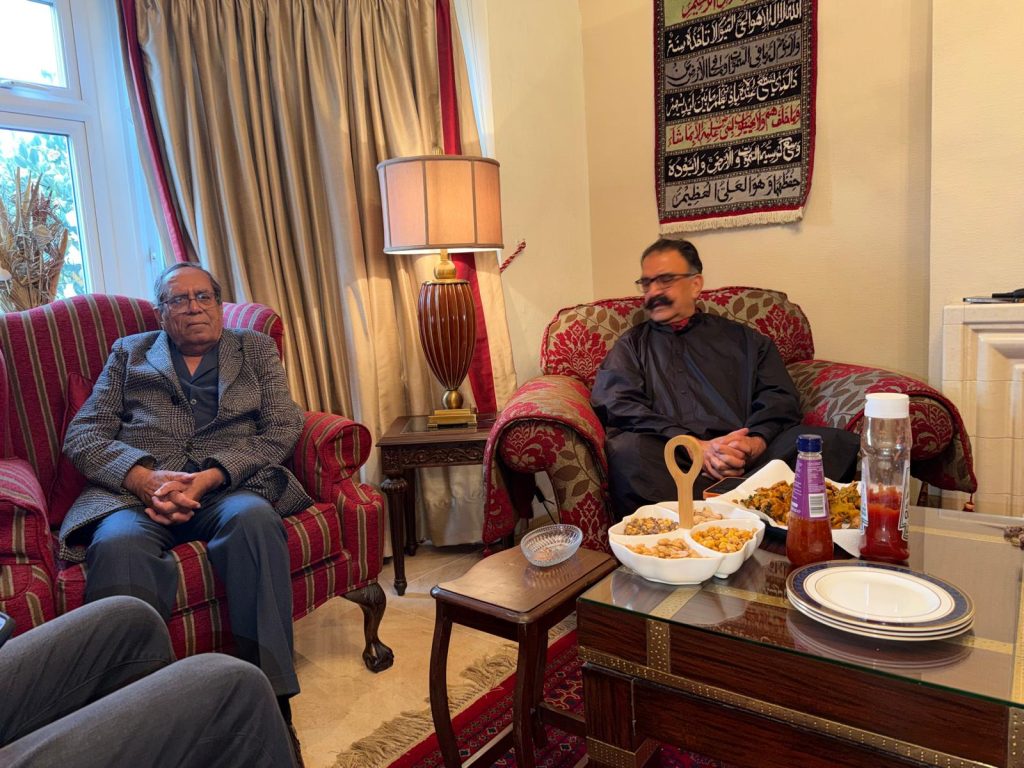
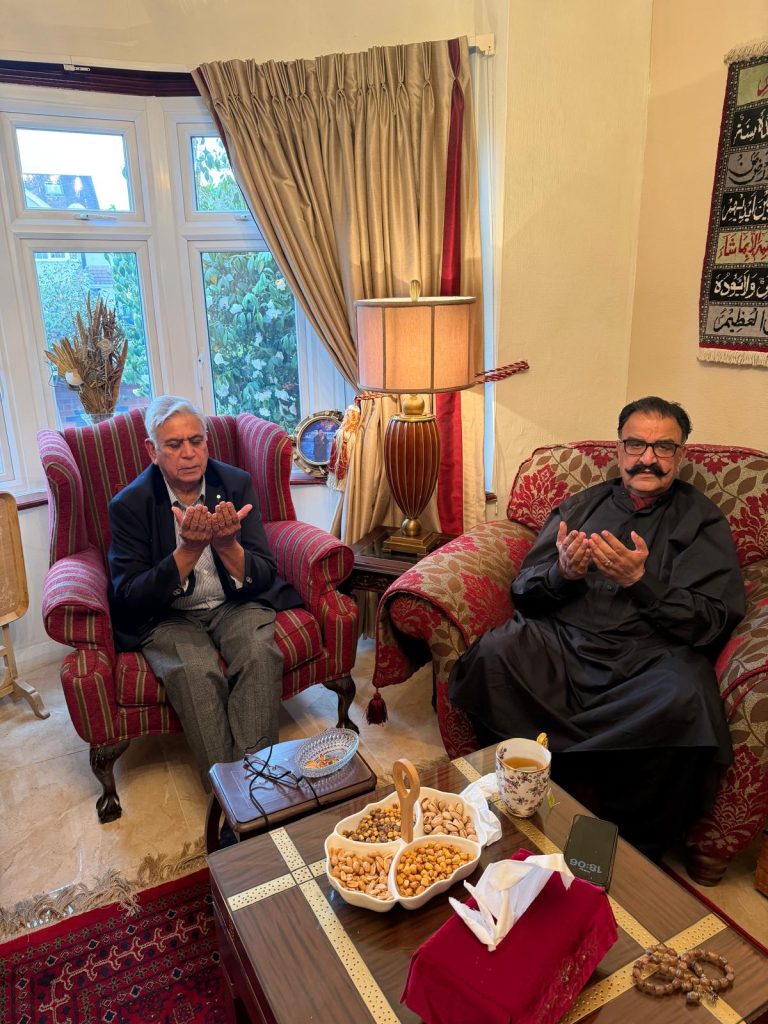
London: Recently, Raja Shaukat Hayat, the elder brother of the famous British socialite Raja Mazhar Hayat, passed away in Pakistan. In this moment of grief, Abdulrazzaq Sajid, Chairman of “AlMustafa Welfare Trust”, Nazar Lodhi, a political and social figure from Slough, journalist Wajahat Ali Khan and Raja Faiz Sultan visited Raja Mazhar Hayat’s residence and offered their condolences. Here are some pictures from the occasion.

Bureau report
Manchester
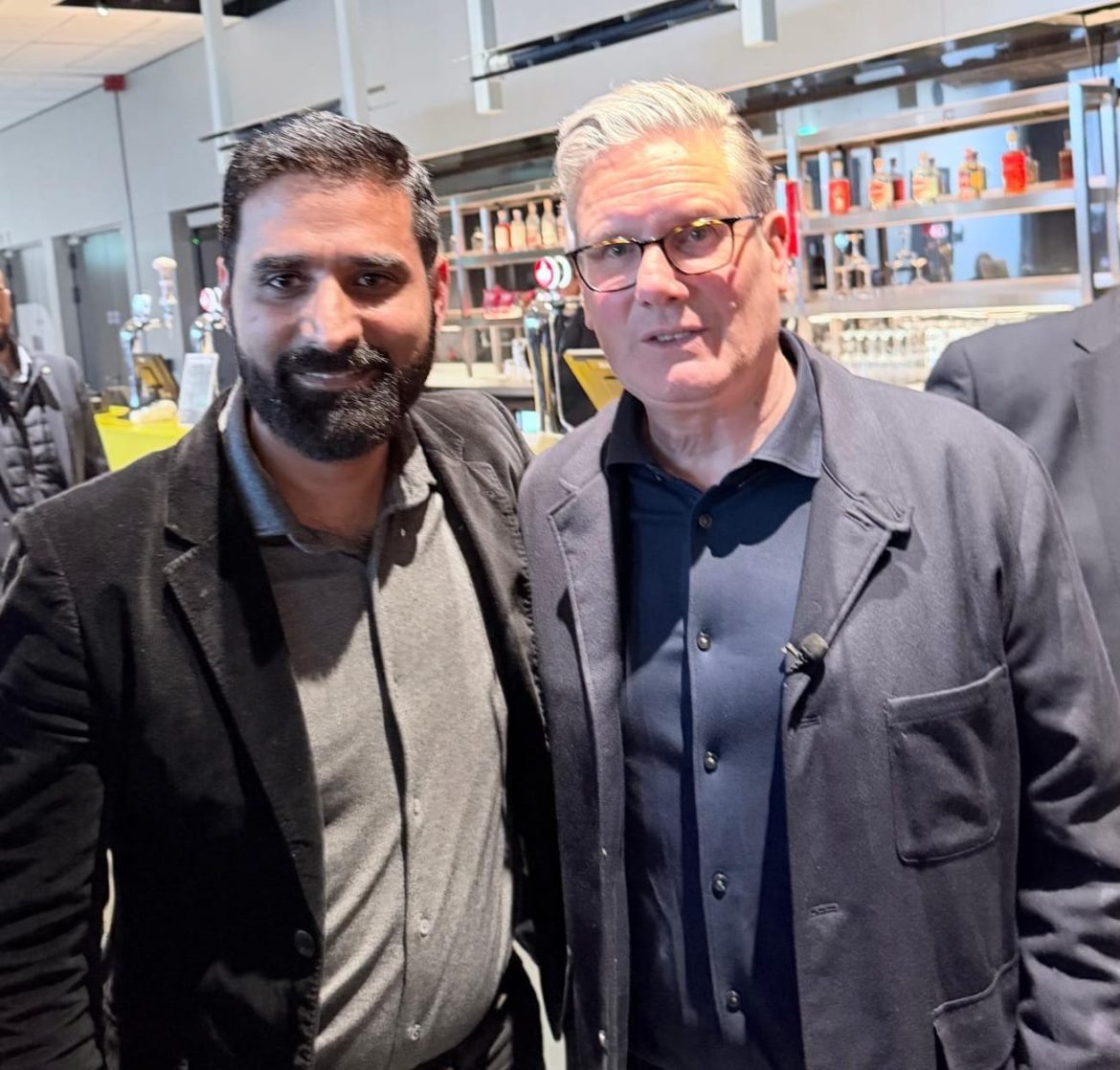
The prominent businessman Zia Fareed called on Prime Minister Keir Starmer in Manchester. The Prime Minister praised Pakistan’s role in the Iran–US conflict and assured his full support for global peace. Zia Fareed also expressed gratitude to the Prime Minister for his constructive role and his recent visits in the Middle East, as well as his efforts toward a ceasefire between Lebanon and Iran.
Bureau report
Manchester
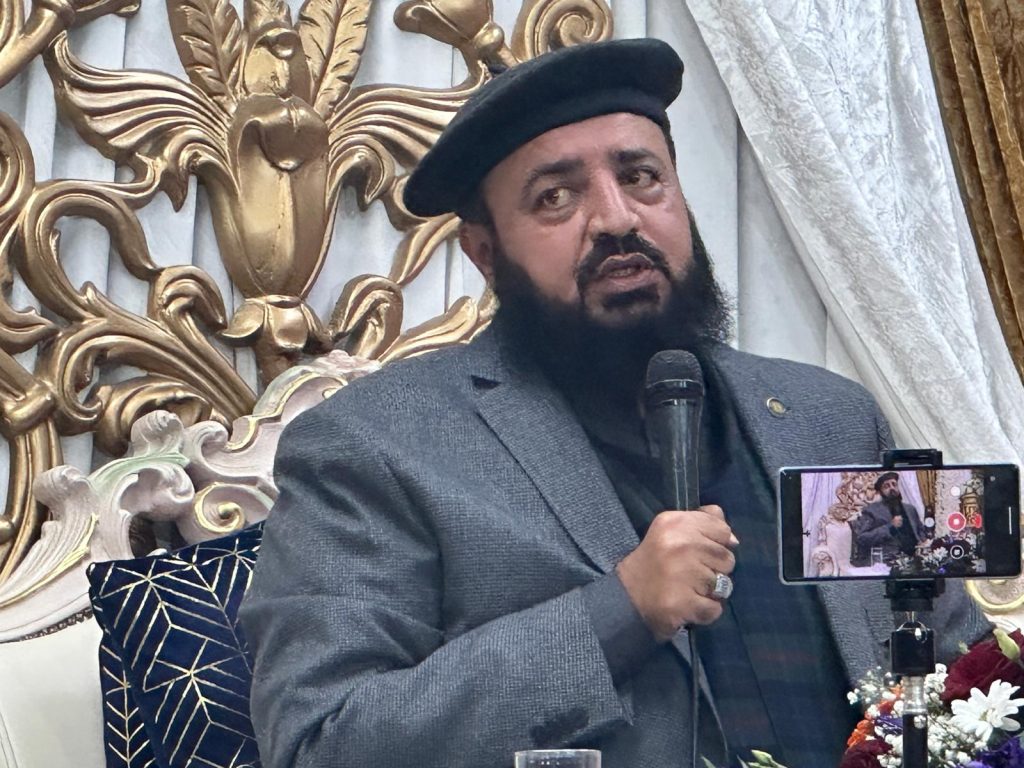
The annual Sirajam Muneera Conference was held at a local hall in Manchester. The Sheikh of Silsilah Naqshbandia Owaisiah, Ameer Abdul Qadeer Awan, addressed the event and he was warmly welcomed on his arrival.
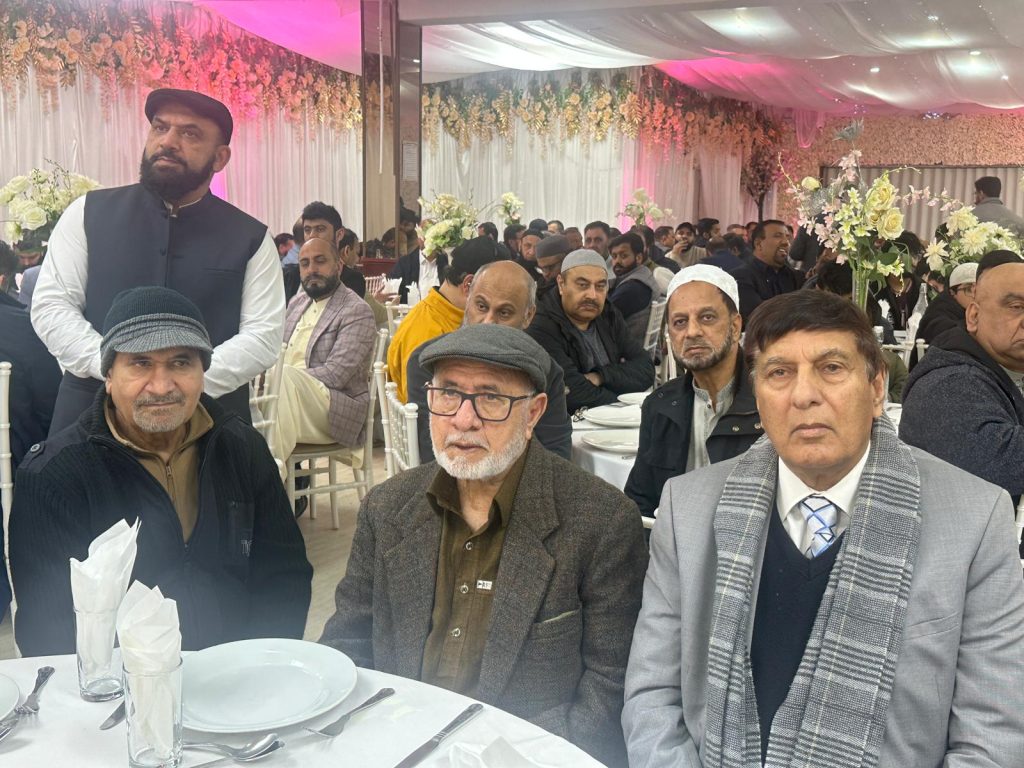
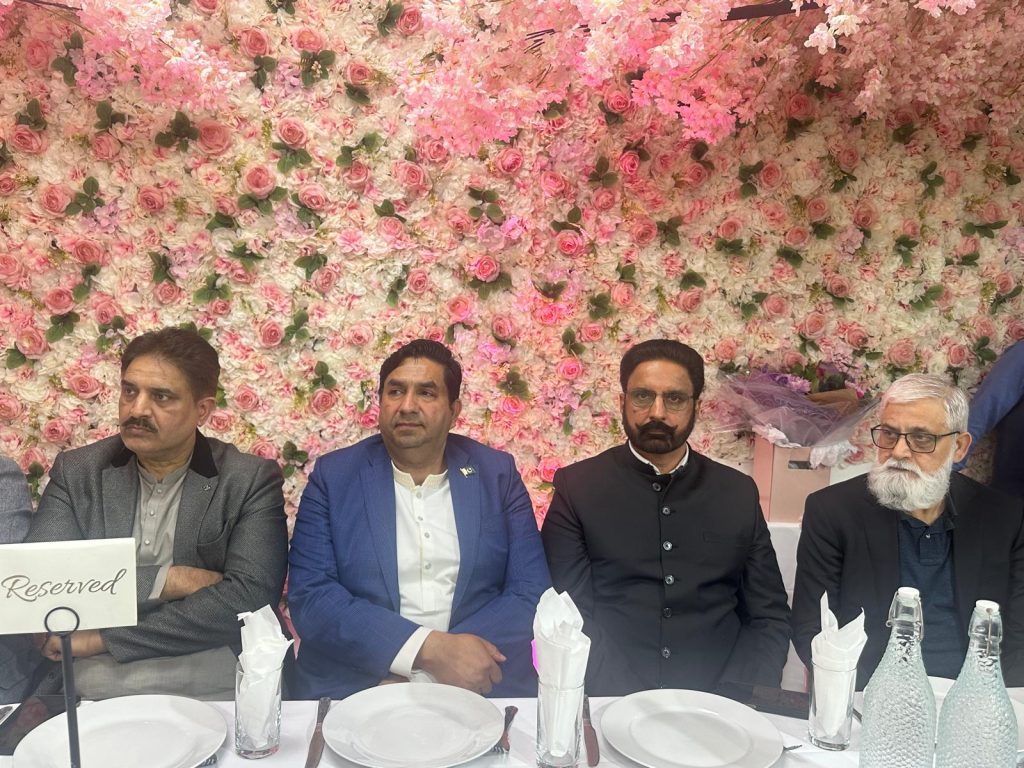
The conference was attended by Pakistan’s Consul General Imtiaz Feroz Gondal, Cllr Abid Latif Chouhan, Cllr Shahbaz Sarwar, local Mayor Muhammad Khan, Ustad Muhammad Safdar, Malik Zamir Awan, Rasab Khan, Aslam Jora, and a large number of business, political, and religious community leaders, as well as a large number of local people. Ameer Abdul Qadeer Awan offered special prayers for the Muslim Ummah, Pakistan, the participants, and the organisers.

In his address, Ameer Abdul Qadeer Awan said that human beings are a special creation of Allah and the most honoured among all creatures. He said that remembrance of Allah is necessary to purify the inner self and that the purpose of human creation is to worship Allah. He said that the Holy Prophet Muhammad (PBUH) is the role model for guidance, and Muslims should follow his teachings in their lives. He added that on the Day of Judgement, forgiveness will be granted through Allah’s mercy, not only through prayers. “We should not forget the remembrance of Allah while being engaged in family, children, and business, as this world is temporary and everything will come to an end,” he added. He stressed that we should work for the betterment of humanity, and that strong family systems can help build strong relationships among us. He said that Muslims should play a positive role in British society, pay taxes, and live by good values. He also highlighted the importance of spending time with children and said true peace of heart comes from the remembrance of Allah.
Business Community Attends Marketing Training Session with Nick James
Tajammul Gurmani
Manchester
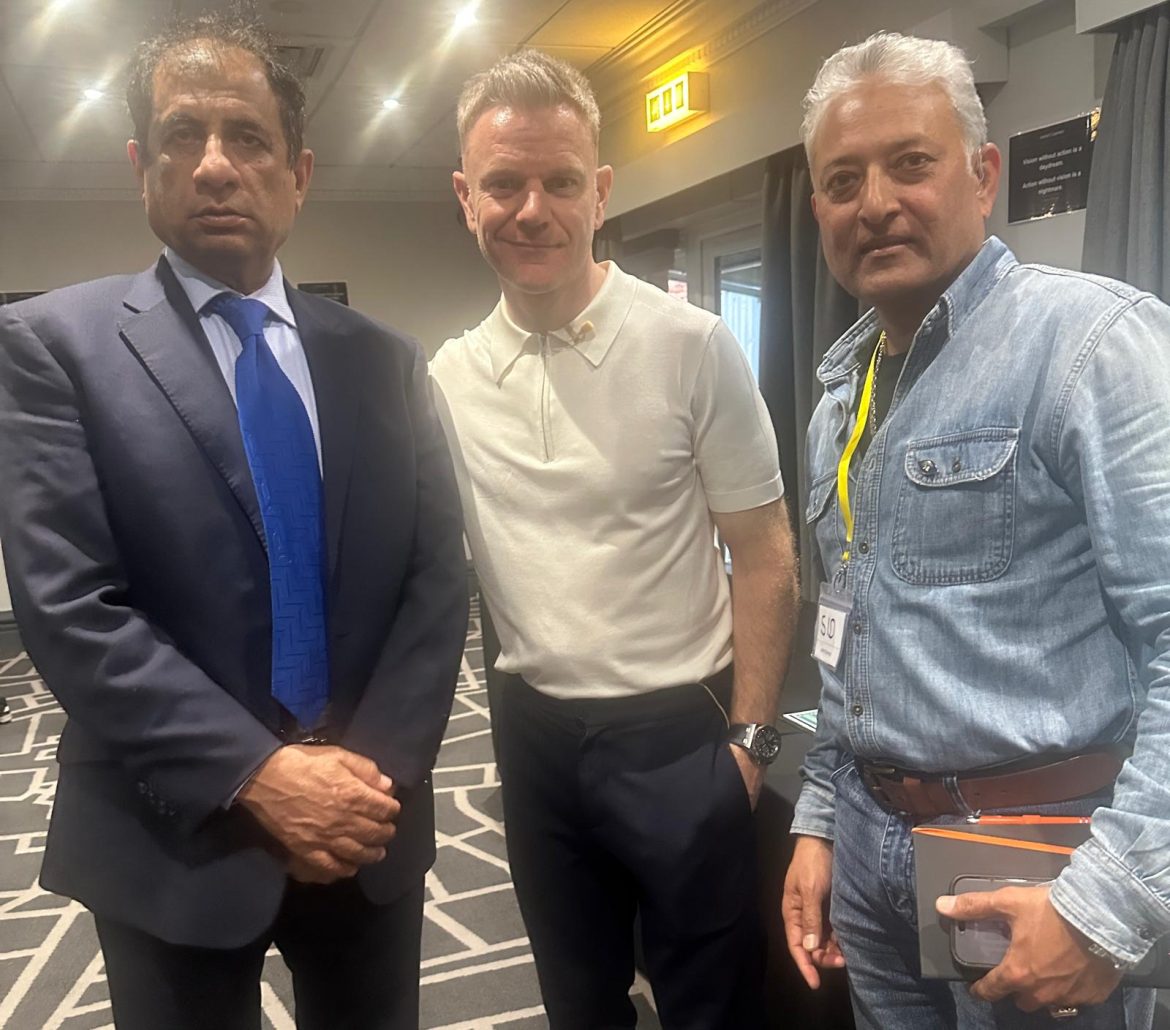
The Marketing Accelerator organised a business training event at the Village Hotel Manchester Cheadle, where Nick James Nick James, a British business coach, marketing trainer, and entrepreneur delivered his lecture on marketing and sales skills. A large number of business people from different backgrounds attended the event. Nick James highlighted the importance of vision, structure, strategy and tactics for business growth. He explained that strong planning and regular follow-up are key to success. He also discussed practical topics such as building an email list, finding ideal customers, pitching offers, overcoming objections and using tools like email, phone calls, paid advertising and social media to promote services. He encouraged participants to invest in their personal development and stay focused on their goals, stating that consistent effort and proper follow-up can lead to better business results.
Tajammul Gurmani
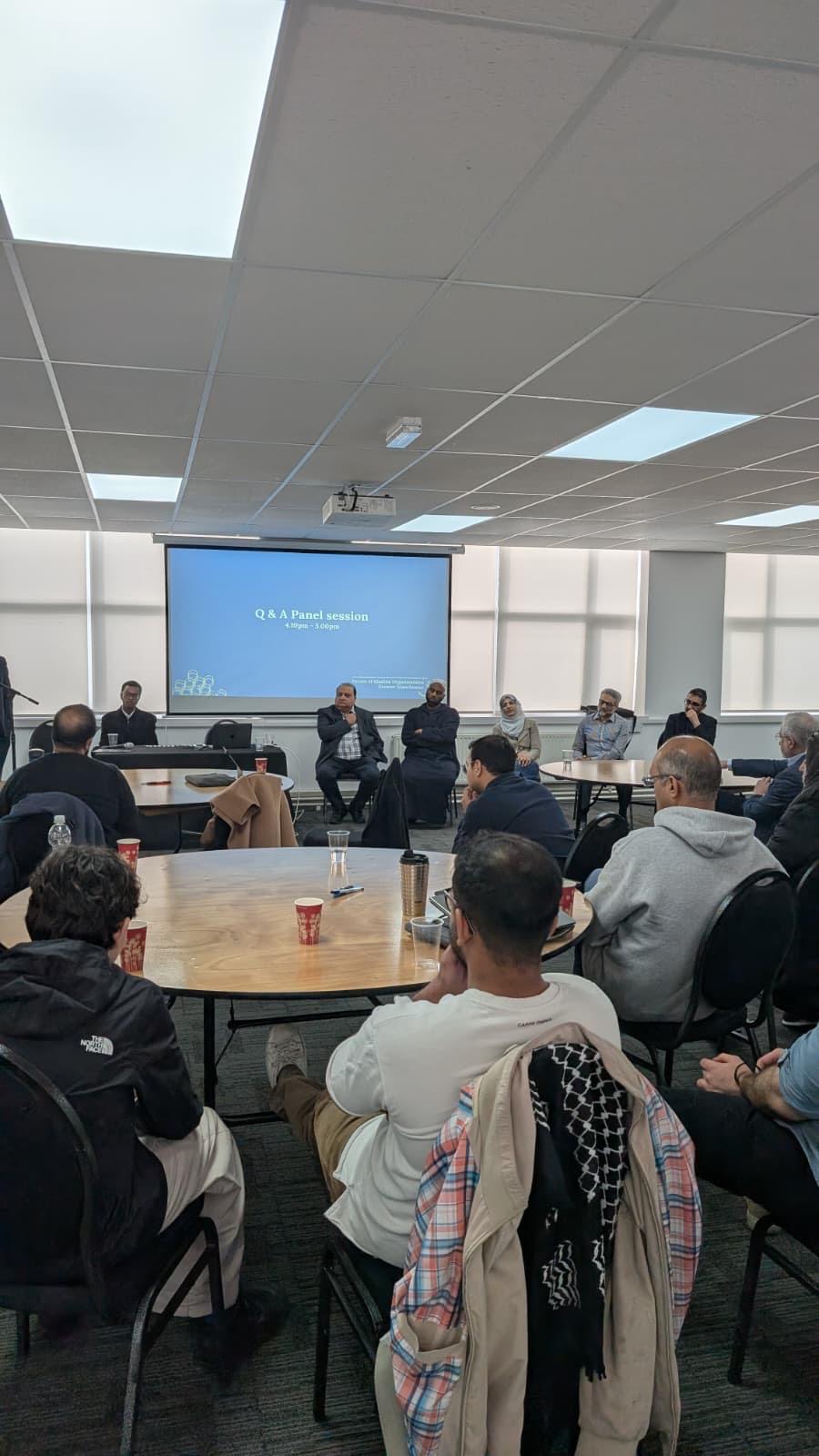
Forum of Muslim Organisations, Greater Manchester (FMO-GM) has been formally launched, while the body and founding members were also announced during a consultation meeting held at Rethink Rebuild Society, Discovery House in Manchester. A large number of mosque committee members, representatives of Muslim organisations, charities, community leaders and youth also attended the event. The renowned Muslim scholars who addressed the meeting included Jehangir Mohammad, Nahella Ashraf, Sheikh Bilal Brown, Abdul Rehman, Nasir Hafezi, Dr Sara Saigol, Nasir Malik, Khalid Anis and others.
The title of the meeting was “The Far Right and Local Elections – A Time for Action”. The speakers expressed their views on the topic, while a panel discussion and question-and-answer session was also held, alongside the introduction of FMO on the occasion. The meeting started with the recitation of the Quran by Omar Alkanj, after which Elinor introduced the agenda of the meeting. Jehangir Mohammad, the founding Director of the Ayaan Institute, a UK-based think tank, delivered his address on “Understanding the Far Right – who, what, where and how”. He said the origin of the term “far right” dates back to the French Revolution, when those opposed to the monarchy were considered left-wing reformists, and those who supported the monarchy were on the right. He said that when discussing white identity, it refers to white politics, white nationalism and white supremacy, and is about racial politics. “In terms of what we traditionally call far-right groups, there has always been an element of fascism. One aspect of these groups is white identity, but there is also a link to fascism and white supremacy. You can see that clearly with Trump, who is seen as a symbol of this movement,” he observed. He added that the threat level is real, noting that Reform UK is at 25 percent, which he described as shocking, as mainstream parties are fracturing, Labour is losing support and the Conservatives have collapsed. “The main elections are going to be significant. If Reform wins big, that could become the new norm in British politics. So, it is a big test and a major challenge,” he added.
Nasir Malik, a civil engineer and trustee at Cheadle Masjid, while speaking on the importance of local elections, stressed the need to educate the community to take part in local politics and come out to cast their votes in the elections to be held next month. He said the Muslim community holds significant influence, noting that in the last general elections, a large number of Muslim MPs were elected as independents as well as on the Labour platform. He added that unity within the community is essential, and that mosques and Muslim organisations can play an important role in this regard. He said that volunteers should help and guide people to support the right candidates for the right cause. He also highlighted concerns over Labour Party policies, particularly regarding Gaza and immigration.
Nahella Ashraf said it is time for Muslim voters to use the power of their vote and stand up against the politics of racism, hate and division. She said there is a need to campaign against racism and Reform UK, adding that trade unions, human rights groups, refugee charities and anti-racism organisations should stand together. She urged every mosque to play its role in standing up against racism.
Founder member of FMO, Khalid Anis, in his concluding remarks, said, “May Allah grant us unity.” He also announced the body and founding members of FMO, including Action for Humanity, British Muslim Heritage Centre, Cheadle Masjid, Khizra Mosque, Convert Muslim Foundation, Islamic Society of Britain and Manchester Muslim Forum.
Tajammul Gurmani
Manchester
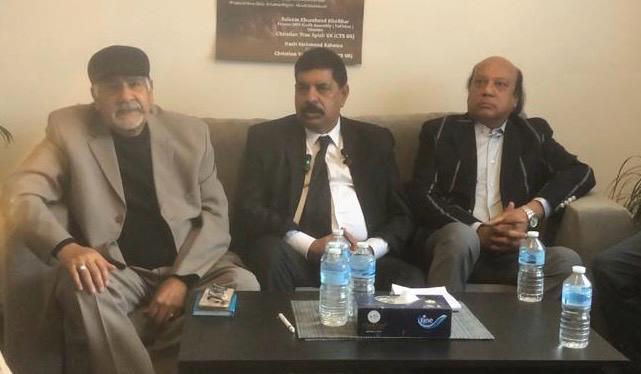
Former minority member of the Sindh Assembly, Saleem Khurshid Khokhar, has said that the Christian community in Pakistan is deeply concerned over the Federal Shariat Court’s verdict in the Maria Shahbaz case, and demanded the protection of their places of worship, as well as the lives and property of minorities across the country. He was addressing a press conference in Manchester along with Christian leaders Shafiquz Zaman and Saleem Gill.
Saleem Khokhar said that Maria Shahbaz was allegedly abducted two years ago from the Nawab Town Police Station area in Lahore, and an FIR was also registered at the local police station. Later, a Muslim young man, Shehryar, appeared in the local court with a marriage certificate and claimed that Maria had willingly married him. Following the submission of the marriage certificate in court, the FIR was dismissed. “At that time, Maria was only a 12-year-old minor girl, and during the court proceedings, a B-Form and NADRA records were also presented as evidence of her age, but were not accepted. According to state law, the marriage of a girl under the age of 18 is not allowed; however, the Federal Shariat Court upheld this marriage in its verdict,” he claimed.
Former MPA of Sindh Assembly said that the Christian community rejects the court’s decision in the Maria Shahbaz case and demands that the forced marriage be annulled, and that Maria be recovered and returned to her parents. He said that a Christian delegation will soon meet political leaders in the UK to inform them about the situation, he concluded.
UK could adopt EU single market rules, what does this statement by means by Keir Starmer?
Analysis
Wajahat Ali Khan
In a statement that has reignited the post-Brexit debate, PM Keir Starmer suggested that the United Kingdom could adopt aspects of European Union single market rules. While not a call to rejoin the EU, the remark signals a potentially significant recalibration of Britain’s economic strategy after Brexit.
At its core, the EU single market is built on regulatory alignment. Member states follow common standards governing goods, services, labour, and capital, enabling frictionless trade across borders. When the UK left the EU, it also exited this regulatory ecosystem, opting instead for autonomy over its laws even at the cost of increased trade barriers.
The practical meaning of “adopting single market rules” lies in selective alignment. Rather than full membership, the UK could choose to mirror EU standards in key sectors such as food safety, chemicals, pharmaceuticals, and manufacturing. This would reduce the need for border checks, ease customs procedures, and lower compliance costs for exporters. For British businesses, particularly small and medium enterprises, this could translate into smoother access to their largest trading partner.
The economic rationale is clear. Since Brexit, UK-EU trade has been marked by friction: paperwork, delays, and regulatory divergence have imposed costs that many firms were ill-prepared to absorb. Aligning with EU rules could alleviate some of these pressures, effectively recreating parts of the single market’s benefits without formal re-entry.
However, the political implications are more complex. Regulatory alignment comes with a fundamental trade-off: influence versus access. If the UK adopts EU rules, it must follow standards set in Brussels without having a vote in shaping them. Critics argue this would reduce Britain to a “rule-taker,” undermining one of the central arguments for Brexit legislative sovereignty. Supporters, by contrast, frame the proposal as pragmatic rather than ideological. In an era of economic uncertainty, they argue, the priority should be growth and stability. If aligning with EU standards helps British firms compete and reduces costs for consumers, then the loss of formal influence may be a price worth paying. The statement also reflects a broader shift in tone. The immediate post-Brexit years were dominated by questions of identity and sovereignty. Today, the focus is increasingly on economic performance. Slow growth, trade disruptions, and global competition have forced policymakers to reassess earlier assumptions. Starmer’s remarks can be read as part of this reassessment a recognition that complete regulatory divergence may not serve the UK’s long-term interests.
Importantly, adopting single market rules does not mean rejoining the EU or restoring freedom of movement. The UK would remain outside the union’s political structures and could, in theory, choose which areas to align with. This “à la carte” approach, however, may prove difficult in practice. The EU has historically resisted partial arrangements that allow non-members to benefit from the single market without accepting its full obligations. There is also the question of domestic politics. Any move towards alignment risks reopening divisions that Brexit was supposed to settle. For some voters, even limited convergence with EU rules may be seen as a step backwards. For others, it may represent a necessary correction an effort to make Brexit work more effectively rather than reverse it.
Ultimately, Starmer’s statement is less about ideology and more about realism. It acknowledges a simple fact: geography and economics bind the UK closely to Europe, regardless of political separation. The challenge is to manage that relationship in a way that balances sovereignty with prosperity. In that sense, the statement is not a policy announcement so much as a signal of direction. It suggests that the next phase of Britain’s European relationship may be shaped less by slogans and more by the practical demands of trade, investment, and economic growth.