By Wajahat Ali Khan
London
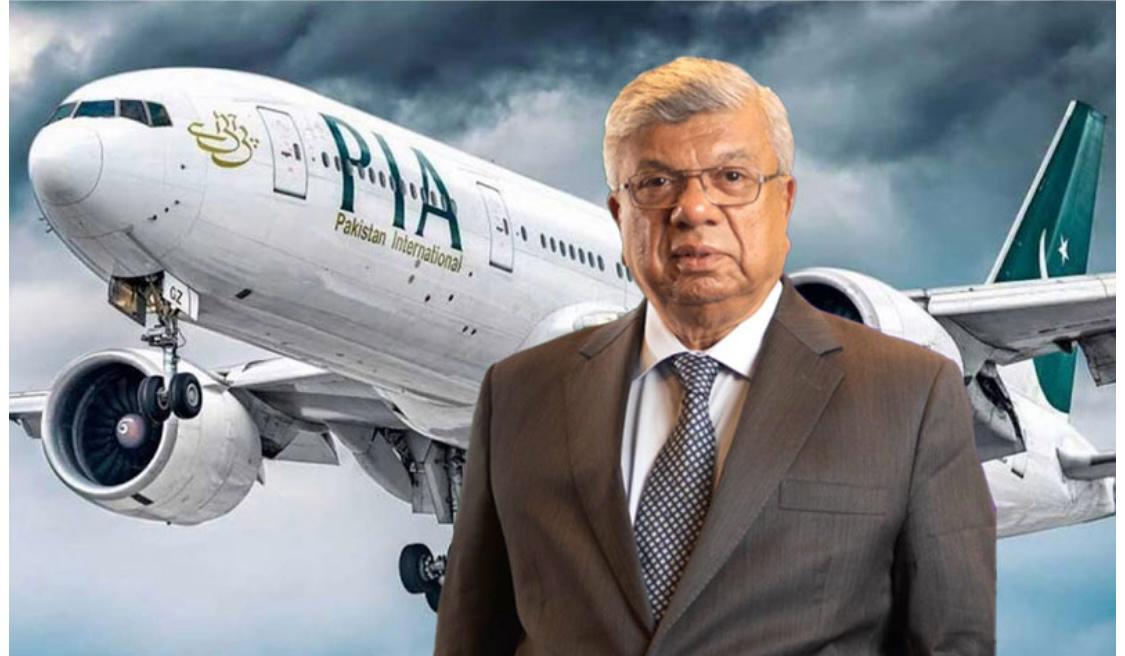
The sale of Pakistan International Airlines (PIA) is not a sudden policy whim nor an isolated economic decision. It is the inevitable outcome of decades of mismanagement, political interference, mounting financial losses, and a changing global aviation landscape that Pakistan could no longer afford to ignore.
Once a symbol of national pride, PIA was among Asia’s leading airlines in the 1960s. It trained crews for foreign carriers, pioneered routes, and represented a confident, outward-looking Pakistan. Today, however, the airline stands as a textbook case of how state-owned enterprises collapse when commercial logic is sacrificed at the altar of politics.
A History of Financial Bleeding: PIA had been running on losses for years, accumulating massive debt that ran into hundreds of billions of rupees. These losses were not caused by market forces alone but by chronic inefficiency: overstaffing, poor fleet management, outdated systems, and non-competitive operations. Successive governments continued to inject taxpayer money to keep the airline afloat, turning PIA into a permanent burden on the national exchequer.
In a country struggling with fiscal deficits, inflation, and external debt, subsidizing a loss-making airline became economically indefensible. Every bailout meant fewer resources for health, education, and social welfare.
Political Interference and Governance Failure
Perhaps the biggest reason behind PIA’s downfall was political interference. Appointments were often made on political grounds rather than merit. Routes were opened or closed for political convenience, not profitability. Decision-making was slow and inconsistent, tied to changing governments and bureaucratic control rather than professional airline management.
No private airline can survive under such conditions—yet PIA was expected to compete globally while carrying the dead weight of political influence at home.
Global Aviation Standards and Safety Issues: PIA’s troubles deepened when international aviation authorities raised serious concerns about safety and licensing standards. The temporary ban on PIA flights to key destinations badly damaged its reputation, reduced revenue streams, and pushed passengers toward foreign carriers. Trust, once lost in aviation, is extremely difficult to regain.
For an airline already struggling financially, this reputational blow proved devastating.
IMF Pressure and Economic Reality
Pakistan’s broader economic situation also played a decisive role. International lenders, particularly the IMF, consistently urged structural reforms, including the privatization or restructuring of state-owned enterprises. PIA topped that list.
Selling the airline—or at least transferring its management to the private sector—was seen as a way to stop financial hemorrhaging, improve efficiency, and signal seriousness about economic reform.
Privatization as a Last Resort, Not a First Choice
Critics argue that selling a national airline is an admission of failure—and they are not entirely wrong. But it is also an admission of reality. The choice was not between keeping PIA as a proud national carrier or selling it cheaply; the real choice was between reform through privatization or eventual collapse through neglect.
Private ownership brings commercial discipline, professional management, and accountability—qualities that PIA lacked under state control. While privatization is no magic wand, it offers a chance to rebuild the airline on sustainable lines.
A Lesson Beyond PIA:The sale of PIA should serve as a national lesson. Institutions do not fail overnight; they decay slowly when incompetence is protected, losses are normalized, and accountability is absent. If Pakistan wishes to avoid repeating this story, it must rethink how it runs public enterprises—placing merit over politics and performance over patronage.