By Monitoring desk:
In January last year, two months before US President Donald Trump returned to the White House for the second time, Indian Foreign Minister Jaishankar had said that India was not ‘worried’ about Trump’s return.
He said, ‘I know that many countries are worried about America today, but frankly, we are not among those countries.’
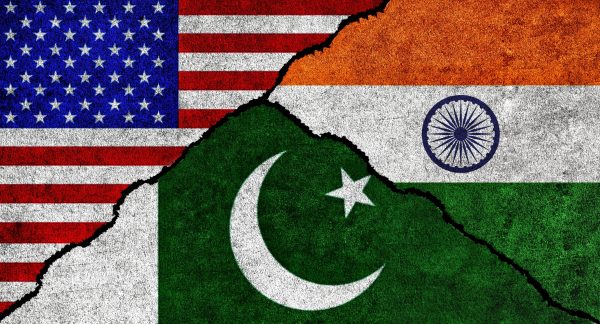
However, since Trump returned to the White House in January 2025, India-US relations have not warmed up. On the other hand, the US’s cold relations with Pakistan have been improving continuously.
On January 22, Pakistani Prime Minister Shehbaz Sharif attended the official ceremony of Trump’s ‘Board of Peace’ in Davos, where Pakistan’s Field Marshal Syed Asim Munir was also present.
When Shehbaz Sharif signed with Trump on the occasion of joining this board created for the reconstruction of Gaza, pictures of the warmth between the two went viral.
However, India has not said anything about this Board of Peace. Trump has also invited India to join.
Relations between India and the US have been tense for a year. First, the gap widened when Trump imposed additional tariffs on India, and then the situation became more bitter after the India-Pakistan dispute in May last year.
Many experts say that Pakistan took advantage of the tension between India and the US, and improved relations that had cooled during Trump’s first term in office.
According to the international affairs journal ‘The Diplomat’, something unthinkable happened in India-US relations in 2025.
A steep tariff of 50% was imposed on India, considered a ‘natural’ partner of Washington.
At the same time, Pakistan began to carve out a place for itself in the White House as America’s new favorite ally.
It started when New Delhi publicly rejected Donald Trump’s claim that he had mediated to end the dispute with Pakistan in May 2025.
After this, India-US relations fell into a state of ice that is unlikely to melt in the near future.
Neither the Quad summit nor any trade agreement that could provide relief to India, which is under the burden of extremely high tariffs, took place.
The tense relations further deteriorated when a US House panel report in November said that ‘Chinese weapons were prominent in Pakistan’s military success during the four-day conflict with India.’
President Trump, without naming India, said several times that five aircraft were shot down during the war. In subsequent statements, he increased this number further.
India did not give any information about the downing of any aircraft, only saying that a Pakistani aircraft was damaged.
Trump also claimed that he had prevented a conflict between India and Pakistan, which India has consistently denied.
The Diplomat article says that India ‘publicly insulted’ Trump by rejecting his claim of mediation in the May 2025 dispute. Since then, India-US relations have been frosty.
While India viewed Trump’s claims as an affront to its sovereignty, Pakistan saw it as a major opportunity.
Islamabad has exaggerated Trump’s claim that he brokered the India-Pakistan dispute, even nominating Trump for the Nobel Peace Prize. This move has proven to be very beneficial for Pakistan.
Before Trump’s second term, India was considered important for the US strategy of pressuring China. On the other hand, Pakistan was seen as a pro-China country.
But now US-Pakistan relations seem to be strengthening. It cannot be said that Pakistan’s relations with China are deteriorating. Trump has imposed heavy tariffs on India (25 percent reciprocal, and an additional 25 percent as punishment for buying oil from Russia).
The US policy of improving relations with India, the world’s largest democracy, seems to be reversing its two-decade-long policy of improving relations with India.
Now Trump seems to be praising Pakistan and its army chief. On the other hand, India has rejected Trump’s claim that he stopped the war between the two countries in May.
Pakistan’s importance in the Middle East is also growing. Pakistan is on Trump’s peace board. India has also been invited to join, but the Modi government has not yet made a decision.
Nisha Biswal is a partner in The Asia Group and was a former US assistant secretary of state for South and Central Asian affairs during the Obama administration. In November last year, she told Bloomberg: “A strong relationship with Pakistan also gives the US the ability to put pressure on India. Countries will have to stand on their own merits.”
She added: “The extent to which the US can influence Pakistan and put pressure on it, and to have a relationship with Pakistan to do that in times of crisis, is a very important aspect. You don’t want a Pakistan that is completely outside of US influence.”
Pakistan and the US have been partners since the Cold War. In the 1980s, Pakistan cooperated with the US in supporting Afghan insurgents fighting the Soviet Union. Later, Pakistan provided logistical support in the US’s so-called war on terror.
66