
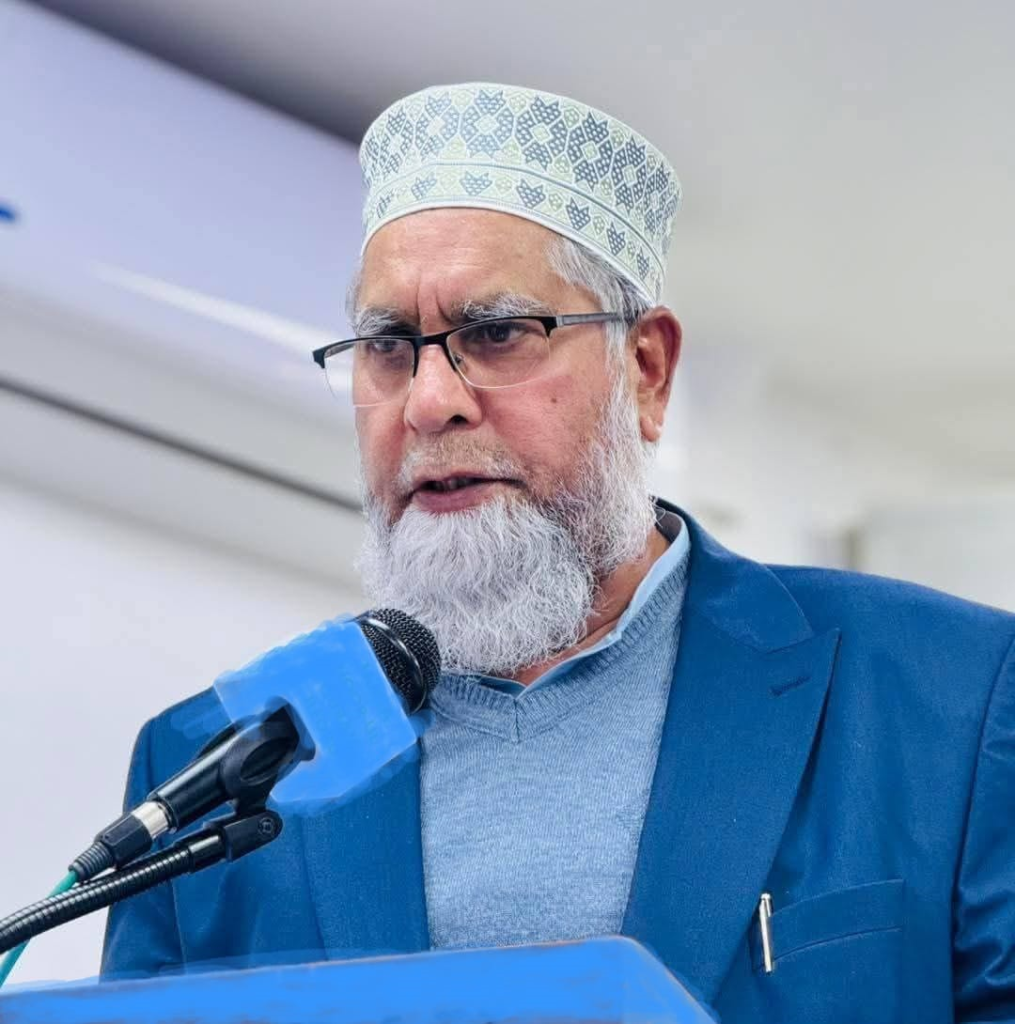
Professor Masood Akhtar Hazarvi
There is a strange and captivating beauty in the deserts of West Africa. Vast stretches of sand, silent horizons, simple settlements, and amidst them, hearts in which the lamps of divine love and love for the Messenger of Allah ﷺ continue to burn brightly. I am currently travelling through different countries of West Africa. During these blessed days of Rabi‘ al-Awwal, I have also been fortunate to attend gatherings of Mawlid and assemblies devoted to the life and teachings of the Messenger of Allah ﷺ at various locations.
I have visited West Africa before, but this journey has been different. From cities to villages, from mosques to religious schools, and from scholars to ordinary people, I have had the opportunity to observe many things at close quarters. During this journey, one question has repeatedly arisen in my heart and mind: How did Islam actually reach this land? This is a region thousands of miles away from the Arab world. Between the two lies the vast Sahara Desert, one of the greatest deserts on earth. Yet, despite this enormous distance, Islam is today not merely present across vast areas of Senegal, Mauritania, Mali, Gambia, Niger, Guinea, Burkina Faso and Nigeria; it has become an integral part of the lives, culture and identity of hundreds of millions of people.
In Senegal, Muslims constitute an overwhelming majority of the population, reaching as high as 96 percent. Mauritania is an entirely Muslim society. On the soil of Mali stands Timbuktu, whose historic significance as a great centre of Islamic scholarship remains deeply embedded in history. In the northern regions of Nigeria, Islam has influenced society and civilisation for centuries. Seeing all of this brings me back to the same question: How did this light reach here?
Perhaps searching for the answer solely in swords, armies and military conquests would mean overlooking a major chapter of history. The story of the spread of Islam in West Africa is both fascinating and deeply thought-provoking. Many of the early ambassadors of Islam here were not rulers, but merchants, scholars, Sufis and righteous people. They may not have possessed the power of political authority, but they certainly possessed the enduring power of character.
Trading caravans travelled from North Africa across the Sahara and reached West Africa. Gold, salt and other precious commodities formed an important part of these commercial markets. But these caravans brought more than goods and merchandise. They brought with them the recitation of the Qur’an. They brought the Arabic language. They brought a tradition of knowledge. They brought the concept of the mosque. And above all, they carried with them the fragrance of divine love and love for the Messenger of Allah ﷺ.
(To be continued)
