By Amr roshdy:
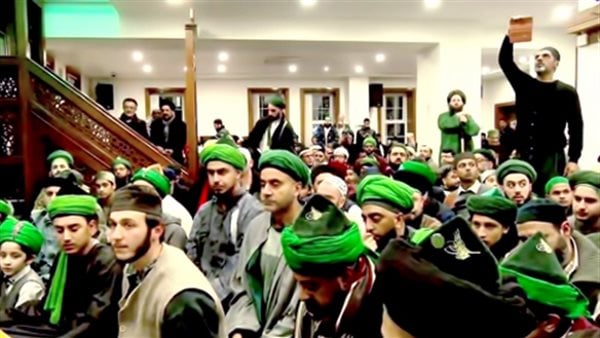
Amidst the social and cultural transformations sweeping across Europe, and the growing debates surrounding the role of religion in the public sphere, Islamic Sufism stands out as one of the most capable currents for offering a balanced religious discourse that resonates with the specificities of European societies and establishes a relationship based on understanding, coexistence, and social peace. Within this context, the Tijaniyya Order has been playing an increasingly prominent role in Italy and several other European countries in recent years.
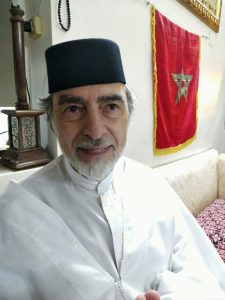
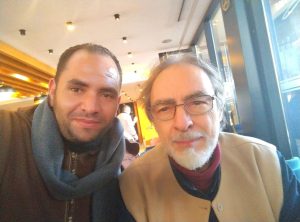
Sheikh Abdel Samad al-Itali, the head of the Italian Sufi community, affirms that Sufism is no longer merely an internal spiritual practice, but has become a civilizational and ethical project that contributes to human development and the strengthening of shared human values. He explains that the essence of Sufism lies in purifying the soul, spreading a culture of love, and distancing oneself from extremism and isolationism.
The Tijaniyya Order and the Discourse of Moderation
Sheikh Abdel Samad points out that the Tijaniyya Order, with its rich spiritual and educational heritage, has contributed to establishing a moderate religious discourse within Muslim communities in Italy and Europe. This has been achieved through a focus on spiritual and moral education, respect for the law, and positive engagement with society. This role is reflected in the organization of open spiritual and cultural gatherings aimed at promoting sound religious awareness and strengthening social bonds among the various segments of society. He added that this Tijani approach has contributed to creating a healthy religious environment within Muslim communities and has mitigated the influence of extremist rhetoric that exploits religion for ideological or political ends. He emphasized that Sufi moderation constitutes the first line of defence against extremism and isolationism.
Spaces for Dialogue and Coexistence
The Sheikh of Sufis in Italy explained that Sufi lodges in Italian and European cities have recently transformed into spaces for spiritual and cultural dialogue. These lodges welcome Muslims and non-Muslims alike and provide a platform for discussion on shared values such as peace, justice, coexistence, and respect for human dignity. He emphasized that these meetings contributed to building bridges of trust with European religious and civil institutions. He also noted that the moderate Sufi presence helped correct many prevailing stereotypes about Islam by presenting a practical model based on ethical conduct and social commitment, far removed from confrontational or exclusionary rhetoric.
Towards a European Islamic Model
Sheikh Abdel Samad believes that Sufism, and the Tijaniyya order in particular, contributes to shaping a European Islamic model that preserves religious principles while simultaneously respecting the cultural and legal specificities of European societies. This makes it an active element in promoting positive integration without assimilation or isolation. He affirmed that this model contributes to strengthening the concept of citizenship and encourages Muslims to actively participate in public life, volunteer work, and social initiatives, reflecting the true values of Islam as a religion of mercy and peace.
Challenges and Future Prospects
Speaking about the challenges, the Sheikh of Sufism in Italy pointed out that Sufism sometimes faces misunderstanding or media marginalization, despite its important role in promoting intellectual and religious stability. He called for supporting moderate Sufi initiatives and involving them in religious and intellectual dialogues at the European level. Sheikh Abdel Samad concluded by emphasizing that the next phase requires strengthening cooperation between Sufi religious institutions and European academic and cultural bodies to establish a rational and humane religious discourse capable of confronting hate speech and extremism and contributing to building a future of peace and coexistence. This Sufi movement comes at a time when Europe is increasingly in need of spiritual religious models that balance faith and humanity, making Sufism and the Tijaniyya order among the most prominent actors in the contemporary European religious and cultural landscape.