
By Wajahat Ali Khan:
Today Friday talks between Iran and the United States continue in Muscat, Oman. Mediators from Qatar, Turkiye and Egypt have presented Iran and the US with a framework of key principles to be discussed in the talks.
Arab states successfully lobbied the U.S. administration to keep the talks alive, and both sides agreed to resume these discussions. US and Iran aimed at discussing Tehran’s nuclear programme and tensions, though disagreements remain over the agenda, especially U.S. demands to include Iran’s missiles and regional proxies alongside the nuclear file.
However, Iran insists the discussions should focus only on its nuclear programme rejecting U.S. pressure to broaden the agenda to ballistic missiles or support for militant groups. U.S. officials want to include these wider security concerns. U.S. leadership messaging. Senior U.S. figures, including Secretary of State Marco Rubio, have emphasised that for talks to be meaningful they must address Iran’s ballistic missiles and backing for proxy forces, a stance Tehran opposes.
While, Qatar, Turkey and Egypt have reportedly proposed a “framework of key principles” to guide the discussions, including limits on Iran’s uranium enrichment and missiles, although full details have not been publicised. Today’s These negotiations represent the most significant US Iran diplomatic engagement since the breakdown of talks over Iran’s nuclear activities and escalating Middle East tensions last year. Both sides have repeated it’s their last major chance to avert wider military conflict, amid recent heightened tensions including Iranian drone activity and a U.S. military buildup in the region.
Seemingly Oman will be the immediate test of whether diplomacy can bridge deep disagreements. Iran is unlikely to drop its refusal to discuss missiles or regional proxy forces. US negotiators are under pressure to secure concrete commitments on nuclear limits and broader security issues.
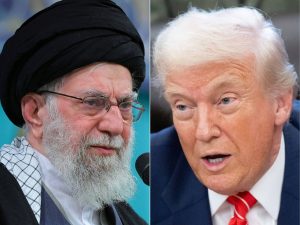
(COMBO) This combination of pictures created on February 04, 2026 shows, L/R, a handout photograph provided by the office of Iran’s Supreme Leader Ayatollah Ali Khamenei showing him addressing a meeting with the people in Tehran on January 17, 2026 and US President Donald Trump speaking in the Oval Office of the White House in Washington, DC, February 3, 2026. President Donald Trump said in an interview with NBC News on February 4, 2026, that Iran’s supreme leader Ayatollah Ali Khamenei should be “veryWhile, Qatar, Turkey and Egypt have reportedly proposed a “framework of key principles” to guide the discussions, including limits on Iran’s uranium enrichment and missiles, although full details have not been publicised. Today’s These negotiations represent the most significant US Iran diplomatic engagement since the breakdown of talks over Iran’s nuclear activities and escalating Middle East tensions last year. Both sides have repeated it’s their last major chance to avert wider military conflict, amid recent heightened tensions including Iranian drone activity and a U.S. military buildup in the region.
Seemingly Oman will be the immediate test of whether diplomacy can bridge deep disagreements. Iran is unlikely to drop its refusal to discuss missiles or regional proxy forces. US negotiators are under pressure to secure concrete commitments on nuclear limits and broader security issues.

