
By Amr Roshdy:
Egypt:
The Qadiriyya Budshishiyya Sufi order has recently been very active in Europe, organising a series of spiritual and intellectual events in several European capitals. These events are part of its efforts to promote the values of moderation and tolerance, strengthen the culture of coexistence, and counter extremist and hateful rhetoric.
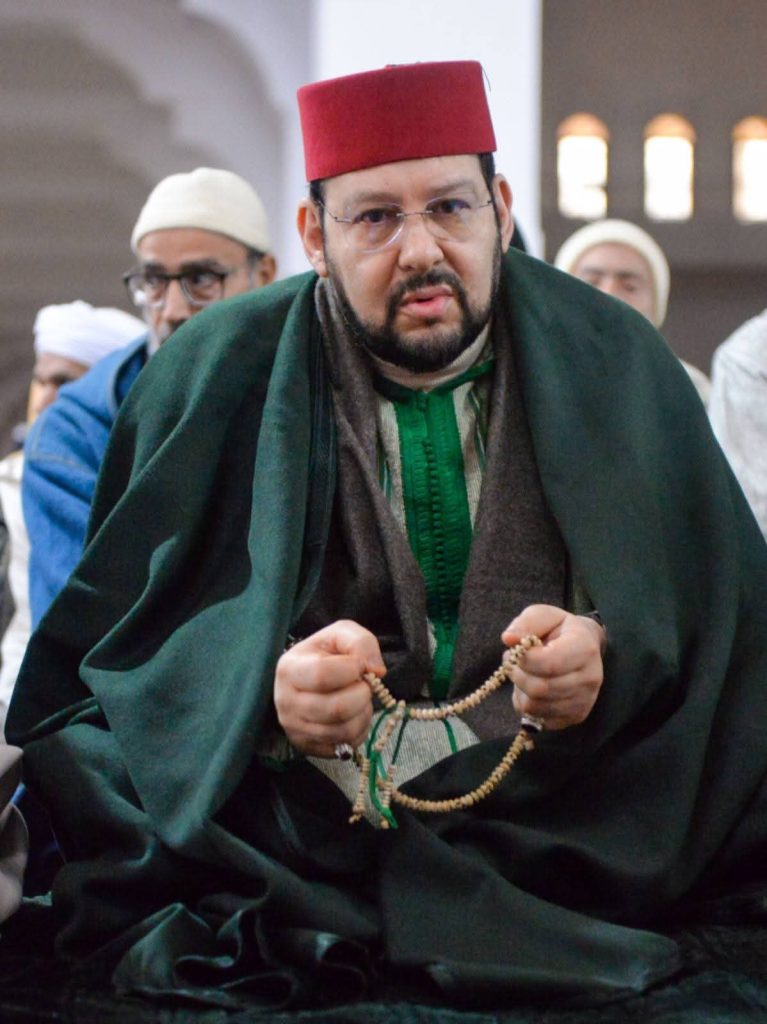
In this context, Dr. Munir al-Qadiri Budshishi, Sheikh of the Qadiriyya Budshishiyya order and President of the Euro-Mediterranean Center for the Study of Islam Today in Morocco and the Muslim world, told the London Post that these initiatives are “a response to the urgent need within European societies for a balanced religious discourse that restores the spiritual dimension of Islam and highlights its authentic values based on mercy, love, and peace.”
He explained that the events, held in several European cities, included intellectual gatherings, academic seminars, and open spiritual evenings, featuring researchers, thinkers, and religious figures from diverse backgrounds, and focused on deconstructing extremist rhetoric and promoting intercultural and interreligious dialogue.
Dr. Qadiri Boudchich added that “the Qadiri Boudchichi Sufi order has been working for years to establish an open Islamic model that aligns with universal values, respects the specificities of European societies, and contributes to the positive integration of Muslims within them. The Boudchichi order strives to introduce people to true Islam and combat extremism, especially in Europe.”
He pointed out that “the challenges facing European societies today, particularly in light of the growing tendencies toward isolationism and extremism, necessitate the combined efforts of various actors, including religious, academic, and civil institutions, to establish an alternative discourse based on wisdom and insight.”
He also emphasized that “the activities organized by the order were not limited to the spiritual aspect alone, but also addressed issues of youth, identity, and citizenship, stressing the importance of involving rising generations in building a future characterized by coexistence and mutual respect.”
In this context, he affirmed that “young people represent a fundamental stake in the battle against extremism, and therefore we are committed to their intellectual development.” Spiritually, and to protect them from extremist rhetoric that exploits their vulnerability or feelings of marginalization.”
He added that “the increasing participation in these events reflects a growing awareness among broad segments of European society of the importance of the spiritual dimension in achieving psychological and social balance, especially in light of the successive crises the world is witnessing.”
He emphasized that “Sufism, as a moral and educational school, is capable of providing profound answers to the questions of contemporary humanity, through its call for love, service to humanity, and the pursuit of inner and outer peace.”
He also pointed out that “confronting extremism cannot be achieved solely through security approaches, but also requires profound intellectual and cultural work that addresses the roots of the phenomenon and offers a convincing alternative for young people.”
He noted that the Euro-Mediterranean Center for the Study of Islam today is keeping pace with this dynamic through research and training programs aimed at qualifying imams and religious figures and equipping them with the necessary knowledge to engage with the challenges of the European context.
In a related context, Dr. Al-Qadiri Boudchich affirmed that “the dialogue between Religions and cultures form one of the cornerstones of our work, as they contribute to dismantling stereotypes, building bridges of trust, and strengthening the values of shared citizenship.
He also called for supporting serious initiatives that promote a culture of peace and encouraging cooperation among various stakeholders to counter hate speech and exclusion.
He concluded his statement by emphasizing that strengthening social peace in Europe requires investing in people, cultivating conscience, and instilling ethical values, which contributes to building more cohesive and harmonious societies.
These efforts are part of a comprehensive vision that seeks to present Islam in its civilized and humane form and contribute to building societies characterized by spiritual security and social stability.

