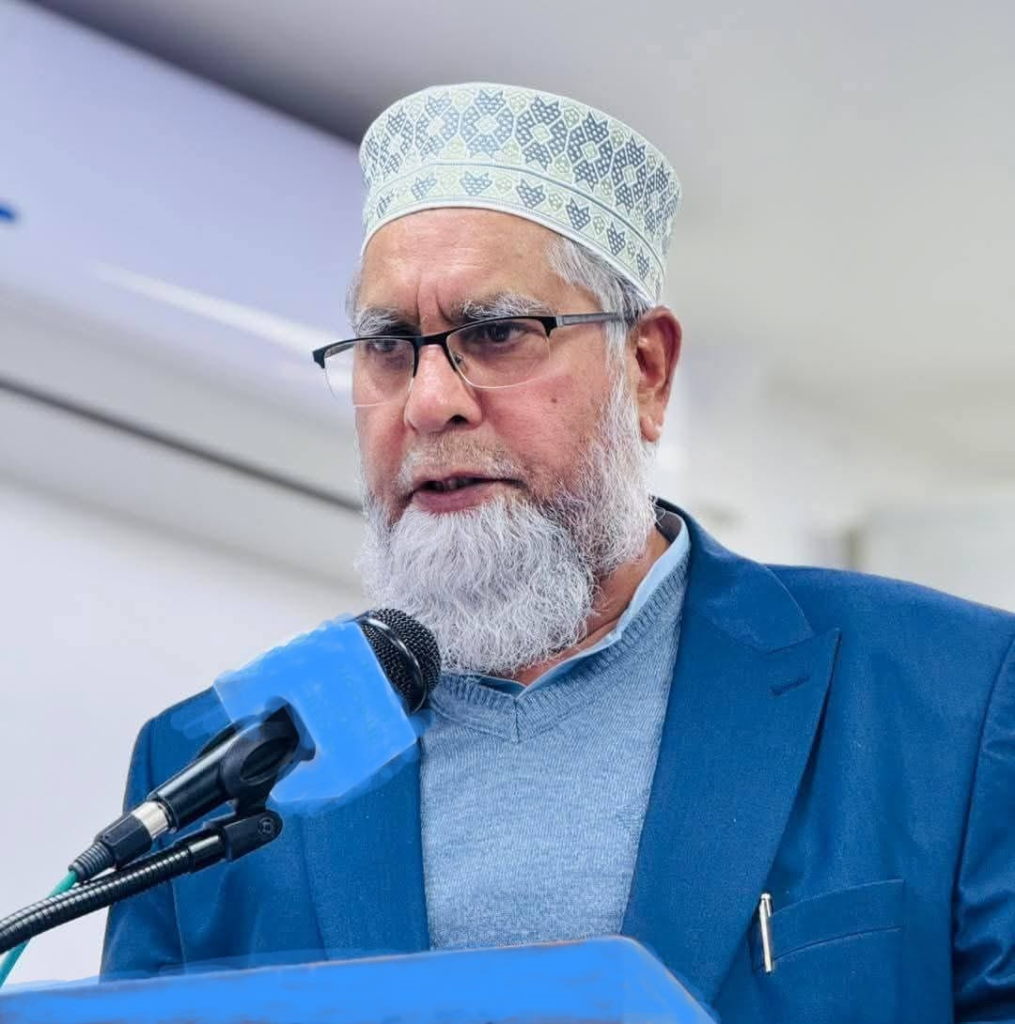
Prof Masood Akhtar Hazarvi
In the pure and radiant atmosphere of the Plain of Arafat, the blessed words that flowed from the tongue of the Messenger of Allah ﷺ 1,437 years ago during the Farewell Pilgrimage were far more than a speech. They were a universal and timeless call that transcended the boundaries of time and place, guiding humanity toward its true purpose and noble station. The Farewell Sermon of the Prophet ﷺ is, in reality, a complete code of life, a comprehensive ethical charter, and an enduring source of guidance whose relevance becomes even more evident and luminous with the passage of time.
This sermon was delivered at a critical and decisive moment when the Prophet ﷺ was nearing the end of his earthly life. As such, it was not merely a general address but a comprehensive testament, sincere counsel, and an eternal roadmap for the Muslim Ummah. In it, he combined the preservation of human rights with the fundamental principles of faith in a manner that has continued to illuminate the path of humanity ever since. It is for this reason that the echoes of this sermon resonate in every heart that seeks guidance and truth.
During Hajj 1447 AH, the address delivered by Sheikh Dr. Ali bin Abdul Rahman Al-Hudhaifi, Imam and Khateeb of the Prophet’s Mosque, offered a living reflection of that Prophetic message. Scholars and people of insight felt as though the same concern for the Ummah, the same sincerity, the same call to piety, and the same passion for the reform of humanity had reappeared in a renewed style and contemporary context. His words carried gravity, compassion, and the vision of a true reformer.
The Farewell Sermon begins with a declaration of the sanctity of human life, property, and honor. The Prophet ﷺ unequivocally proclaimed that just as the day, month, and city were sacred, so too were the life, wealth, and dignity of every Muslim. In the tribal and revenge-driven society of that era, this teaching was nothing short of revolutionary. Human worth had often been measured by lineage and power, but Islam transformed this outlook by granting every individual an inherent and inviolable dignity.
Sheikh Al-Hudhaifi emphasized the same principle in his address, reminding the Ummah that the essence of Islam is peace, mercy, and justice. Any behavior that promotes oppression, corruption, or bloodshed stands in contradiction to the true teachings of the faith. He stressed that a genuine Muslim is one from whose hands and tongue others remain safe. In a time when many Muslim societies are afflicted by internal divisions, sectarianism, and mistrust, this message carries exceptional significance and serves as a profound warning.
Likewise, the Prophet ﷺ eradicated all notions of racial, linguistic, and tribal superiority by declaring that no Arab has superiority over a non-Arab, nor a non-Arab over an Arab; no white person over a black person, nor a black person over a white person—except through piety and righteousness. This declaration represented a remarkable intellectual revolution in human history, elevating humanity above narrow racial boundaries and establishing moral excellence as the true criterion of distinction.
Reflecting this teaching in the contemporary global and Muslim context, Sheikh Al-Hudhaifi observed that many of the political, social, and intellectual divisions afflicting the Ummah today stem from the same pre-Islamic prejudices that Islam came to abolish. He clarified that the true strength of the Muslim community lies in Islamic brotherhood, love for the Messenger of Allah ﷺ, and obedience to Allah—not in race, ethnicity, or nationality. This is the very message that liberates human beings from every form of artificial superiority and servitude, directing them to bow only before Allah.
The Farewell Sermon also highlights the inseparable connection between worship and social conduct. While the Prophet ﷺ emphasized prayer, fasting, and other acts of devotion, he also underscored good character, trustworthiness, the fulfillment of rights, and mutual goodwill. This demonstrates that Islam is not merely a collection of ritual acts but a comprehensive way of life.
Sheikh Al-Hudhaifi illuminated the true essence of Hajj with remarkable insight. He explained that Hajj is not merely about wearing the ihram, performing tawaf, or completing sa‘i. Rather, it is a profound spiritual journey aimed at self-purification, cleansing the heart, and refining one’s character. If a person sheds tears in Arafat but returns without transforming their conduct, then they have not truly grasped the spirit of Hajj.
Among the Prophet’s ﷺ most important instructions was his command to hold firmly to the Qur’an and Sunnah. He declared that as long as people remained attached to these two sources, they would never go astray. This principle remains the definitive solution to every age’s intellectual confusion, moral decline, and social crisis.
Addressing the challenges of the modern era—particularly those facing the younger generation—Sheikh Al-Hudhaifi stressed that in an age dominated by social media, ideological confusion, and materialism, distancing oneself from the Qur’an and Sunnah leads to a profound spiritual emptiness. He identified sincere and practical adherence to these divine sources as the only path to overcoming that void.
The Farewell Sermon’s prohibition of usury, oppression, tribal vengeance, and pre-Islamic prejudices laid the foundation for a just society built upon justice, mercy, and equality. These were not isolated rulings but the starting point of a comprehensive civilizational transformation. Sheikh Al-Hudhaifi echoed these principles in the context of the modern world by emphasizing moderation, tolerance, and justice. While acknowledging that differences of opinion are natural, he warned against allowing them to evolve into hostility, hatred, and division. His address reflected both a deep awareness of the wounds of the Ummah and a clear vision for their healing.
Today, the Plain of Arafat remains the same, the Kaaba remains the same, and the cries of Labbaik Allahumma Labbaik continue to rise from millions of hearts revolving around the same sacred center. Times have changed, civilizations have evolved, but the message that inspires this journey remains as alive as ever: devotion to Allah, service to humanity, purification of character, and preparation for the Hereafter. In truth, every effective sermon in every age is one that reconnects people with their Lord, instills God-consciousness in their hearts, and awakens them to their responsibilities. If the Muslim Ummah were to move beyond merely listening to these teachings and instead embody them in daily life, the same system of brotherhood, justice, and mercy established by the Prophet of Mercy ﷺ could once again flourish—a light that remains humanity’s greatest source of hope.