Special report
The London Post
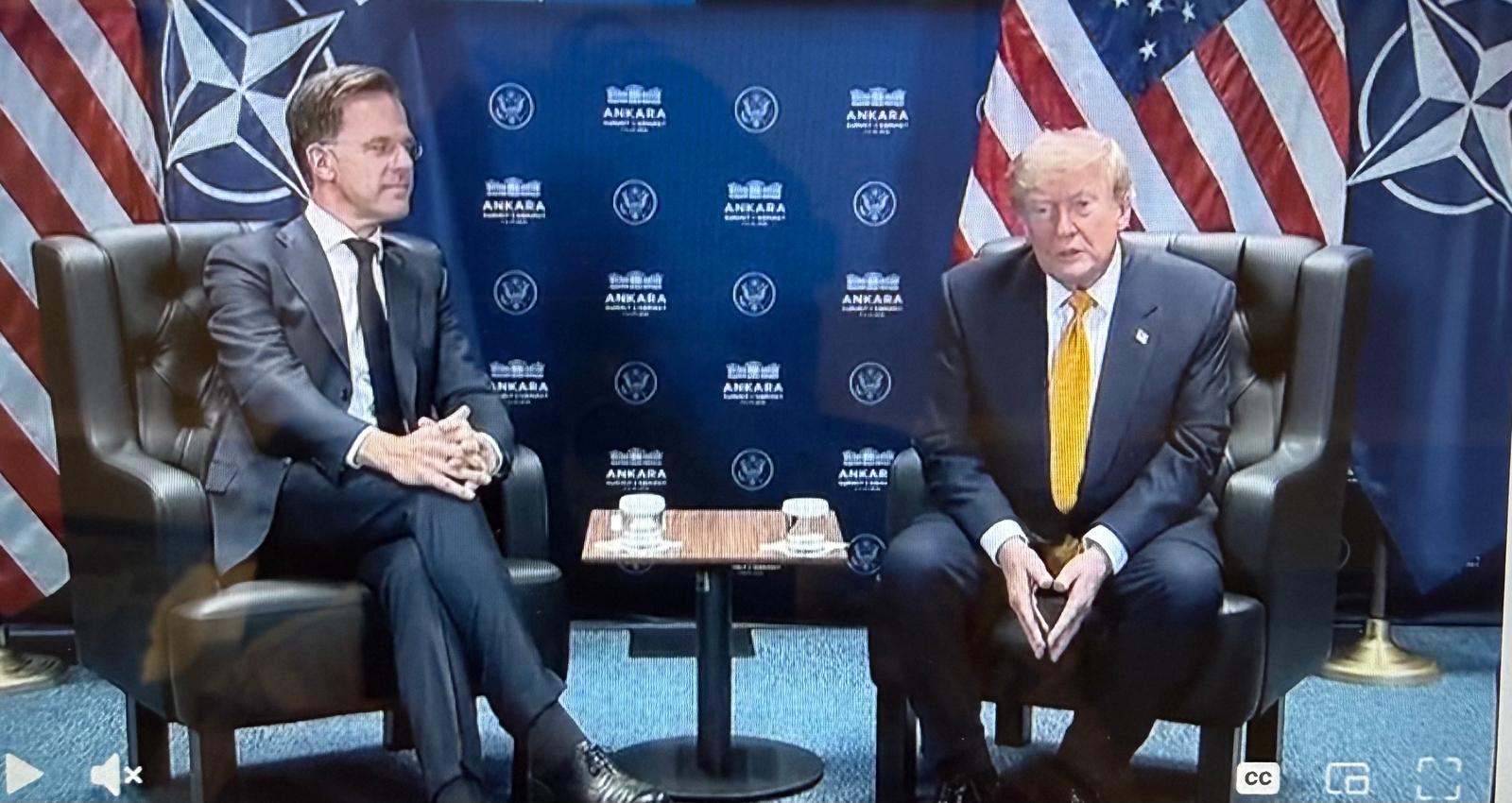
US President Donald Trump launched a sharp attack on NATO allies at the alliance’s summit in Ankara on Tuesday, accusing several member states of failing to support the United States during its recent military confrontation with Iran and questioning their commitment to the transatlantic alliance.
Speaking alongside Turkish President Recep Tayyip Erdogan, Trump said he was “very disappointed” with NATO, claiming European allies had declined to back Washington during the Iran crisis. He argued that while the United States had spent decades and trillions of dollars defending Europe, many allies had failed to demonstrate the same level of solidarity when the US faced its own security challenges.
Trump also criticised Spain, describing it as a “terrible partner in NATO” over defence spending and warning that countries failing to meet alliance commitments could face economic consequences.
Trump further reignited controversy by repeating his claim that Greenland should come under American control, saying opposition from European allies had become “a big problem.” Denmark swiftly rejected the remarks, reiterating that Greenland is not for sale and remains an autonomous territory within the Danish Kingdom.
Despite his criticism of the alliance, Trump reserved praise for Turkey and President Erdogan, describing Ankara as a more dependable partner than several traditional US allies. He also signalled a willingness to lift sanctions imposed on Turkey over its purchase of the Russian S-400 missile system and said his administration was considering restoring Turkey’s participation in the F-35 fighter jet programme.
Trump’s remarks cast a shadow over the summit, which had been expected to focus on strengthening NATO’s collective defence, increasing military spending and sustaining support for Ukraine. Diplomats acknowledged that his criticism highlighted persistent tensions within the alliance over burden-sharing and U.S. leadership, even as NATO leaders sought to project unity in the face of growing global security challenges.
United States has launched a new wave of airstrikes against Iran, and Iran has retaliated with missile and drone attacks. The latest exchange marks a significant escalation after hopes for a ceasefire and renewed diplomacy had emerged. The U.S. says its strikes targeted Iranian military facilities in response to attacks on commercial shipping in the Strait of Hormuz.
Whereas, Iran responded by launching missiles and drones toward US linked targets in Bahrain, Kuwait and Qatar, according to U.S. and regional officials.
54