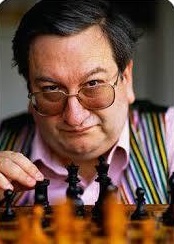
By Raymond Keene OBE
Chess Grandmaster
Patron Labour Asians Society
We are told, more and more, that certain words, thoughts, even memories are no longer fit for use. The new censors call this progress. It isn’t. It is the old habit of forcing people to think alike, dressed up in modern language. Freedom of speech hangs by a thread, and many of those who claim the right to govern us seem to understand more about power than about truth.
In a post-election interview, conducted by an interlocutor who asked nothing difficult, Kemi Badenoch offered a long list of reasons for the Tory collapse, none of them the real one. The obvious cause was the infighting among the party’s own leadership contenders, scrabbling for position while the country’s problems went unaddressed. This is the very definition of the ultracrepidarian: literally “one who goes beyond his shoe,” the shoemaker who forgets to stick to his last.
Assertion without knowledge is the seed of something larger. In the Soviet Union, almost every art form was bent to serve the state, even music. Shostakovich complied but nursed a private resistance that brought him under suspicion. Prokofiev, who returned from the West in 1936, was later condemned for “anti-democratic formalism.”
One pursuit stayed strangely free: chess. The state could not dictate what counted as a good move. A move won or it lost; no commissar could rule a knight fork ideologically unsound. Chess offered a small refuge where people could still think for themselves.
Even there, the shadow fell. When Tigran Petrosian drew too many games, the Soviet press denounced him for not matching the myth of the tireless worker. That he was simply seeking the best moves counted for nothing.
I know this kind of criticism first-hand. When I won the British Championship in 1971, one prominent writer claimed I lacked fighting spirit, despite reckless sacrifices and games fought to exhaustion. Later, covering an international win, he dwelt on my single loss and said almost nothing about the victory. In England that’s merely irritating. Elsewhere, it could end a career.
When I left the Conservatives, a party I had supported for forty years, for Reform, I found myself told what I could and couldn’t say on social media by people who behaved like small commissars. So I tore up my membership card in public, in front of an audience from the Labour Asians Society. Under Andy Burnham, I now see the Labour Party as a place where free speech and new ideas are still welcome, thinking outside the box, as business schools used to say. But what if there is no box at all?
Wherever speech is watched, the chessboard becomes a form of quiet resistance, a place where people still judge for themselves, win or lose. The question is whether the current rush to silence and correct will push more of our thinkers toward that same refuge. Unless, of course, Andy Burnham gets there first.
116