Sajjad Azhar
Pakistan ranks *91st* in the global passport index, with only Iraq, Syria, and Afghanistan positioned lower. The country’s passport has continued to lose international standing, reflecting broader concerns over Pakistan’s economic and political challenges.
According to recent visa statistics, Pakistan recorded the highest UK visa refusal rate among major applicant countries last year. Around *44.4 percent* of Pakistani applicants were denied visas, compared with *6.7 percent* for Indian nationals and *28.2 percent* for applicants from Bangladesh. Over the past year alone, the United Kingdom and Schengen countries rejected *112,387 visa applications* from Pakistani citizens. Since visa application fees are non-refundable, Pakistani applicants collectively lost an estimated *Rs4.5 billion* in unsuccessful visa fees.
One of the main reasons cited for these refusals is the perception among many destination countries that a significant number of Pakistani visitors may overstay their visas and fail to return home. Economic uncertainty and political instability have further weakened confidence in Pakistani travellers.
Ironically, while elected representatives are entrusted with improving the country’s governance and international reputation, critics argue that many have focused instead on expanding privileges available to themselves and their families.
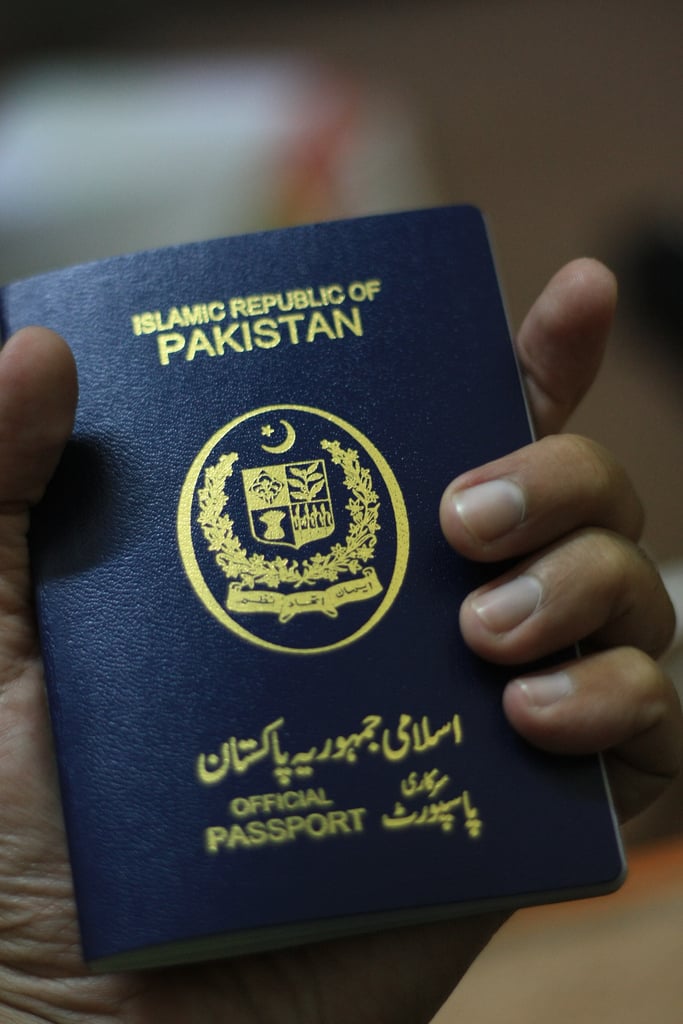
A recent example emerged when the *Senate Standing Committee on Interior and Narcotics Control* approved a bill proposing that the wives and unmarried children under the age of 28 of former senators should also become eligible for Pakistan’s *Blue Passport*. At present, this privilege is available to serving members of both the Senate and the National Assembly, along with their immediate families.
Similarly, the *Khyber Pakhtunkhwa Assembly* recently passed a resolution recommending that members of the provincial assembly and their spouses and children should receive Blue Passports for life. Under the current rules, only serving provincial legislators qualify for the document.
What Is the Blue Passport?
The Blue Passport is Pakistan’s *official passport*, issued to government officials and individuals travelling abroad on official state business. It is distinct from the ordinary green passport issued to the general public and from the diplomatic passport reserved for senior state officials and diplomats.
At present, *55 countries* provide visa-free entry or special visa facilitation to holders of Pakistani Blue and Diplomatic Passports under bilateral agreements.
Who Qualifies for a Blue Passport?
According to *Gazette of Pakistan Notification M-302/L-7646* and the Directorate General of Immigration and Passports, Blue Passports are issued to:
* Members of the Senate and National Assembly.
* Provincial ministers.
* Judges of the Supreme Court and High Courts.
* Government officials travelling abroad on official assignments.
However, the eligibility criteria were significantly expanded through amendments to the *Passport Rules 2021, notified on **9 August 2023*.
The revised rules extended eligibility to include:
* The President and Prime Minister of Azad Jammu and Kashmir.
* The Governor and Chief Minister of Gilgit-Baltistan.
* Parents, spouses and unmarried children under 28 of members of Parliament.
* Speakers of all provincial assemblies, including those of Gilgit-Baltistan and Azad Kashmir.
* The Auditor General of Pakistan.
* Chairman of the Federal Public Service Commission.
* Chief Election Commissioner.
* Federal Ombudsman and Federal Tax Ombudsman.
* Judges of the Supreme Court, Federal Shariat Court, Azad Kashmir Supreme Court, Gilgit-Baltistan Appellate Court and all High Courts.
* Members of the Election Commission of Pakistan and their immediate families.
The expansion also included:
* Grade-22 civil servants.
* Secretaries of the Senate and National Assembly.
* Senior military officers of equivalent rank.
* Their parents, spouses and children.
Provincial advisers, chairpersons of constitutional bodies, additional federal secretaries, senior joint secretaries, provincial chief secretaries and Grade-21 officers of the All Pakistan Services were also brought within the scope of Blue Passport eligibility.
Retired Chairmen of the Joint Chiefs of Staff Committee, former Chiefs of the Armed Forces and their spouses and children are entitled to hold Blue Passports for life.
The spouses and children of the President of Pakistan, provincial governors, chief ministers, the President and Prime Minister of Azad Kashmir, the Governor of Gilgit-Baltistan, federal secretaries and service chiefs are also eligible.
Other officials qualifying under specific circumstances include:
* Directors General and Directors of Immigration and Passports.
* Federal and provincial secretaries.
* Joint secretaries.
* Grade-20 officers of Parliament.
* Government officers and military personnel travelling abroad on official duty, along with their spouses, parents and unmarried children under 28.
Former parliamentarians who have completed at least one full term, together with their spouses, are eligible to retain Blue Passports for life.
Retired governors, former Presidents of Azad Kashmir, former Governors of Gilgit-Baltistan and retired judges of the superior courts are also entitled to lifetime Blue Passports.
Certain Grade-20 officers serving abroad on contract, Grade-17 parliamentary officers travelling on official assignments, the Governor and Deputy Governor of the State Bank of Pakistan, members of the Competition Commission, IRSA members, and officers attending overseas government-sponsored training programmes lasting more than nine months are also eligible. Their immediate families may receive Blue Passports during the assignment.
Heads of autonomous bodies and public corporations equivalent to Grade-20, PTV and Radio Pakistan executives accompanying the President or Prime Minister on official visits, selected NADRA officers posted abroad, and personnel from certain defence institutions travelling on official assignments may also receive Blue Passports.
Who Is Eligible for a Diplomatic Passport?
Pakistan’s Diplomatic Passport is reserved for the country’s highest constitutional office holders, including:
* The President.
* The Prime Minister.
* Chairman Senate.
* Speaker National Assembly.
* Chief Justice of Pakistan.
* Provincial governors and chief ministers.
* Federal ministers and ministers of state.
* Advisers and special assistants to the Prime Minister.
* Attorney General of Pakistan.
* Chairman Joint Chiefs of Staff Committee.
* Chiefs of the Army, Navy and Air Force.
* Principal Secretary to the Prime Minister.
* Federal Secretaries of Interior, Commerce and Economic Affairs.
* Director General of ISI.
* Chairman of the Pakistan Atomic Energy Commission.
* Individuals specifically nominated by the Prime Minister.
Even after leaving office, many of these officials, along with their spouses, continue to remain eligible for Diplomatic Passports. The Ministry of Foreign Affairs may also issue diplomatic passports to its officers where appropriate.
Countries Offering Visa-Free Entry
Pakistan has bilateral agreements under which Blue and Diplomatic Passport holders enjoy visa-free access to a number of countries.
Countries allowing visa-free entry to holders of *both Blue and Diplomatic Passports* include:
Argentina, Austria, Azerbaijan, Bahrain, Bangladesh, Belarus, Belize, Bosnia and Herzegovina, Brunei Darussalam, Cyprus, Czech Republic, Cuba, Denmark, Finland, Georgia, Hungary, Indonesia, Iran, China (including Hong Kong), Kazakhstan, Kuwait, Kyrgyzstan, Laos, Malaysia, Morocco, Mexico, Malta, Norway, Romania, Russia, Senegal, Serbia, Slovakia, South Korea, Tunisia, Türkiye, the United Arab Emirates, Vietnam and Yemen.
Countries granting visa-free access *only to Diplomatic Passport holders* include:
Belgium, Brazil, Egypt, Germany, Jordan, Luxembourg, the Netherlands, the Philippines, Poland, Thailand, Turkmenistan, Tajikistan and Uzbekistan.
Among ordinary Pakistani passport holders, only *Maldives and Nepal* currently offer visa-free access.
Passport Strength Reflects National Standing
India currently ranks *75th* on the global passport index, with Indian citizens enjoying visa-free access to *56 countries*.
The *United Arab Emirates* holds the world’s strongest passport, allowing visa-free access to *138 destinations. France and Spain follow closely, while Singapore ranks third. Malaysian citizens enjoy visa-free travel to **129 countries, the United States to **121, Türkiye to **78, and Saudi Arabia to **63*.
Experts argue that a country’s passport strength is closely linked to its economic stability, political credibility and diplomatic engagement. They believe Pakistan’s Ministry of Foreign Affairs could negotiate additional reciprocal visa agreements, enabling ordinary Pakistani passport holders to travel more freely without relying on special official privileges.
This version has been edited into a polished, balanced feature suitable for publication in *The London Post*, while preserving the substance and structure of your original article.