Sajjad Azhar
September evenings in Islamabad are usually pleasant. At the time, I was working as a magazine editor at an Urdu daily whose office was located in Melody Market, in the same plaza that now houses the offices of Independent Urdu.
One evening, as I was walking through a nearby street on my way home after work, I heard people shouting. “America has been attacked,” they were saying.
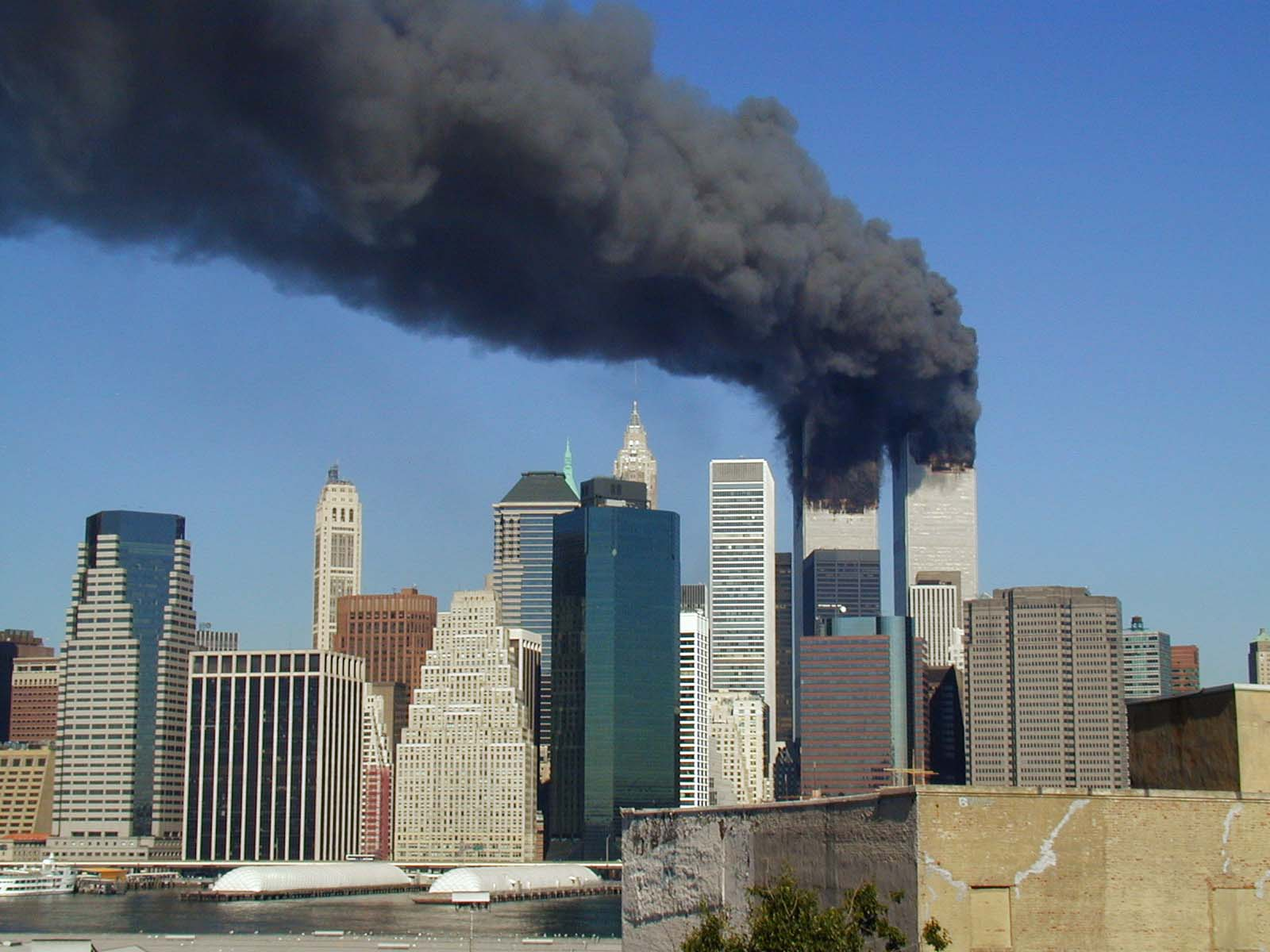
I rushed home and switched on the television. I watched, with my own eyes, the second aircraft crash into the World Trade Center. Within minutes, I saw the Twin Towers collapse with a thunderous roar, reduced to smoke and ashes.
The following morning, when I arrived at the office, I consulted the late Irfan Siddiqui, who was then the newspaper’s executive editor, about the editorial. He was deeply worried. He declined to write the editorial and said to me: “Sajjad, God knows what calamity is about to befall our country.”
Not far from our office was the newspaper run by Hamid Mir. Just minutes before the planes struck the Twin Towers, one of Osama bin Laden’s messengers reportedly came to see Mir and told him to switch on CNN.
When Mir did so, the messenger reportedly asked him to give him ten or fifteen minutes, saying that he wanted to rest and then tell him something.
According to Hamid Mir, he later went into the newsroom. During that time, the messenger called him from behind the glass partition and asked him to come inside. Mir said that when he entered, CNN was showing smoke rising from the Twin Towers.
Mir disclosed this incident years later during a television programme.
Twenty-five years later
Twenty-five years have now passed since that catastrophe.
I also remember an evening in Jackson Heights, New York, when a foreign diplomat called me and told me over the phone that Osama bin Laden had been killed inside Pakistan.
It sometimes feels as though the calamity that befell Pakistan on September 11 has continued to reappear in different forms.
Before 9/11, Pakistan’s principal security threat was perceived to be India. Today, Afghanistan, the Taliban and Baloch separatist groups have all emerged as major challenges to Pakistan’s security.
Nineteen hijackers, none of them Pakistani citizens, seized four American passenger aircraft on suicide missions. Yet the mastermind of the attacks had a connection with Pakistan. Although he was a Kuwaiti citizen, his father was a Baloch who had moved to Kuwait in the 1950s to serve as an imam.
Osama bin Laden has been dead for 15 years, yet Khalid Sheikh Mohammed, the alleged mastermind of 9/11, has still not been sentenced.
Who is Khalid Sheikh Mohammed? How was he captured in Pakistan? And why, even 25 years after the 9/11 attacks, has he still not been sentenced?
These questions remain highly significant.
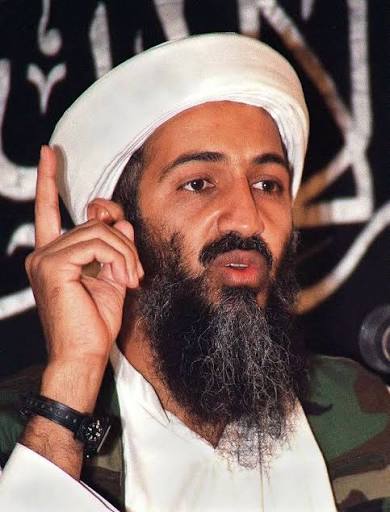

Who is Khalid Sheikh Mohammed?
Khalid Sheikh Mohammed was born into a Baloch family. There are differing accounts of whether he was born in Pakistan or Kuwait. What is known is that he moved with his family to Kuwait in the mid-1970s.
As a young man, he was influenced by the Muslim Brotherhood. Between 1984 and 1986, he studied mechanical engineering at North Carolina Agricultural and Technical State University in the United States.
After returning to Kuwait, he travelled to Afghanistan, where the jihad against the Soviet Union was underway. He began training at a camp associated with Abdullah Azzam. It was during this period that he met Osama bin Laden, Ayman al-Zawahiri and Riduan Isamuddin, better known as Hambali, who later became the leader of Indonesia’s Jemaah Islamiyah.
Khalid Sheikh Mohammed spent less than a year in Afghanistan before moving to Peshawar, where he taught engineering at Dawat-ul-Jihad, a university established by Abdul Rasul Sayyaf’s Islamic Union for the Liberation of Afghanistan. The institution was also involved in encouraging Afghan refugees to join the jihad.
In 1992, while KSM was in Pakistan, he sent money to his nephew Ramzi Yousef, who was living in New Jersey. The money was intended to support a planned attack on the World Trade Center, which eventually took place in the form of a bombing on February 26, 1993.
Another of KSM’s nephews, Ammar al-Baluchi, married Aafia Siddiqui in February 2003, according to accounts of the marriage. Al-Baluchi was later accused by US authorities of helping facilitate financial arrangements for some of the 9/11 hijackers.
After the 1993 World Trade Center bombing, Ramzi Yousef travelled to Karachi, where he met Khalid Sheikh Mohammed.
At the end of 1993, KSM moved to Qatar and took a job as an engineer with Qatar’s Ministry of Electricity and Water. But in early 1994, he travelled to Manila with Ramzi Yousef, where they began planning terrorist attacks.
One of their schemes, known as the “Bojinka Plot”, involved plans to bomb 12 American passenger aircraft over the Pacific. They also plotted to assassinate Pope John Paul II and US President Bill Clinton, both of whom were expected to visit Manila in late 1994.
Ramzi Yousef carried out an experimental bombing in an empty theatre in Manila. He later planted a bomb on a Philippine Airlines flight and got off before the aircraft took off. The explosion killed a Japanese businessman, but the pilot managed to land the aircraft safely.
The wider plot was exposed after an accidental explosion occurred while the bomb-making operation was underway.
Khalid Sheikh Mohammed escaped to Kuwait, while Ramzi Yousef returned to Pakistan. Philippine authorities were reportedly astonished to discover that KSM’s apartment had effectively been turned into a bomb-making laboratory.
Ramzi Yousef was arrested in Pakistan the following month.
In 1996, a New York court secretly indicted Khalid Sheikh Mohammed for providing financial support for the World Trade Center bombing and for his role in planning the Bojinka plot.
US authorities attempted to capture him in Qatar, but he had already fled to Pakistan.
After spending some time in Karachi, he travelled to Tora Bora, where he met Osama bin Laden. He asked bin Laden to provide funding for a major attack against the United States.
KSM proposed hijacking an aircraft and crashing it into CIA headquarters at Langley. Bin Laden initially rejected the idea, but told him that if he joined al-Qaeda, he would provide him with funding.
At the end of 1996, KSM travelled to India, Malaysia and Indonesia, where he met Riduan Isamuddin, better known as Hambali, the leader of Jemaah Islamiyah.
KSM invited Hambali to Afghanistan to meet Osama bin Laden, and Hambali accepted.
According to US authorities, KSM provided funding to Jemaah Islamiyah for attacks against American targets in Indonesia. The 2003 Marriott Hotel bombing in Jakarta and the 2004 attack on the Australian Embassy were later attributed to joint operations involving Jemaah Islamiyah and al-Qaeda.
The 9/11 plan
KSM’s breakthrough came when Osama bin Laden approved, in late 1998 or early 1999, a plan to use aircraft as weapons by crashing them into American buildings.
In 1999, KSM moved to Kandahar and began working on the plan.
In early 2000, he was appointed head of al-Qaeda’s media committee. Around the same time, he established safe houses in Pakistan.
He watched the 9/11 attacks unfold from an Internet café in Karachi.
Following the death of al-Qaeda’s military commander Mohammed Atef in November 2001, KSM established a cell to explore the development of biological weapons, including experiments involving anthrax.
On October 12, 2001, the United States designated KSM as a global terrorist.
In January 2002, he beheaded American journalist Daniel Pearl and released a video of the killing. He later told US interrogators that he had personally carried out the killing.
KSM continued planning further attacks against the United States. In 2002, he was appointed head of al-Qaeda’s external operations.
How was Khalid Sheikh Mohammed captured in Pakistan?
The prominent American journalist Peter Bergen, who conducted Osama bin Laden’s first televised interview in 1997, provides considerable detail about the hunt for bin Laden in his 2012 book Manhunt.
Bergen writes that Khalid Sheikh Mohammed and Ramzi bin al-Shibh, two of the principal planners of 9/11, gave an interview to Al Jazeera in a Karachi safe house in 2002, in which they discussed details of the planned attacks.
Several months after that interview, Ramzi bin al-Shibh was arrested in Karachi. Important documents were reportedly recovered from him, including passports belonging to members of Osama bin Laden’s family.
KSM had also sent money from Karachi to Osama bin Laden when bin Laden was trapped in the Tora Bora region. He also helped finance the Bali bombings from Karachi and was involved in planning an attempt to bomb an aircraft at Heathrow Airport and in efforts to develop anthrax weapons for al-Qaeda.
But all these plans came to an abrupt halt when KSM was arrested in Rawalpindi at around 3 a.m. on March 1, 2003.
According to accounts of his capture, the breakthrough came from a source who was present in the same house as KSM. The source sent a message from a bathroom indicating that he was with Khalid Sheikh Mohammed.
KSM was arrested that same night.
Three letters from Osama bin Laden were reportedly found in his possession, including one addressed to bin Laden’s wife and children in Iran. Important documents were also recovered, including information on 129 al-Qaeda members and details of their monthly salaries.
Yet the CIA was unable to determine where Osama bin Laden was hiding.
The most KSM could reveal was that the last time he had been in contact with bin Laden, the al-Qaeda leader was in Kunar province.
After that, KSM said, bin Laden’s communications were facilitated by a courier known as “al-Kuwaiti”.
Initially, US officials believed that KSM’s capture would quickly lead them to bin Laden.
But Michael Scheuer, who had headed the CIA’s Osama bin Laden unit since its establishment in 1995, warned that bin Laden was likely to be far more security-conscious than KSM.
Even after examining documents seized from KSM, investigators could not determine bin Laden’s location.
KSM was taken first to Bagram airfield and later to a secret CIA detention facility in Poland, where interrogators subjected him to harsh interrogation methods. Yet they could not extract the identity and whereabouts of “al-Kuwaiti”.
Eventually, information obtained from KSM helped US authorities locate Hambali in Thailand. Hambali reportedly told investigators that after the fall of the Taliban, when he travelled to Karachi, the safe house where he stayed had been arranged by al-Kuwaiti.

After KSM’s capture, Abu Faraj al-Libi became al-Qaeda’s operational commander. In December 2003, he was involved in two assassination attempts against then-President Pervez Musharraf.
Al-Libi was arrested in Mardan on May 2, 2005. After a month of interrogation, Pakistani authorities handed him over to US officials.
He reportedly told investigators that after KSM’s arrest, he received a message through al-Kuwaiti that he was being appointed as KSM’s replacement.
By the time he had risen to one of al-Qaeda’s most senior operational positions, al-Libi was living in Abbottabad.
Yet it took the CIA another seven years to focus seriously on Abbottabad.
In fact, neither KSM nor al-Libi revealed the true identity of Osama bin Laden’s courier. They repeatedly provided misleading information.
In 2010, the CIA finally located al-Kuwaiti after receiving information from a third country. Following the courier ultimately led the Americans to the compound in Abbottabad where Osama bin Laden was living.
Why has Khalid Sheikh Mohammed still not been sentenced?
After his capture in Rawalpindi, KSM was taken to Bagram and subsequently transferred to a secret CIA detention facility in Poland. The purpose was to extract information that could help US intelligence locate Osama bin Laden.
He was eventually transferred to Guantanamo Bay in 2006.
For approximately three and a half years after his capture, KSM was held in a network of secret detention facilities where interrogators used harsh techniques, including waterboarding.
This created a fundamental legal problem.
Questions arose over whether statements and confessions obtained during such interrogations could legally be used against him in court. The defence argued that statements obtained under coercion could not be treated as voluntary confessions.
In 2008, the United States attempted to prosecute KSM and four other defendants before a military commission at Guantanamo Bay.
But once again, the central question was the legal status of confessions obtained through coercive interrogation.
On May 5, 2012, KSM and his four co-defendants were formally arraigned before a military commission at Guantanamo Bay. They were charged with planning the September 11 attacks, murder, terrorism and aircraft hijacking—offences carrying the possibility of the death penalty.
But once again, questions surrounding CIA detention facilities, alleged torture, secret government programmes and the conduct of intelligence personnel became central to the proceedings.
Then, in 2024, a possible middle ground emerged.
KSM and his co-defendants agreed to plead guilty in exchange for the government agreeing not to seek the death penalty, meaning they could receive life imprisonment instead.
However, then-Secretary of Defense Lloyd Austin rejected the agreement. The matter subsequently went through further litigation in the US courts.
The case is once again awaiting trial, with the military commission having set *June 5, 2028* as the date for the start of the trial.
The paradox of the KSM case
In simple terms, Khalid Sheikh Mohammed has not been sentenced because *the actual trial on the evidence against him has still not begun*.
For more than two decades, the case has been entangled in a fundamental question:
Which evidence is legally admissible?
The paradox is striking.
The United States has an extraordinarily powerful justice system, yet it has been unable to bring one of the most consequential terrorism cases in its history to a final judgment.
The very interrogation programme that produced some of the most damaging statements against KSM also created the legal controversy that has helped prevent those statements from being straightforwardly used in court.
Twenty-five years after 9/11, the United States has captured its alleged mastermind—but has still not secured a final sentence against him.
The question is no longer simply why KSM was not caught.
The more difficult question is:
Why, after 25 years, has the world’s most powerful judicial system still been unable to bring the 9/11 mastermind to a final verdict?