Amr Khalifa
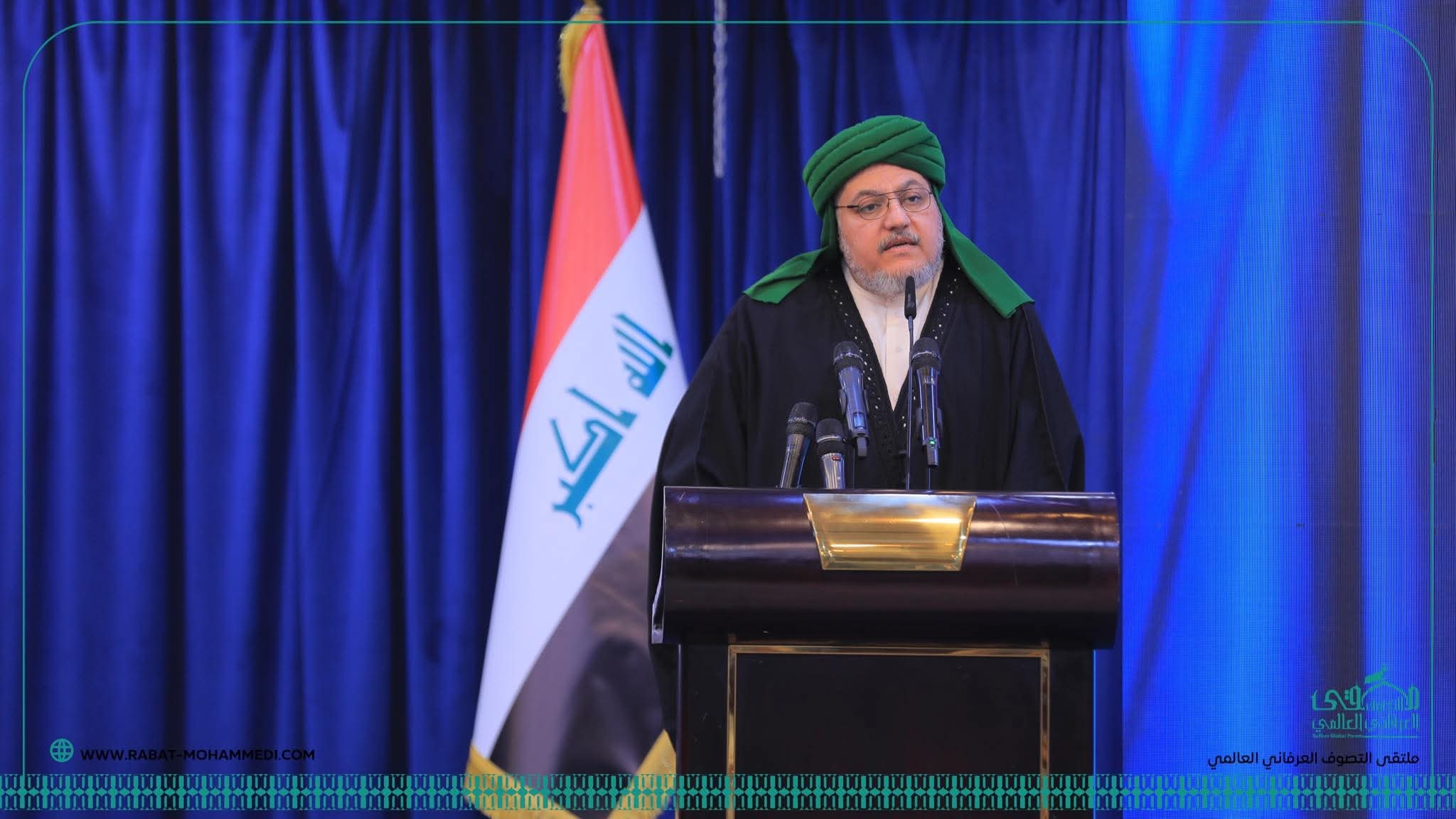
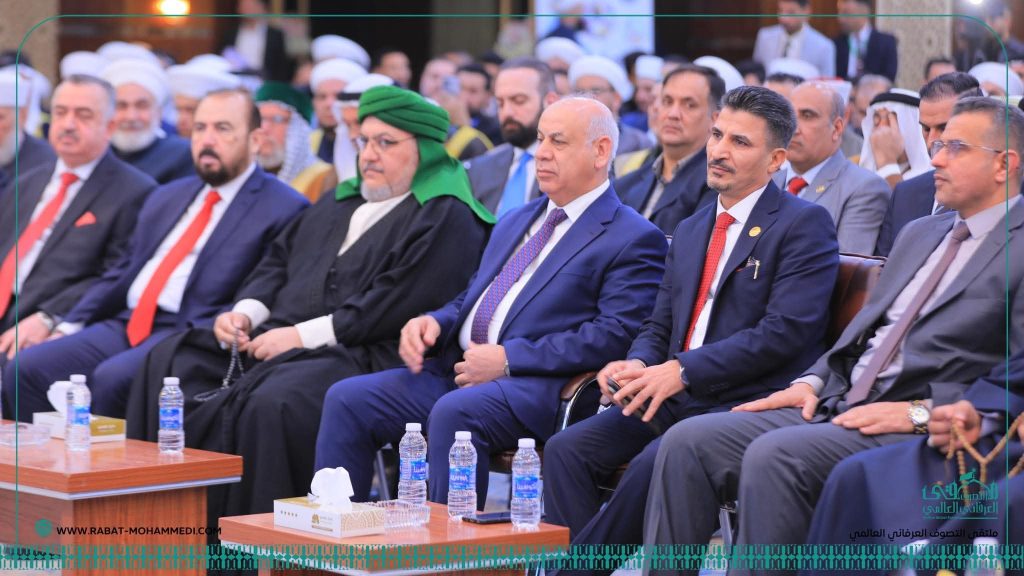
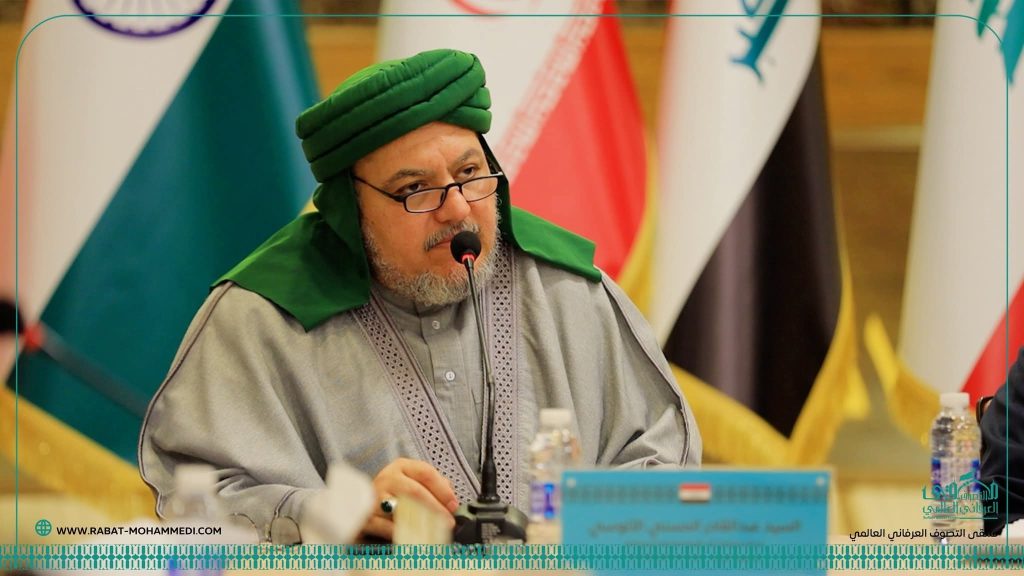
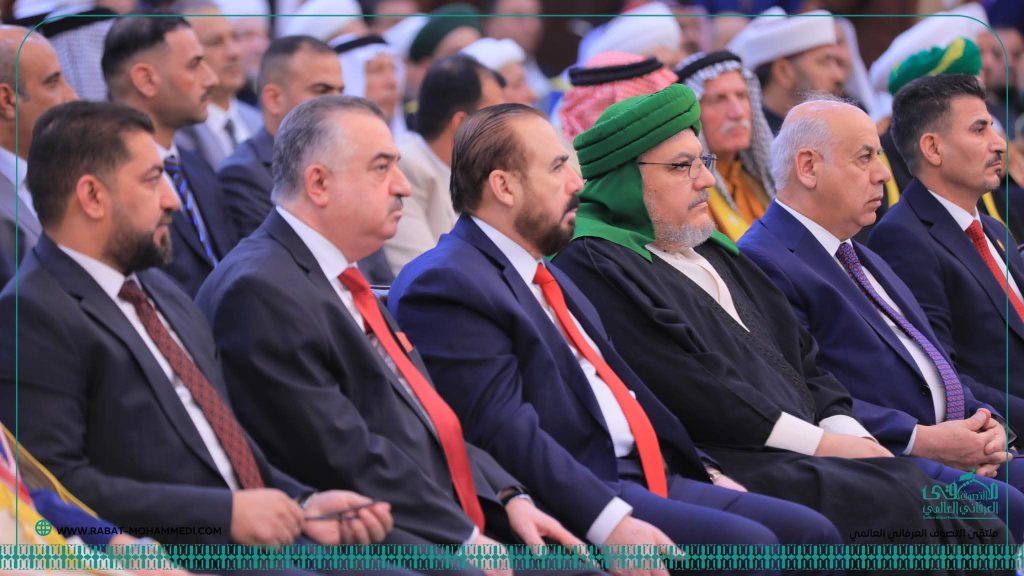
EGYPT : As part of the ongoing scholarly and Prophetic gatherings—organized by the Council of Scholars of the Muhammadan Ribat and the Global Forum for Gnostic Sufism in Iraq—aimed at reviving the meanings of Prophetic guidance, embedding a culture of unity and harmony, and addressing the causes of division and discord within the Ummah through a comprehensive, scholarly, and Quranic approach.
The lecture began with a fundamental question: If Allah has commanded the Ummah to hold fast to His Rope, what exactly is this “Rope of Allah” that must be understood before one can hold fast to it?
Sheikh al-Alusi explained that understanding the object to which one holds fast must precede the act of holding fast itself. This is because an error in identifying the point of reference can transform a movement however sincere into a gradual drift away from the ultimate goal. He illustrated this with the example of a traveler on a long journey who veers slightly off course at the start; the gap between him and his destination widens the further he proceeds.
Thus emerges the symbolism of the “Rope” in the Quran: it is that which connects the human being to their ultimate goal, prevents them from falling or slipping, and rescues them from danger. In terms of meaning, this concept aligns with another Quranic expression: al-Urwah al-Wuthqa (the Firm Handhold). Thus, the Ummah is called upon to employ its intellect and knowledge in seeking a reliable reference that connects it to God’s intent one that serves as a source of certainty rather than a point of contention.
From this fundamental premise, the lecture turned to a review of the history of Islamic sectarian divergence, posing the question: If the “Rope of God” is one, why have the Ummah’s various sects drifted so far apart over the centuries?
The head of the “Gnostic Sufism Forum” emphasized a central principle for building unity: Islamic unity cannot be founded upon matters of disagreement among Muslims.
Historically, these points of contention were causes of division; making them the basis for cohesion would not bring the parties closer together. Instead, the priority is to identify the “realm of certainty” shared by the entire Ummah—a common ground upon which all can unite.
Foremost among these shared certainties is the Holy Quran. The Ummah across its various schools of thought and traditions agrees that it is the Word of God and a source of guidance and legislation. It is established through tawatur (mass transmission) and has been preserved within the Ummah from generation to generation. His Eminence explained the concept of tawatur as a mode of knowledge that yields absolute certainty and assurance. The Quran was not transmitted merely by a single individual or a handful of people; rather, it was carried by successive groups across generations, making it rationally impossible for such vast numbers to have colluded to fabricate or alter its text.
Consequently, the lecture stressed that the strength of the Quran’s transmission lies not in the physical printed copy itself, but in the unbroken chain of mass transmission that has carried its words from the Prophetic era to subsequent generations. This renders the Quran “definitive in authenticity” (qat‘i al-thubut) and establishes it as the primary anchor to which the Ummah can hold fast with absolute certainty. The lecture then addressed the noble status of the Prophet, emphasizing that the Ummah despite its diverse schools of thought is unanimous regarding the prophethood, message, and station of our master Muhammad (peace and blessings be upon him and his family). Consequently, the person of the Prophet and his established guidance serve as a unifying reference and a “rope” connecting the community to the Divine Will.
However, from a scholarly perspective, the lecture distinguished between the certainty regarding the Messenger (peace and blessings be upon him and his family) and the varying degrees of authenticity associated with the narrations transmitted from him. While the Quran is mutawatir (mass-transmitted) and definitively established, a significant portion of Prophetic Hadith was transmitted via ahad (individual/solitary) chains of narration; regarding the latter given the nature of human transmission the authenticity of the report, the standing of the narrators, and the methods of inference remain open to scholarly scrutiny.
It is within this realm that a significant portion of jurisprudential disagreement has arisen; a Hadith might be deemed authentic by one Imam yet not established for another, or scholars may differ in their methodologies for evaluating narrations, interpreting their meanings, and deriving rulings from them leading to a multiplicity of rulings and schools of jurisprudence. Therefore, the lecture posited that the Sunnah established with certainty along with authentic narrations that scholars have accepted as consistent with the Quran and fundamental religious tenets falls within the sphere of guidance that connects the Ummah to the Divine Will, provided there is an appreciation of the scholarly distinction between the ranks of evidence and their respective degrees of authenticity.
The lecture did not stop at defining “the rope” it proceeded to examine a specific Quranic term jami‘an (collectively/together) viewing it as the key to understanding the verse’s social objective. The Quran did not merely say, “Hold fast to the rope of Allah”; rather, it called for a collective act of holding fast, in which the Ummah across all its diverse spectrums participates together.
This was then linked to the system of worship in Islam; Prayer establishes the concept of communal gathering; fasting unites Muslims within a shared timeframe of worship; and the Hajj presents the grand image of the Ummah’s unity as the faithful circumambulate, perform the Sa‘i, and stand at Arafat through shared rituals, transcending differences in homeland, skin colour and school of thought. Thus, Islamic unity is not merely a transient political notion, but a concept deeply embedded in the very structure of Islamic worship and religious obligation.