Dr. Rasheed Ahmed
How a simple rainwater harvesting system could turn 600 acres of dry grazing land in Gandaf Syedan, Haripur, into orchards and bring a livelihood back to the village.
A Village Beside Tarbela, Far from Everything
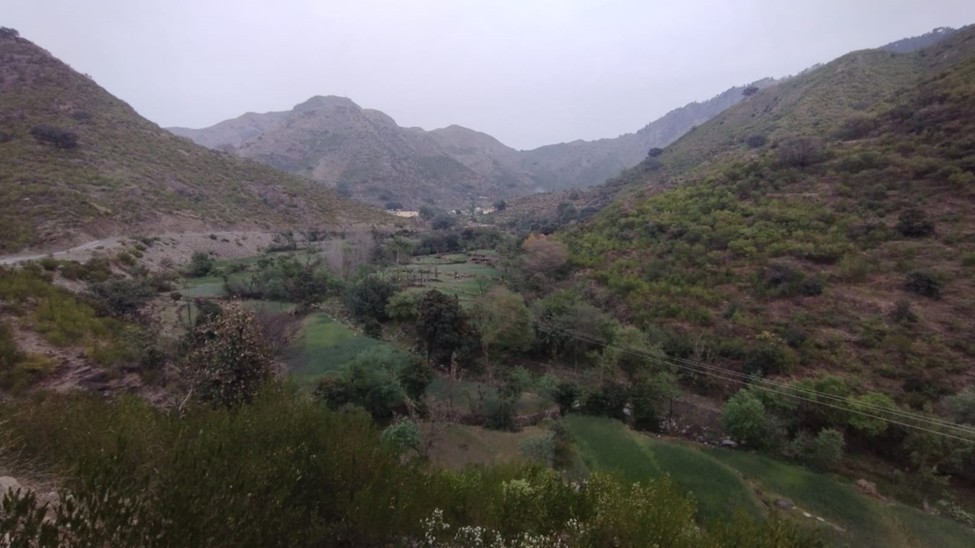
Gandaf Syedan lies in Haripur district, Khyber Pakhtunkhwa, close to the banks of Tarbela. Yet the village sits about an hour and a half by road from Haripur city, and for the people who live there it may as well be a world away. The road climbs through mild-to-moderate hill terrain, past terraced slopes and dry watercourses, and ends in a valley that has been left almost entirely to cattle grazing.
The irony is hard to miss. Here is a community living near one of the country’s largest reservoirs, and still the land around them is arid. The village depends almost wholly on rainfall. When the rain is irregular or insufficient, wells and springs run low, crops fail, and families are left with little to eat and nothing to sell.
Too Little Water, Then Too Much
The water problem here has two faces. For most of the year the land is dry. The summers are hot, the winters are dry, and almost all the rain arrives in a few weeks of monsoon, between July and September. When it comes, it comes all at once. With no structures to hold it, the water races down the bare slopes, tears away the topsoil and leaves the village with floods, gullies and a thinner, poorer soil every year.
So, the same slopes that suffer from drought also suffer from flooding. Water is both missing and wasted.
Meanwhile, there is almost nothing else to fall back on. Apart from grazing, the area offers no agriculture or other regular source of income. Wheat, maize and livestock keep some households going, but every year inflation pushes up the price of food, fuel and basic needs while incomes stay where they were. Literacy is low, schools are hard to reach, and good jobs are far away. The result is a community that is hospitable and close-knit, but under severe economic strain, and for many families’ lives have become miserable.
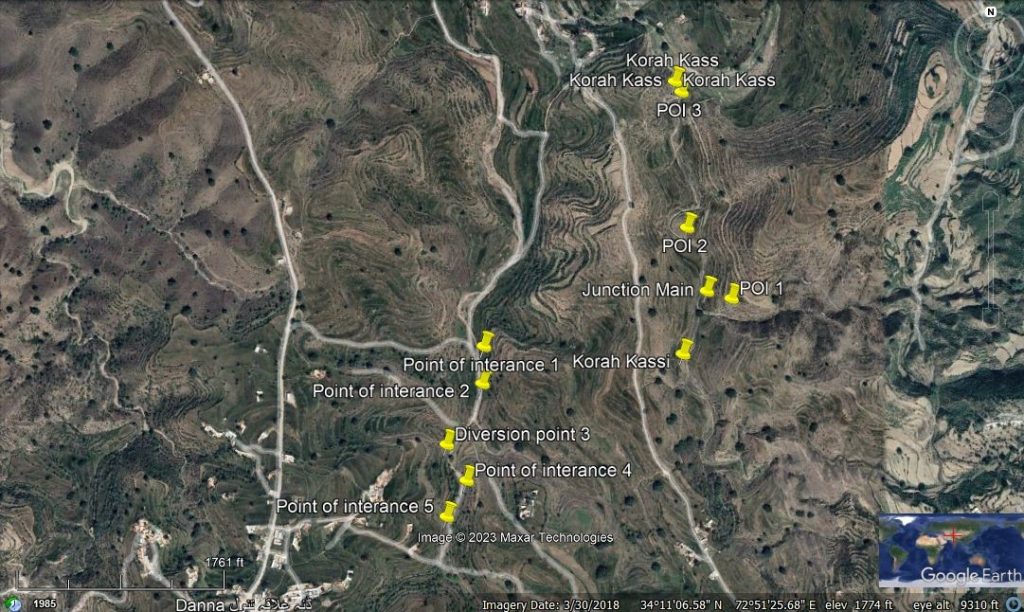
Sites marked on Google Earth during the survey, including points of entrance, a diversion point and the main junction.
Listening Before Building
The project began with an invitation. Syed Naveed Hussain Shah of Gandaf Syedan visited the office of Green Celestial, a design and consulting firm working on water resources, and asked its technical team to come and see the problem for themselves. The team travelled to the village for a reconnaissance survey: an early field visit meant understanding the land, the water situation and, above all, the people.
They walked the slopes, observed how water moves across the landscape, and sat with the elders and young men of the village to hear what they needed. The conversations made one thing clear. The community did not want charity. They wanted a way to use their own land.
The Idea: Hold the Rain on the Hill
The survey found a simple answer. Around 600 acres of moderately steep strips around the village, now used only for grazing, have the slope and terrain to support orchards. The same slope that sends the monsoon rushing away also lets water be captured high up and carried down by gravity, with no pumps and no electricity bill.
Based on community demand and technical checks, the team identified 10 sites that are feasible for rainwater harvesting structures. Depending on what a detailed survey shows, these could be retaining walls and weirs, diversion canals and embankments, or small dams with canals. Each site can store a useful amount of water and has the slope to run a gravity-fed irrigation system.
This is not rocketing science, and it is not expensive. Dry-stone and masonry walls, earthen embankments and simple diversion channels are well-understood techniques, and they can be built largely with local labour and local material. With modest resources we can establish a good system, and one that the village itself can maintain.
From Water to Orchards
Stored water changes what the land can do. The slopes of Gandaf Syedan are suited to olive, litchi, guava and citrus, fruit trees that suit hillside planting and bring a better return than grazing. Once the water is in place, the system is completed with an irrigation method matched to each site: low-pressure drip irrigation, pitcher irrigation, sprinkler guns or surface irrigation.
The design also must be looked after. The recommendations of the survey include sizing each structure to its catchment and to the demand for water, keeping storage large enough to meet need while limiting losses from overflow and evaporation, protecting water quality with simple screens and sand filters, and setting up community-based management so that cleaning, inspection and repair become a shared habit.
The benefits would reach well beyond the orchards. Terraces, walls and tree cover hold the soil in place and soften the monsoon floods. Water stays in the ground longer. Orchards create seasonal work, fruit to sell and a reason for young people to stay. In an area with no other source of income, that is the difference between getting by and getting ahead.
An Invitation to Our Readers
The reconnaissance survey is only the first step. The next stage is a semi-detailed survey of the 10 sites, followed by design, construction and the planting of the first orchards. That work needs partners: donors, volunteers, engineers, agricultural experts and organizations that believe water should be kept, not lost.
The Welfare Trust has always stood with communities in need. Gandaf Syedan is a chance to support something that lasts, a system that keeps working after the ceremony is over and the donors have gone home. A few walls and channels built now can give a village its water, its soil and its livelihood back.
The rain will come again next monsoon. The only question is whether it runs away down the hill or stays to grow something. With your support, we hope it will stay.