Our International Correspondent
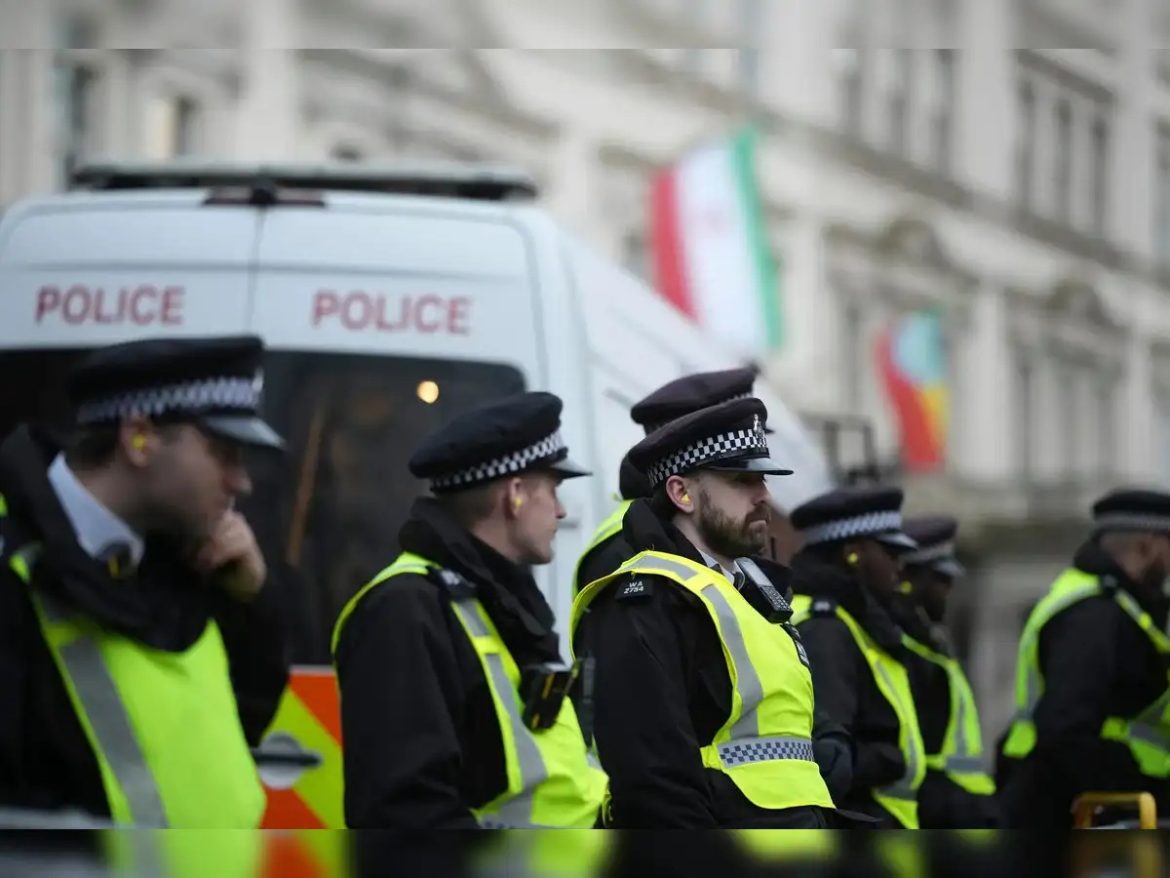
The United Arab Emirates says that it will not allow its airspace, land or sea borders to be used for an attack on Iran, the Foreign Ministry’s clear stance, refusal to provide any assistance in military action, emphasis on dialogue and international laws, due to the escalating geopolitical situation, many international airlines have cancelled flights to the Middle East. According to the Khaleej Times, the UAE Ministry of Foreign Affairs has made it clear that the UAE will not allow its airspace, land area or sea waters to be used for any military attack against Iran, nor will it provide logistical support in any such action.
London Post
City reporter
Under new reforms, response officers will be expected to reach the scene of the most serious incidents within 15 minutes in cities and 20 minutes in rural areas, and forces will be expected to answer 999 phone calls within 10 seconds.
These new targets will ensure that all forces provide the same level of police response to crimes. Currently, data on response times is collected differently across forces, and police are not held accountable if targets are not met. Reforming the system will create more transparency and consistency across the country. Where forces fail to deliver, the Home Secretary will send in experts from the best performing forces to improve their performance, including when unmet response‑time targets are part of broader systemic failing.
To fight everyday crime, the government will ramp up its pledge to restore visible neighbourhood policing and patrols in communities through an extension of its Neighbourhood Policing Guarantee. This has already placed named, contactable officers in each neighbourhood. Under the extension, every council ward in England and Wales will have its own named, contactable officers, create more local points of contact and give officers a deeper understanding of the issues in their area.
Police forces will also recruit the brightest and best from universities in a new recruitment drive to cut crime and catch more criminals. Modelled on Teach First, the government is investing up to £7 million to attract top students from universities into specially trained graduate neighbourhood police officer roles in England and Wales. Retailers across the country will see a major crackdown on organised crime gangs thanks to £7 million in new government investment aimed at dismantling criminal networks from the ground up.
By Zain Ali Khan:
Britain’s government has unveiled plans to create a new National Police Service (NPS), widely dubbed the “British FBI” in the press.
The United Kingdom is set to overhaul its policing structure in what officials describe as the most significant reform in nearly 200 years, with plans to create a new National Police Service informally dubbed a “British FBI.” The government argues that this radical change is necessary to confront modern crime, streamline law enforcement, and free up local forces to focus on community safety. Home Secretary Shabana Mahmood has repeatedly told Parliament that the current policing model, built around 43 separate police forces in England and Wales, was “built for a different century.” Officials say today’s major criminal threats from transnational organised crime and cyber-enabled fraud to terrorism and online child abuse are too complex and borderless for the current patchwork system to handle effectively. Under the reforms, the new National Police Service (NPS) will take on responsibility for major and complex investigations that often cross local boundaries including counterterrorism, organised crime, serious fraud, and digital exploitation. This is similar in concept to the U.S. Federal Bureau of Investigation (FBI), which operates nationwide with specialist investigative powers.
One of the central arguments from the Home Office is that local police forces are overstretched. Forces say they are currently having to split scarce resources between everyday crimes such as burglary, anti-social behaviour and drug offences and complex investigations that often require specialist skills and technology. By centralising high-level investigations under the NPS, the government believes local forces will be better able to focus on community policing, improve response times, and build trust with residents. Officials also emphasise the need to attract highly specialised investigators and cutting-edge technology to tackle modern threats. A centralised force is expected to pool expertise in digital forensics, artificial intelligence, and cross-jurisdictional intelligence sharing areas where smaller forces currently lack capacity. The white paper accompanying the reforms notes that thousands of digital devices awaiting analysis are delaying criminal investigations nationwide. In addition to policing duties, the new service will take over national functions such as roads policing, counter-terrorism coordination and procurement of equipment roles that are currently fragmented across agencies. The government argues this reduces duplication, delivers cost savings, and ensures that specialist skills and technology are available equitably across England and Wales, regardless of a force’s individual budget or location. While proponents highlight the need for modernisation, critics worry that centralising power could weaken local accountability and open the door to political influence over policing priorities. Some police leaders have also urged care in implementing change so that local knowledge and community ties essential in preventing and detecting crime are preserved.
The Consumer Price Index (CPI) inflation is projected at 3.5% in 2025, easing to 2.5% in 2026 before returning to the Bank of England’s 2% target in 2027. As 2026 begins, the headline figures tell a sobering story. Shop price inflation has unexpectedly accelerated to its fastest pace in nearly two years, with food prices staples like meat, fish and fruit leading the increase. Retailers report that energy costs and higher employer National Insurance contributions are squeezing margins and passing costs onto households. Overall inflation remains stubbornly above the Bank of England’s 2 per cent target, exacerbating cost-of-living pressures that many had hoped were easing. For millions of British families already stretched by mortgages, rent and stagnant wage growth, these figures are not abstract percentages they are real rises in weekly shop bills and household outgoings. Public expectations of future inflation have also climbed, according to recent surveys, a reminder that people’s perceptions often shape economic behaviour as much as official statistics. Policymakers face a delicate balancing act. After a series of interest rate cuts in 2025, the Bank of England is now widely expected to hold rates steady in the near term, as inflation refuses to dip swiftly towards target levels. While some economists foresee modest declines later in the year, the recent data complicates the case for further rate reductions. Yet this is not merely a question of central banking. Underlying the numbers are deeper structural issues that require political leadership and strategic policy: productivity that lags peers, tax and welfare choices that shape disposable incomes, and energy and supply chain costs that increasingly filter through domestic prices. Without sustained action across economic policy, the burden of inflation however measured will continue to fall disproportionately on those least able to absorb it. Inflation may no longer dominate front-page headlines as it did at its peak, but its everyday impact remains profound. For many households, price rises in essentials still outstrip the modest comforts of lower headline CPI, eroding living standards even as official rhetoric focuses on future improvements. In this moment, the challenge for Britain is not just to chase a number, but to ensure that the economic recovery is inclusive, resilient, and sustainable. The UK can expect to see big falls in the rate of inflation this year, according to the Resolution Foundation. The think tank’s prediction comes despite an increase in December 2025 that saw the UK end the year with the highest headline inflation of any G7 economy – an unwanted position it has now held for the past seven months.UK inflation increased from 3.2% in November to 3.4% in December, keeping the UK at the top of the G7 leaderboard. CPI inflation expectedly increased in December, driven by tobacco duty, airfares and food. Food prices rose by 4.5% in the 12 months to December, up 0.8% compared with November. Bread and cereals made the largest contribution to this rise, which is disappointing given such staples make up a larger share of spending for lower-income families.The think tank says that better news is coming this year, with the Bank of England forecasting a broad-based 0.5 percentage point fall in January. With inflation still below the Bank’s forecast, it remains on track to head back towards its target rate over the course of 2026. While Britain hopes to lead the G7 economic leaderboard for growth, it has instead spent the last seven months at the top of the charts for inflation instead. But big falls are due in 2026, with inflation finally returning to back to more normal levels. However, the scars from a long period of acute price pressures will continue to be felt by families.’
Burnham Issue
Greater Manchester Mayor Andy Burnham has been at the centre of a major conflict within the Labour Party after being blocked from standing as a parliamentary candidate in the upcoming Gorton & Denton by-election. The party’s National Executive Committee (NEC), led by Sir Keir Starmer, voted to prevent Burnham’s candidacy citing concerns about the cost and risk of a mayoral by-election if Burnham quit his post. This move has sparked significant backlash within Labour. More than 50 Labour MPs have protested the decision, arguing there was no legitimate reason to bar Burnham and warning it reinforces perceptions of internal factionalism and centralised control. Andy Burnham has said he is “disappointed” after being blocked from standing as a candidate for the upcoming parliamentary by-election in Gorton and Denton by Labour’s ruling body. As a directly elected mayor, Burnham had to get approval from Labour’s national executive committee (NEC), after he applied to be a candidate on Saturday. But Labour said the party had decided to deny him permission to stand to “avoid an unnecessary mayoral election, which would use substantial amounts of taxpayers’ money and resources”. Burnham, a former minister, is widely seen as a potential leadership challenger to Prime Minister Sir Keir Starmer should he return to Westminster.Burnham expressed concern about the ruling’s “impact on the important elections ahead of us” and said he would return with “full focus” to his role as mayor. “I decided to put myself forward to prevent the divisive politics of Reform from damaging that. We are stronger together and let’s stay that way,” Burnham said. However, he criticised how the ruling was made known on Sunday saying, “The fact that the media was informed of the NEC decision before I was told you everything you need to know about the way the Labour Party is being run these days”. The seat in Greater Manchester is vacant after former Labour minister Andrew Gwynne stood down on Friday as an MP on health grounds.

Hamid Mir
This was a voice message from a distressed mother. The grieving mother has been struggling in the courts for the recovery of her missing son, Mudassar Naru, for the past seven years. Mudassar Naru was a journalist and poet. In 2018, he posted one of his Punjabi poems on Facebook, which angered the powerful people of that time. Mudassar Naru had also objected to the results of the July 25, 2018, election. So, he was reported missing on August 20, 2018. His son Sachal was only six months old at the time. Mudassar Naru’s wife Sadaf ran around looking for her husband, carrying the six-month-old baby in her arms, but her husband was nowhere to be found. In this difficult time, Iman Mazari filed a petition in the Islamabad High Court against Mudassar’s disappearance. After some time, Sadaf also died mysteriously, and Mudassar’s mother began to be seen in the corridors of the Islamabad High Court with her grandson Sachal. Now the only support of this sad mother was Iman Mazari, through whose efforts the court had summoned (then) Prime Minister Imran Khan on the issue of Mudassar Naru’s disappearance. The Prime Minister promised that Mudassar would be recovered, but the promise was not fulfilled. When Imran Khan’s government ended. Shahbaz Sharif became the Prime Minister. The court also summoned him; Shahbaz Sharif himself came to the Islamabad High Court in 2022 and promised Mudassar Naru’s mother and son Sachal in the court that he would recover Mudassar Naru very soon. This promise of the Prime Minister has not been fulfilled till date, but the lawyer Iman Mazari, because of whom he had to come to the court and make a false promise, has been arrested and sentenced to 17 years in prison, her lawyer husband Hadi Chatha also have been sentenced to 17 years in prison and a total fined of Rs 36 million. This sentence seems low and someone’s anger seems high, that is why Mudassar Naru’s helpless mother asks me if Iman and Hadi were terrorists? Why so much anger at them? Mudassar Naru’s elderly mother and ailing father came to Lahore from Faisalabad to protest the arrest of Iman Mazari and her husband. They stood outside the Press Club holding banners for a long time. Mudassar Naru’s journalist friends, along with their friends, raised slogans in the favour of Iman Mazari and went back. They did what they could. Iman Mazari was the last hope of these elderly parents. This last hope has been sentenced to 17 years in prison. This sentence has been given under the PECA Act. Ironically, Iman Mazari’s mother, Dr. Shireen Mazari, was a federal minister in Imran Khan’s government and cases were filed against Iman during that period as well. Iman often criticised the PTI government and her mother used to say in her defence that she cannot impose any restrictions on her daughter’s political views. Then, when Imran Khan’s government changed, many of her colleagues also changed.
A false case was filed against Dr. Shireen Mazari to change her political allegiance. When she got bail in this case, she was arrested in another case. Due to this injustice, Iman Mazari said some harsh things about the then Army Chief General Qamar Javed Bajwa. Bajwa Sahib got angry. On May 26, 2022, a case was registered against Iman Mazari at the Ramna police station in Islamabad on the request of an officer. She was also arrested. When the case reached the court, Iman’s lawyer Zainab Janjua expressed regret over the words said about General Bajwa and the court disposed of the matter. In September 2023, another case was registered against Iman and then this series continued. Due to weak and baseless cases, Iman used to get released after arrest, but then the PECA Act 2025 was passed.
The 26th and 27th Constitutional Amendments became a law. When the hearing of the cases under the PECA Act began, Iman thought that she would be sent to jail for six to seven months. Perhaps she did not realise that her crime was very serious. She was not only rude but had summoned two prime ministers into court. Many powerful people did not want to see her face. Therefore, by sentencing Iman and Hadi to a sentence greater than life imprisonment and imposing a heavy fine due to this anger, the message has been given that Pakistan has become a hard state for soft people. These soft people are those who do not pick up guns to implement their ideology but rather engage in peaceful political and legal struggle. When the state treats even such soft people like terrorists, then understand that the state has become weak due to its anger. Iman Mazari’s opponents call her an accomplice of terrorists. They claim that those who support Iman Mazari will also be taught a lesson soon. They should remember that Pakistan cannot be made strong by sentencing a pregnant lawyer to 17 years in prison. To strengthen Pakistan, it is necessary for the state to give justice to the grieving mother of Mudassar Naru. This mother is a representative of thousands of grieving mothers who are being pushed from Baluchistan to Kashmir for their missing loved ones. Mudassar Naru’s son Sachal is now seven years old. Just think about this seven-year-old child, who will he stand with after ten to twelve years? Will he stand with the anger of state institutions, or will he stand with Iman Mazari? Those who call Iman Mazari an accomplice of terrorists, please also tell me that if Iman Mazari is an accomplice of terrorists, then what act of terrorism has Mudassar Naru’s grieving mother committed? If you had rescued Mudassar Naru, no Prime Minister would have had to bother coming to court and making false promises to his old mother and young son. If anyone thinks that after sentencing Iman Mazari and Hadi Chatha to 17 years in prison, criticism of this government and its institutions will decrease and people will hold their tongues for fear of arrest, then this is a big delusion. I know educated people who do not belong to any political party but are very disappointed with the current situation. They say that we have only two options left. Either leave Pakistan and if we want to stay in Pakistan, then we will have to prepare for 34 years in prison, not 17 years. It is not necessary to go to jail for this long sentence because the conditions inside and outside the prison were not much different. History shows that rulers who imprison their opponents and critics in prisons on false charges never live the life of China because the curse of some sad mother will land them in jail one day.

Wajahat Ali Khan
British Prime Minister Sir Keir Starmer is facing opposition and rebellion from his own Labour MPs for several reasons. The differences within his own party are coming to the fore now, and this is due to growing concerns about the government’s policies, changes in promises and leadership.
Keir Starmer’s government has weakened or changed some policies on workers’ rights and welfare reforms, such as the withdrawal of the “day one” protection plan for workers against oppression, which Labour MPs considered part of the party manifesto. This has caused deep resentment within the party.
Similarly, some of the government’s harsh measures in the Welfare Bill, such as cuts to the UK’s aid and financial assistance system, have been described as anti-people and oppressive by some Labour MPs, and the government’s bill has been opposed by their opposition. The government has proposed tougher measures against refugees and illegal immigrants, which some Labour MPs have described as “draconian” and against the party’s traditional principles. The party is in a power and leadership struggle, partly due to differences over the future of the leadership within the Labour Party, and now, most recently, Andy Burnham, the mayor of Manchester and a key Labour leader, is seen as a strong candidate for the party leadership. Many Labour MPs are unhappy with Starmer for blocking his bid for a second seat in parliament, which has increased tensions in the party and feelings against the leadership. This step is seen by some analysts as an attempt to preserve Starmer’s leadership, but it has been seen by many members as an attack on internal democracy. In addition, in the face of the party’s decline in public popularity and the pressure for an early election, the Labour Party’s decline in popularity and the potential poor results in the upcoming local elections, senior party members are criticizing Starmer’s leadership, and they say that the government has not kept its public promises, which has angered voters. Sir Keir Starmer is facing opposition from his party’s MPs because he has retreated from or weakened some of his oaths and promises and has presented tough refugee policies that deviate from the party’s traditional principles, which has led to his decline in public popularity and the concerns of senior party politicians have also increased the rebellion. As a result, Starmer is facing opposition from many his MPs, which is raising questions about the unity and stability of his government.
But despite this, there has not yet been a ” full-fledge rebellion” in the Labour Party, but there is certainly great internal conflict and growing differences because Sir Keir Starmer is not yet facing a full-fledged rebellion within the party, that is, party members have not launched an organized rebellion (official leadership challenge) to force him to step down or win the leadership challenge, while there is certainly great disagreement and tension within the party. Some members are openly opposing Starmer’s policies and expressing disappointment with his leadership.
Many Labour MPs are very angry at Andy Burnham’s decision and are calling it a decision that will increase internal differences within the party. Some Labour MPs have expressed displeasure over the changes in the Starmer government’s promises, such as changes to workers’ rights, welfare reforms, etc.
Currently, some MPs have voted against or resisted party policies, and there are some serious differences and angry members within the party. Some MPs and leaders have also made strong statements, so criticism of Starmer’s leadership and political decisions is growing, but there is certainly no atmosphere of full-scale rebellion against the government or the Labour Party or the Prime Minister yet.
On the other hand, a major reason for the declining popularity of Prime Minister Keir Starmer is that, for a while, he was seen as a “serious alternative” in British politics, a leader who talked about law, order and stability instead of noise. But after coming to power, that same quiet seriousness now seems to be a burden on his popularity.
The biggest reason is the growing gap between public expectations and ground reality. Voters who voted for Labour in the hope that inflation would be reduced, everyday life would be easier, and the state would appear to stand by the people are now disappointed. The signs of improvement in the economy are slow, there is no clear relief on taxes and spending, and the average citizen does not realize that the government is really changing their lives. The second main reason is the political personality of Keir Starmer himself. He is a cautious, legalistic and confrontational leader. This style was acceptable in the opposition, but in power the people want to see clear direction, strong decisions and political courage. Many voters feel that Starmer is “managing” but showing little “leadership”. The third factor is the internal problems of the Labour Party. Disagreements within the party, talk of possible alternative leadership and the perception of sidelining some senior figures have raised the question of whether Labour is truly united. A government that appears to be suffering from internal uncertainty weakens public confidence in it. At the same time, rival political forces are also filling t Right-wing parties are appealing to disaffected voters, especially on the right, by presenting simple and tough narratives on emotional issues such as immigration, identity and law and order, but Starmer’s cautious and middle-of-the-road approach seems to be failing to impress these voters.
In short, Keir Starmer’s declining popularity is not the result of a single decision or scandal, but a reflection of a broader political climate. The public voted for change, but they have yet to see it in their daily lives. Intention is not enough in politics, perception is just as important, and right now the perception is that there is a government, but there.

By Prof Masood Akhtar Hazarvi
My dear son, This letter is the voice of a pain that I see spread all around me every morning. Faces wear smiles, yet a deep emptiness has taken residence in the eyes. Every hand holds a glowing screen, but within the heart lives an unknown fear. I do not wish merely to explain things to you; rather, I want to descend with you into the depths of this age, so that together we may understand whether this glittering world is true light or merely an optical illusion.
My dear son, our civilization today stands at a delicate threshold. We have acquired the ability to transmit news across oceans in moments, yet we have lost the capacity to understand our own inner restlessness. The internet has made access to information easy, but it has prevented knowledge from turning into lived experience. Mobile phones have given us the power to stay connected every moment, yet unfortunately through them we have drifted away from those closest to us. Laughter is now confined to superficial chat smiles, grief has been reduced to emojis, and human existence has shrunk into a handful of pictures. This is an age where relationships are formed online, but hearts remain offline.
My son, you may not fully realize it, but this transformation has changed the atmosphere of our homes. The houses where conversation, shared laughter, and the light of parents’ experience once prevailed are now illuminated by silent screens. The mother is busy in WhatsApp groups, the father lost in news analyses, the son absorbed in games, and the daughter counting likes and followers. Four people live in one house, yet their worlds are scattered in four different directions. What a strange new torment it is—to live close together while distances in hearts continue to grow.
This digital world has plunged us into a deep psychological divide. People can no longer tolerate waiting. They want instant replies, instant appreciation, instant happiness. But the most beautiful experiences of life are always formed slowly. Anything acquired in haste is superficial, and whatever is superficial does not endure.
My dear son, another dangerous trend of this era is what I call the “artificial light of images.” Everyone presents their life as a celebration—pictures of travel, attractive food, smiling faces. Yet this glitter often serves to hide inner darkness. Behind these charming images lie countless withered emotions, silent restlessness, and hearts writhing in the pain of loneliness. But we fail to see these realities.
Moral decline is the most tragic aspect of this entire scene. Matters once kept behind the veil of modesty have now become topics of public discussion. Secrets once buried in the chest are now exposed to the entire world with a few clicks. Standards of modesty and restraint have changed. Human private life has become a public spectacle, and we have named this spectacle “freedom.”
We possess millions of books, thousands of lectures, and countless courses, yet instead of knowledge we now have content. The breadth of information has increased, but depth has vanished. This is precisely where modernity has defeated spirituality.
My dear son, I want to give you a direction in the form of a few principles of life, so that you may remain safe in this storm:
Give precedence to reality over illusion. The world on the screen can be deceptive; therefore, learn to see with your own eyes, feel with your heart, and speak the truth with your tongue.
Prefer quality over quantity. See less, but see well. Instead of trivial entertainment, build a relationship with intellectual, scholarly, or spiritual content.
Strive for depth. Rather than shallow knowledge of everything, seek profound understanding in a few areas.
Prefer creation over consumption. Instead of merely watching what others have made, create something yourself—write, think, build.
Embrace solitude. Every day, set aside some moments just for yourself and your Lord.
Return to nature. Step out of artificial lights and reconnect with trees, birds, clouds, wind, and rain. This connection keeps the soul alive.
The desire for instant results weakens a person. Patience not only grants strength but also nurtures sincerity.
My son, remember: every invention is a double-edged sword. Fire gave light but also burned; electricity provided power but brought the possibility of destruction; vehicles made travel easy but increased accidents. The internet spread knowledge but also spread temptation and chaos. The real decision lies not in the tool, but in intention and usage.
The greatest test facing today’s younger generation is to maintain balance between two parallel worlds: one that shines on the screen, and one that breathes behind it. Recognize both and keep each within its limits. Do not drift with the storm; learn the skill of choosing your direction. Your faith is your protector, your intellect your guide, your character your asset, and the purpose of your life is the pleasure of your Lord. If these are with you, no storm can drown you.
My son, I pray that Allah Almighty protects you from the pitfalls of this age. May He grant your mind wisdom, your gaze modesty, your heart peace, and your hands the strength to do good. Wherever you are, be an ambassador of goodness.
My son, remember that these tools of scientific advancement are your servants, not your masters. This world is a vast field of trial for you and for all of us; our true home is the one where there will be no internet and no screens—only our deeds, our intentions, and our Lord. There, light will rise from our character.
May Allah Almighty protect us from being lost in the glitter of this world while neglecting the Hereafter, keep us firm upon guidance, and make our tongues truthful, our hearts faithful, and our hands a means of goodness.
Ameen, then Ameen, O Lord of all the worlds.
Report: Wajahat Ali Khan:
Reports show that some 25 years back Pakistan’s overall trade with UK was a negative trade balance of approximately $2.26 billion and trade as a percentage of GDP at 23.58%, indicating a significant flow of goods and services that included British exports and Pakistani imports, with the UK historically a key partner for Pakistan in textiles, services, and engineering, even if recent figures show increased trade with other nations like China and the UAE.
As time passes, today the UK-Pakistan bilateral trade relationship is growing, with recent focus on boosting investment in sectors like IT, healthcare, and green energy, marked by new dialogues and a new UK Trade Envoy. While total trade neared £4.7 billion in late 2024 and beginning of 2025, the UK is shifting from aid to investment, seen in new initiatives supporting Pakistan’s growth, alongside cooperation on climate and border security. Key Pakistani exports to the UK include textiles (house linens), while the UK provides investment and expertise, with over 200 British firms active in Pakistan.
Now, UK-Pakistan trade hit a record high, exceeding £5.5 billion in the four quarters tills mid-2025, marking a significant 14% increase, with UK exports reaching £3.0 billion and imports £2.4 billion, signalling growing economic ties and confidence, noted last year in December 2025 reports.
This trade milestone was announced alongside the first ministerial development talks between the UK and Pakistan in eight years, highlighting renewed momentum and cooperation in economic engagement, investment, and tackling global challenges like climate change.
By TRT World:
British Prime Minister Keir Starmer said Britain would not bow to pressure from US President Donald Trump over the future of Greenland, rejecting tariff threats. British Prime Minister Keir Starmer told parliament on Wednesday he would not give in to pressure from US President Donald Trump over the future of the autonomous Danish territory Greenland.
“I will not yield, Britain will not yield on our principles and values about the future of Greenland under threats of tariffs, and that is my clear position,” he told lawmakers, adding he would host Danish counterpart Mette Frederiksen in London on Thursday.
Trump has threatened to slap tariffs on Britain and other European countries for opposing his claims on Greenland. Starmer was also taunted in parliament by opposition Conservative Party leader Kemi Badenoch over Trump’s condemnation of his government’s Chagos Islands deal.
The Chagos agreement will see Britain hand the archipelago some 2,000 kilometres (1,200 miles) northeast of Mauritius to its former colony and pay to lease the US-UK military base there for a century. Trump blasted it on Tuesday on social media as an act of “great stupidity”. Responding to the criticism, Starmer told MPs: “The words from President Trump were expressly intended to put pressure on me to yield on my principles. What he said about Chagos was literally in the same sentence as what he said about Greenland. That was his purpose.
“And the future of Greenland is a binary issue that is splitting the world at the moment, with material consequences. I’ve been clear and consistent in my position on the future of Greenland. The future is for Greenland and the Kingdom of Denmark alone,”
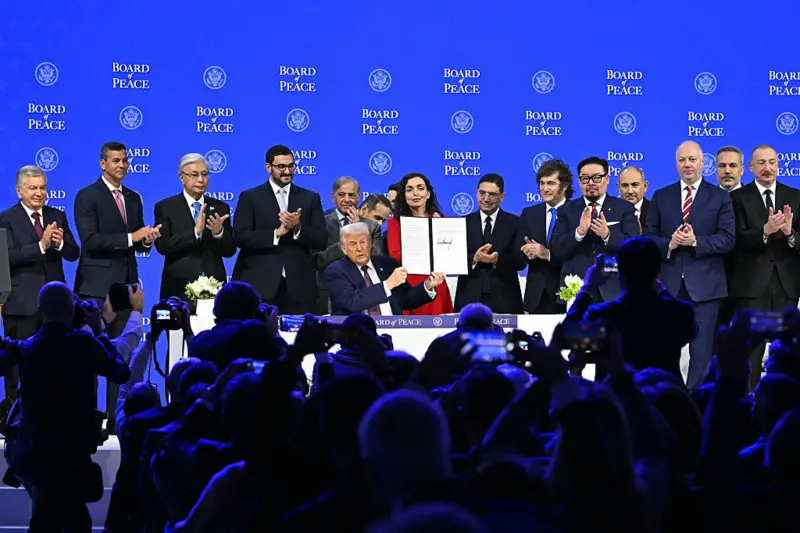
Gaza “Board of Peace” agreement has signed, Ukraine settlement coming soon: Trump
By monitoring desk:
London:
US President Donald Trump has officially announced the Gaza ‘Board of Peace’, saying that everyone wants to be part of this board. Pakistan’s Prime Minister Shahbaz Sharif has also signed the Gaza ‘Board of Peace’ agreement. President Trump said that the board includes many intelligent leaders from different countries of the world, and he hopes that together they will advance peace efforts in Gaza.
So far 35 world leaders have so far committed to joining the Board of Peace out of the 50 or so invitations that were sent. These include Middle East allies such as Israel, Saudi Arabia, the United Arab Emirates, Bahrain, Jordan, Qatar and Egypt. NATO members Turkiye and Hungary, whose nationalist leaders have cultivated good personal ties with Trump, have also agreed to take part, as have Morocco, Pakistan, Indonesia, Kosovo, Uzbekistan, Kazakhstan, Paraguay, and Vietnam. Donald Trump also suggests a settlement on the Ukraine war “is coming very soon”.