City reporter:
London:
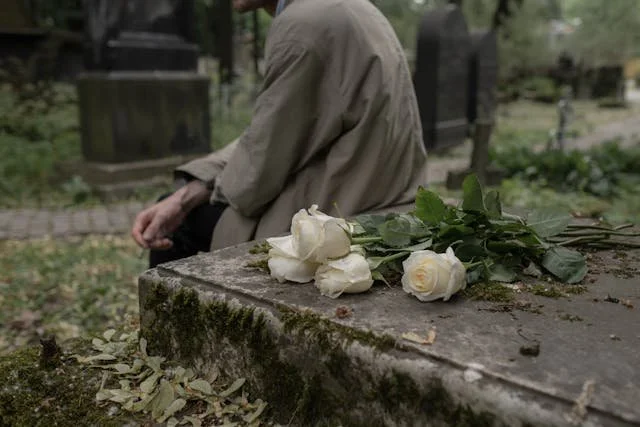
You could get a Funeral Expenses Payment (also called a Funeral Payment) if you get certain benefits and need help to pay for a funeral you’re arranging. If you or your partner must get one or more of these like, Universal Credit, Income Support, income-based Jobseeker’s Allowance, income-related Employment and Support Allowance, Pension Credit and Housing Benefit. You might also be eligible if you’re getting a Support for Mortgage Interest loan.
You can still claim Funeral Expenses Payment if you’ve applied for these benefits and you’re waiting to hear about your claim. You might be able to get a Funeral Expenses Payment if you are the partner of the deceased, the parent of a baby stillborn after 24 weeks of pregnancy, the parent or person responsible for a deceased child who was under 16 (or under 20 and in approved education or training. If a close relative of the deceased (such as a sibling or parent) is in work or not getting a qualifying benefit, you might not get a Funeral Expenses Payment. You might be able to get a Funeral Expenses Payment if, the deceased did not have a partner when they died, the partner of the deceased or parent of a deceased child cannot claim (for example, they live abroad or are in prison.
London Post
By our political editor:
Thus, general elections are held in the UK every five years, but this time, after just one and a half years, opposition parties are increasing pressure on the ruling Labour Party to hold snap elections.
Political change in the UK is rarely defined by a single decision or event. It tends to emerge gradually, as policies move from announcement to implementation and voters begin to judge outcomes rather than intentions.
The first year of a new government is usually dominated by agenda setting. The second is where trade-offs become visible. In 2026, the Government will face simultaneous pressure from elections, limited fiscal headroom and public services operating under sustained strain.
But in this regard, the ruling party has responded very loud and clear that, This Government was elected on a mandate of change at the July 2024 general election. Our full focus is on fixing the foundations, rebuilding Britain, and restoring public confidence in government. The Prime Minister can call a general election at a time of their choosing by requesting a dissolution of Parliament from the Sovereign within the five-year life of a Parliament. The Government was elected by the British people on a mandate of change at the July 2024 general election.
This Government is fixing the foundations and delivering change with investment and reform to deliver growth, with more jobs, more money in people’s pockets, to rebuild Britain and get the NHS back on its feet. This will be built on the strong foundations of a stable economy, national security and secure borders as we put politics back in the service of working people. In this regard, a petition based on 1,059,231 signatures has also been submitted to Parliament by the opposition.
AlMustafa Welfare Trust’s 2025 Winter Eye Camp Campaign Restores Sight to Over 31,000 Across Pakistan
Staff Reporter:
Lahore:
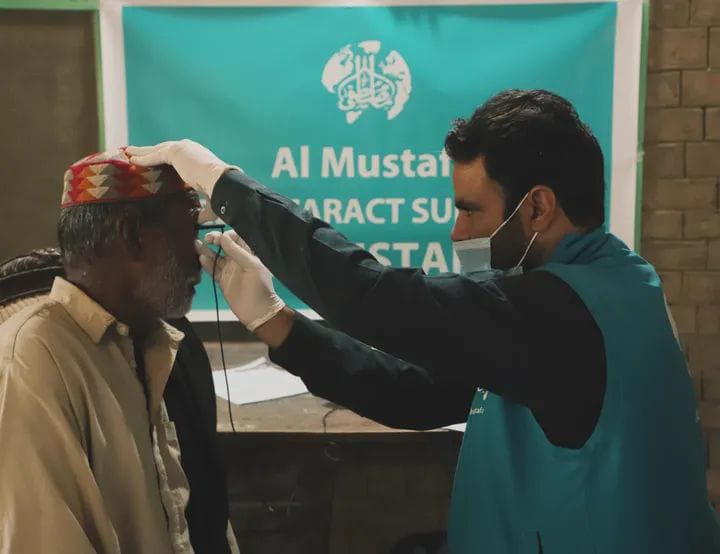
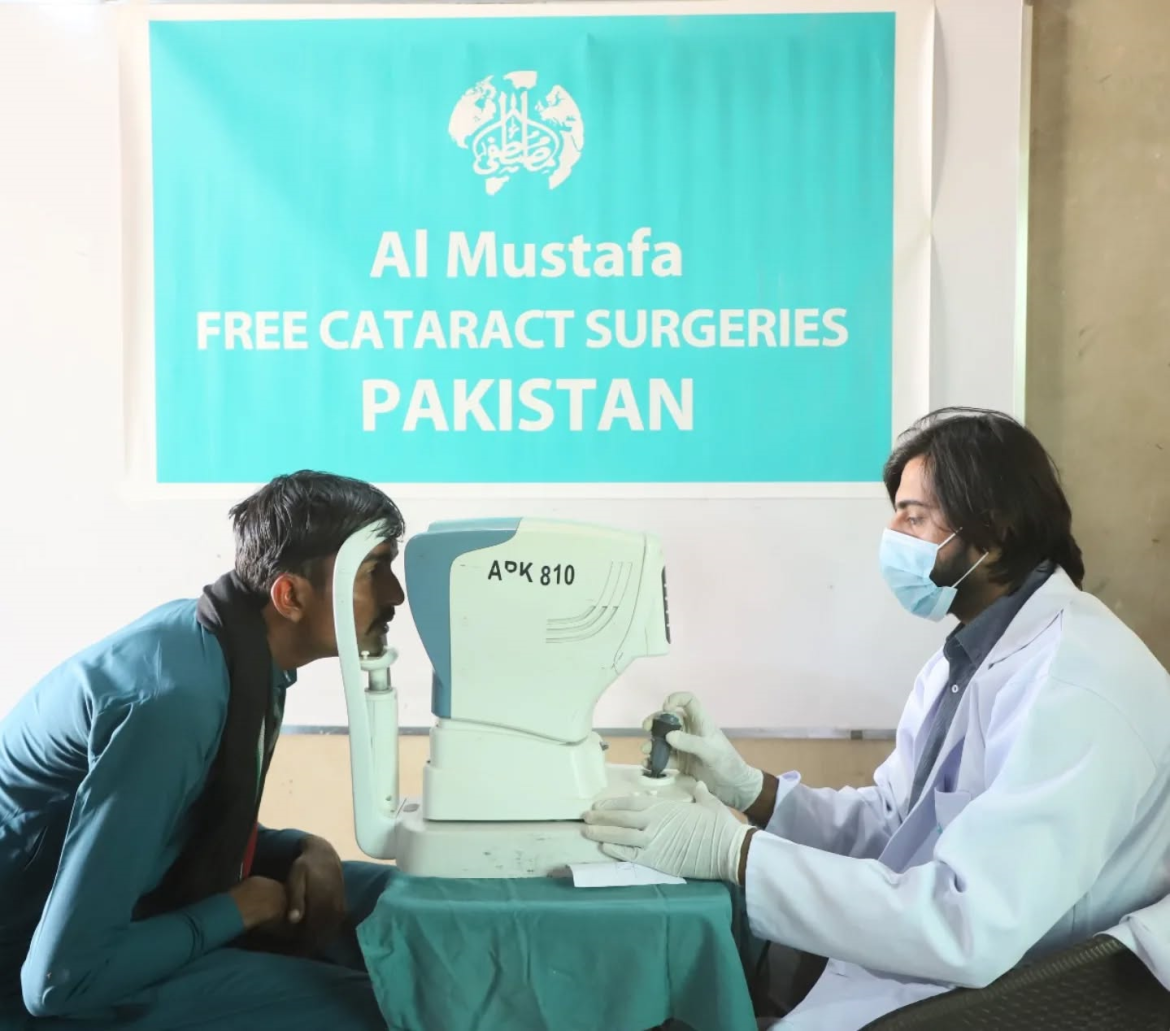
AlMustafa Welfare Trust successfully concluded its Winter Free Eye Camp Campaign 2025, marking a landmark achievement in providing accessible eye care to underserved communities nationwide. During this extensive campaign, free medical eye camps were organized across 39 cities, benefitting over 31,622 deserving individuals with high-quality medical services.
The campaign conducted 3,302 comprehensive Outpatient Department (OPD) examinations, and successfully performed cataract and other eye surgeries at no cost to patients. Additionally, individuals with impaired vision received free spectacles and necessary medications, significantly improving their daily lives and restoring hope to thousands.
This outstanding success was made possible through the generous support of donors, the trust and participation of beneficiaries, and the dedicated efforts of Al Mustafa Welfare Trust’s expert medical teams, whose commitment and meticulous planning ensured the smooth execution of this nationwide initiative.
Building on this momentum, Al Mustafa Welfare Trust is now preparing to launch its Spring Free Eye Camp Campaign 2026, aiming to continue expanding access to life-changing eye care services and preventable blindness prevention across Pakistan.
Prince Harry appears in London High court against Daily Mail’s publisher
By Zain Ali Khan:
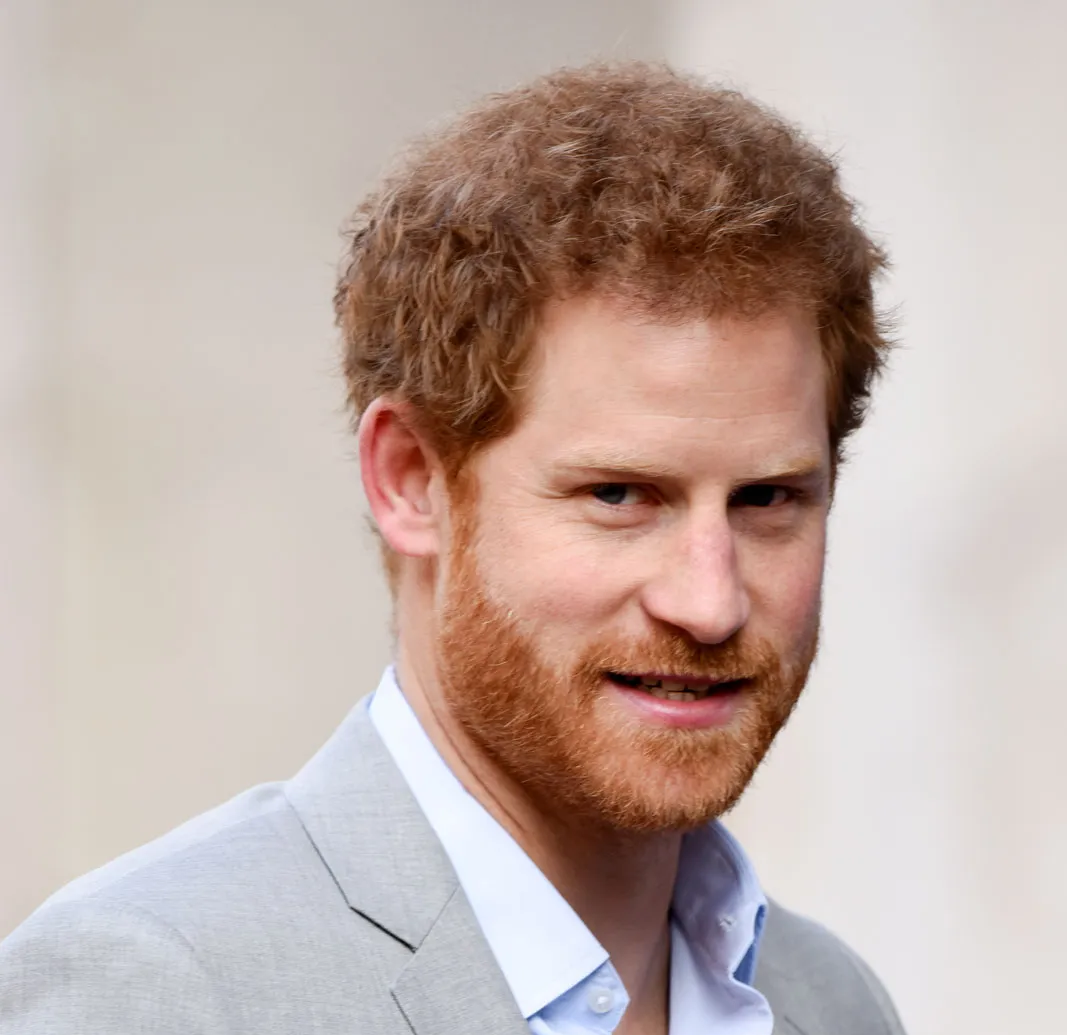
Prince Harry feels he has “endured a sustained campaign of attacks against him” because he “had the temerity to stand up” to the Daily Mail’s publisher, a court has been told.
David Sherborne, for the Duke of Sussex, said that efforts by him and his former girlfriend Chelsy Davy were “entirely frustrated” by unlawful acts by private investigators working for Associated Newspapers Limited.
This includes one article containing travel plans for a holiday in Africa, with an investigator paid for Ms Davy’s flight details and seat number.
On Monday, the publisher’s lawyers denied the accusations and claimed that Harry and other celebrities bringing legal action had “leaky” social circles.
The second day of the trial into alleged unlawful information gathering for the publication of stories about the claimants has resumed on Tuesday morning, with the Duke of Sussex telling the court on Monday that it was “disturbing to feel that my every move, thought or feeling was being tracked”.
Harry, Sir Elton John and his husband David Furnish, campaigner Baroness Doreen Lawrence, politician Sir Simon Hughes, and actresses Sadie Frost and Liz Hurley all allege Associated Newspapers Limited (ANL) had a practice of “clear systematic and sustained use of unlawful information gathering”.
This included hiring private investigators, “blagging” medical records and flight details, and accessing phone conversations.
Tajammul Gurmani
Manchester
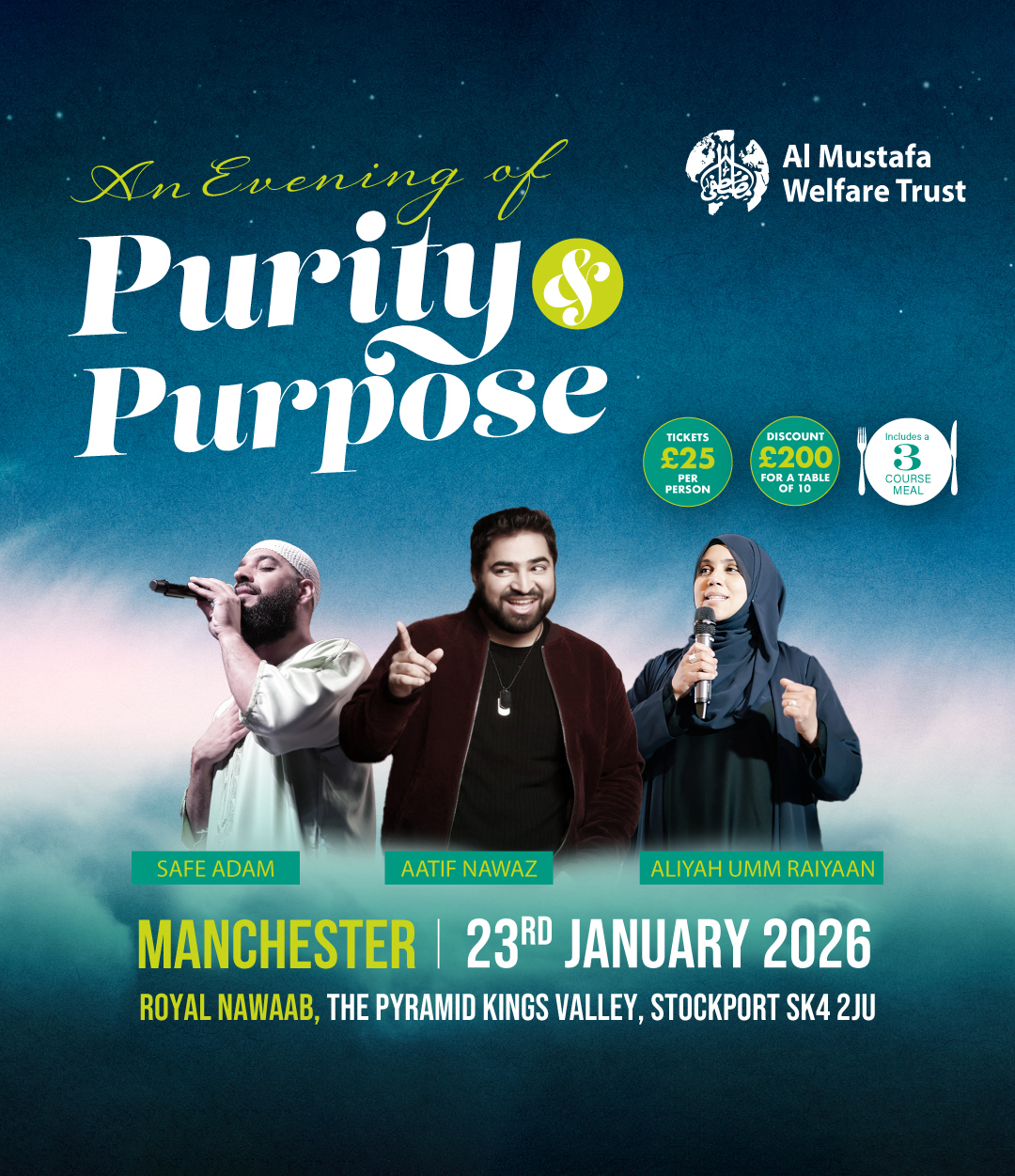
AlMustafa Welfare Trust (AMWT) has kicked off its annual charity events from Manchester. Five charity fundraising events are scheduled: Manchester on January 23, Ilford January 25, Bradford January 30, Birmingham January 31, and London on February 6. During these events, well-known artists Safe Adam, Atif Nawaz and Aliyah Umm Raiyaan will perform. Thousands of people are expected to attend, and all tickets have already sold out in advance. Chairman Al Mustafa, Abdul Razzaq Sajid, arrived in Manchester in connection with the annual events. During his week-long stay, he visited Bilal Masjid Rochdale and met committee members, including Chairman Raja Mushtaq Ahmed, Raja Farooq and others.
He invited them to the annual charity dinner in Manchester. Abdul Razzaq Sajid also visited Imam Qari Abdul Rauf of Darul Munawar during his tour of Rochdale. He later visited the office of Tahir Mehmood, Chairman of Mehmood Foundation and Golden Masjid Rochdale. Renowned businessman Amjad Hussain Mughal hosted a dinner for Abdul Razzaq Sajid at his residence in Cheadle. Imran Mughal, Wasim Mughal, Ihsaan Mughal, Raja Faiz Sultan, Tajammul Gurmani and Ijaz Malhi were also present on the occasion. During his visit, Abdul Razzaq Sajid paid a courtesy call on the Consul General of Pakistan in Manchester, Imtiaz Feroz Gondal, at his office and invited him to the annual event. He also met Khan Zada and Chief Editor of Urdu Times UK, Tahir Choudhry, at his residence, where Dr Ajmal was also in attendance.
AlMustafa Welfare Trust’s Flagship Cataract Project Restores Sight to Hundreds in Havelian Eye Camp
Staff Reporter
Abbottabad
AlMustafa Welfare Trust continued its flagship humanitarian initiative aimed at the treatment of cataract (white eye disease) by successfully organizing a large-scale Free Cataract Eye Camp in Havelian, Abbottabad, bringing hope and restored vision to hundreds of underprivileged patients.
According to the official camp report, a total of 115 cataract surgeries were carried out, including 63 female and 52 male patients, enabling them to regain their eyesight and return to normal life. In addition, 1,513 patients were examined through the Outpatient Department (OPD), with women constituting the majority of beneficiaries.
Beyond eye treatment, Al Mustafa Welfare Trust also provided essential health screening services at the camp. 132 patients were tested for Hepatitis C (HCV), Hepatitis B (HBsAg), and HIV. Test results revealed three HCV-positive cases, while no cases of Hepatitis B or HIV were detected. The medical team also identified 15 diabetic patients, who were guided for further care and management.
As part of its vision care support, the organization distributed 298 free spectacles to patients suffering from refractive errors, further enhancing the impact of the camp. The eye camp was coordinated by Mr. Wahid Bakhsh, Eye Camp Coordinator of Al Mustafa Pakistan, who stated that cataract treatment remains one of the Trust’s flagship projects due to the high prevalence of preventable blindness in underserved communities. Al Mustafa Welfare Trust reaffirmed its commitment to expanding cataract treatment services across Pakistan, particularly in remote and marginalized areas, as part of its broader mission to deliver accessible and life-changing healthcare to those in need.
Greenland may sit far from Westminster, but it no longer lies on the margins of British foreign policy. As Arctic ice melts, global competition intensifies, and NATO’s northern flank grows in strategic importance, the United Kingdom can no longer afford ambiguity about its policy toward the world’s largest island. Silence and vagueness are themselves choices and not prudent ones. Greenland occupies a unique geopolitical position. An autonomous territory within the Kingdom of Denmark, it is geographically North American, culturally Arctic, and strategically central to transatlantic security. It hosts critical sea lanes, lies beneath emerging shipping routes, and contains vast reserves of rare earth minerals essential to modern technologies. Unsurprisingly, the United States, China, Russia, and the European Union have all sharpened their focus on Greenland in recent years. Against this backdrop, Britain’s posture remains under-articulated. The UK is not without interests there. As a leading NATO member, a close ally of Denmark and the United States, and a country with declared ambitions to be active in the High North, Britain has security, economic, and environmental stakes in Greenland’s future. Yet these interests are scattered across policy documents and diplomatic statements, never cohering into a clear, public strategy. This lack of clarity risks marginalising the UK in a region where influence is increasingly contested. First, there is the security dimension. The Arctic is no longer a zone of benign cooperation. Russian military activity has expanded, and China has labelled itself a “near-Arctic state,” seeking footholds through investment and research. Greenland is central to early-warning systems and North Atlantic defence. The UK should clearly state how it intends to support NATO’s Arctic posture, work with Denmark and Greenlandic authorities, and contribute to stability without militarising the region unnecessarily. Strategic ambiguity may be useful in some contexts; here, it breeds uncertainty among allies. Second, economic interests demand transparency. Greenland’s mineral wealth particularly rare earth elements could play a role in diversifying global supply chains away from overdependence on China. Third, there is the question of self-determination. Greenland’s political trajectory includes an ongoing debate about eventual independence from Denmark. Finally, climate leadership is at stake. The Arctic is warming faster than any other region on Earth, and Greenland’s ice sheet is a global climate regulator. Any UK policy that foregrounds security and resources while sidelining climate responsibility would be short-sighted. Doing so would strengthen alliances, reassure partners, and signal that the UK understands the strategic realities of the 21st century.
Has NATO’s Time Passed?
From Kabul to Kyiv, from Washington to Warsaw, doubts about NATO’s relevance have resurfaced with renewed urgency. Once hailed as the most successful military alliance in history, NATO now finds itself under relentless scrutiny. Has its status ended? The short answer is no. The longer, more important answer is that NATO’s status is being tested and only sustained political will can preserve it. NATO was born in 1949 to deter a clear and present danger. Soviet expansion in Europe. For decades, its purpose was unambiguous. The Cold War ended, however, and with it the certainties that underpinned the alliance. Critics have since argued that NATO outlived its original mission, drifting into vague crisis management and distant interventions, most notably in Afghanistan. The chaotic withdrawal from Kabul in 2021 appeared, to many, as a symbol of strategic exhaustion. Yet history did not end with the Cold War, and neither did threats to European security. Russia’s full-scale invasion of Ukraine in 2022 delivered a brutal reminder of why NATO exists. Far from fading into irrelevance, the alliance experienced a revival. Finland and Sweden long bastions of military non-alignment sought membership, a powerful vote of confidence in NATO’s continued value. Defence spending rose across Europe, and Article 5 regained its meaning not as rhetoric, but as a credible deterrent. Still, survival is not the same as success. NATO faces serious internal and external challenges. Internally, burden-sharing remains uneven, with the United States shouldering a disproportionate share of military costs. Political divisions among member states, differing threat perceptions, and the rise of populism complicate consensus. Externally, NATO must contend not only with Russia, but with cyber warfare, disinformation, terrorism, and the strategic implications of China’s growing global influence none of which fit neatly into Cold War frameworks. Moreover, NATO’s legitimacy depends on more than military capability. It rests on shared democratic values, trust among allies, and public support. When member states undermine the rule of law at home or flirt with authoritarian rhetoric, the alliance’s moral foundation weakens. NATO cannot defend democracy abroad if it tolerates its erosion within.

By Prof Masood Akhtar Hazarvi
There was a time when our society stood as a shining symbol of modesty, chastity, moral purity, and self-respect. The first lesson imparted in homes was one of ethics and good character. Courtesy in speech, gentleness in tone, purity in gaze, and integrity in conduct were clearly visible. Modesty was not confined to a particular dress, gender, or ritual; rather, it was a collective state of being that permeated the entire society. Whether man or woman, old or young, everyone possessed an inner restraint and moral dignity that kept them away from wrongdoing. In those days, honor, truthfulness, trustworthiness, and service were regarded as a person’s true identity. But the passage of time has altered our values profoundly.
Today, display has overpowered character, fame has devoured dignity, and fleeting attention has weakened lasting moral foundations. Social media and modern culture may project an image of progress, but they have stripped hearts of the simplicity and spirituality that once defined a righteous society. Today, a person’s worth is measured not by ethics or knowledge, but by views, likes, and followers. This is the stage where conscience falls silent and society begins to laugh at immorality.
The recent incident of Umaira’s video has laid bare this decline. The tragedy is not merely that an inappropriate video was made or went viral; the real sorrow is that millions watched it, forwarded it, and commented on it. We turned someone’s lapse, a family’s honor, and a human life into entertainment. We forgot that modesty is a part of faith, and that the Prophet Muhammad ﷺ said: “A Muslim is the one from whose tongue and hand other Muslims are safe.” Today, our “hand” is the mobile phone and our “tongue” is the social media platform. Through these very means, we attack the emotions, honor, and lives of others.
The viral culture of social media is a mirror reflecting our intellectual and moral decline. Automated systems—algorithms—promote and amplify only what is sensational or emotionally provocative, while serious discussion, reformative messages, and scholarly discourse fade into the background. As a result, corruption becomes commonplace and goodness is labeled as boring. Our priorities shift, and we fail to realize that what we perceive as “entertainment” is, in fact, a form of moral destruction.
Islam laid the foundation of society upon pure character. A society improves when individuals safeguard their hearts, gazes, and tongues. But today, religion has been confined merely to rituals. We pray, yet do not refrain from lying; we recite the Qur’an, yet its reflection does not appear in our conduct. This contradiction is the root of our collective weakness. If knowledge, worship, and morality were to support one another, society would naturally move in the right direction.
Parents take pride in modernity but have removed lessons of modesty and shame from the home environment. Educational institutions impart knowledge, yet character-building has been relegated to a secondary status. Scholars preach, but audiences are no longer willing to listen. This vacuum has weakened our values.
The Qur’an clearly declares: “Indeed, Allah does not change the condition of a people until they change what is within themselves.” Within this verse lies hope—that if we choose to correct our attitudes, priorities, and upbringing, we can once again adopt the path of light. History teaches us that moral decay erases the rise of nations. The Roman Empire fell to indulgence, Greece declined with the erosion of justice, and the downfall of Andalusia began when the bond between knowledge and character was severed. When principles weaken, when modesty is labeled outdated, when sin is considered bravery and virtue is deemed weakness, nations crumble despite possessing knowledge, power, and wealth.
Today, Pakistan stands at this perilous crossroads. In the name of freedom, the new generation is forgetting boundaries. Under the guise of modernity, the veil of modesty is being shed in dress, language, relationships, and lifestyle. Most of the day and night is spent on social media, where there is neither constructive dialogue nor intellectual depth. As a result, the moral and psychological balance of the youth is being disturbed, and an entire generation is gradually losing inner peace.
Yet, it is not too late. If we elevate upbringing within our homes to the status of worship, make character-building essential alongside education, promote moral responsibility in the media, and transform our religion from mere words into lived practice, circumstances can change. Modesty is not just about veiling or clothing; it is the spirit of faith—a state that keeps the heart awake, makes sin shameful, and renders virtue beautiful. When modesty is alive, the heart trembles before committing a wrong; when modesty dies, even sin begins to seem trivial.
The real battle today is not fought with swords on battlefields, but on screens. If we fail to raise the banner of faith, morality, and modesty there, future generations will remember us as a cautionary tale. But if we rekindle the inner lamp, awaken our conscience before clicking, and remember faith before watching, this very nation can become a new source of light. May Allah grant us the insight and courage to be free yet within limits, modern yet moral, and to use technology not as a source of evil but as a means of goodness. Ameen.

By Wajahat Ali Khan
For much of the late twentieth century, global politics rested on a comforting illusion: that the world, though noisy and imperfect, was broadly moving in a single direction. Borders were stabilizing, markets were integrating, democracy was spreading, and international rules however unevenly applied were strengthening. That sense of inevitability has now evaporated.
Today’s world is not simply “more chaotic.” It is more contested. Power, values, and even the meaning of order itself are up for debate. At the centre of this shift is the slow erosion of the post-Cold War consensus. The United States remains the most powerful actor in the system, but it no longer dominates uncontested. China has grown from a regional force into a global one, reshaping trade, technology, and diplomacy. Russia, unable to match economic or demographic weight, has turned to disruption as strategy, challenging borders and norms it sees as imposed during a moment of weakness.
Yet this is not a neat return to Cold War bipolarity. Instead, we live in a multipolar world without multipolar rules. Power is distributed across states, corporations, financial systems, technology platforms, and even non-state actors. Influence travels through supply chains, data flows, and social media as much as through armies and embassies.
This diffusion of power has made cooperation harder precisely when it is most needed. Climate change does not pause for geopolitical rivalries. Pandemics do not respect spheres of influence. Financial shocks ripple globally within hours. But trust the essential currency of cooperation is in short supply. Domestic politics have deepened the problem. Across continents, voters are sceptical of elites and institutions that promised stability but delivered inequality, cultural dislocation, or insecurity. Populist leaders have learned to translate this frustration into foreign policy: multilateralism becomes weakness, compromise becomes betrayal, and complexity is reduced to slogans.
Nowhere is this tension clearer than in technology. Artificial intelligence, cyberwarfare, and surveillance tools are transforming power faster than international norms can keep up. States fear falling behind, so they race ahead, often sidelining ethical or legal concerns. The arms control debates of the nuclear age feel almost quaint by comparison; today’s weapons are cheaper, faster, and harder to attribute.
Still, history suggests that disorder is not destiny. Periods of upheaval have often preceded new arrangements sometimes more stable, sometimes not. The question is whether today’s leaders can shape that transition deliberately, or whether they will simply react to crises as they emerge. That requires realism without cynicism. Acknowledging competition does not mean abandoning cooperation. Accepting cultural and political differences does not require surrendering core principles. The most successful international systems have not been built on harmony, but on managed disagreement.
The age of certainty is over. What comes next is not yet written. The choices made now about institutions, alliances, technology, and trust will determine whether this era is remembered as a painful transition to a new equilibrium, or the beginning of a long, avoidable decline.
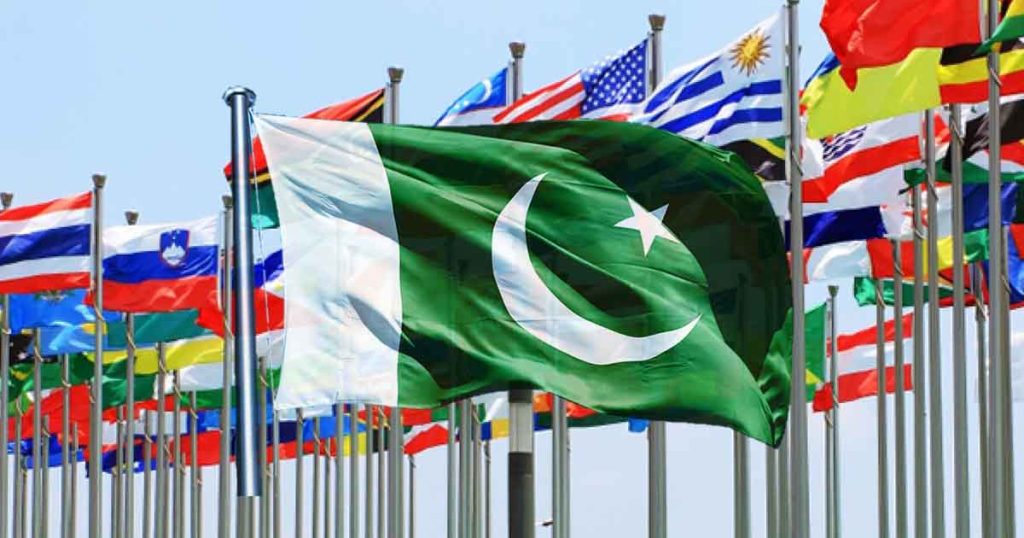
So, now the big question is that what is the Pakistan’s role in this world political scenario? Pakistan occupies a paradoxical position in world politics; it is rarely absent from major geopolitical conversations yet often misunderstood in them. Neither a global power nor a peripheral state, conversations yet he intersection of regions, rivalries, and routes that shape international affairs from South Asia and the Middle East to Central Asia and the Indian Ocean.
Geography is Pakistan’s enduring strategic asset. Bordering India, China, Afghanistan, and Iran, and lying close to the energy corridors of the Gulf, Pakistan has long been a state others cannot ignore. During the Cold War, it was a frontline ally of the United States against Soviet influence. After 9/11, it became central to the global war on terror. Today, it finds itself navigating a far more complex and crowded global landscape.
At the heart of Pakistan’s foreign policy remains its rivalry with India. This relationship has shaped not only military priorities but diplomatic choices, alliance structures, and even domestic politics. Nuclear weapons have prevented full-scale war, but not crisis. The result is a fragile deterrence that commands international attention whenever tensions rise, reinforcing Pakistan’s image as both a security concern and a strategic necessity.
Pakistan’s deepening partnership with China marks another defining feature of its global role. Through the China–Pakistan Economic Corridor (CPEC), Pakistan has become a key node in Beijing’s Belt and Road Initiative. For China, Pakistan offers access to the Arabian Sea and a reliable strategic partner in South Asia. For Pakistan, China provides investment, diplomatic backing, and an alternative to Western dependence. Yet this relationship also brings risks: debt pressures, limited transparency, and the challenge of balancing Chinese interests with national autonomy.
Relations with the United States have cooled but not collapsed. Washington no longer sees Pakistan as indispensable in the way it once did, especially after the U.S. withdrawal from Afghanistan. Still, cooperation persists in counterterrorism, regional stability, and crisis management. The relationship is transactional, cautious, and shaped as much by mistrust as by shared interests. Afghanistan remains Pakistan’s most immediate and complicated foreign policy challenge. Instability across the border affects security, refugees, and militancy at home.
Beyond security, Pakistan’s global role is increasingly shaped by economic and climate realities. As a country highly vulnerable to climate change, Pakistan has become an important voice in international climate diplomacy, arguing credibly that those least responsible for global emissions often suffer the most severe consequences. Its advocacy for climate finance and loss-and-damage mechanisms reflects a shift from purely security-based diplomacy to issue-based engagement.
At international forums, Pakistan positions itself as a leader of the Global South, emphasising multilateralism, development, and sovereign equality. This resonates with many states facing similar challenges, though Pakistan’s influence is often constrained by domestic political instability and economic fragility. Foreign policy ambitions are difficult to sustain without internal coherence.
Ultimately, Pakistan’s role in world politics is one of navigation rather than domination. Its manoeuvrers among great powers, manages enduring regional conflicts, and seeks relevance in a system that is itself in flux. Its choices matter not because Pakistan sets the global agenda, but because its position can amplify stability or instability across a strategically vital region. However, after crushing India in a matter of hours last year, Pakistan’s morale and confidence is skyrocketing, and the world is recognising this too.
In a world moving toward multipolar competition, Pakistan’s greatest challenge is also its greatest opportunity to move from being seen primarily as a problem to be managed, to becoming a partner defined by economic connectivity, regional cooperation, and responsible statecraft. Whether it succeeds will depend as much on decisions made in Islamabad as on forces beyond its control.

Hamid Mir
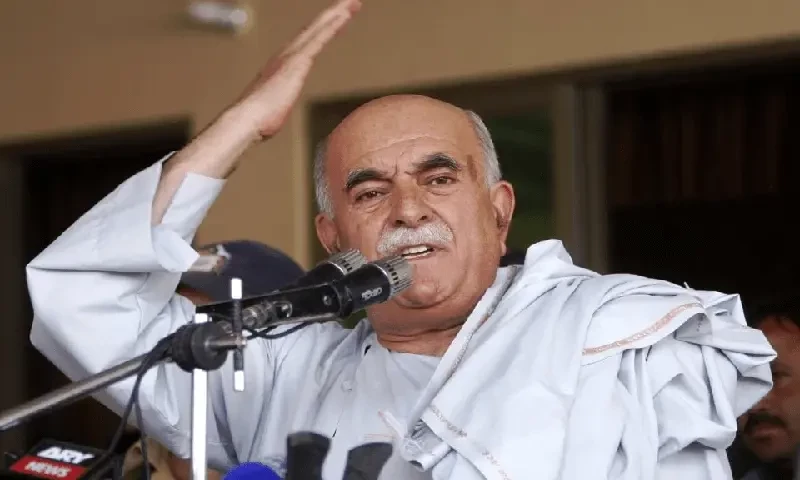
Appointing Achakzai as the opposition leader in the National Assembly means that an attempt will be made to run the current government arrangement without any major face change. Friends of PTI are right to say that Achakzai becoming the opposition leader is a major achievement of Imran Khan, who is imprisoned in Adiala Jail, because he was nominated for the opposition leader by prisoner number 804 from the jail. On the other hand, the PML-N’s powerful men are clapping and saying that Imran Khan has made our job easy because if the opposition leader had come from PTI, he would have done what Omar Ayub Khan used to do. There was not only a communication gap between Omar Ayub Khan and the government, but also a strong dislike for each other. The reason was that Omar Ayub Khan had left the PML-N. Apart from this, he was very critical of the interference of his father and grandfather’s former institution in politics and this criticism hurt the authorities more because Omar Ayub Khan is the grandson of Pakistan’s first military dictator General Ayub Khan and a year ago, the Movement for the Protection of the Constitution was formed in General Ayub Khan’s house in Islamabad. In this house, Mahmood Khan Achakzai had repeatedly explained to the PTI members that a way of dialogue would have to be found with all stakeholders including Asif Zardari and Nawaz Sharif to protect and restore the constitution. Achakzai Sahib repeatedly spoke of a Grand National Dialogue from the platform of the Movement for the Protection of the Constitution and said that Nawaz Sharif should play some role as an elder. Achakzai kept on annoying Imran Khan’s supporters by declaring Nawaz Sharif as his elder, but the PML-N members felt that Achakzai should go with them or not, but the government could sometimes take a little walk with them. Nawaz Sharif and Shahbaz Sharif still respect him very much due to their old friendship. How can Nawaz Sharif forget that Achakzai not only joined the political alliance he formed in London during the rule of General Pervez Musharraf, but also stood by Nawaz Sharif later?
In 2014, when Imran Khan occupied D-Chowk in Islamabad and staged a long sit-in, Khan often made fun of Mahmood Khan Achakzai’s chader during the sit-in. The reason was that Achakzai’s elder brother, Muhammad Khan Achakzai, was the governor of Balochistan. Imran Khan realised his mistake ten years later. By then, it was too late. In 2024, Imran Khan made Mahmood Khan Achakzai his presidential candidate. Everyone knew that Asif Ali Zardari would easily become the President of Pakistan again, but by making Achakzai the presidential candidate, Imran Khan atoned for the mistake he made in D-Chowk in 2014. Achakzai stood by the Constitution in 2014 and he still stands by the Constitution today. One can disagree with him on many issues, but in every period of oppression, he shows more resilience than he can handle. After becoming the opposition leader in the National Assembly, the most difficult test of his political life has begun. The government will try to make him the opposition leader and get him to withdraw the call for the February 8 protest. It should be noted that the call for the wheel-jam strike on February 8 was not given by the Tehreek-e-Insaf but by the Tehreek-e-Tahafuz-e-Ain. There is no possibility of this call being withdrawn because the parliament in which Mahmood Khan Achakzai has been given a position has already taken 27, not 26, blows to its reputation. Politics is now moving out of the parliament and onto the streets. The rapidly changing global situation has also forced the government to reconsider its policy. Until recently, US President Trump and our powerholders seemed to be in a state of disarray. In Sharm el-Sheikh, we added such earth-shattering twists to Trump’s praise that many Americans, overcome by excessive emotions, brought “tears to their eyes”, but many Pakistanis “cried tears of blood” at these praises. Then Pakistan made two decisions that dealt Trump a serious political blow. The first decision was to refuse to send Pakistani troops to Gaza. The second decision was to issue a statement of condemnation at the United Nations over the arrest of the Venezuelan president. In response, the US added Pakistan to the 75 countries whose citizens have had their immigrant visas suspended. Pakistani decision-makers are examining the joint role of the US and Israel in Iran from every angle. They are not afraid, but rather certain that after the change of government in Iran, Pakistan will be the next target. The US does not want more political turmoil in Pakistan, but Israel will try to bring Pakistan and the US face to face. The US establishment has been looking for ways to limit Pakistan’s nuclear program for a long time. Today, Israeli Prime Minister Netanyahu is trying to improve relations between Trump and Narendra Modi. If this attempt succeeds, it will be an attempt by Netanyahu and Modi to use Trump against Pakistan’s nuclear programme. It is no secret that the Israeli secret service Mossad was behind the recent violent protests in Iran. There is a fear circulating in the conspiracy circles of Islamabad that the kind of political chaos that was spread in Iran can also be spread in Pakistan so that the Pakistani government is forced to support the US, at least on the issue of Iran. Last week, PPP Chairperson Bilawal Bhutto Zardari presented the case of Sindh in front of foreign diplomats and journalists at the Presidential Palace. It was not only about Sindh but also about protecting the 18th Amendment. When this program ended, during tea, a diplomat asked me whether there have ever been protests in Pakistan like the ones happening in Iran today? I was surprised to hear this question and inquired what you wanted to ask. The diplomat asked, “Has political protests ever been used to bring about regime change in Pakistan?” I nodded in the affirmative and said, “Read Zulfikar Ali Bhutto’s book, ‘If I am Assassinated,’ in which he wrote while sitting in jail that the movement against his government in 1977 was backed by US dollars.” He also presented some evidence in the book. The diplomat asked where he could get this book. I told him the name of a bookstore in Islamabad but also explained that regime change in Pakistan is not possible unless the political leadership and the military leadership are suspicious of each other. Achakzai’s test now is that he must protect himself from the government’s influence and keep the opposition movement away from the foreign agenda. The Constitution of Pakistan is not only the target of undemocratic forces, but also of some foreign powers, which Achakzai must explain in detail.”