By Wajahat Ali Khan
For much of the late twentieth century, global politics rested on a comforting illusion: that the world, though noisy and imperfect, was broadly moving in a single direction. Borders were stabilizing, markets were integrating, democracy was spreading, and international rules however unevenly applied were strengthening. That sense of inevitability has now evaporated.
Today’s world is not simply “more chaotic.” It is more contested. Power, values, and even the meaning of order itself are up for debate. At the centre of this shift is the slow erosion of the post-Cold War consensus. The United States remains the most powerful actor in the system, but it no longer dominates uncontested. China has grown from a regional force into a global one, reshaping trade, technology, and diplomacy. Russia, unable to match economic or demographic weight, has turned to disruption as strategy, challenging borders and norms it sees as imposed during a moment of weakness.
Yet this is not a neat return to Cold War bipolarity. Instead, we live in a multipolar world without multipolar rules. Power is distributed across states, corporations, financial systems, technology platforms, and even non-state actors. Influence travels through supply chains, data flows, and social media as much as through armies and embassies.
This diffusion of power has made cooperation harder precisely when it is most needed. Climate change does not pause for geopolitical rivalries. Pandemics do not respect spheres of influence. Financial shocks ripple globally within hours. But trust the essential currency of cooperation is in short supply. Domestic politics have deepened the problem. Across continents, voters are sceptical of elites and institutions that promised stability but delivered inequality, cultural dislocation, or insecurity. Populist leaders have learned to translate this frustration into foreign policy: multilateralism becomes weakness, compromise becomes betrayal, and complexity is reduced to slogans.
Nowhere is this tension clearer than in technology. Artificial intelligence, cyberwarfare, and surveillance tools are transforming power faster than international norms can keep up. States fear falling behind, so they race ahead, often sidelining ethical or legal concerns. The arms control debates of the nuclear age feel almost quaint by comparison; today’s weapons are cheaper, faster, and harder to attribute.
Still, history suggests that disorder is not destiny. Periods of upheaval have often preceded new arrangements sometimes more stable, sometimes not. The question is whether today’s leaders can shape that transition deliberately, or whether they will simply react to crises as they emerge. That requires realism without cynicism. Acknowledging competition does not mean abandoning cooperation. Accepting cultural and political differences does not require surrendering core principles. The most successful international systems have not been built on harmony, but on managed disagreement.
The age of certainty is over. What comes next is not yet written. The choices made now about institutions, alliances, technology, and trust will determine whether this era is remembered as a painful transition to a new equilibrium, or the beginning of a long, avoidable decline.
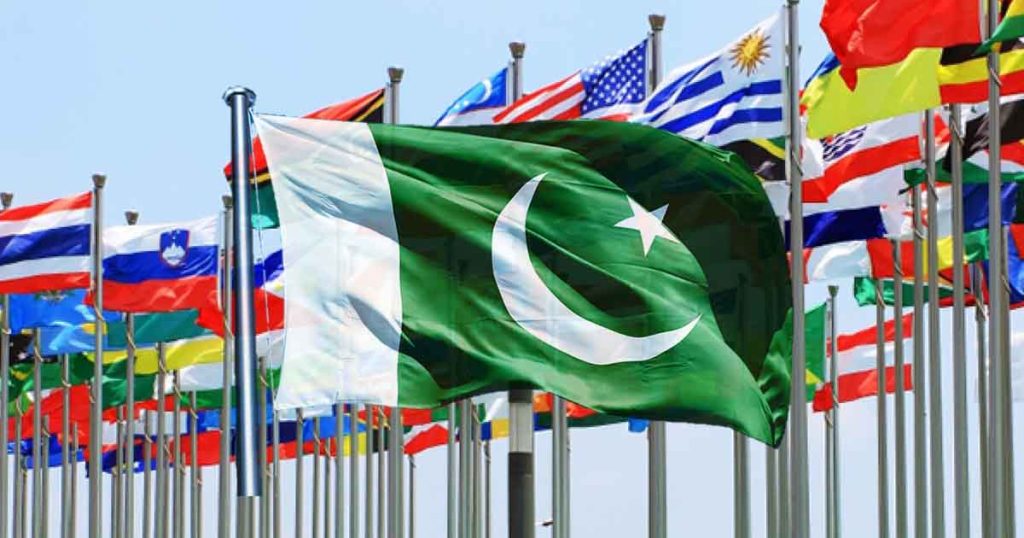
So, now the big question is that what is the Pakistan’s role in this world political scenario? Pakistan occupies a paradoxical position in world politics; it is rarely absent from major geopolitical conversations yet often misunderstood in them. Neither a global power nor a peripheral state, conversations yet he intersection of regions, rivalries, and routes that shape international affairs from South Asia and the Middle East to Central Asia and the Indian Ocean.
Geography is Pakistan’s enduring strategic asset. Bordering India, China, Afghanistan, and Iran, and lying close to the energy corridors of the Gulf, Pakistan has long been a state others cannot ignore. During the Cold War, it was a frontline ally of the United States against Soviet influence. After 9/11, it became central to the global war on terror. Today, it finds itself navigating a far more complex and crowded global landscape.
At the heart of Pakistan’s foreign policy remains its rivalry with India. This relationship has shaped not only military priorities but diplomatic choices, alliance structures, and even domestic politics. Nuclear weapons have prevented full-scale war, but not crisis. The result is a fragile deterrence that commands international attention whenever tensions rise, reinforcing Pakistan’s image as both a security concern and a strategic necessity.
Pakistan’s deepening partnership with China marks another defining feature of its global role. Through the China–Pakistan Economic Corridor (CPEC), Pakistan has become a key node in Beijing’s Belt and Road Initiative. For China, Pakistan offers access to the Arabian Sea and a reliable strategic partner in South Asia. For Pakistan, China provides investment, diplomatic backing, and an alternative to Western dependence. Yet this relationship also brings risks: debt pressures, limited transparency, and the challenge of balancing Chinese interests with national autonomy.
Relations with the United States have cooled but not collapsed. Washington no longer sees Pakistan as indispensable in the way it once did, especially after the U.S. withdrawal from Afghanistan. Still, cooperation persists in counterterrorism, regional stability, and crisis management. The relationship is transactional, cautious, and shaped as much by mistrust as by shared interests. Afghanistan remains Pakistan’s most immediate and complicated foreign policy challenge. Instability across the border affects security, refugees, and militancy at home.
Beyond security, Pakistan’s global role is increasingly shaped by economic and climate realities. As a country highly vulnerable to climate change, Pakistan has become an important voice in international climate diplomacy, arguing credibly that those least responsible for global emissions often suffer the most severe consequences. Its advocacy for climate finance and loss-and-damage mechanisms reflects a shift from purely security-based diplomacy to issue-based engagement.
At international forums, Pakistan positions itself as a leader of the Global South, emphasising multilateralism, development, and sovereign equality. This resonates with many states facing similar challenges, though Pakistan’s influence is often constrained by domestic political instability and economic fragility. Foreign policy ambitions are difficult to sustain without internal coherence.
Ultimately, Pakistan’s role in world politics is one of navigation rather than domination. Its manoeuvrers among great powers, manages enduring regional conflicts, and seeks relevance in a system that is itself in flux. Its choices matter not because Pakistan sets the global agenda, but because its position can amplify stability or instability across a strategically vital region. However, after crushing India in a matter of hours last year, Pakistan’s morale and confidence is skyrocketing, and the world is recognising this too.
In a world moving toward multipolar competition, Pakistan’s greatest challenge is also its greatest opportunity to move from being seen primarily as a problem to be managed, to becoming a partner defined by economic connectivity, regional cooperation, and responsible statecraft. Whether it succeeds will depend as much on decisions made in Islamabad as on forces beyond its control.