Nisar Kallu
Toronto
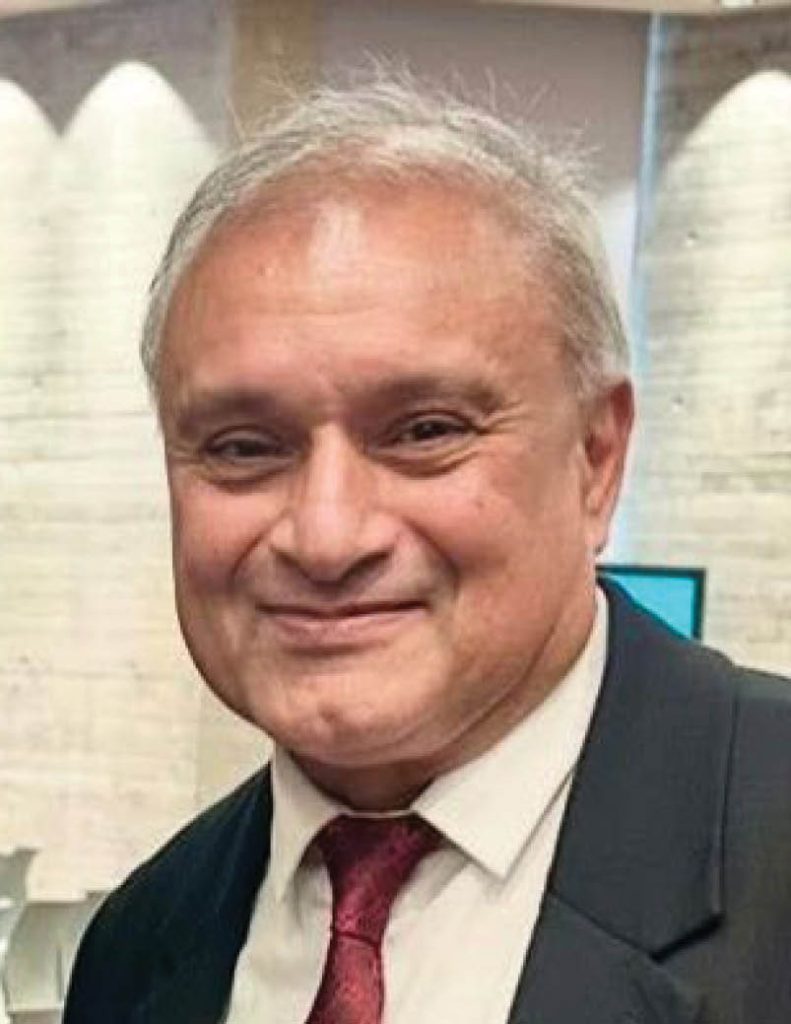
It is with deep sorrow that we report the passing of Khalid Usman, a respected community leader, former councillor, and dedicated philanthropist from Markham, Ontario, who passed away in Toronto.
Khalid Usman was widely known for his long-standing service to the City of Markham, where he served as a Ward 7 City Councillor and contributed significantly to local governance and community development over many years. His leadership was marked by a strong commitment to public service, diversity, and community engagement.
Professionally, Khalid Usman was a Chartered Professional Accountant (CPA), bringing his financial expertise into both his professional career and his public service roles. His integrity and professional knowledge earned him respect in both civic and business circles.
Beyond politics, Usman was deeply involved in charitable and humanitarian work. He actively supported numerous organizations and fundraising initiatives, including notable contributions to Shaukat Khanum Memorial Cancer Hospital & Research Centre and other healthcare and social service causes. His efforts helped raise awareness and support for healthcare, education, and community welfare projects both in Canada and abroad. He was known as a bridge-builder within the community—working with diverse cultural, faith, and civic groups to promote unity, inclusion, and mutual respect. His dedication to volunteerism and public service left a lasting impact on many organizations and individuals.
Khalid Usman’s passing is a significant loss to the Markham and broader Greater Toronto Area community. He is remembered as a devoted public servant, a compassionate philanthropist, and a respected professional who dedicated his life to serving others.
He leaves behind a legacy of community service, leadership, and generosity that will continue to inspire future generations.
London Post
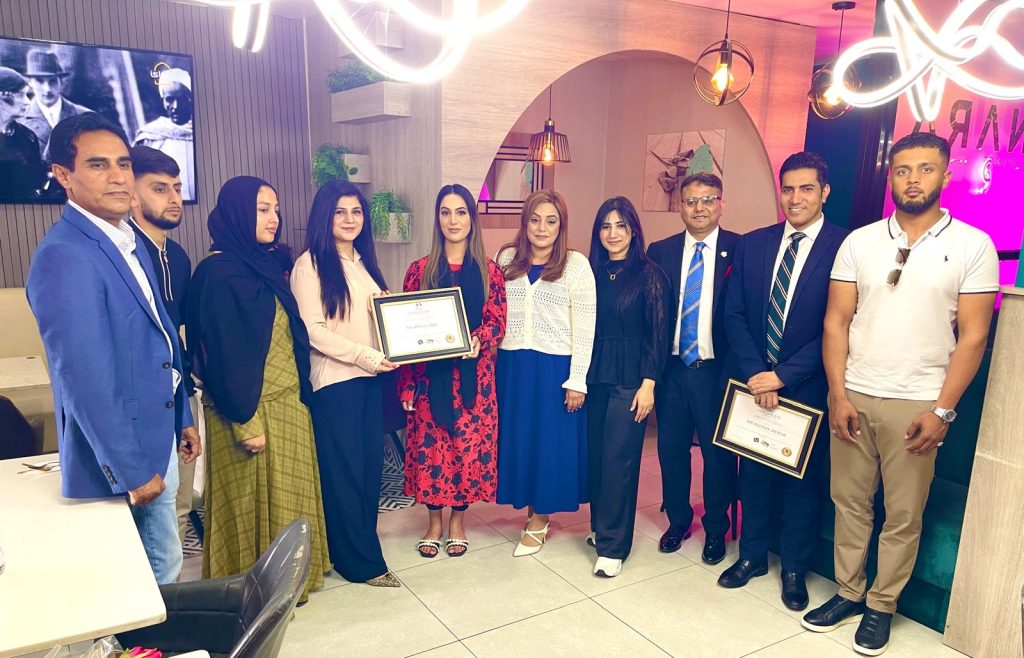
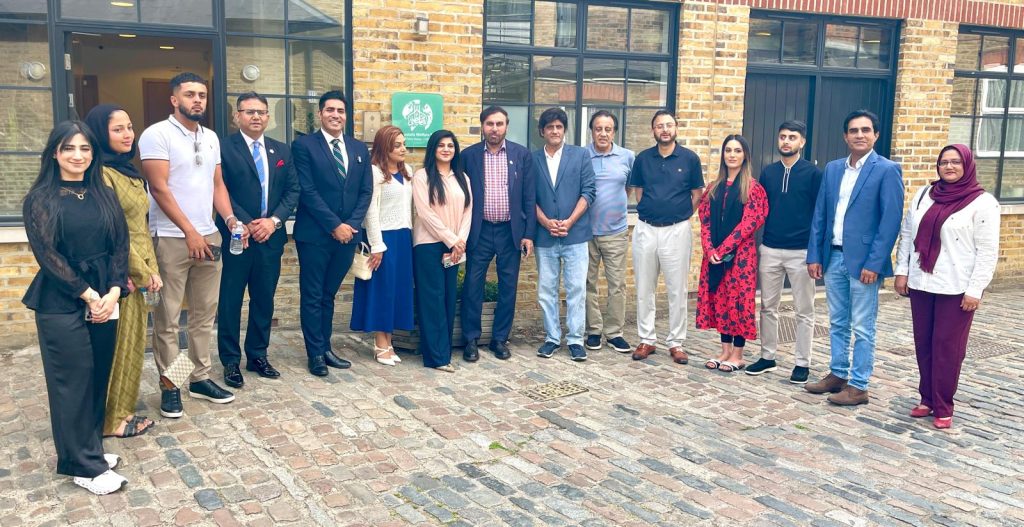
A special delegation of the Prime Minister’s Youth Programme visited the offices of AlMustafa Welfare Trust
Wajahat Ali Khan
London
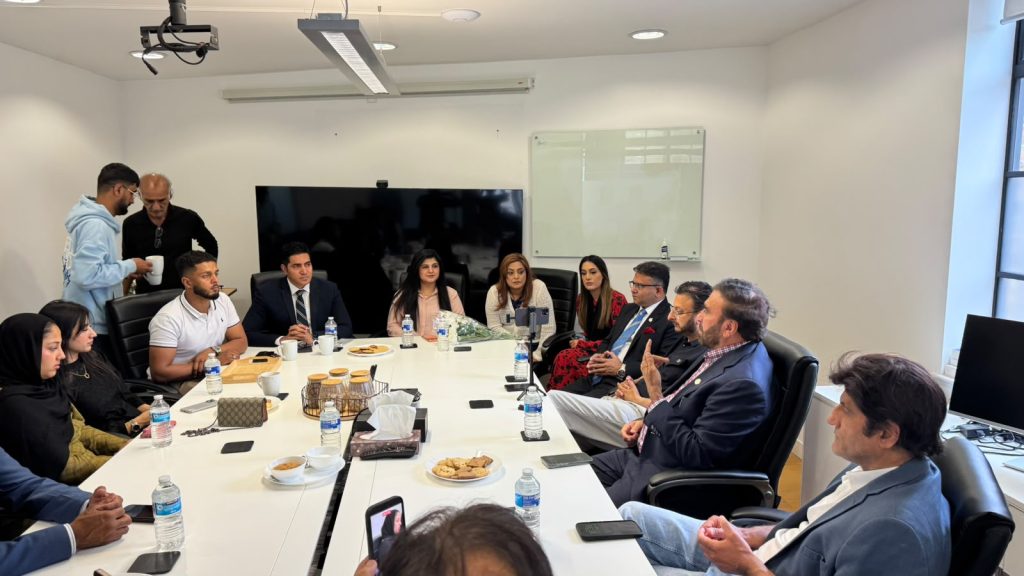
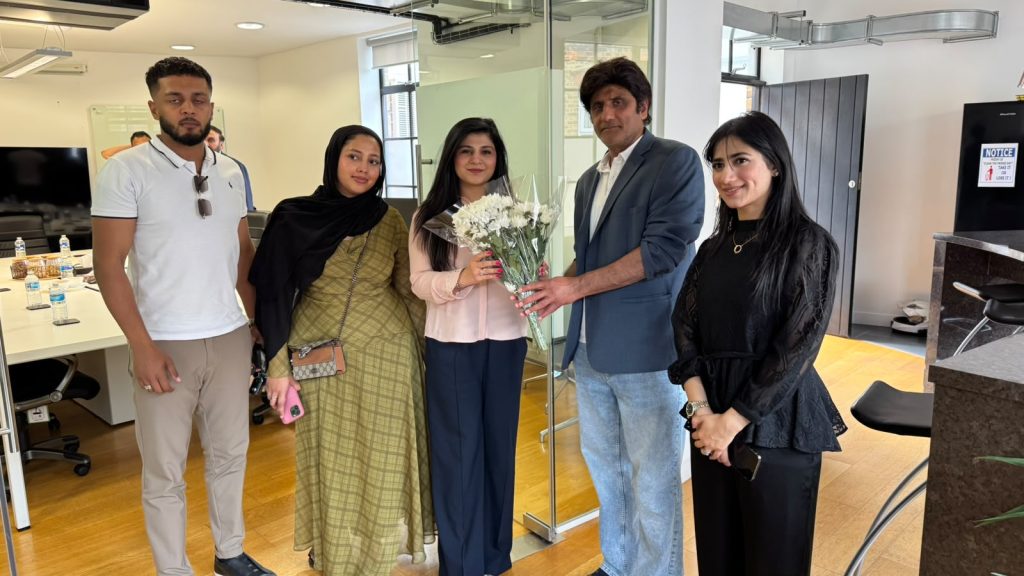
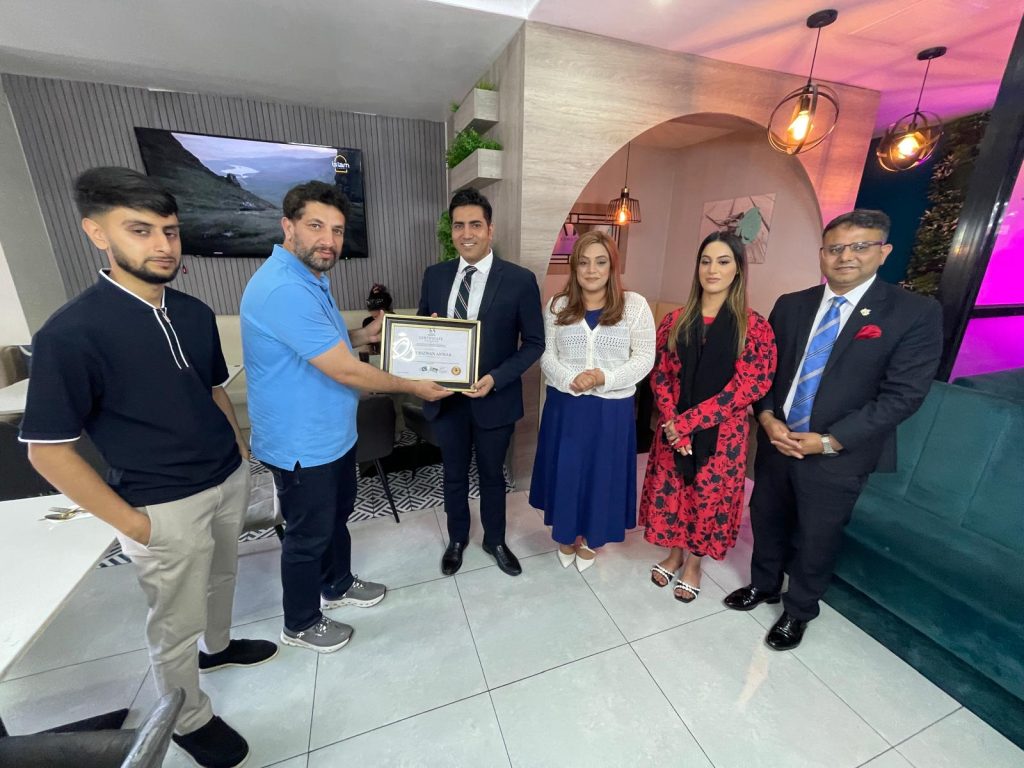
A special delegation under the Prime Minister of Pakistan’s Youth Programme, led by Rizwan Anwar and Maha Jamil, paid a special visit to the London headquarters of “AlMustafa Welfare Trust” during their visit to London. This delegation is also working as Youth Ambassadors on behalf of the Prime Minister for the United Nations’ “Sustainable Development Goals” program. During the visit to the “AlMustafa Welfare Trust” offices, Rizwan Anwar and Maha Jamil said that the Prime Minister’s Youth Programme, which was launched 14 years ago, is proving to be very beneficial for the youth.
Appreciating the ongoing humanitarian service projects of “AlMustafa Welfare Trust” in twenty-four countries of the world, they said that we will provide all possible cooperation in securing space and providing other facilities for “A-Mustafa”’s welfare projects in many other cities in Pakistan, including Lahore, Islamabad and Karachi
They said that the Prime Minister’s Youth Programme (PMYP) is a flagship government initiative in Pakistan that provides subsidized loans, digital skills training, laptops, and scholarships to empower youth. The centralized Digital Youth Hub platform connects young people with courses, mentorship, and employment, they enlighten that the Key initiatives under the PMYP are a centralized platform connecting millions of users with IT training, online career advisory, and digital employment opportunities. Provides government-subsidized business and agricultural loans of up to Rs. 25 million, split into three tiers for varying loan sizes. Distributes laptops to high-achieving university students based on merit. Offers scholarships and vocational training to enhance employability and promote blue-collar dignified jobs. Encourages university youth to spearhead sustainable development, eco-tourism, and green growth. Identifies and nurtures young athletic talent across multiple sports disciplines. A platform designed to support young entrepreneurs, start-ups, and innovators with funding and recognition. This programme was launched by the former Prime Minister Nawaz Sharif in 2013.
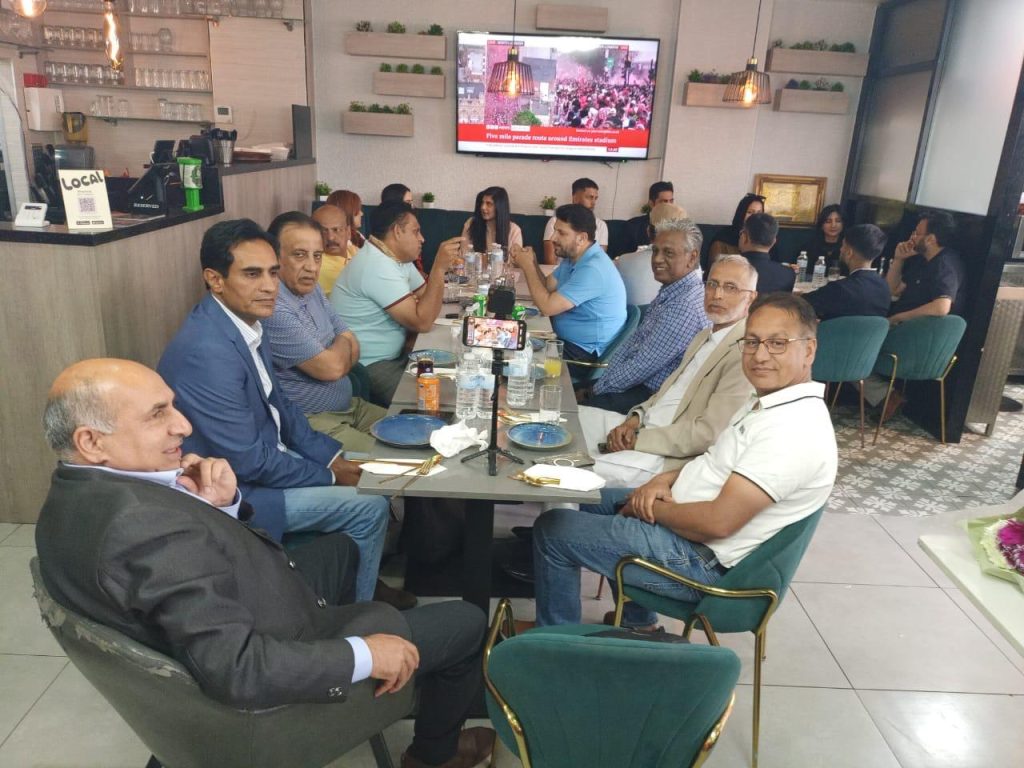
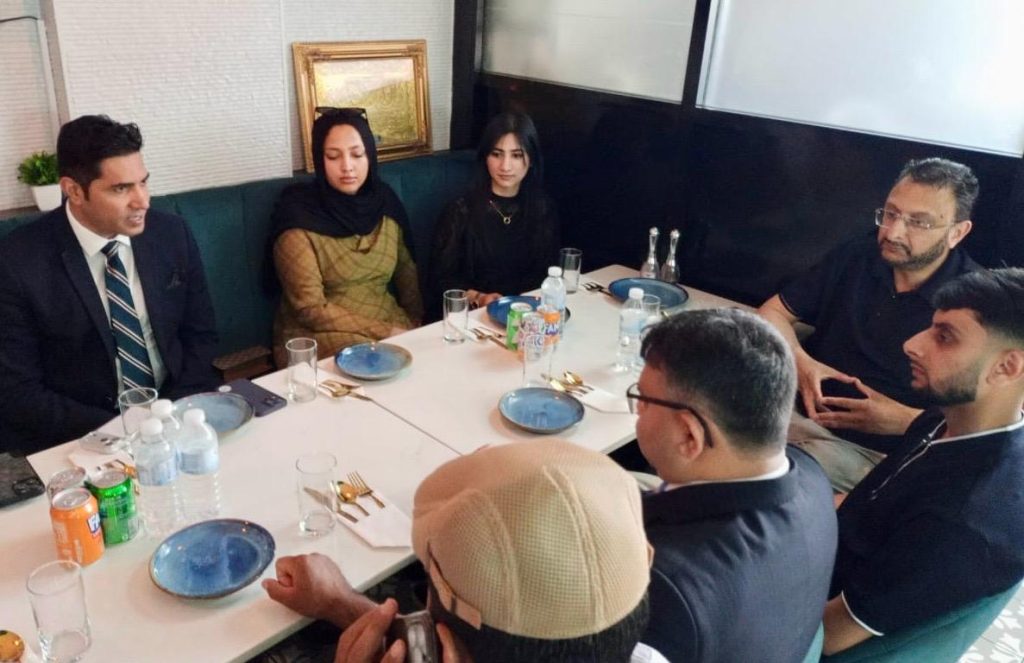
Earlier, a lavish lunch was hosted by Shafiq Rahman, a well-known social leader and General Secretary of Hounslow Jamia Mosque, in honour of the delegation mentioned above. On this occasion and during the visit of the “AlMustafa Welfare Trust”, prominent local political and social figures attended, including Shafiq Rahman, Councillor Samia Chaudhry, Councillor Tariq Gujjar, Councillor Sahiba Hussain, Councillor Muhammad Shakeel Akram, former Councillor Rehman and leading figures of the community also attended.

Saj Butt
London
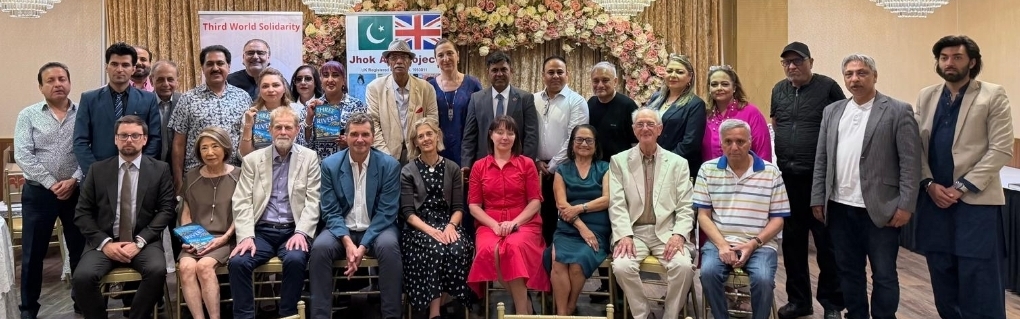
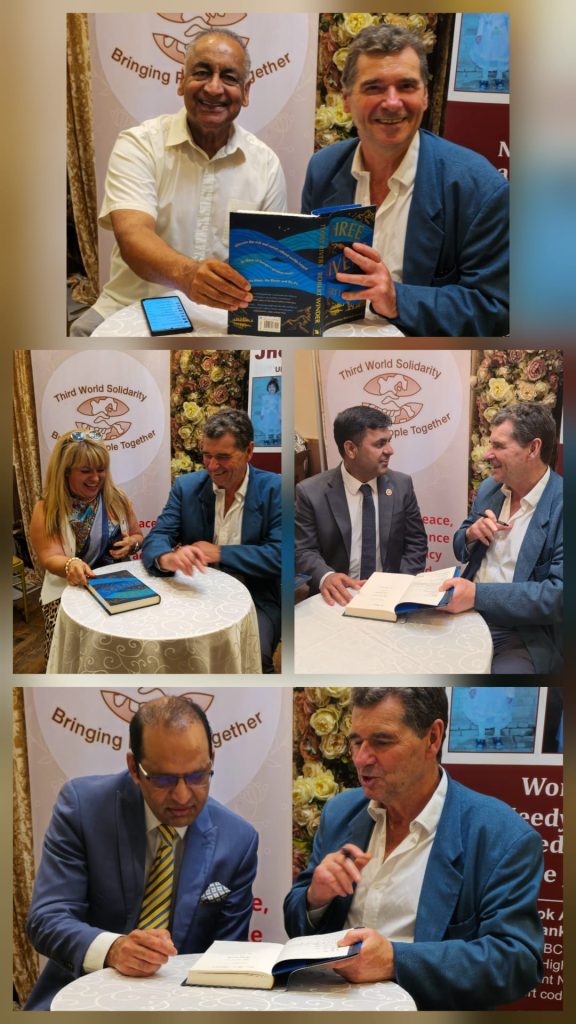
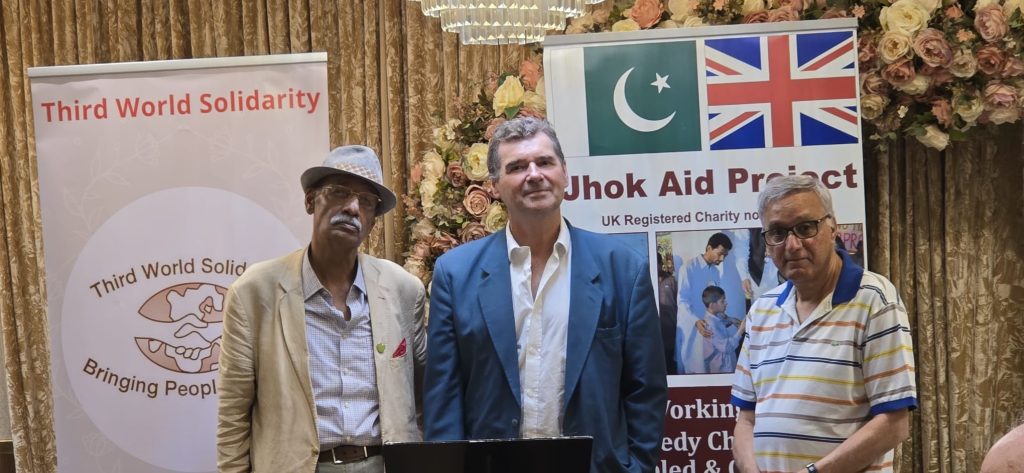
Hon Alderman Mushtaq Lasharie CBE, Chairman of Third World Solidarity, the British Pakistani Mayors’ Association, and the Lancaster West Residents Association, hosted a splendid launch event for Robert Winder’s acclaimed book Three Rivers — a fascinating account of the great rivers of Europe and the pivotal role they played in shaping the continent’s civilisation, trade, culture, and historical development.
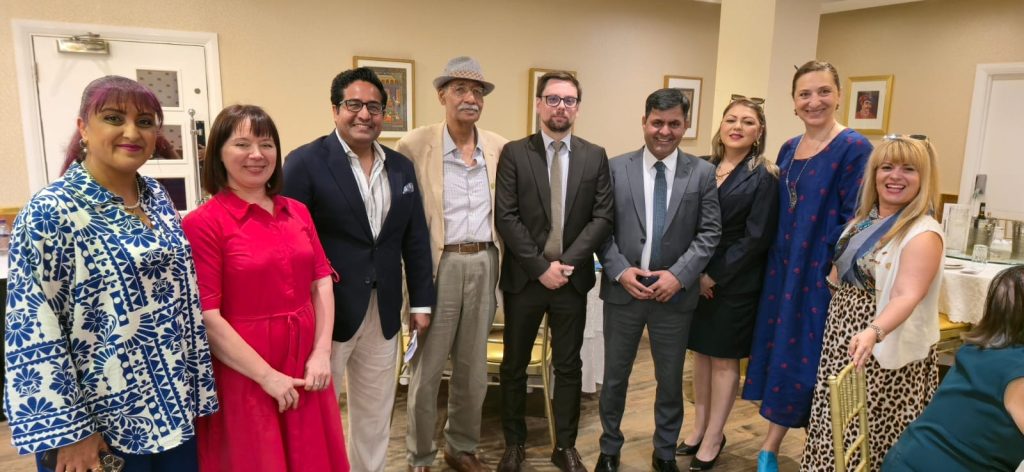
The distinguished gathering brought together members of the diplomatic, literary, business, media, and community sectors. Among the notable attendees were Barrister Farhan Farani, Founding Chairman of BritTogether; Mian Saleem, President of TWS-UK and PPP Greater London; Aina Mamaeva of Znaniye Foundation Charity; Rita Payne, former President of the Commonwealth Journalists Association; Barrister Riaz Gull, Chairman of Sharifa Ibrahim Foundation Charity; Tariq Mustafa Khan, Chairman of FBR; Radiana Vlahova, Executive Director of London Southside Chamber of Commerce; Chaudhry Ansar Mahmood, Director of Kenton Solicitors; singer Irina Pskovitina; William Horsley; Geoffrey Payne; Dr Shahzad Qureshi; Sheraza Khan; Mona Baig; Singer Sima Syed; Amer Shehzad; Sajjad Butt; Sajeel Ahmed; Mian Shahjahan Ahmed; Raja Qamar Javed, alongside many respected members of the intellectual and cultural community.
The memorable evening, held at West London’s prestigious Royal Nawaab Perivale Restaurant, was marked by thoughtful discussion, cultural appreciation, and celebration of literature, history, and community engagement. The event was attended by prominent figures of the city.

A UK heatwave has been linked to at least 15 water-related deaths, including a 13-year-old girl in North Yorkshire. Authorities are warning about the dangers of rivers, lakes, and coastal waters as searches continue for missing individuals.
The FTSE 100 and FTSE 250 opened June slightly lower as investors reacted to Middle East tensions and concerns about economic disruption. Airline shares, including EasyJet, rose after takeover-related reports.
The UK financial regulator has opened a probe into Royal Mail over missed delivery performance targets. The investigation comes amid continued scrutiny of postal services and ownership changes.
The Bank of England said it is closely monitoring public-sector wage growth because of potential inflation risks. Policymakers remain cautious about future interest-rate decisions.
More than 1,000 migrants reportedly crossed the English Channel into the UK during the past six days, keeping immigration and border security high on the political agenda.
Emergency services in London reported one of their busiest periods since the pandemic as the recent heatwave increased health-related callouts across the capital.
UK officials are considering a system that could allow airlines to share information about disruptive passengers, potentially enabling broader flight bans for repeat offenders.
The UK assisted the French Navy in tracking and intercepting a tanker suspected of being linked to Russia’s sanctioned “shadow fleet.” The operation took place in the Atlantic Ocean.
Concerns are growing over the rise in serious e-scooter and e-bike accidents, with reports showing hundreds of severe injuries across the UK over the past year.
The UK government confirmed it will not have to pay additional compensation linked to the cancelled Rwanda asylum deportation agreement, easing concerns over further public costs.
A Russian drone reportedly struck a residential building in Romania near the Ukrainian border, prompting strong condemnation from Romanian and European officials.
NATO members are monitoring increased drone-related incidents around Eastern Europe as security concerns continue to grow alongside the war in Ukraine.
Thousands of residents in Ukraine’s Odesa region experienced power disruptions following fresh Russian attacks targeting infrastructure.
European leaders criticized what they described as Russia’s “reckless escalation” after the reported drone incident on Romanian territory.
Global markets showed signs of volatility as geopolitical uncertainty fueled demand for safe-haven assets and strengthened the U.S. dollar.
The European Union’s foreign policy leadership stated that the EU cannot act as a neutral mediator between Ukraine and Russia under current conditions.
France launched an inquiry into the treatment of activists involved in a Gaza-bound flotilla, adding to ongoing scrutiny of the Gaza conflict.
A major United Nations sustainability initiative highlighted renewed international commitments to protecting oceans and marine ecosystems.
Concerns about record global temperatures intensified as climate experts warned that El Niño effects combined with climate change could drive further extreme heat events.

Hamid Mir
Today’s world is full of contradictions. At some point, we come to terms with these contradictions. Sometimes we move forward from these contradictions, but sometimes it becomes difficult to get rid of them. Some such contradictions are a challenge in Pakistan-US relations.
During his first term in 2018, Donald Trump called Pakistan a liar and a cheat. In his second term in 2026, Trump has praised Pakistan and its leadership more than fifty times. Does this “praise” mean that Pakistan-US relations are very good? Apparently, these relations look very good. Pakistan nominated Trump for the Nobel Peace Prize twice in two years. In 2025, after Pakistan’s nomination, Trump attacked Iran along with Israel. The second time, Pakistani Prime Minister Shahbaz Sharif nominated Trump for the Nobel Peace Prize, and after some time, the United States attacked Iran again along with Israel. In this world full of conflicts, people were surprised that the country other than Pakistan that nominated Trump for the Nobel Peace Prize was Israel. When the US and Israel launched a second attack on Iran in February 2026, Pakistan started trying for a ceasefire.
Iran launched a missile attack on Pakistan in 2024, that Iran was ready to accept Pakistan as a mediator in 2026 and on April 8, Pakistan announced a ceasefire between Iran and the US. Then Pakistan organized high-level talks between Iran and the US in Islamabad. Both sides had agreed on some points before the talks. The aim of these talks was to extend the ceasefire and announce an interim agreement, after which a comprehensive agreement was to be reached in a few weeks. The document of this interim agreement was ready and was about to be signed when suddenly the American delegation left these talks unfinished. This was an insult not only to the Iranian delegation but also to the mediator, but Trump saved him from a slap in the face by repeatedly praising the Pakistani leadership. Trump himself wanted to come to Islamabad to participate in the second round of negotiations, but now the Iranian government was not ready to trust him. To bring Iran back to the negotiations, Field Marshal Syed Asim Munir himself went to Tehran and told the Iranian leadership that if a peace agreement with the United States was not reached, Israel would benefit the most. Obviously, Iran had no answer to this argument. Iran once again expressed its willingness to negotiate, and it was agreed that both sides would announce the lifting of the blockade of the Strait of Hormuz and the second round of negotiations would be held in Islamabad.
Once again, Trump made statements that increased tensions and the second round of negotiations was postponed. Trump wanted to reach an agreement with Iran before his visit to China because he hoped for a breakthrough with North Korea after Iran. This time, the Iranian leadership decided to humiliate Trump, and when Trump arrived in China on May 13, his hands were empty of the agreement document with Iran.
Trump’s visit to China was a failure and he also came to know that the real role in this failure was played by Iran. On the other hand, he had no other option but to make an agreement with Iran because the closure of the Strait of Hormuz had created a huge global economic crisis. First, going to war with Iran failed, then there were failures on the diplomatic front as well. Trump wanted to turn these failures into successes. He tried to make the peace agreement with Iran conditional on the Abrahamic Covenant. Trump demanded that Pakistan and other Muslim countries, including Saudi Arabia, recognize Israel. Trump’s demand to recognize Israel was a strong slap in the face not only of Pakistan but of Muslims around the world. The oppression of the Palestinians is not a religious issue. It has become a human rights issue and Israel has become a symbol of oppression, tyranny and violence not only in the Muslim world but also in Europe. Trump believed that Pakistan did not have the option of refusing. Pakistan would say yes and then Saudi Arabia would also say yes. Then a peace agreement will be signed between Iran and the US and this agreement will turn into a great political and diplomatic victory for Trump. All of Trump’s predictions turned out to be wrong. Pakistan and Saudi Arabia clearly took the position that until Israel recognizes an independent Palestinian state with Jerusalem as its capital, there will be no question of recognizing Israel. Pakistan’s Deputy Prime Minister Ishaq Dar reiterated this position while sitting in the US. In other words, Pakistan made it clear to Trump that whether you sign a peace agreement with Iran or not is your choice, but we are not under any compulsion. We will not be part of the Ibrahimi Accord under your pressure. Trump made a mistake at the wrong time by making the peace agreement with Iran conditional on the Ibrahimi Accord, which will cause great harm to the US in the future.
Now, even if a peace agreement is signed between the US and Iran, most Muslim countries, including Pakistan, will not trust the US. It is also true that Trump does not represent the entire American public opinion, but he is the representative of the powerful lobby that makes decisions in America. This lobby wants to shut down Iran’s nuclear program at all costs. Will this lobby continue to ignore Pakistan’s nuclear program? If not today, then tomorrow America must settle its affairs with Iran and Pakistan will be praised all over the world, but Pakistan needs to be careful and vigilant about its nuclear program. In this world full of contradictions, Pakistan should have very good relations with America but also remember that Trump’s closest friend Netanyahu wants to eliminate not only Iran but also Pakistan’s nuclear capability, and Netanyahu’s closest friend Narendra Modi is always busy conspiring against Pakistan’s nuclear capability. After the agreement with Iran, a new era of conspiracies against Pakistan’s nuclear program is about to begin. The question is, will Trump become a part of these conspiracies or will he stand with Pakistan? We all know the answer.
The Importance of Positive Activities for Children’s Growth in the UK

Prof Fatima Zaman
Children are the future of every nation, and their growth and development play a vital role in building a strong and successful society. In the United Kingdom, it is increasingly important for parents, schools, communities, and society as a whole to encourage children to participate in positive activities that help them become responsible, confident, and active citizens. Positive engagement during childhood not only supports personal development but also creates a long-term positive impact on British society.
Today’s children are growing up in a fast-changing world filled with opportunities as well as challenges. Technology, social media, and peer pressure can sometimes distract young people from healthy and productive lifestyles. This is why parents and society must focus on guiding children towards activities that improve their physical health, mental wellbeing, social skills, and educational growth.
Sports and physical activities are among the most effective ways to support children’s development. Football, cricket, swimming, athletics, and martial arts help children stay healthy, disciplined, and confident. Team sports also teach important values such as respect, teamwork, leadership, and communication. These qualities help children become more responsible adults who can contribute positively to society.
Educational and creative activities are equally important. Reading, music, drama, art, science clubs, and debating competitions encourage creativity and critical thinking. Children who participate in such activities often perform better academically and develop stronger self-esteem. They learn how to express themselves positively and build meaningful relationships with others from different backgrounds and cultures, which is an important part of British society.
Community involvement also plays a major role in shaping young minds. Volunteering, charity work, environmental projects, and youth programmes teach children the importance of kindness, responsibility, and helping others. When children are involved in community activities, they develop a sense of belonging and understand the value of contributing to society. This helps reduce anti-social behaviour and creates stronger, safer communities across the UK.
Parents have the greatest influence on children’s lives. Spending quality time with children, listening to them, supporting their interests, and encouraging positive behaviour can make a huge difference in their future. Schools and local organisations should also work closely with families to create more opportunities for children to learn, grow, and succeed.
Society must recognise that investing in children is investing in the future of the nation. Positive childhood experiences create confident and educated individuals who can become future leaders, professionals, entrepreneurs, and community role models. Every child deserves support, guidance, and encouragement to reach their full potential.
In conclusion, positive activities are essential for children’s growth and development in the UK. Parents, teachers, community leaders, and society must work together to ensure children are given the right opportunities to grow into respectful, active, and successful individuals. By focusing on our children today, we can build a brighter, safer, and more united British society for tomorrow.
The Woman at Reception: A lawyer’s diary on grief, immigration, and the strange power of kindness

Ramsha Shahid
Two and a half years ago, a woman began appearing at the reception of our office. She never arrived with urgency. She never demanded attention. She simply sat and waited.
At first glance, she was easy to overlook. Her clothes were worn by circumstance rather than fashion. Her appearance reflected a life that had spent years placing survival ahead of self-care. She looked tired, not in the ordinary sense of the word, but with the kind of exhaustion that settles into a person after years of caring for others while slowly disappearing from their own story.
I remember people asking me why I entertained her visits. “How do you tolerate her?” “Why does she keep coming here?” “Can’t somebody else deal with her?”. The comments were rarely intended to be cruel. Yet they exposed something uncomfortable about us as people. We are often willing to sympathise with suffering, provided suffering arrives looking respectable. We are less comfortable when hardship appears disorganised, confused, dependent or inconvenient.
The truth is that vulnerability rarely presents itself elegantly. It often arrives carrying years of grief, poverty, neglect and loneliness. And sometimes it arrives at reception without an appointment.
At the time, I had only recently started working in the United Kingdom as caseworker. Like many immigrants, I understood that people often seek out those who might understand them. Not necessarily because they speak the same language, but because they understand something of the journey.
One afternoon, I invited her into my office.
She told me she wanted to go to Umrah. For Muslims, Umrah is more than a journey. It is an act of devotion, gratitude and hope. Many spend years dreaming of it. I explained, gently, that we were a law firm rather than a travel agency. She smiled and replied that she was already a client of the firm.
When I checked the records, she was right.
What followed became one of the most important lessons of my professional life.
She had limited leave to remain in the United Kingdom. Her immigration status required attention. I explained that before travelling anywhere she would need valid leave and a passport. She looked at me and quietly replied: “I don’t have a passport”
That was the beginning.
The more I learned, the more complicated the picture became.
She had entered the United Kingdom in 1999 and had spent more than twenty-six years here. She was the primary carer for her husband, a British citizen who was elderly, severely ill and largely bedridden. Her own circumstances were difficult. She had learning difficulties which affected her ability to navigate official systems. She had no savings. No employment. No meaningful support network outside the small community that had grown around her. For years, her life revolved around caring for her husband and keeping their fragile household together. When people speak about integration, they often imagine employment records and economic contribution. Yet there is another form of contribution that receives less recognition: caring for another human being when nobody else can.
Her passport had been lost many years earlier.
I had already decided that I wanted to help her on a pro bono basis.
Yet she insisted on paying.
A few days later she handed me £30.
Thirty pounds.
It was all she had.
Lawyers spend years studying consideration in contract law. We learn that consideration need not be adequate; it merely needs to be sufficient.
Perhaps that is why I have never forgotten those £30.
To anyone else, it was a trivial amount.
To her, it was dignity.
She was not asking for charity.
She was retaining her lawyer.
And so began a journey that neither of us fully understood at the time.
Over time, she became a familiar face in the office. Everyone greeted her warmly, quietly hoping that one day her circumstances would finally improve. She would drop in from time to time, sometimes with a question, sometimes with a document she had unearthed from an old drawer, and sometimes for no reason at all. On quieter afternoons, we would share a samosa or a slice of cake. She had a habit of calling me “Miss Pyari”(the pretty one) which never failed to make me smile. Before leaving, she would always offer a heartfelt dua, and somehow the office felt a little brighter for it.
Over the following months, the difficulties multiplied.
A replacement passport application was made. Months passed. Then more months. Letters were sent. Chasers were sent. Enquiries were made. The file grew thicker while answers remained elusive.
What fascinated me was how little any of this resembled what we had studied at university. In law school we are taught statutes, principles and precedents. We are taught to identify legal issues and construct legal arguments. We debate jurisprudence and constitutional theory. We learn where certainty lies.
What we are not taught nearly enough is that most clients live in uncertainty.
They live in the grey spaces, between housing law and immigration law, bereavement and bureaucracy, social care and public policy. The spaces where no single institution feels entirely responsible.
The law likes categories. Human beings rarely fit inside them.
Then tragedy struck. Her husband died.
After years spent caring for him, she suddenly found herself alone. The death itself was devastating. Yet what followed revealed one of the paradoxes of immigration law. The system is often at its most important precisely when a person is least able to engage with it. Grief does not pause legal deadlines. Bereavement does not suspend administrative requirements. A widow still needs forms, evidence, identification, applications and appointments.
The Immigration Rules contain a route for bereaved partners. The principle behind it is both humane and legally sound. Where a person has built a genuine and subsisting family life with a British citizen or settled partner, the death of that partner should not automatically extinguish the survivor’s right to remain.
On paper, her case was compelling. Yet even compelling cases require someone to tell the story. That is something lawyers sometimes forget. Law is not merely the application of rules. It is often the translation of human experience into a language which institutions can understand.
The irony is that while her legal case was progressing, her life remained precarious. She had lived in accommodation that was wholly unsuitable for her needs. There were concerns about exploitation and abuse from other residents. She experienced periods of acute financial hardship. At times she relied upon the goodwill of others simply to get by.
This is where I believe government policies can do better.
Not by abandoning immigration controls.
Not by disregarding rules.
But by recognising that vulnerability rarely arrives alone.
Bereavement often travels with poverty.
Disability often travels with isolation.
Immigration issues often travel with housing difficulties.
The most vulnerable people frequently find themselves moving between multiple agencies, each addressing one fragment of a much larger problem.
A truly compassionate state is not one that removes all rules. It is one that recognises when strict adherence to process begins obscuring the human being standing in front of it.
Last week, after years of uncertainty, we finally received the decision. Her application for indefinite leave to remain as a bereaved partner was granted.
There was relief. There was happiness. There may even have been a few tears.
But I hesitate to describe it as a happy ending.
Because it is not an ending.
It is merely the removal of one obstacle. The passport remains unresolved. The practical realities of daily life remain unresolved. The loneliness of losing a spouse remains unresolved. The need for community support remains unresolved. The challenge of rebuilding a life after years spent caring for another person remains unresolved.
The law has done what it could do. Now society must do the rest.
Perhaps that is the lesson I take away from this case. The most important work of a lawyer is not always winning. Sometimes it is noticing.
Noticing the person sitting quietly in reception. Noticing the individual whom others have stopped seeing. Noticing the humanity hidden beneath circumstances that make people uncomfortable.
Years ago, she came to our office because she wanted to go to Umrah.
The legal journey that followed was far longer than either of us anticipated.
One day, I hope she makes that pilgrimage. Not because it will mark the end of her struggles. But because after everything she has endured, she deserves the opportunity to travel somewhere not out of necessity, but out of hope. And perhaps that is what justice looks like at its most human: not merely the right to remain, but the chance to move forward.

Dr Shahzad Qureshi
As temperatures continue to rise during the summer season, health experts are warning people to prepare for an upcoming heatwave. Extreme heat can affect anyone, but young children, elderly people, and those with health conditions are especially at risk. During a heatwave, it is important to stay alert, take precautions, and protect yourself and your family from heat-related illnesses.
One of the most important things to remember during hot weather is to stay hydrated. Drinking plenty of water throughout the day helps the body maintain its temperature and prevents dehydration. Even if you do not feel thirsty, you should continue drinking fluids regularly. Avoid excessive tea, coffee, fizzy drinks, or alcohol, as they can lead to dehydration. Carrying a water bottle while travelling or working outdoors can also be very helpful.
People should try to stay indoors during the hottest part of the day, usually between 11am and 4pm. If you must go outside, wear lightweight and loose-fitting clothing made from breathable fabrics such as cotton. A hat, sunglasses, and sunscreen can provide additional protection from harmful sun rays. Walking in shaded areas and avoiding unnecessary physical activity can also reduce the risk of heat exhaustion.
Homes can become extremely warm during a heatwave, so keeping indoor spaces cool is important. Closing curtains or blinds during the daytime can block direct sunlight and help maintain lower indoor temperatures. Opening windows during the evening or early morning allows cooler air to circulate. Electric fans can provide some relief, but during extremely high temperatures, staying hydrated remains more important.
Heatwaves can also affect sleep and overall wellbeing. Hot nights may lead to discomfort and tiredness during the day. Taking cool showers, using light bedding, and keeping bedrooms ventilated can help improve sleep quality. People should also regularly check on elderly neighbours, relatives, or anyone living alone to ensure they are safe and comfortable.
Recognising the signs of heat-related illnesses is essential. Symptoms of heat exhaustion include dizziness, headaches, heavy sweating, tiredness, nausea, and muscle cramps. If someone experiences these symptoms, they should move to a cool place, drink water, and rest immediately. Heatstroke is more serious and requires urgent medical attention. Signs include confusion, rapid breathing, loss of consciousness, and a very high body temperature.
Children and pets should never be left inside parked cars, even for a short period. Temperatures inside vehicles can rise dangerously within minutes and may become life-threatening. Pet owners should also make sure animals have access to fresh water and shaded areas throughout the day.
As climate conditions continue to change, heatwaves are becoming more frequent and intense in many parts of the world. By taking simple precautions and staying informed about weather warnings, people can reduce health risks and stay safe during extreme summer temperatures. Preparation, awareness, and care for others can make a big difference during periods of severe heat.
For all the noise, threats, sanctions, military deployments, and diplomatic drama surrounding US-Iran relations, the central question remains remarkably simple: What does Donald Trump actually want from Iran? The popular assumption is that Trump seeks regime change in Tehran. His rhetoric has often been harsh, and his administration has pursued a policy of “maximum pressure.” Yet a closer examination suggests that Trump’s primary objective is not necessarily to overthrow the Iranian government, but to secure a deal that can be presented as a decisive American victory. At the heart of Trump’s Iran policy lies one overriding demand. Iran must never acquire a nuclear weapon. Trump has repeatedly stated that preventing Iran from becoming a nuclear-armed state is the essential condition for any agreement. Recent negotiations and statements from his administration have consistently focused on dismantling, limiting, or strictly controlling Iran’s nuclear capabilities. But the issue extends beyond uranium enrichment. Trump’s approach appears driven by three interconnected goals. First, he wants strategic security. A nuclear-capable Iran would fundamentally alter the balance of power in the Middle East and challenge both US influence and the security of regional allies such as Israel and Gulf Arab states. Second, he wants freedom of navigation in the Persian Gulf. Recent negotiations have reportedly included demands that shipping through the Strait of Hormuz remain open and unrestricted. The waterway carries a significant portion of global oil exports, and any disruption threatens the world economy. Third, Trump wants a political achievement. Throughout his political career, he has measured success through deals. Unlike traditional foreign-policy strategists who often focus on long-term frameworks, Trump tends to seek visible, headline-making agreements that can be presented to voters as proof of strength and negotiation skill. A new Iran agreement would allow him to claim he achieved what previous administrations could not. The challenge, however, is that Washington and Tehran define success very differently. The United States wants restrictions that permanently eliminate any path to a nuclear weapon. Iran wants sanctions relief, economic recovery, and recognition of its sovereignty and technological rights. Both sides believe they are negotiating from a position of principle; both suspect the other’s intentions. This is why negotiations repeatedly swing between optimism and confrontation. Trump’s ideal outcome is not endless conflict. Military action carries enormous risks, economic costs, and political uncertainty. A negotiated settlement that limits Iran’s nuclear ambitions while preserving regional stability would be far more valuable and more marketable as a political success. In the end, what Trump actually needs from Iran is not surrender. It is compliance on a narrow but critical issue. preventing Iran from becoming a nuclear weapons power, while allowing him to present the result as a stronger and more effective agreement than those achieved by previous administrations. Whether Iran is willing to accept those terms remains the question that continues to shape one of the world’s most consequential rivalries.
New Benefit Plans in England and the risk of leaving People Behind
England’s new benefits reforms represent one of the most significant changes to the welfare system in recent years. Supporters argue that the plans are designed to create a fairer balance between helping vulnerable people and encouraging employment. Critics, however, fear that some of the changes could place additional pressure on those who already face the greatest challenges. The reforms contain both positive and controversial elements. On one hand, the government has increased the basic Universal Credit allowance above inflation and expanded support for many low-income families. The removal of the two-child limit is expected to provide additional financial assistance to larger households that have struggled with rising living costs. These measures acknowledge a reality that many families have experienced for years: everyday expenses have increased faster than incomes, and many working households still rely on support to make ends meet. At the same time, the government has reduced health-related Universal Credit payments for most new claimants while increasing investment in employment support programmes. Ministers argue that the previous system discouraged some people from seeking work and that a stronger focus on employment assistance will help more people enter the labour market. Billions of pounds have been allocated for work coaches, training, and tailored support services. The central question is whether these reforms strike the right balance. Encouraging employment is a reasonable goal, particularly at a time when labour shortages and economic inactivity remain major concerns. Many people with health conditions want to work if they can do so safely and flexibly. New measures such as the “Right to Try” approach, which aims to reduce fears about losing benefits when attempting employment, could be a constructive step forward. However, there is also a danger that policymakers focus too heavily on reducing welfare spending while underestimating the complexity of disability, chronic illness, and long-term unemployment. Not every claimant faces the same barriers. A system that works well for one person may create hardship for another. Reducing support for future claimants may save public money, but it also risks increasing financial insecurity for some of the most vulnerable members of society. (House of Commons Library ) Ultimately, the success of England’s new benefit plans will not be measured by government savings alone. It will be measured by whether more people can find sustainable employment, whether poverty falls, and whether those unable to work continue to receive the dignity and support they deserve. Welfare reform should never be viewed simply as an accounting exercise. It is a statement about what kind of society we want to build. The challenge for England is to create a system that rewards ambition without abandoning compassion a system that helps people move forward while ensuring that no one is left behind.