Bureau Report:
Islamabad:
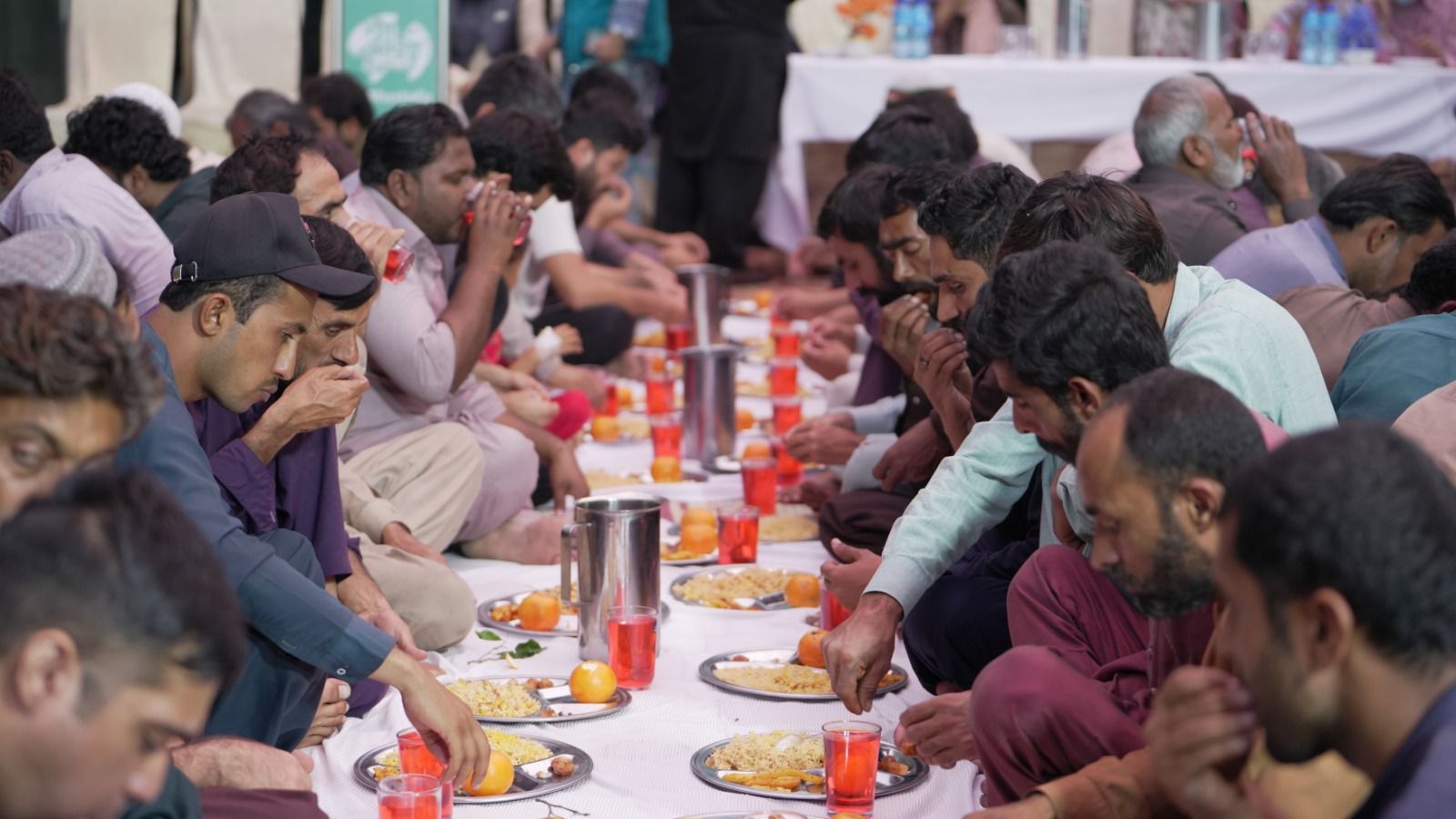
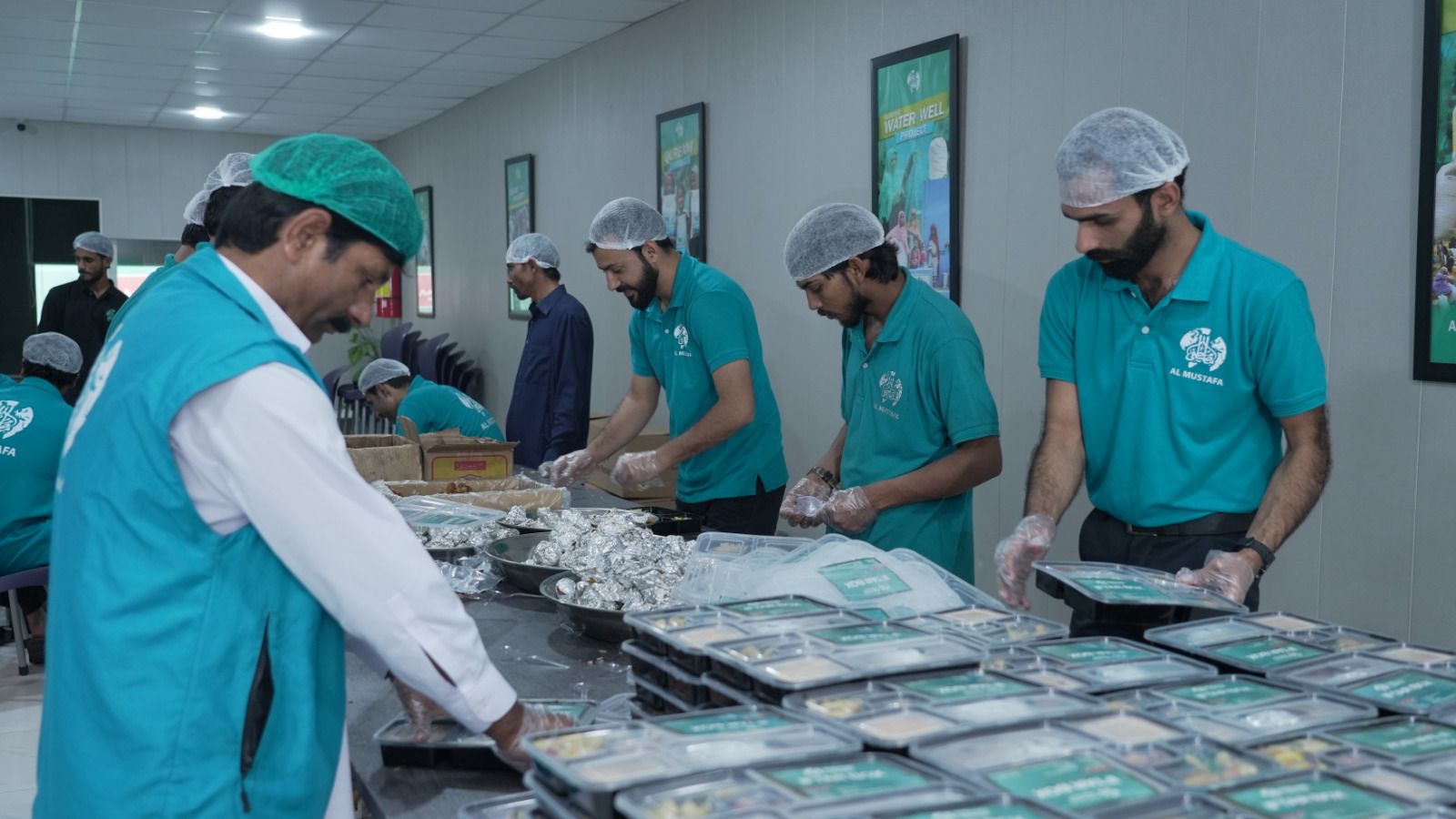
The Al Mustafa Welfare Trust has been running a daily Iftar dinner program outside the main gate of Pakistan Institute of Medical Sciences (PIMS) in Islamabad since the first day of Ramadan, providing food to hundreds of deserving people each evening.
According to organizers, more than 300 underprivileged individuals — including hospital visitors, patients’ attendants, laborers and travelers — are served Iftar and dinner every day. The initiative aims to support those who remain away from home while caring for patients or working in the capital during the holy month.
The Ramadan outreach program is being supervised by Mohsin Ali, Manager Projects of Al Mustafa Welfare Trust, who is leading the arrangements on site. He is assisted by Syed Farrukh Zafar, Program Manager of Al Mustafa Pakistan, ensuring the smooth distribution of meals and the organization of volunteers.
A large number of young volunteers are actively participating in the effort, including students from Bahria University and members of Anjuman Talaba-e-Islam. Their participation has helped strengthen the spirit of community service and solidarity during Ramadan.
The program is also being conducted under the guidance of Sajjad Azhar, Trustee of Al Mustafa Pakistan, and Rubina Khawaja, Trustee of Al Mustafa Welfare Trust UK, who have been supporting the initiative and encouraging volunteers to continue humanitarian service for vulnerable communities.
Officials of the trust stated that the initiative reflects Al Mustafa Welfare Trust’s broader commitment to assisting the needy during Ramadan, particularly those who spend long hours in hospitals while caring for loved ones and often struggle to arrange meals at the time of Iftar.
The daily gathering outside PIMS Hospital has become a scene of compassion and generosity, where volunteers work tirelessly to ensure that every fasting individual present can break their fast with dignity and comfort.
London Post
Al Mustafa Welfare Trust Distributes Iftar Boxes to Commuters in Lahore
Bureau Report:
Lahore:
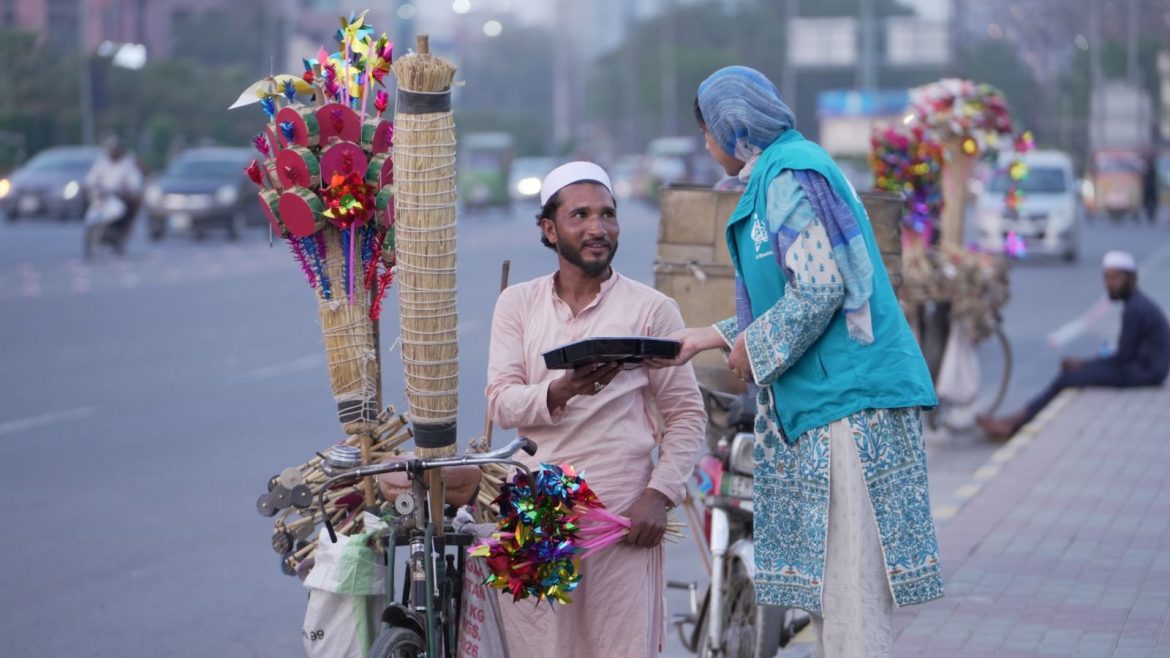
Continuing its Ramadan outreach, the Al Mustafa Welfare Trust Pakistan distributed Iftar boxes among commuters and passersby at Liberty Market in Lahore, ensuring that people traveling at sunset could break their fast on time. Volunteers of the organization set up arrangements at the busy commercial area and provided Iftar boxes to fasting individuals who were on the move during the Maghrib hours. Many travelers and pedestrians warmly appreciated the initiative and offered heartfelt prayers for the volunteers and organizers.
The activity was part of Al Mustafa Welfare Trust’s ongoing Ramadan humanitarian campaign aimed at supporting those who may not have access to proper Iftar while away from home. The gesture reflected the spirit of compassion, generosity and community service that defines the holy month of Ramadan.
Officials of the organization said that such initiatives are meant to spread kindness and solidarity in society while providing timely support to people observing the fast during their daily routines.
The distribution drive created a moving scene of gratitude and goodwill as volunteers worked with dedication to serve the public. Photographs of the event were captured by Nasir Iqbal, highlighting the memorable moments of the outreach.
Al Mustafa Welfare Trust Marks International Women’s Day with Special Iftar Ceremony
Bureau Report:
Lahore:
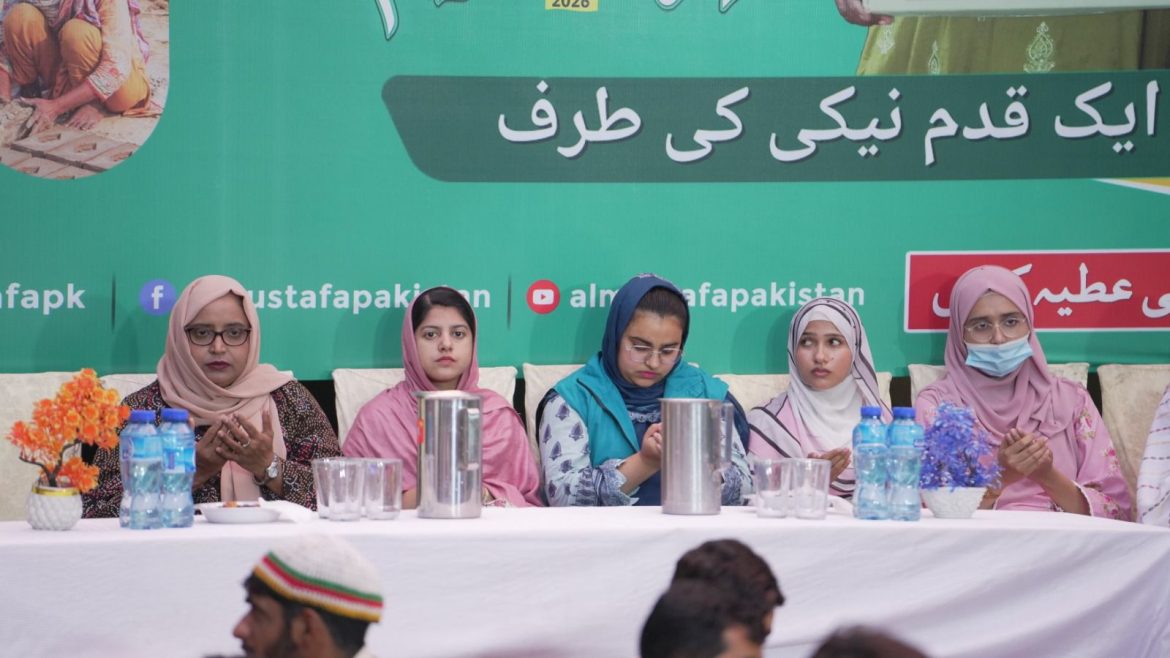
The Al Mustafa Welfare Trust organized a dignified ceremony alongside its 18th Ramadan Iftar under the Al Mustafa Dastarkhwan initiative to mark International Women’s Day, paying tribute to the strength, compassion and contributions of women in society.
The event was led by the Managing Director of Al Mustafa Welfare Trust, Madam Nusrat Saleem, who highlighted the vital role women play in humanitarian service, community development and social harmony. Volunteers and staff members of the organization gathered to recognize and appreciate the dedication, resilience and leadership of women working for the betterment of society.
Speaking on the occasion, Madam Nusrat Saleem emphasized that women symbolize courage, service and love, and their efforts are essential for building a compassionate and progressive community. Participants applauded the contributions of women in humanitarian work, education and social welfare.
The Al Mustafa Dastarkhwan is not only a place where fasting people break their fast during Ramadan but also a symbol of respect, service and humanity. The gathering reflected a spirit of gratitude and recognition for women whose tireless efforts often strengthen families and communities.
Through its welfare programs, Al Mustafa Welfare Trust continues to promote respect, service and empowerment of women in Pakistan. The organization reaffirmed its commitment to supporting initiatives that uplift women and recognize their invaluable role in society.
Photographs from the event were captured by Nasir Iqbal.

Al Mustafa Welfare Trust Hosts Grand Iftar Gathering at Historic Wazir Khan Mosque
Bureau Report:
Lahore:
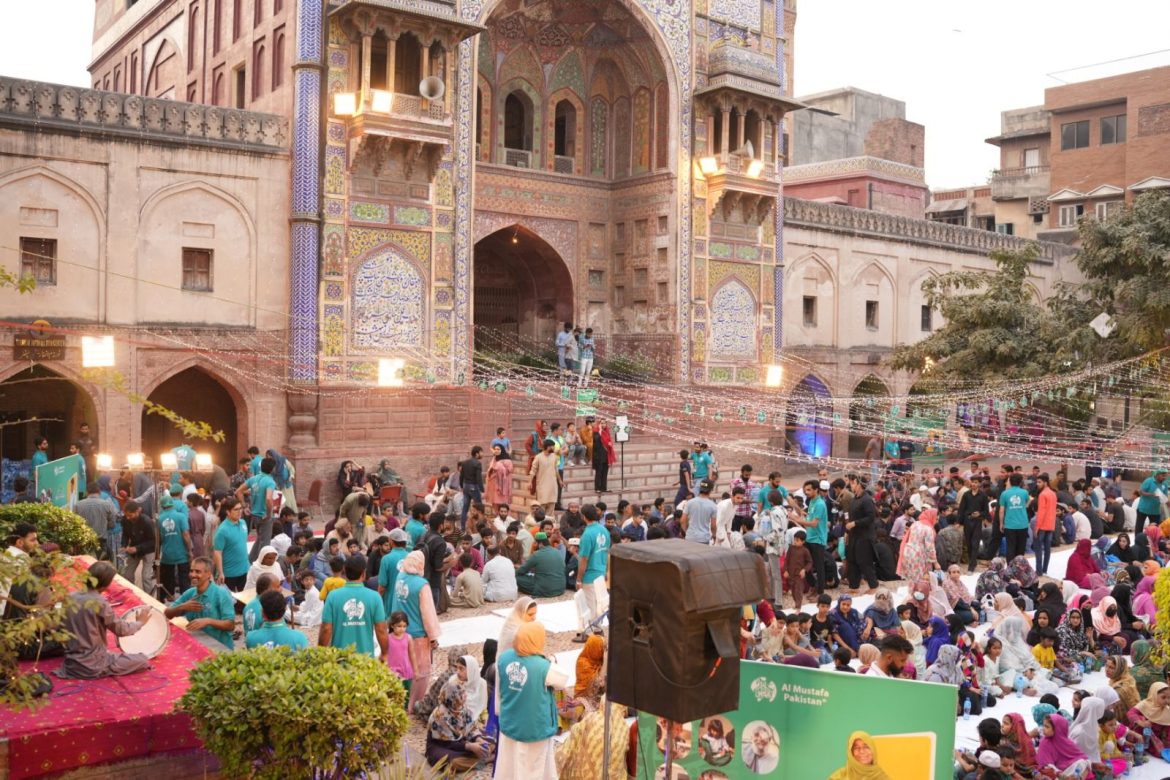
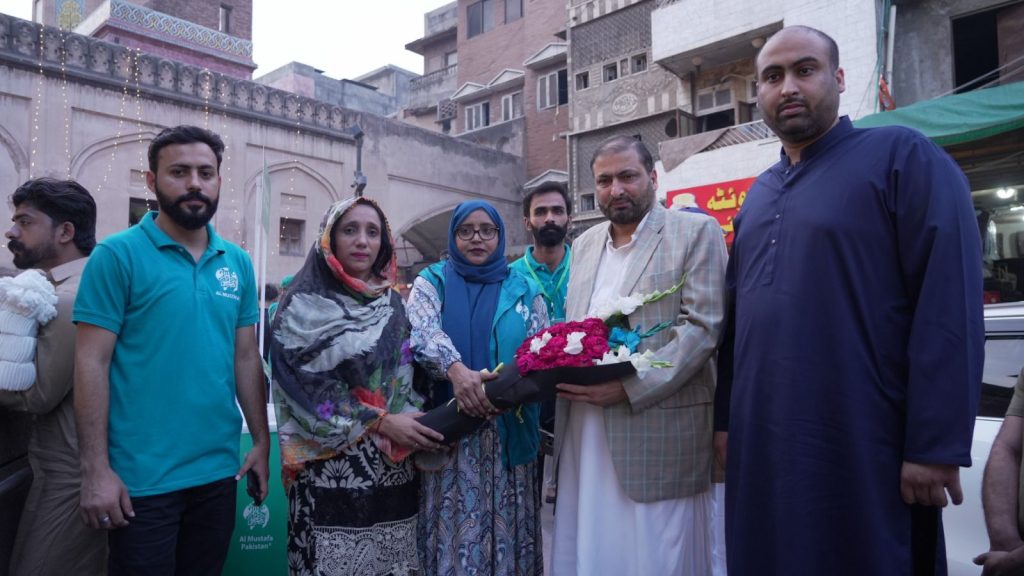
In the blessed month of Ramadan, a beautiful display of compassion and community spirit was witnessed as the Al Mustafa Welfare Trust organized a grand Sehri and Iftar arrangement at the historic Wazir Khan Mosque near Delhi Gate in Lahore.
Hundreds of families, including children, elderly citizens, women and men, gathered at the mosque where thousands of fasting individuals sat together to break their fast. The event created a remarkable atmosphere of unity, gratitude and brotherhood, reflecting the true spirit of Ramadan.
The spiritually uplifting gathering was presided over by Madam Nusrat, whose leadership and patronage continue to strengthen the humanitarian mission of Al Mustafa Welfare Trust. The event was further honored by the presence of EX. Chief Justice Qasim Khan and members of the WIFA delegation, who joined the community in the collective Iftar.
Dedicated volunteers of the trust served the fasting participants with great care, sincerity and excellent arrangements, ensuring that everyone present could comfortably break their fast. Their tireless efforts added warmth and dignity to the occasion.
As the call to Maghrib prayer echoed through the historic courtyard of Wazir Khan Mosque, a deeply spiritual scene unfolded. People raised their hands in prayers, expressing gratitude and sharing the blessings of Ramadan in an atmosphere filled with compassion and solidarity.
The initiative is part of Al Mustafa Welfare Trust’s ongoing Ramadan outreach, through which the organization continues to provide Sehri and Iftar to thousands of underprivileged people across various regions. The trust reaffirmed its commitment to expanding this mission of humanitarian service and spreading the blessings of Ramadan to more communities in the days ahead.


By Wajahat Ali Khan:
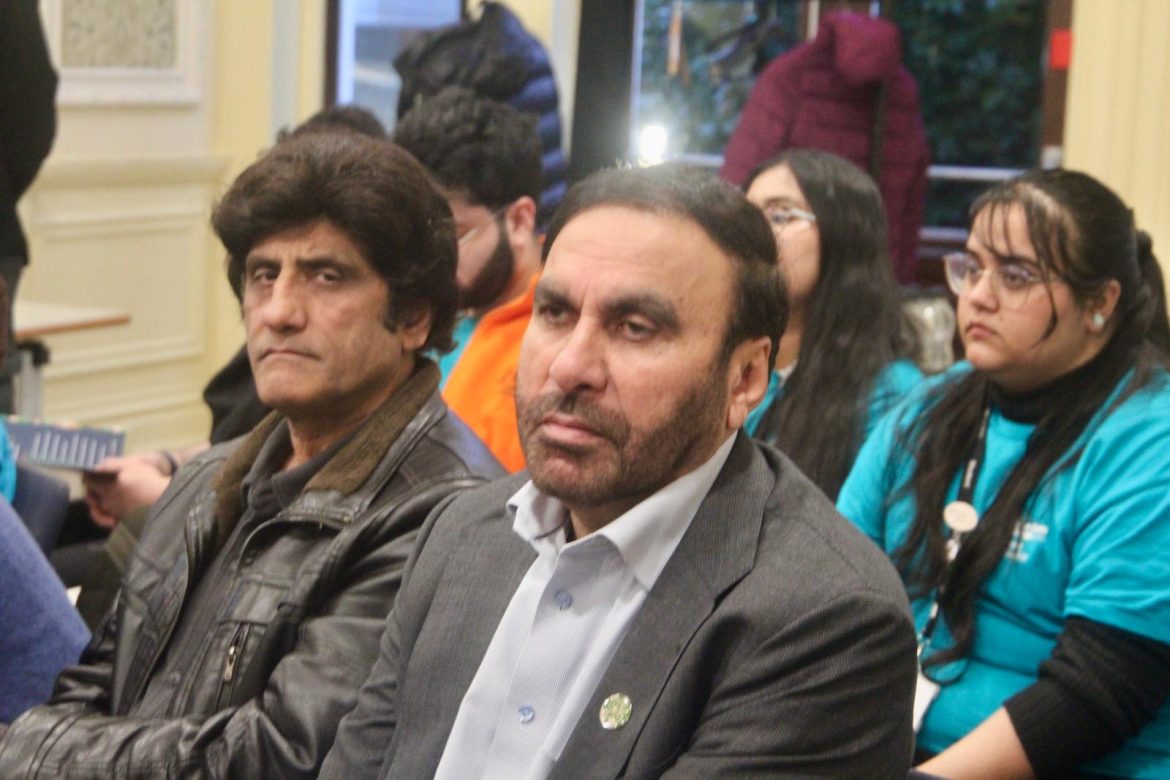
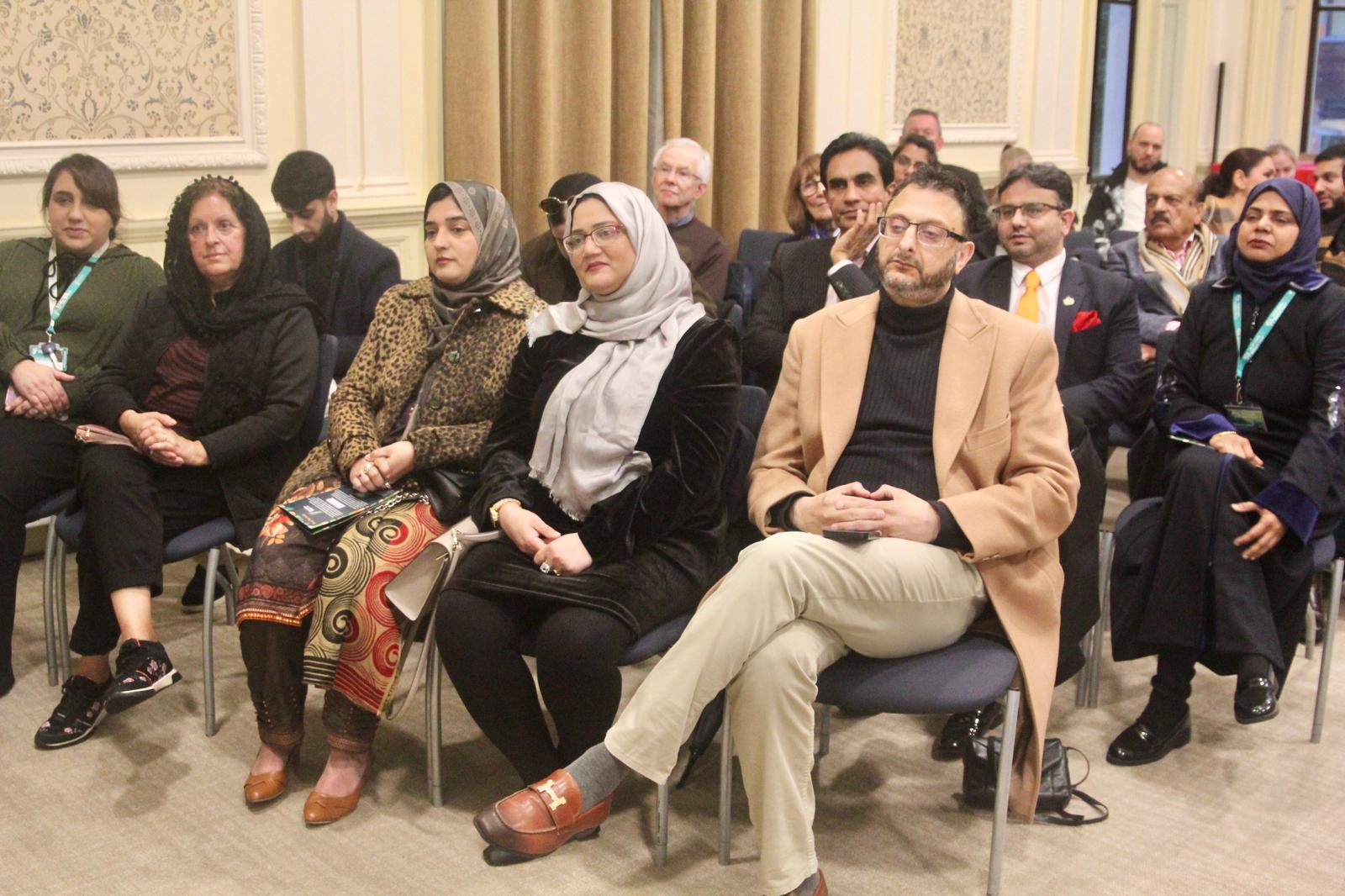
A multi-faith Iftar dinner was jointly organised by the “AlMustafa Welfare Trust” Hounslow Friends of Faith and “West Thames College” at West Thames College London which hosted by Barrister Zubair Awan. The event was attended by Ruth Cadbury, Member of Parliament for Isleworth & Brentford, Mayor of Hounslow Amy Croft, Charanjit Kaur, Chair of Hounslow Friends of Faith, Marta Gajewska Principal of West Thames College, Abdulrzzaq Sajid, Chairman of AlMustafa Welfare Trust, Shamama Latif, Ahmed Nawaz and a large number of people from other communities and all walks of life attended the event. On the occasion, speakers highlighted the importance of Ramadan and said, this month teaches us a lesson in piety and abstinence, as it is stated in the Holy Quran that fasting was made obligatory so that humans can satisfy the hunger and thirst of other humans. The speakers said that fasting teaches us patience by controlling hunger, thirst and desires, a person learns to control his soul. Therefore, fasting is not just about abstaining from food and drink, but also teaches us to avoid lies, backbiting, fighting and sins. The speakers said that in a multicultural society like Britain, where people of different religions, cultures and nationalities live together, participating in each other’s festivals or at least respecting them promotes mutual harmony and brotherhood. These festivals bring people closer and joining in each other’s joys increases friendship and trust.

Pakistan Calls for a Bold, Practical and Reformed at 26th Commonwealth Foreign Affairs Ministers Meeting
PR:
London:
The 26th Commonwealth Foreign Affairs Ministers Meeting (CFAMM) was held on 8 Mach 2026 at Lancaster House, London, bringing together Foreign Ministers and senior representatives from across the Commonwealth, to set priorities ahead of CHOGM 2026 and explore transformative solutions for a stronger and more responsive Commonwealth.
High Commissioner Dr. Mohammad Faisal represented Pakistan on behalf of Deputy Prime Minister / Foreign Minister Senator Ishaq Dar, who could not participate because of the prevailing regional situation.
In his remarks, the High Commissioner highlighted the urgent need for a more agile, inclusive and result-oriented Commonwealth in an increasingly complex global environment. He observed that the current global context was marked by fragmentation, geopolitical rivalries and increasing strain on traditional multilateral institutions. He noted that this moment presented both a challenge and an opportunity for the Commonwealth to reaffirm its relevance and collective purpose. At the same time, the High Commissioner cautioned against creation of new power centres within organisations.
Emphasizing the importance of reforms, the High Commissioner stated that the Secretary General’s reform proposals merit serious and constructive engagement by member states. He underscored that Commonwealth Foreign Ministers and leaders must take a proactive role, not only in shaping institutional reforms but also in advancing meaningful cooperation among member states.
Highlighting Pakistan’s perspective, the High Commissioner stressed that the Commonwealth must focus on practical outcomes that directly benefit its peoples. These included strengthening economic resilience, facilitating trade, promoting investment flows, addressing debt sustainability and advancing sustainable development. He called on the member states to seize this moment of global transition to reposition the Commonwealth as a credible platform for action, solidarity and shared prosperity.
The High Commissioner reaffirmed Pakistan’s commitment to working closely with fellow Commonwealth members, to pursue meaningful reforms and practical initiatives to ensure the organisation remained modern, resilient and responsive to the needs of its citizens.
President Donald Trump has been critical of PM Keir Starmer because their political views are very different. Starmer supports closer cooperation with Europe and stronger climate policies, while Trump has often opposed these ideas. Public comments and criticism from both sides have sometimes created tension between them. There is truth to Donald Trump’s declaration earlier this week that the UK-US relationship is “not what it was”, although there is no indication that he understands the reasons for the change. The US president is “very disappointed” that Sir Keir Starmer has been “uncooperative” in the war against Iran, offering only limited logistical support to American forces. The prime minister’s concession that RAF resources can be involved in defensive operations does not compensate for the prior refusal to put Britain’s military assets at American disposal. It came too late for Mr Trump, whose irritation turned to culture-war jibes about “windmills” ruining British landscapes and a false claim about the prevalence of sharia courts. Sir Keir is not the only European leader guilty of lèse-majesté. Pedro Sánchez, the Spanish prime minister, has been forthright in opposition to the Iran war. In response, Mr Trump threatened to cut off all trade, saying he no longer wanted “anything to do with Spain”. Sir Keir is right to keep his distance from a military operation with no justification in law and incoherent objectives. But judicious caution doesn’t protect the UK from repercussions if Mr Trump’s irritation should mutate into a longer grudge. There are important differences between the Spanish and British situations. As an EU member, Spain trades with the US as part of the European single market. Disagreements over Iran will further complicate relations between Washington and Brussels, but Mr Trump will not sever economic ties with the bloc just to spite Mr Sánchez. Post-Brexit Britain is more exposed to vindictive unilateral action. The president’s power to impose tariffs on a whim has been curtailed but certainly not ended by a recent supreme court judgment. Meanwhile, there are other areas of UK-US commerce – a multibillion-pound “tech prosperity deal” currently under negotiation, for example – where a souring of diplomatic relations could have swift economic consequences. Then there is the problem of military dependency. All European Nato members have relied on US power to guarantee their security, but for Britain, the “special relationship” extended to a thorough enmeshing of systems. The technological infrastructure of UK national defence is wired to the Pentagon in ways that cannot simply be disregarded. The contrast with France, whose security and defence capabilities have evolved out of Gaullist mistrust of America, is notable. Emmanuel Macron was an early advocate of “strategic autonomy” from Washington, before most continental leaders anticipated a crisis in transatlantic relations on the current scale. Mr Trump’s erratic temperament and volatile actions make a compelling case for moving faster. The legacy of Brexit complicates the relationship with Europe, but it does not alter the strategic imperative of making common cause with continental allies.
Unemployment rising in UK
Unemployment in the UK has been rising recently, reaching about 5.2%, the highest level in nearly five years. This increase is mainly due to slow economic growth and businesses hiring fewer workers. Higher business costs and fewer job vacancies have also contributed to the problem, especially affecting young people looking for jobs. Launching a review into unemployment and economic inactivity among young people in December, the former health secretary Alan Milburn described the situation as a “national outrage”, and suggested that a “coalition of the concerned” would be needed to turn things around for the 16- to 24-year-olds known as Neets (not in education, employment or training). The latest figures, showing another increase in the final quarter of last year, to 957,000, underline the scale of the problem. The review is evidence that ministers are paying attention. The “youth guarantee” in the autumn budget means that £820m will be spent on paid work placements for 18- to 21-year-olds. But further bold reforms are needed if young adults are to be enabled to flourish.

Prof. Masood Akhtar Hazarvi
The Middle East is no longer merely a geographical region; it has become a blazing circle surrounded by gunpowder, fire, and smoke. The heat of this turmoil, rising from Gaza, Lebanon, and Iran, is scorching the hearts and minds of the entire Muslim world. The streets of Gaza are still filled with the ruins of shattered homes, burnt buildings, and the lingering smell of fresh blood. Thousands of families have grown weary of carrying the bodies of their loved ones, yet the bombardment shows no sign of stopping. The wounds of Lebanon had barely begun to heal when American and Israeli strikes on Iran pushed the entire region to the brink of a new and extremely dangerous war. This is a situation where even a single misstep could trigger a wider regional conflict and deepen the clouds of a global energy crisis.
This is not merely a conflict between two states; it is a fire that could engulf the entire Ummah through sectarian, ethnic, and national divisions—especially an Ummah that calls itself a “single community” in words, yet in practice remains divided into small camps shaped by state interests, sectarian preferences, and global pressures. Syria stands as perhaps the most painful example of this division and indifference. What began as political protests in 2011 quickly turned into a devastating civil war and international intervention that completely transformed the country. Hundreds of thousands were killed, and millions were forced to become internally displaced or refugees abroad. Historic cities such as Damascus, Aleppo, Homs, and Hama—once centers of knowledge, culture, and the glory of Islamic civilization—now stand as landscapes of broken minarets, empty libraries, and devastated neighborhoods, shaking our collective conscience.
This is not the first time the Ummah has paid the price of its internal weaknesses and mutual distrust in human blood. The Iran–Iraq war divided the region along sectarian lines to such an extent that brother turned suspicious of brother and neighbor of neighbor. Its effects reached the Indian subcontinent as well, manifesting in sectarian violence and bloodshed in cities such as Karachi, Quetta, Parachinar, and Gilgit. Today the situation is even more fragile because hatred is no longer confined to sermons or closed-room speeches. Through a single social media post, a short video clip, or a fabricated image, millions of minds can be influenced within moments, and falsehood can easily be presented as truth.
The real problem is not only external conspiracies; it is also our internal fragmentation, our suspicion of one another’s intentions, and our habit of treating our own opinions as the final word. Yemen offers a tragic example of this reality, where global and regional powers turned land, sea, and sky into battlefields for their proxy wars. Yet the real burden of bombing, hunger, and disease has been borne by ordinary Yemeni civilians. When sect, party, tribe, or political affiliation replaces justice as the standard, institutions weaken and the very foundations of society begin to crumble. For Pakistan, this entire regional landscape carries extraordinary sensitivity. On one side lies a long land border with Iran along with historical and commercial ties; on the other lies the uncertainty in Afghanistan, domestic political tensions, and an economy already under pressure. If tensions escalate in the Strait of Hormuz, countries like Pakistan—whose economies depend heavily on imported oil—could face serious challenges in energy supply, currency stability, and rising inflation, directly affecting the daily lives of ordinary citizens.
At such a critical crossroads, both as an Ummah and as a nation, several fundamental principles must remain before us. First, injustice must be called injustice—no matter who commits it, even if it is done in the name of “our own.” Second, every piece of news or video circulating on social media should be verified before acceptance, so that we do not become part of false narratives or hate-driven propaganda. Third, national and collective unity must be consciously strengthened, because only a united nation can effectively face global pressures and diplomatic challenges. At the same time, Pakistan—as the only nuclear power in the Muslim world—should attempt to bridge divides within the Ummah through wise diplomacy and a role of reconciliation.
The devastated streets of Gaza, the fragile tents of Palestinian refugee camps, the broken minarets of Syria, and the starving children of Yemen remind us every day that the real cost of war is always paid by ordinary people—those who possess neither weapons nor diplomatic influence nor access to global media. All they desire is that their children sleep without the shadow of bombs, that their homes remain safe, and that they may witness the sunrise with hope rather than fear.
Today is not a time for negligence or fleeting emotions; it is a time for awareness, responsibility, and collective self-accountability. If we make justice our guiding principle, support the oppressed beyond sectarian boundaries, and prioritize unity at both national and communal levels, it is possible that future generations will not witness the horrifying scenes that our generation has seen—from Iraq to Afghanistan, from Syria to Yemen, and from Gaza to Iran. If we steady ourselves today, history may remember that even while surrounded by a blazing circle, we chose to pour water on the fire rather than fuel it.

Wajahat Ali Khan
The United Arab Emirates, Kuwait, Bahrain, Qatar, Iraq and Saudi Arabia certainly have this complaint that, why is Iran firing missiles at them, but they do not understand why they all allowed the US to build military bases in their countries and now if missiles are raining down on Iran from these military bases, then which country should Iran fire missiles in response?
Today, when we witness the regular war between Iran, Israel and the United States and the instability in the Middle East, we realise that the Muslim world desperately needs a leader who is a politician like ZA Bhutto who is farsighted, courageous and believes in the welfare of the people. Zulfikar Ali Bhutto, a name that is much more than just a definition of a politician, is still alive in our consciousness like a symbol. Under his leadership, the priorities of public welfare and national interest were always higher than the flames of power. The secret of Bhutto’s politics was that he had the courage to raise the voice of the interests of Muslims at the global level and understand the public sentiments in domestic politics.
In the 1970s, Bhutto provided Pakistan with the basis for nuclear capability, strengthened popular democracy, and tried to promote relations between the countries of the Muslim world. His goal was not just to gain power, but to present a scenario where Muslim countries would unite to protect their interests and play an effective role at the global level. Of course, later as Prime Minister Mian Muhammad Nawaz Sharif, despite all the pressure to emulate Bhutto, played his part in making Pakistan a nuclear power in 1998.
In 1974, the Islamic Summit Conference (OIC) was held in Lahore, a historic occasion for the unity of the Muslim Ummah. Muslim leaders from all over the world attended the conference and took important decisions such as the Palestine issue, economic cooperation and the recognition of Bangladesh. This Islamic Summit was the moment when politics overturned all the scales of hostility and friendship, and the world witnessed a scene that was previously unimaginable.
In 1974 when the Islamic Summit Conference was to be held in Lahore. At the same time, the Jamaat-e-Islami was raising slogans of “Bangladesh is unacceptable” and was openly criticising Bhutto. In such an environment, Sheikh Mujibur Rahman apologised for coming to Pakistan and announced that he would not come himself but would send his Foreign Minister. However, at the request and wish of Zulfikar Ali Bhutto, the matter took a new direction. Egyptian President Anwar El Sadat and Yasser Arafat reached Dhaka on a special plane and brought Sheikh Mujibur Rahman with them to attend the conference. Thus, when Sheikh Mujibur Rahman, who had been considered an “enemy of Pakistan” in Pakistan for years, came to Lahore to attend the Islamic Summit Conference, the world witnessed a surprising scene. The same man called “traitor” shook hands with Bhutto and was seen laughing and smiling in pleasant conversations. Even the one who received Sheikh Mujib at the airport was the same General Tikka Khan whom Sheikh Mujib once called the “Butcher of Bengal” and later the founder of Bangladesh, Sheikh Mujibur Rahman, who was also called “Bangla Bandhu”, also gave a very emotional speech in the Punjab Assembly during the Lahore Summit.
In today’s world, we need a leader who can unite Muslim countries with economic, political and military acumen, a leader who can not only assure the people of solutions to local problems but also effectively defend Muslim interests at the global level. It is necessary to understand that a united Muslim world does not mean just gathering at ceremonies or shaking hands at international meetings. It means economic unity, common defence policies, and cooperation in the fields of education and technology. For example, if Islamic countries unite in energy, technology, and investment, not only will internal crises be reduced but their voices will also be heard at the global level. I think that the Muslim world still needs a new Bhutto, one who is also a politician, a friend of the people, and a voice of the Muslim world at the global level.
The recent war between the United States and Iran has once again put the Middle East in danger. This is not just a problem of two countries, but a warning for the peace, economy and political stability of the entire region. Are all Muslim countries not seeing that the ongoing crises in Palestine, Iran, Iraq, Syria, Libya, Yemen, Bahrain, Kuwait, Qatar, Oman, Dubai, Abu Dhabi and other Arab countries today is proof that when Islamic countries do not unite and prefer to be puppets in the hands of global powers, global powers make them easy targets in their games.
It is time for Islamic countries to put aside their internal politics and differences and take a united stand. Economic cooperation, joint defence, and a common position at the global level are the only ways that can protect the region from external pressure. This was the work of Zulfikar Ali Bhutto, which he laid the foundation for. Of course, he paid a heavy price for it by sacrificing his life, but his head still stands proudly in history.
If Bhutto were here today, perhaps the priorities of the Islamic world would have been decided in 1974 and the shape of the Islamic world would have been different. But Bhutto always said that Pakistan should adopt an independent foreign policy, free from the pressure of the big powers. Therefore, it is possible that he would not have stood completely with any one bloc but would have preferred Pakistan’s interests. Or he would have possibly taken the matter to the United Nations and increased global pressure for a ceasefire and negotiations.
In my opinion, analysing the Israel and American attacks on Iran and the situation that has followed it so far, is it not the right time for all Islamic countries, especially the Gulf countries and Saudi Arabia, to immediately hold an “Islamic Summit” like the one in 1974, and if 57 Islamic countries participate in it and declare a joint military and economic agenda, then they can certainly live a more prosperous, independent and dignified life than today, and Pakistan can also take the initiative to hold this Islamic conference!!
Shouldn’t Muslim countries hold any joint meeting or conference, especially in such a case, can’t an emergency meeting of the organisation of Islamic Cooperation (OIC) be called? This organisation consists of about 57 Muslim countries and its aim is to form a common position on the political, economic and diplomatic issues of the Muslim world.
If Bhutto were there, he would at least tweet about world politics all the time and would also send a “Bhutto-style remarks” to US President Trump every day.

Hamid Mir
Who is giving a religious colour to the US and Israel’s war against Iran? Israeli Prime Minister Netanyahu and US President Donald Trump had declared the main goal of the war to be to destroy Iran’s nuclear capability, but who organised a special prayer for victory in the war in the Oval Office with Christian pastors and religious leaders? The world media has published a picture of this special prayer in which several religious leaders, including Pastor Greg Laurie, are placing their hands on Trump’s shoulders and promising victory in the war against Iran. All these people have been preparing Americans for years for a big war before the appearance of the Antichrist, which is called (ہرمجدون) Armageddon. Several Western newspapers, including the British newspaper The Guardian, have revealed that the US Military Religious Freedom Foundation (MRFF) has so far received more than 200 complaints, stating that US military commanders are telling their subordinates that Trump has been told by Jesus Christ to attack Iran because he is returning to earth and this is the same Armageddon (ہرمجدون) that has been mentioned in the Bible. A joint complaint sent by 15 US soldiers includes 11 Christians, one Muslim and one Jewish soldier. This complaint means that the religion card has divided the US military. This religion card played by Trump clearly shows that despite the martyrdom of Iran’s Supreme Leader Ayatollah Ali Khamenei, there has been no major movement for regime change in Iran now, so Trump wants to achieve some other goals by giving this war a religious colour before mentioning these goals, it is important to mention that Trump is not the first US president to They are declaring the support of the Islamic State as their religious duty and are waiting for Jesus (peace be upon him) after (ہرمجدون) Armageddon. Armageddon is a combination of two Hebrew words. Har means mountain and Mejdud is the name of a valley in Palestine. Much has been written in the books of Muslims, Christians and Jews about the causes and consequences of this war. The article titled “Clash of Civilisations” that Professor Samuel P. Huntington of Harvard University wrote in Foreign Affairs Magazine in 1993 revolved around the concept of Armageddon. Later, he turned this article into a book. Huntington also quoted a Saudi scholar, Dr Safar Al-Hawali Al-Ghamdi, in his article, who said that the next war would be between the West and Islam. In 1994, Huntington presented the theory of the clash of civilisations at the World Economic Forum meeting in Davos, and I was also there. I As a journalist, I interviewed the head of the Palestine Liberation Organisation, Yasser Arafat, and the Israel Foreign Minister, Shimon Peres, on the sidelines of this conference. I remember a meeting between Yasser Arafat and Pakistani Prime Minister Benazir Bhutto in which the Palestinian leader requested the Pakistani Prime Minister not to recognize Israel or talk to them. Benazir Bhutto asked Yasser Arafat that you sat with the Israelis at the Madrid Conference and then you signed the Oslo Accords with them, so why are you stopping us from sitting with them? Yasser Arafat replied that we are doing all this at gunpoint. We have been pushed against the wall. In this weak position, we want to establish an independent Palestinian state with the help of countries like Pakistan, but Israel is deceiving us in the name of negotiations. Israel and the US together really betrayed Yasser Arafat in the name of negotiations, which resulted in Hamas replacing the PLO as the identity of the Palestinians. In 2009, I saw Israelis in the streets of Gaza. I had the opportunity to see scenes of tanks and Palestinian stone throwers fighting. One day, Israel bombed a church in Gaza. When I reached the ruins of the destroyed church, I had the opportunity to have a detailed conversation with the Christian priest there. He told me that we Palestinians have become prisoners of the misleading ideology of Zionist extremists and American Christian extremists, (ہرمجدون) Armageddon. This Palestinian priest said that there is no consensus among Jews on Armageddon. Many fundamentalist Jews do not accept Israel as a state. They believe that the work of gathering the scattered Jews around the world will happen after the return of Prophet Jesus (peace be upon him), while extremist Zionists say that after the establishment of Israel in 1948, we have to establish the Temple of Solomon in place of the Al-Aqsa Mosque and extend the borders of our state from the Nile to the Euphrates. This Palestinian priest said that we Christians also have differences on this issue and we do not agree with the position of American priests on (ہرمجدون) Armageddon. This Palestinian priest was a supporter of Hamas. In 2024 While covering the Lebanon-Israel war, I met many Christians in Beirut who supported Hamas and Hezbollah. There is no consensus between Jews and Christians about (ہر مجدون) Armageddon. The only point is that Donald Trump has declared the attack on Iran as the beginning of Armageddon, which, if it happens, will benefit anti-American extremists in Muslim countries. Dr Safar al-Hawali was arrested in 1994 after the lecture in which Huntington quoted Dr Safar al-Hawali said that the next war would be between the West and Islam. Safar al-Hawali based his argument on the Zionist position on Armageddon and the position of American clergymen that a major war was going to take place between the West and Muslims, so the Arab countries Do not allow the US to establish military bases on your soil. He was arrested again in 2018. Will what Trump is doing now not increase sympathy for Safar al-Hawali? Trump is not the first US president to play the religion card. Before him, Richard Nixon, Jimmy Carter, Ronald Reagan and George Bush I have also been saying similar things. All these US presidents were followers of Jerry Falwell, who founded Liberty University in the US. Jerry Falwell also used to define Israel’s borders from the Nile to the Euphrates, which includes Gaza, Iraq, Syria, Turkey, Saudi Arabia, Egypt, Lebanon, Jordan, and Kuwait. Now, Britain and Europe are trying to distance themselves from the recent attack on Iran because if this war spreads, the global economy could be devastated. Now let’s come to the question: does Trump really want to destroy Iran from his heart and soul, considering it a religious duty? A large majority of Americans neither consider this war to be Armageddon (ہرمجدون) nor do they consider Trump to be a religious person. A large majority of Americans believe that Trump is trying to divert attention from the Epstein files. Israeli intelligence has evidence against him that he is abusing underage girls. Because of this evidence, he is being blackmailed and, under pressure from Netanyahu, he attacked Iran to divert media attention from the expected sex scandal against him. When Rahim could not be changed after this attack, he started playing the religion card. Trump’s religion card may or may not have worked for him, but it will definitely work for the school of thought in Muslim countries that agrees with Dr. Safar al-Hawali. Trump’s war is in the interest of extremists on both sides.