
Lucy Powell Labour MP for Manchester Central, Abid Chohan, Consulate general of Pakistan in Manchester Imtiaz Faroz Gondal and Ijaz Ahmed Malhi at the Iftar dinner hosted by Haroon Afzal Khatana President of Jehlum Forum UK
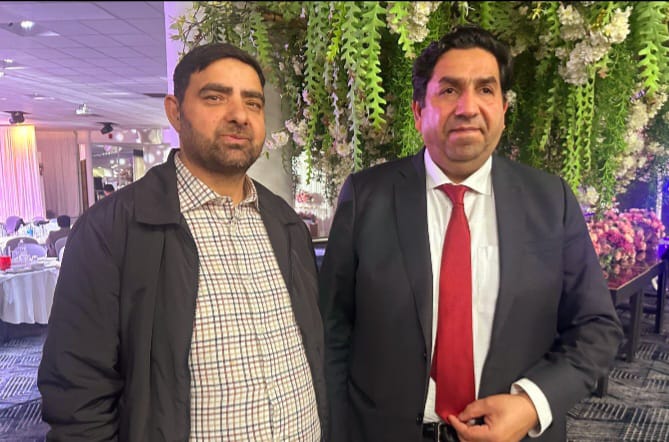


Lucy Powell Labour MP for Manchester Central, Abid Chohan, Consulate general of Pakistan in Manchester Imtiaz Faroz Gondal and Ijaz Ahmed Malhi at the Iftar dinner hosted by Haroon Afzal Khatana President of Jehlum Forum UK
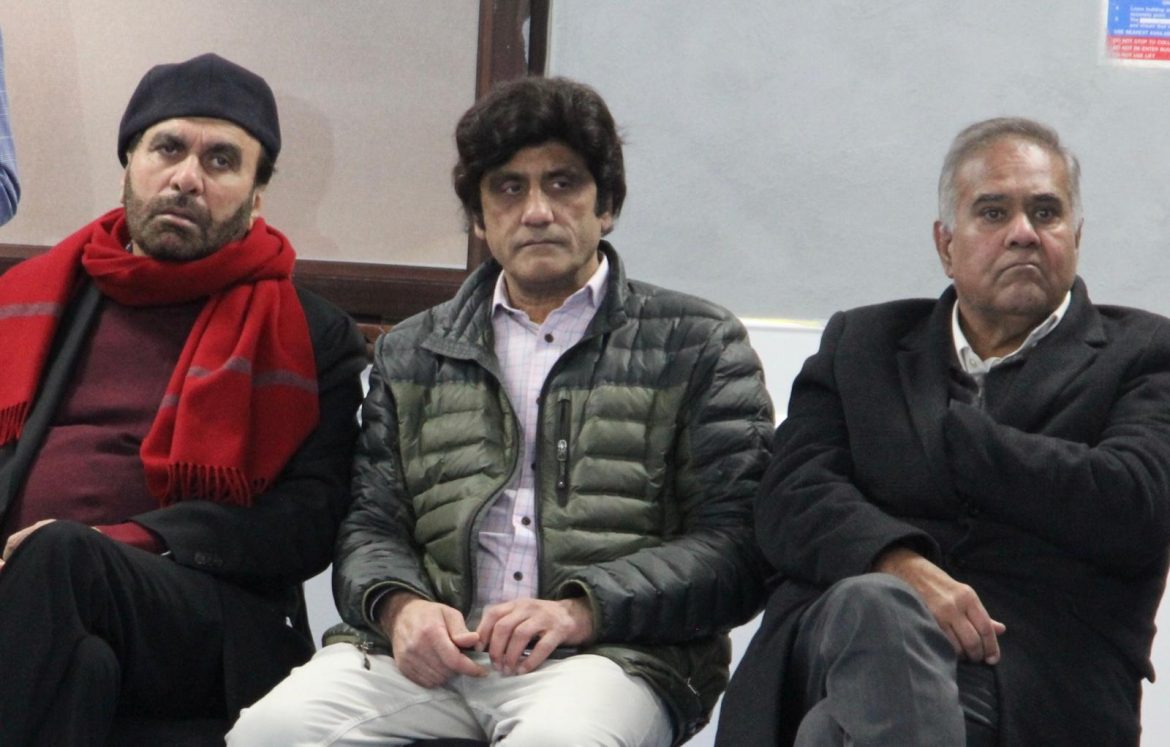
Funeral of the wife of “Pakistan Muslim League UK’s” Information Secretary Iqbal Sandhu was performed at Hounslow Jamia Mosque Hounslow London. A large number of deceased relatives and friends attended the event to pay their respects. Here are some pictures from the event.







The widening war between the United States and Iran has moved with alarming speed from strategic rivalry to open conflict. What began as mounting tensions over Iran’s nuclear ambitions has now erupted into a regional confrontation whose consequences extend far beyond the Middle East. The joint U.S.–Israeli strikes launched under Operation Lion’s Roar marked a decisive and dangerous turning point. The assassination of Iran’s Supreme Leader, Ali Khamenei, transformed a long-running geopolitical standoff into an existential struggle for Tehran’s leadership and national identity. Retaliatory missile attacks, proxy warfare, and strikes on civilian and energy infrastructure have since drawn multiple states into the conflict, threatening a broader regional war. The human cost is already mounting. American casualties have been confirmed for the first time, while hundreds of Iranian civilians have reportedly died amid extensive bombardment. Missile exchanges have struck cities, embassies, and oil facilities across the Gulf, underscoring an uncomfortable truth: modern wars rarely remain confined to military targets. Supporters of Washington’s campaign argue that decisive force was necessary to prevent Iran from becoming a nuclear-armed state and to dismantle its regional military network. Yet history offers little reassurance that regime-targeting air campaigns produce stability. Iraq, Libya, and Afghanistan stand as reminders that military victory does not automatically yield political order. Equally troubling is the erosion of diplomacy. Only weeks before hostilities began, indirect negotiations suggested that a nuclear agreement remained achievable. Iranian officials had publicly maintained that diplomacy not military action offered the only durable solution. The collapse of those talks now raises the question of whether war was inevitable or merely chosen. The risks extend beyond battlefield casualties. The unfolding crisis in the Strait of Hormuz threatens global energy supplies, financial markets, and already fragile economies. Shipping disruptions and attacks on oil infrastructure demonstrate how swiftly regional warfare can become a global economic emergency. Perhaps most concerning is the logic of escalation itself. Iran’s network of allied militias has already opened additional fronts, including renewed fighting involving Hezbollah and Israel. Each retaliatory strike narrows political space for restraint while increasing the probability of miscalculation a missile landing in the wrong capital, a naval clash spiralling out of control, or another state drawn unwillingly into combat. Wars often begin with promises of speed and precision. American leaders suggest the campaign could last only weeks. But conflicts rooted in ideology, national pride, and regional rivalry rarely obey timelines set in press briefings. Public scepticism within the United States itself reflects a growing fear that another prolonged Middle Eastern war may already be underway. The central lesson of this moment is stark: military power can destroy capabilities, but it cannot easily rebuild legitimacy or trust. Without an urgent return to diplomacy, the Iran–U.S. war risks becoming not a decisive confrontation, but a generational conflict one that destabilises an entire region while solving none of the underlying disputes. The world does not merely watch this war. It will live with its consequences.
The NHS is facing a deep, ongoing crisis characterised by record-high waiting lists, severe staffing shortages, and dangerous overcrowding, with thousands of patients waiting over 24 hours in A&E and many treated in corridors. The system is overwhelmed by, among other factors, high numbers of delayed discharges due to lack of social care. Patients are experiencing extreme delays in A&E, with some waiting over 24 hours for admission. “Corridor care” has become common, where patients are treated in hallways due to a lack of available beds. The NHS is grappling with significant understaffing across various roles, including nurses, doctors, and ambulance workers, leading to burnout and, in some cases, industrial action. Routine operations and specialist appointments are facing long delays, sometimes measuring in years. A lack of capacity in social care is causing a high number of delayed discharges from hospitals, preventing new patients from being admitted.

Hamid Mir
Mr President, why did you start this war? This is the question that the New York Times asked President Trump in its editorial on February 28, 2026. A few hours before another attack on Iran by the United States and Israel, the world media was broadcasting the news that the talks between the United States and Iran in Geneva were moving in the right direction thanks to Oman’s efforts. Trump also used these talks for deception and attacked Iran during the talks. As a result of this attack, the fire of a new war has spread throughout the Middle East. After the end of the life of Iran’s Supreme Leader Ayatollah Ali Khamenei, the flames of this war will flare up even more. Apparently, Trump’s goal is to change the regime in Iran, but will regime change bring stability to Iran?
Trump and Netanyahu have together brought the world to the brink of a third world war. This little guy, in his column titled “The only danger ahead” in the Jang daily on January 1, 2026, expressed his fear that the world is moving towards a third world war and to avoid this war, everyone will have to come together to stop Netanyahu in 2026. Only Trump could stop Netanyahu, but unfortunately, he became his partner and is seeking praise by announcing the death of Khamenei. Will this war be limited to a change of regime in Iran? Why is the New York Times asking the US President the reason for starting the war? Didn’t the editorial board of the New York Times listen to the interview of US Ambassador to Israel Mike Huckabee in which he openly supported Greater Israel? Before the start of this war, two important events occurred that are very closely related to the Greater Israel project. The first event was the visit of Indian Prime Minister Narendra Modi to Israel. Israeli Prime Minister Netanyahu said a day before the start of the visit that he was going to form a broader regional alliance with India against Shia extremists and Sunni extremists.
This claim seemed to indicate a determination that Israel and India would work together to divide Muslims on sectarian lines and commit aggression against them. The second important event was that as soon as Modi arrived in Israel, the Afghan Taliban carried out 51 attacks on the border with Pakistan.
Pakistan responded to these attacks with lightning speed and for the first time made Afghanistan realize that it had provoked a nuclear power. I am not forcibly finding any connection between these attacks on Pakistan and Modi’s visit to Israel. All I know is that the current Indian Ambassador to Israel, JP Singh, went to Kabul in November 2024 and met with Taliban Foreign Minister Amir Khan Muttaqi and other important Afghan leaders. JP Singh has also served in Islamabad. He played a very important role in bringing the Afghan Taliban closer to Delhi. Whether the Afghan brothers believe it or not, everyone can see that India is using them against Pakistan. On the night between February 26 and 27, when the Afghan Taliban attacked Pakistan, we cannot ignore Modi’s presence in Israel. Who knows that those who advised the Taliban to attack Pakistan were actually conspiring to make Muslims fight Muslims.
Pakistan is very aware of the partnership between India and Israel and there was a fear that this partnership could lead to an aggression against Pakistan by both of them, which could directly or indirectly involve the Afghan Taliban, so before such a time came, they were responded to by invading Afghanistan. Now let’s move on to the new war started by Trump and Netanyahu, which is moving from the Middle East to South Asia. When the US Ambassador to Israel, Mike Huckabee, supported Greater Israel, I was reminded of the 2006 Lebanon-Israel war. During that war, I spent several weeks in Lebanon and Syria – at that time, the British journalist Robert Fisk was in Beirut and I listened very carefully to the words of Robert Fisk, a journalist who had come to Beirut to report on the war from all over the world. I heard the details of the Greater Israel plan from Fisk’s language for the first time. Fisk used to say that the Zionists seek justification for this project from the Bible and the Torah, but in reality, it is a plan to establish political and economic dominance over the world. It was here that I heard about an American Jew, Colonel Ralph Peters, who in 2006 published a new Middle East map in the US Armed Forces Journal, in which the borders of Syria, Jordan, Lebanon, Egypt and Iraq were changed, as well as Saudi Arabia.
Ralph Peters’ map also included independent Kurdistan and independent Balochistan. To create an independent Kurdistan, it was necessary to break Iraq and Turkey, and to create an independent Balochistan, the Baloch majority areas of Iran, Pakistan and Afghanistan had to be connected to each other. Colonel Ralph Peters wrote many articles based on this map. Then he also wrote a book called Never Quit the Fight. Colonel Ralph Peters declared Pakistan and Saudi Arabia to be unreal states. He added some areas of Saudi Arabia to Jordan. Many areas of Iran were given to Azerbaijan and some areas were included in independent Balochistan. Colonel Ralph Peters called this new map the borders of blood. Behind these borders of blood was actually the plan of Greater Israel, which Americans like Mike Huckabee are openly supporting today. The question arises, what is Modi’s interest in Greater Israel? Modi is actually the enemy of Muslims. Every plan to oppress Muslims and divide them is the voice of his heart. He considers Greater Israel and Akhand Bharat to be a link in the same chain. The Modi government has put up a map of Akhand Bharat in the Indian Parliament, under which it wants to include some areas of Pakistan, Afghanistan, Bangladesh, Nepal, Sri Lanka, Maldives and Tibet in India. The Afghan Taliban have not condemned Akhand Bharat till date or they are not yet aware of it. Anyway, Israel and India actually want to become two new world powers. For this purpose, the Israeli Zionist lobby is using US President Trump. Many Jewish intellectuals in America are strongly opposed to the Greater Israel plan because they know that it is the same plan that Theodor Herzl made in 1904, under which he wanted to make the Zionist movement a new world power. A new world power that also wanted to dominate America. The war that Trump has started is actually a war against America. Israel has already become a symbol of hatred around the world. Trump is also making America a symbol of hatred. Those rulers of the Muslim world who were very happy to hear Trump praise them will soon pray that Trump never praises them again because Trump is now becoming a symbol of hatred in America as well. Those who nominated this symbol of hatred for the Nobel Peace Prize will soon regret why we declared the merchant of death a messenger of peace.

Wajahat Ali Khan:
At the beginning of 2026, not just Iran but about fourteen or fifteen Muslim countries have become battlefield, also world finds itself trapped in an era, many analysts now describe as the most conflict-ridden period since the end of the Cold War. Wars are no longer isolated events; they overlap geographically, politically, and ideologically. Yet one uncomfortable reality stands out when global conflict zones are examined closely: a significant number of Muslim-majority countries are either directly at war or deeply entangled in armed conflict.
The question is often asked in political discussions and public debates: how many Muslim countries are currently at war? The answer depends on how “war” is defined whether limited to declared interstate wars or expanded to include civil wars, insurgencies, and prolonged armed conflicts. Based on ongoing conflict trackers, humanitarian reports, and current news developments, between 10 and 14 Muslim-majority countries are presently experiencing active warfare or large-scale armed conflict in 2026. One of the most alarming developments in early 2026 is the escalation between Pakistan and Afghanistan, where cross-border clashes rapidly evolved into what Pakistani officials openly described as an “open war.” Airstrikes, artillery exchanges, and military offensives have taken place across major cities and border regions, raising fears of a prolonged regional conflict. Civilian casualties and troop losses continue to mount as diplomatic mediation struggles to gain traction.
Interstate wars between Muslim neighbours were once rare in recent decades. Their return signals not only political breakdown but also the erosion of regional security mechanisms that previously prevented escalation. Sudan today represents one of the world’s worst humanitarian catastrophes. Since 2023, fighting between the national army and the Rapid Support Forces has devastated cities, displaced millions, and created famine-like conditions. International observers warn that atrocities committed during the conflict bear the “hallmarks of genocide.
Similarly, Syria’s civil war, now entering its second decade, continues to produce instability despite reduced global attention. Millions remain displaced, infrastructure lies shattered, and armed factions still control fragmented territories. In Yemen, years of conflict between government forces and Houthi fighters have entrenched one of the world’s longest humanitarian emergencies, with no decisive political settlement in sight. (The National Interest) These wars demonstrate a grim modern reality.
No discussion of conflict in Muslim regions can ignore the ongoing violence surrounding Palestine, particularly Gaza. Although intensity fluctuates, hostilities and military tensions remain central to Middle Eastern instability and continue to influence wider regional politics. Analysts warn that unresolved confrontation risks reigniting broader regional war involving neighbouring actors. For many across the Muslim world, Palestine remains not only a geopolitical crisis but also a symbolic one shaping public opinion, diplomacy, and political identity far beyond its borders. Less visible to global audiences but equally deadly are conflicts spreading across the Sahel region of Africa. Muslim-majority or heavily Muslim societies such as Mali, Niger, Burkina Faso, and parts of Nigeria face persistent insurgencies involving militant organizations, military juntas, and foreign security interventions.
Elsewhere, Libya remains divided between rival political and military authorities more than a decade after the fall of Muammar Gaddafi. Armed factions continue to compete for territorial control and oil wealth. Somalia, meanwhile, continues its long battle against insurgent groups challenging state authority, keeping the country in a condition of chronic conflict despite international peacekeeping efforts. Together, these cases highlight a broader pattern: many Muslim-majority states are not experiencing short wars but prolonged instability where peace agreements repeatedly fail.
When aggregated, the principal Muslim-majority countries currently experiencing active war or major armed conflict include, Iran, Lebanon, Gaza, Bahrain, UAE, Afghanistan, Pakistan, Palestine, Syria, Yemen, Sudan, Libya, Somalia, Mali, Niger. The explanation cannot be reduced to religion, culture, or geography alone. Experts increasingly point to overlapping structural causes. Weak state institutions unable to manage political transitions. External power competition, turning local disputes into proxy wars. Resource politics, particularly oil, minerals, and strategic trade routes. Demographic pressure, with rapidly growing youth populations facing unemployment. Post-colonial borders, which often ignored ethnic and tribal realities.
Humanitarian agencies warn that a small group of conflict-affected countries many of them Muslim-majority now account for an overwhelming share of global humanitarian need. Entire generations in parts of the Muslim world have grown up knowing nothing but checkpoints, displacement camps, drone strikes, or militia rule. War has shifted from emergency to environment from exception to routine. Meanwhile, global attention moves quickly from one crisis to another. Conflicts that continue for years become politically inconvenient and gradually invisible.
It is essential to resist simplistic conclusions. These wars are not proof of inherent instability within Muslim societies. Rather, they reveal how fragile governance, global rivalry, economic inequality, and unresolved historical grievances intersect most violently in already vulnerable regions.
As 2026 unfolds, the central question is no longer how many Muslim countries are at war. The more urgent question is whether the international system possesses either the will or the imagination to prevent today’s conflicts from becoming permanent features of tomorrow’s world. Because history shows one undeniable truth: wars that persist long enough eventually redefine entire civilisations.

Sajjad Azhar
The escalating tensions between Iran and the United States have revived a long-standing intellectual debate: is the confrontation merely a geopolitical struggle, or does it reflect a deeper clash of civilizations?
British historian Peter Frankopan, a professor of global history at Oxford University, has described the attack on Iran as potentially the third major turning point in modern global history, after the fall of the Berlin Wall and the attacks on the World Trade Center. Such interpretations indicate that the current crisis is being viewed not only through a political or military lens but also through a broader historical perspective.
Recently, US Defense Secretary Pete Hegseth remarked that “a fanatical regime like Iran, which believes in religious delusions, cannot be allowed to possess nuclear weapons.” US Secretary of State Marco Rubio has also argued that “the old world order is over.” These statements raise an important question: what kind of new global order is the United States attempting to shape?
This debate echoes the theory presented in 1993 by political scientist Samuel P. Huntington in his famous thesis, “The Clash of Civilizations.” Huntington argued that future global conflicts would be driven less by ideology or economics and more by cultural and civilizational differences. Observers now wonder whether the Iran–US confrontation reflects precisely such a civilizational divide.
Iranian officials strongly reject this narrative. Ali Larijani, secretary of Iran’s Supreme National Security Council, recently declared that Iran would defend its “6,000-year-old civilization” and that the country had prepared for a long conflict if necessary.
Some analysts therefore interpret the standoff not merely as a dispute between two states but as a confrontation between two distinct historical traditions and political visions. On one side stands Iran, a country that historically emerged as a global power more than once and ruled large parts of the known world for centuries. On the other stands the United States, the dominant superpower of the past century and the leading representative of the modern Western political and economic order.
Iran: A Civilization That Became a Superpower Twice
Iran is among the regions where evidence of early human settlement dates back tens of thousands of years. Historically, the Iranian plateau became a major center of civilization with the arrival of Indo-Iranian tribes around 2000 BCE.
The Achaemenid Empire, founded in the 6th century BCE by Cyrus the Great, is often regarded as the first great Persian superpower. At its peak, the empire stretched from Anatolia in the west to the Indus River in the east, covering nearly 7.5 million square kilometers. It established one of the world’s earliest administrative systems and a remarkably organized imperial structure.
After the conquest of Persia by Alexander the Great in 330 BCE, Persian power eventually revived under the Parthian Empire, which rebelled against Greek rule and re-established control across much of the region.
Later, the Sassanian Empire (224–651 CE) marked another golden age of Persian power. During this era, Persia and the Roman Empire were the two dominant global forces. The Sassanians controlled territories stretching from the Caucasus to the Indus River and presided over the peak of Zoroastrian influence.
The empire eventually collapsed after the Arab conquest following the Battle of al-Qadisiyyah in 636 CE. In later centuries, Iran passed through various dynasties including the Seljuks, the Khwarazmians, and the Mongol rulers.
The Safavid Empire (1501–1722) restored Iran as a powerful regional state and established Shiite Islam as the state religion. This period was followed by the rule of Nader Shah, the Qajar dynasty, and finally the Pahlavi monarchy, which lasted from 1925 until the Iranian Revolution of 1979.
Comparing the Civilizational Trajectories of Iran and the United States
If Iran’s history stretches back several millennia, the United States is a relatively young nation. The US emerged as a sovereign state following the Declaration of Independence in 1776. Within little more than a century, it began rising as a global power, eventually becoming the world’s dominant superpower after the two World Wars.
The American model—built on secular governance, institutional checks and balances, capitalism, human rights, and democratic ideals—has shaped much of the modern global order.
Iran’s contemporary political structure, however, emerged from the 1979 Islamic Revolution led by Ayatollah Ruhollah Khomeini. The Iranian state is founded on the doctrine of Wilayat-e-Faqih (Guardianship of the Islamic Jurist) and a political philosophy that challenges Western liberal capitalism and American influence in the Middle East.
Thus, the ideological confrontation today is not strictly between Iran’s five-thousand-year-old civilization and America’s modern one. Rather, it is largely between the revolutionary Islamic political system established in Iran in 1979 and the liberal democratic order championed by the United States.
Clash of Civilizations or Strategic Interests?
Before the Islamic Revolution, Iran was one of Washington’s closest allies in the Middle East. After 1979, however, relations deteriorated sharply and have remained tense ever since.
Today, Israel has become the United States’ most trusted ally in the region. Many analysts argue that American policy in the Middle East is deeply intertwined with Israel’s strategic interests. Yet historically, relations between Iran and Jewish communities were often positive.
When Cyrus the Great conquered Babylon in 539 BCE, he allowed the Jewish exiles to return to Jerusalem and rebuild their temple. Because of this act, Cyrus is described in Hebrew scriptures as “the Lord’s anointed,” making him one of the few non-Jewish figures to receive such recognition.
Even during later Persian and Islamic eras, Jewish communities generally enjoyed religious freedoms in Iran. After the establishment of Israel in 1948, Iran quietly maintained diplomatic and trade relations with the new state.
However, after the 1979 revolution, Iran declared Israel an illegitimate state and began supporting groups opposed to Israeli influence in the region. This shift fundamentally transformed Middle Eastern geopolitics and laid the groundwork for the present confrontation.
For this reason, many scholars argue that the current crisis cannot be explained solely as a clash of civilizations. While Iran represents one of the world’s oldest cultural traditions, the roots of its present conflict with the United States and Israel lie primarily in the ideological and geopolitical consequences of the Islamic Revolution.
Whether the tensions will evolve into a broader civilizational conflict or remain a contest of strategic interests remains one of the most critical questions shaping the future of the Middle East.
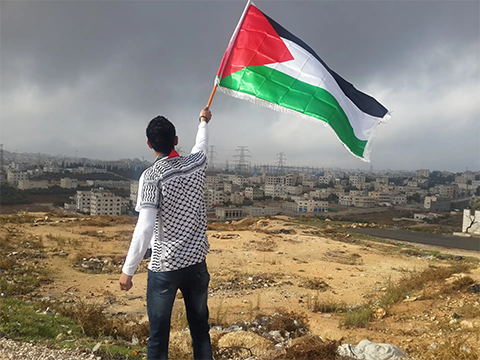
Analysis Wajahat Ali Khan:
The future of Palestine remains one of the most complex and consequential questions in global politics. More than a century after the fall of the Ottoman Empire and decades after the start of the modern Israeli Palestinian conflict, the issue remains unresolved shaped by war, diplomacy, regional power struggles, and shifting international alliances. The modern conflict traces back to the early 20th century under the British Mandate. The creation of the state of Israel in 1948 led to war with neighbouring Arab states and the displacement of hundreds of thousands of Palestinians an event Palestinians refer to as the Nakba (“catastrophe”). Since the 1967 Six-Day War, Israel has occupied the West Bank and East Jerusalem, territories Palestinians seek for a future state.
Efforts to resolve the conflict have included the Oslo Accords in the 1990s, which created the Palestinian Authority and aimed to pave the way for a two-state solution. However, final-status issues borders, refugees, settlements, Jerusalem, and security were never resolved. The Palestinian Authority, which administers parts of the West Bank. This internal division complicates diplomatic negotiations and weakens unified political representation. Meanwhile, Israeli settlement expansion in the West Bank continues to alter facts on the ground, making territorial compromise more difficult.
Regional dynamics also play a role. Arab states such as the United Arab Emirates and Bahrain normalized relations with Israel under the Abraham Accords, shifting regional priorities and reducing collective Arab diplomatic pressure cantered solely on Palestinian statehood. The internationally endorsed framework envisions an independent Palestinian state alongside Israel, roughly based on pre-1967 borders with land swaps. While still supported by many global actors, including the United Nations, critics argue that expanding settlements and political fragmentation make it increasingly difficult to implement. Some analysts argue that the situation is drifting toward a single state between the Jordan River and the Mediterranean Sea, where Israelis and Palestinians live under unequal legal and political systems. This scenario raises profound questions about democracy, citizenship, and rights.
The most likely short-term outcome may be continued instability: periodic escalations of violence, humanitarian crises in Gaza, and limited diplomatic breakthroughs. In Gaza, repeated conflicts have devastated infrastructure, while restrictions on movement and trade have limited economic growth. In the West Bank, economic dependency and mobility restrictions persist. International aid remains crucial but insufficient for long-term stability. A sustainable future will depend not only on political agreements but also on rebuilding trust, strengthening institutions, promoting economic opportunity, and addressing security concerns on both sides.
Global powers including the United States, the European Union, and regional actors continue to influence developments through diplomacy, aid, and military support. However, geopolitical rivalries often overshadow sustained peace efforts. The future of Palestine is uncertain and deeply intertwined with Israeli politics, regional realignments, and global diplomacy. While the vision of peaceful coexistence remains widely endorsed, political fragmentation, entrenched mistrust, and shifting regional priorities complicate progress. Ultimately, the trajectory will depend on leadership decisions, grassroots movements, regional stability, and international engagement. For now, Palestine’s future stands at a crossroads shaped as much by political will as by historical grievance.
Bureau report:
Manchester:
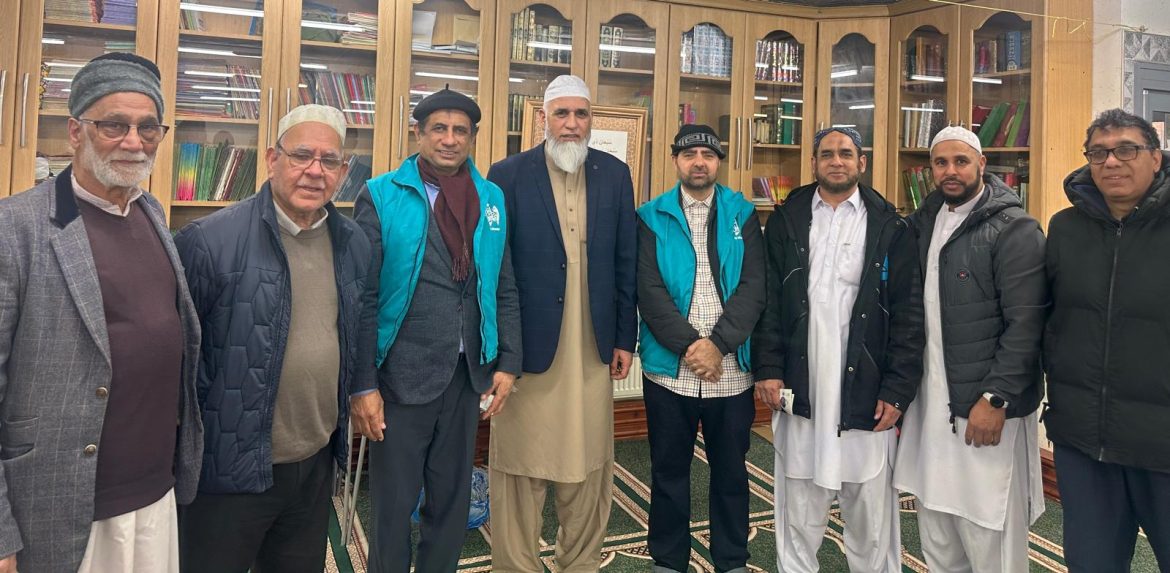
Al Mustafa Welfare Trust collected funds from Wythenshawe Mosque during the Taraweeh prayer. Local people donated generously for food aid for Yemen, Sudan and Gaza. Mosque trustee Yusuf Mirza, admin Zain Sarfraz and volunteers also supported Al Mustafa on the occasion.

News desk:
The UK government will stop issuing study visas to people from Afghanistan, Cameroon, Myanmar and Sudan from this month, Home Secretary Shabana Mahmood has said, as well as stopping skilled work visas to Afghans. The Home Office said the action was being taken due to what it said was widespread visa abuse. According to official figures, people from the four countries were the most likely to make an asylum claim after originally coming to the UK to study. “The government is clamping down on visa abuse so the UK can maintain its ability and proud tradition of helping those genuinely in need,” a government spokesperson added.
In its release, the government said asylum claims from people who had originally travelled to the UK legally – to do something like studying – had more than tripled between 2021 and 2025. Home Office figures showed that people claiming asylum off the back of a study visa make up 13% of all claims currently in the system.
Shabana Mahmood said she was “taking the unprecedented decision to refuse visas for those nationals seeking to exploit our generosity”. I will restore order and control to our borders.” The Home Office said a higher proportion of people than average from the four specified country cited destitution as part of their asylum claim, and there were 16,000 people from the four countries currently being supported. About 95% of Afghans who arrived in the UK on a study visa then applied for asylum since 2021, while applications by students from Myanmar increased 16-fold and claims by students from Cameroon and Sudan more than quadrupled.

By Ramsha Shahid:
London:
The housing crisis in England has emerged as one of the most significant social and legal challenges confronting policymakers in recent decades. Escalating rental prices, limited housing supply and deteriorating housing conditions have placed increasing pressure on both tenants and landlords. The private rented sector now accommodates approximately one fifth of households in England, making it a central component of the country’s housing system.¹
In recent years, the regulatory framework governing residential tenancies has undergone substantial transformation. Legislative developments including the expansion of statutory duties relating to fitness for human habitation, the implementation of Awaab’s Law and the proposed abolition of section 21 “no-fault” evictions have fundamentally altered the balance between landlord rights and tenant protection.
These reforms aim to enhance housing standards and provide greater security of tenure for tenants. However, they also raise important policy questions concerning the long-term sustainability of the private rented sector and the potential implications for housing supply.
This article examines the contemporary housing crisis in England by analysing the structural drivers of the housing shortage, the legal regulation of housing conditions and disrepair, and the evolving framework governing eviction proceedings in light of the proposed abolition of section 21 of the Housing Act 1988.
The housing crisis in England is not merely an economic phenomenon but a structural legal problem affecting the operation of housing law and the administration of justice. Housing construction has consistently failed to keep pace with population growth, urbanisation and household formation. As a consequence, demand for rental accommodation has increased significantly, contributing to sustained upward pressure on rents.
Recent data illustrates the scale of these pressures. Average private rents across the United Kingdom reached approximately £1,368 per month in late 2025, reflecting continued growth in rental costs across England, Wales and Scotland.² In England alone, average rents have exceeded £1,400 per month, demonstrating the continuing upward trajectory of housing costs in many regions.³
Housing affordability has deteriorated correspondingly. Analysis by the Office for National Statistics indicates that private renters in England now spend approximately 36.3 per cent of their household income on rent, significantly above the widely accepted affordability threshold of 30 per cent.⁴ In London, the financial burden is even more pronounced, with rental costs consuming nearly half of average disposable income in certain boroughs.⁵
The social consequences of these pressures are increasingly evident. Official figures indicate that approximately 176,000 children are currently living in temporary accommodation in England, representing one of the highest recorded levels.⁶ Local authorities are also facing escalating costs associated with homelessness, with projections suggesting that temporary accommodation expenditure may reach £4 billion annually by 2030.⁷
While these statistics illustrate the scale of the crisis, they also reveal deeper structural problems within the housing system. From a legal perspective, the housing shortage has intensified litigation within the private rented sector. Possession claims, housing disrepair proceedings and homelessness challenges have become increasingly common, placing additional strain on the judicial system and local authorities responsible for housing enforcement.
Similar housing pressures have been observed in other European jurisdictions where private rental markets have expanded rapidly. Countries such as Germany and the Netherlands have addressed comparable challenges through stronger rent regulation and increased social housing provision. The absence of similar structural measures in England has placed greater reliance on legal regulation of landlord-tenant relationships rather than systemic housing supply reform.
Moreover, the shortage of available housing inevitably alters the bargaining power between landlords and tenants. In a market where demand significantly exceeds supply, tenants may be reluctant to assert legal rights relating to disrepair or housing standards for fear of losing their accommodation. This reality complicates the assumption that statutory protections alone are sufficient to safeguard tenants in practice.
Alongside issues of affordability, the condition of rented housing has become an increasingly prominent concern. Reports of damp, mould and structural disrepair have generated significant public and legal scrutiny, particularly in relation to vulnerable tenants.
Historically, the legal obligations imposed upon landlords in relation to property condition were governed primarily by section 11 of the Landlord and Tenant Act 1985, which imposes a statutory duty upon landlords to maintain the structure and exterior of residential premises together with certain essential installations including heating, water supply and sanitation.⁸
However, the traditional disrepair regime focuses primarily on repair obligations rather than broader issues concerning the overall suitability of a dwelling for habitation. In response to these limitations, Parliament enacted the Homes (Fitness for Human Habitation) Act 2018, which inserted sections 9A–9C into the Landlord and Tenant Act 1985.
These provisions imply a covenant into residential tenancies that a dwelling must be fit for human habitation at the commencement of the tenancy and remain so throughout its duration.⁹
Section 10 of the Act provides guidance on the matters relevant in determining whether a property is fit for habitation, including structural stability, ventilation, natural lighting, drainage, sanitation and the presence of hazards affecting health and safety.¹⁰ Courts typically assess these factors with reference to the Housing Health and Safety Rating System (HHSRS) introduced under the Housing Act 2004.¹¹
Recent legislative developments have further strengthened this regulatory framework. Following the death of two-year-old Awaab Ishak in 2020 due to prolonged exposure to mould in social housing, Parliament enacted provisions commonly referred to as Awaab’s Law through the Social Housing (Regulation) Act 2023.¹²
While these reforms represent important progress in addressing housing conditions, the practical enforcement of such rights remains complex. Tenants often rely upon civil litigation to enforce statutory duties, which may require expert evidence, inspection reports and prolonged court proceedings. This creates an enforcement gap between the existence of legal rights and the practical ability of tenants to secure compliance.
While tenant protections have expanded significantly, landlords have simultaneously faced increasing regulatory and financial pressures.
Over the past decade, the procedural requirements governing residential tenancies have expanded considerably. These include obligations relating to tenancy deposit protection, prescribed information requirements, gas safety certification, energy performance certification and licensing schemes under local authority regulation.
Failure to comply with these procedural requirements may have significant legal consequences. For example, non-compliance with deposit protection rules may prevent a landlord from serving a valid section 21 notice. Similarly, failures relating to gas safety certification may create obstacles to possession proceedings.
For smaller landlords, many of whom manage properties without professional agents, navigating this expanding regulatory framework can be challenging. While enhanced regulation may be justified in order to protect tenants, policymakers must also consider whether increasing regulatory complexity may inadvertently discourage participation in the rental market, thereby reducing available housing supply.
Among the most controversial reforms in recent housing policy is the proposed abolition of section 21 “no-fault” evictions under the Housing Act 1988.
Section 21 historically enabled landlords to recover possession of a property at the end of an assured shorthold tenancy without establishing fault on the part of the tenant, provided that statutory notice requirements were satisfied.¹⁴
Supporters of the reform argue that section 21 contributed to insecurity within the private rented sector by allowing landlords to terminate tenancies without providing a substantive reason. Government statistics indicate that more than 30,000 section 21 eviction notices were issued in England within a single year, while over 11,000 households were ultimately removed from their homes by bailiffs following such notices.¹⁵
However, the abolition of section 21 raises significant practical concerns regarding the operation of possession proceedings. In the absence of a no-fault route to possession, landlords will be required to rely primarily upon section 8 of the Housing Act 1988, which requires landlords to establish statutory grounds for possession.
Section 8 claims often involve complex evidential disputes. Rent arrears claims require detailed rent schedules and payment histories, while antisocial behaviour claims may depend upon witness testimony from neighbours or managing agents.
The proposed reforms also introduce new statutory grounds for possession, including circumstances where the landlord intends to sell the property. While this ground is intended to replace some of the flexibility previously provided by section 21, its practical application may be contentious. Courts will likely require evidence demonstrating a genuine intention to sell, and disputes may arise where tenants argue that such claims are merely a pretext for recovering possession.
Moreover, the county court system already faces substantial delays in housing litigation. If possession proceedings increasingly rely upon fact-sensitive section 8 claims, the number of contested hearings may increase significantly, potentially exacerbating existing backlogs.
The transition from section 21 to a possession regime based primarily on section 8 will significantly alter the litigation landscape for housing disputes.
Under the existing framework, section 21 provided a relatively predictable route to possession provided that landlords complied with statutory requirements. Its abolition means that landlords must increasingly rely upon statutory grounds requiring factual evidence and judicial determination.
In practice, this may lead to a greater number of contested possession claims. Grounds such as antisocial behaviour, persistent rent arrears or the landlord’s intention to sell often involve evidential disputes that must be resolved through court proceedings.
This development may place additional pressure on the already overburdened county court system, raising questions regarding the capacity of courts to efficiently adjudicate an increasing volume of housing litigation.
The interaction between housing disrepair claims and possession proceedings is particularly significant in practice. Tenants facing possession proceedings frequently raise disrepair counterclaims, particularly where alleged housing defects have contributed to rent arrears.
Such counterclaims can significantly complicate possession proceedings. Courts must consider both the landlord’s entitlement to possession and the tenant’s allegations of statutory breach. Where disrepair is established, tenants may be entitled to damages or set-off against rent arrears.
For practitioners, this highlights the importance of identifying potential disrepair issues at an early stage in possession litigation.
Alongside statutory reform, the development of landlord and tenant law in England has also been significantly shaped by judicial interpretation of the regulatory framework governing residential tenancies. Appellate case law has clarified the consequences of non-compliance with procedural requirements relating to tenancy deposits and safety certification.
One of the most influential decisions in this area is Superstrike Ltd v Rodrigues. In that case, the Court of Appeal considered whether the statutory periodic tenancy arising under section 5 of the Housing Act 1988 following the expiry of a fixed-term assured shorthold tenancy constituted a new tenancy for the purposes of the tenancy deposit regime introduced by the Housing Act 2004. The court concluded that the statutory periodic tenancy did in fact constitute a new tenancy, with the result that landlords were required to comply afresh with the deposit protection requirements, including the service of prescribed information.¹⁹
The practical significance of Superstrike lies in the court’s recognition that statutory compliance requirements operate strictly within the framework of housing legislation. The decision had substantial implications for landlords who had assumed that deposits protected during the initial fixed term remained compliant when the tenancy continued on a periodic basis. In practice, the case led to a wave of litigation concerning defective deposit protection and the validity of section 21 notices, highlighting the extent to which procedural technicalities may determine the outcome of possession proceedings.
A similarly important clarification was provided by the Court of Appeal in Trecarrell House Ltd v Rouncefield.²⁰ The court was required to determine whether a landlord’s failure to provide a gas safety certificate prior to the tenant taking occupation permanently invalidated the landlord’s ability to rely upon section 21 of the Housing Act 1988. The majority of the Court of Appeal concluded that although compliance with the Gas Safety (Installation and Use) Regulations 1998 is mandatory, late service of the certificate does not permanently bar reliance upon section 21, provided that the certificate is ultimately served before the notice seeking possession is issued.
The decision in Trecarrell sought to balance strict regulatory compliance with practical fairness. Earlier county court decisions had suggested that failure to provide a gas safety certificate before occupation created an irreversible defect preventing the use of section 21 entirely. Such an approach risked producing disproportionate consequences for relatively minor procedural errors. The Court of Appeal therefore adopted a more pragmatic interpretation, permitting landlords to remedy the defect through subsequent compliance.
Taken together, these decisions demonstrate the increasingly technical nature of housing litigation in England. Possession claims are now frequently determined not only by the substantive relationship between landlord and tenant but also by strict adherence to an expanding network of procedural obligations imposed by housing legislation.
From a practitioner’s perspective, these cases underscore the importance of meticulous statutory compliance when managing residential tenancies. Even relatively minor procedural defects such as failures in deposit protection or safety certification may delay or invalidate possession proceedings. At the same time, the courts have shown a willingness to interpret regulatory provisions pragmatically where rigid enforcement would produce disproportionate outcomes.
Consequently, modern housing litigation increasingly requires careful navigation of both substantive landlord-tenant rights and the procedural compliance framework governing possession claims.
The housing crisis in England represents a complex intersection of economic pressures, regulatory reform and social policy considerations. While legislative developments such as Awaab’s Law and the proposed abolition of section 21 aim to strengthen tenant protections, they also raise significant questions regarding the practical operation of housing law within the court system.
The Renters’ Rights Bill represents one of the most ambitious attempts to reform the private rented sector in recent decades. However, its success will depend not only on legislative change but also on the capacity of courts, regulators and local authorities to enforce the new framework effectively.
Looking forward, housing litigation is likely to become increasingly complex and contested. Practitioners may encounter a growing number of disputes involving possession proceedings, disrepair claims and challenges relating to newly introduced statutory grounds for possession.
A balanced policy approach is therefore essential. Strengthening tenant protections must be accompanied by meaningful investment in housing supply, improved enforcement mechanisms and adequate resources for the courts.
Without addressing these structural issues, legal reform alone may prove insufficient to resolve the underlying causes of England’s housing crisis. It is therefore likely that the coming years will see an increase in housing litigation involving contested possession claims, disrepair counterclaims and judicial scrutiny of the new statutory grounds introduced under the Renters’ Rights reforms.
