Bureau Report:
London:
Nuclear expert Joe Cirincione has said that I think the US-Iran war was not started to change the Iranian regime, but to bring about regime change in the US. Joe Cirincione previously served as vice president for national security and international policy at the Centre for American Progress in Washington, DC. For eight years, he was the director for non-proliferation at the Carnegie Endowment for International Peace, where he chaired and organised five annual Carnegie International Non-Proliferation Conferences. The 2005 conference included Cirincione’s presentation, “A Brief History of the Atomic Age.
He worked for nine years in the U.S. House of Representatives, beginning in 1985 as a professional staff member of the Committee on Armed Services. He also served as a staff member of the Committee on Government Operations and served as staff director of the bipartisan Military Reform Caucus.
London Post
By Wajahat Ali Khan
The United Kingdom has launched one of the most significant reforms of its asylum system in decades, replacing permanent refugee protection with a temporary status model aimed at reducing long-term migration and speeding up removals.
Under the new policy announced by Home Secretary Shabana Mahmood, all newly approved asylum seekers will now receive refugee status lasting 30 months, after which their cases will be reassessed to determine whether conditions in their home country remain unsafe. The change replaces the previous system that typically granted refugees five years’ protection leading to permanent settlement. The government says the reforms are designed to restore “order and control” to what ministers describe as an overstretched asylum system facing rising Channel crossings and mounting public costs.
Officials argue that refugees should return home once conflicts or dangers in their countries of origin have ended. The Home Office believes regular reviews will discourage irregular migration and reduce pressure on housing and public services. However, critics warn the move could create long-term uncertainty for thousands of families already rebuilding their lives in Britain. The Refugee Council and several charities have said repeated reviews may increase bureaucracy and cost hundreds of millions of pounds while making integration into work and communities more difficult. Alongside temporary refugee status, broader immigration reforms will extend the pathway to Indefinite Leave to Remain from five years to around ten years or more for many migrants and refugees.
Government policy documents also propose limiting automatic settlement rights and tightening access to financial support, replacing a legal duty to assist asylum seekers with a more discretionary system. The reforms follow earlier decisions to suspend parts of the refugee family reunion scheme, now facing legal challenges in the High Court. Campaigners argue the restrictions could separate children from parents and create significant humanitarian concerns. Ministers have additionally pledged faster asylum decisions and tougher returns policies, including cooperation agreements with European partners to reduce small-boat crossings across the English Channel.
The new asylum framework has sparked divisions within Parliament and the governing Labour Party itself. Supporters say stronger controls are necessary to maintain public confidence in immigration policy, while opponents argue the measures risk undermining Britain’s long-standing refugee protections. Analysts describe the overhaul as the largest shift in UK asylum policy since the post-war refugee system was established, moving the country toward a model of temporary protection like systems used in parts of Europe. The policy takes immediate effect for new applicants, with further immigration legislation expected later in 2026. Parliamentary debates and legal challenges are likely to determine how far the reforms can go and whether the new system achieves the government’s aim of reducing irregular migration while maintaining humanitarian commitments.
Let’s celebrate International Women’s Day on 8th March 2026 , The power to Give to Gain
By: Erum Masood, Global Media, Journalist.:
On this special day, March 8th, we celebrate the incredible women who inspire and uplift us all across the globe. International Women’s Day shines a spotlight on their achievements, struggles, and the powerful impact of their empowering presence, inspiring future generations.
I’ve had the privilege of supporting women in Pakistan, Morocco, and the UK, especially where women are celebrated not just for their origins but also for their strength and spirit. Today, I honor a truly remarkable South Asian woman, Global Woman Mani Kohli MBE, whose journey and accomplishments speak volumes. Her deep roots in PINDI, Pakistan, remind us of our shared heritage and the importance of women supporting each other, regardless of where they come from. As a leading figure in the fashion world, she has styled stars across the UK, Asia, and the US, always making women feel beautiful from within rather than just on the outside. S
She’s also passionate about raising funds and inspiring women entrepreneurs and small businesses, encouraging others to contribute with love and enthusiasm.
Meeting her through the British Asian Fashion Network was a transformative experience—she has truly become my personal fashion mentor. I was privileged to celebrate her MBE with her children and inspiring women from around the world—women who exemplify strength, talent, and kindness.
Today, the PINE Global Community honors women like Ghinaa Khan, Sana Kardar, Rabia Amir, Musarrat Jabeen, Misha Irshad, Maham Masood, Fakiha Fatima, Vinessa Phoebe, and Ramsha Khokar, who support and uplift each other every day.
Let’s celebrate Mani Kohli MBE and these amazing women—not just for what they do but for who they are: mothers, sisters, daughters, friends, and true sources of inspiration.
They make me strive to be a better person every day, simply by being wonderful. Women’s giving isn’t just about gaining; it’s about sharing their time, love, and themselves to create a kinder, brighter world!!!
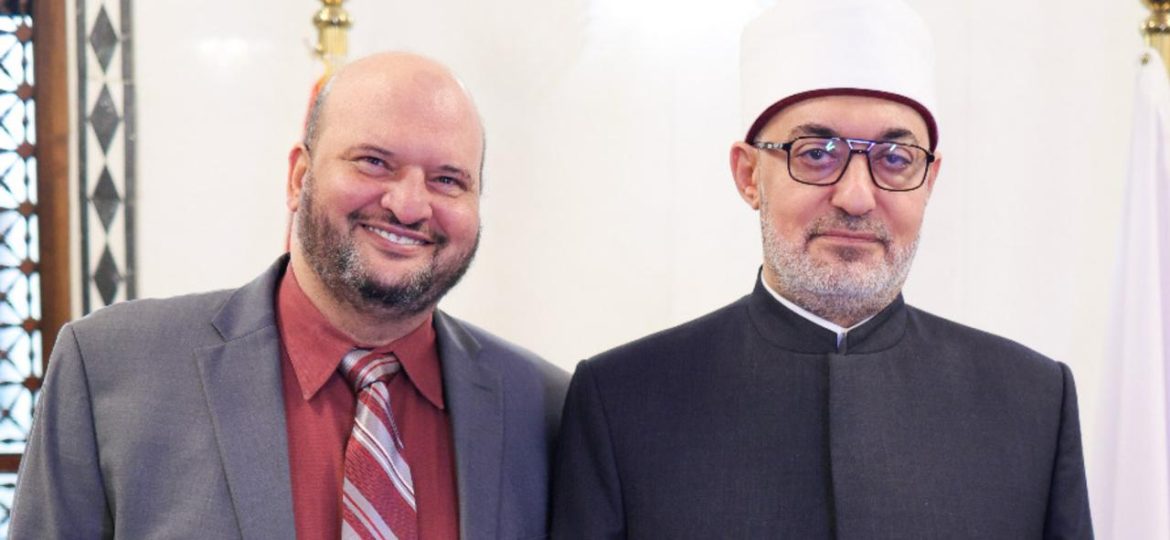
Fatwa institutions stand at the frontline of the intellectual battle against extremis
Interview:
by Amr Roshdy:
Cairo:
In Dismantling Extremist Discourse, Strengthening Societal Peace, Renewing Religious Concepts, and confronting unregulated Fatwas?
I. The Role of Fatwa Institutions in Dismantling Extremist Discourse and Confronting Radical Groups. Fatwa institutions stand at the frontline of the intellectual battle against extremism because they possess the one thing militant groups desperately try to claim: religious authority, Extremist organisations such as ISIS, al-Qaeda, Boko Haram, and the Taliban have consistently relied on distorted interpretations of sacred texts to recruit, mobilise, and justify violence. The most effective refutation of such misuse of religion, as decades of experience have shown, comes from within religion itself through authoritative, well-grounded counter-fatwas issued by qualified scholars who carry the trust of the Muslim community.
Egypt’s Dar al-Ifta has pioneered several institutional mechanisms in this regard. The most significant is the Observatory of Takfiri Fatwas and Extremist Views, established in 2014 as the first Islamic reference centre dedicated to monitoring, analysing, and responding to extremist interpretations worldwide.
The methodology of dismantlement operates on multiple levels:
Theological deconstruction: Fatwa institutions systematically expose how extremist fatwas deviate from classical scholarly consensus. They demonstrate, with full scholarly apparatus, that concepts like indiscriminate takfir (excommunicating Muslims), obligatory hijra to so-called caliphates, and justification of suicide bombings are categorically rejected by most of the Islamic scholarship across all schools of thought.
Collective authoritative declarations:
The power of a unified scholarly voice cannot be overstated. Pakistan’s Pagham-e-Pakistan 2018), signed by over 1,800 scholars from all schools of thought, categorically declared terrorism and suicide attacks haram. Pakistan’s President called it “a strong base for the stability of a moderate Islamic society” and a foundation for national narrative-building. Similarly, in Afghanistan in 2018, over 2,000 clerics issued a fatwa outlawing suicide bombing, which contributed to a brief but unprecedented Taliban ceasefire.
Transnational coordination:
The General Secretariat for Fatwa Authorities Worldwide, established in 2015, unites fatwa institutions across the globe under a single umbrella to amplify moderate voices and coordinate counter-extremism messaging. It operates as what may be described as a “soft power think-tank,” using research, dialogue, and publication rather than coercion to counter radical narratives.
II. How the Enlightened Fatwa Contributes to Strengthening Societal Peace
The relationship between fatwa and societal peace is not incidental—it is structural. Among the Maqasid al-Shariah (objectives of Islamic law) that is often overlooked is the objective of preserving peace (hifz al-amn). National stability and social harmony form the foundation for a harmonious and thriving Islamic way of life, serving as a prerequisite for the protection of the five essential daruriyyat: religion, life, intellect, lineage, and property.
The enlightened fatwa contributes to societal peace through several pathways:
First, providing religious legitimacy for public welfare measures. A striking example was the COVID-19 pandemic, when the General Secretariat for Fatwa Authorities Worldwide issued a transnational directive in March 2020 declaring that people “must follow medical instructions and stay away from gatherings.
Second, promoting interfaith coexistence and social cohesion. Dar al-Ifta has consistently issued fatwas encouraging positive relations with non-Muslims. In December 2024, The landmark Marrakesh Declaration of 2016, endorsed by over 300 Muslim scholars, affirmed the rights of religious minorities in Muslim-majority lands based on the Charter of Medina, providing a blueprint for Muslim governments to bolster coexistence.
Third, building consensus and resolving internal divisions. Fatwas issued by officially recognised bodies help generate agreement among Muslims on contentious issues, reducing the potential for internal communal strife.
Fourth, providing moral frameworks for governance and justice. The fatwa, when it operates within the framework of wasatiyya (moderation) and awareness of contemporary realities, becomes a guide not just for personal piety but for public ethics encouraging transparency, fighting corruption, and anchoring governance in principles of justice and human dignity.
Yet the movement of renewal, effectively stalled after the school of Imam Muhammad Abduh and his peers, only to be replaced by an extremist discourse that disregarded the essence and principles of religious teachings and focused on apparent issues instead.
The following concepts are among the most urgent in need of correction or renewal:
1. Takfir (Excommunication): The reckless, wholesale declaration of Muslims as disbelievers has been the single most dangerous tool in the extremist arsenal. It serves, as Dar al-Ifta’s Observatory noted in its first report, as “legal permits for killing which undermine the objectives of Islamic law”. The Amman Message (2004–2005), endorsed by 200 scholars from over 50 countries.
2. Jihad: The distortion of jihad from a complex, multi-layered concept encompassing the struggle against one’s own ego, the effort to build a just society, and defensive warfare under strict conditions into a blanket license for violence is one of the deepest corruptions of Islamic teaching.
3. The binary of Dar al-Islam and Dar al-Kufr: As I have written before, “It is no longer accepted to keep dividing the world’s countries into abode of Islam and abode of disbelief.”
4. The concept of qadar (predestination) and zuhd (asceticism): The misunderstanding of predestination as fatalism, and asceticism as disengagement from the world, has been detrimental to the ummah’s wellbeing and can impede any prospects of progress. As Dr. Hatem al-Haj has noted, we need to “reset our collective understanding of these concepts to the time of the Messenger and his Companions”.
5. Relations with non-Muslims:
The aberrant notion that Muslims should harbour hostility toward peaceful non-Muslims, refuse to greet them on their holidays, or refrain from civic engagement in pluralistic societies contradicts explicit Qur’anic injunctions and Prophetic practice.
6. The role of women: Extremist discourse has severely restricted women’s agency in ways that contradict both the letter and spirit of Islamic teaching. Renewal in this area requires returning to the comprehensive textual evidence and the practice of the early Muslim community.
7. Over-reporting of scholarly consensus (ijma’): This has stifled ijtihad-based renewal by treating debatable positions as settled. Imam Ahmad ibn Hanbal himself warned: “Whoever claimed a consensus has lied; maybe they disagreed”.
8. The shift from substance to form: Contemporary religious discourse has often prioritised technical formalities over spirituality and morality, minor details over major foundations. and exterior appearances over inner substance. The needed change of emphasis is, as scholars have noted, “not in any way an attempt to show disregard for the Shariah or for the Sunnah, but simply to rearrange the priorities of the religion into the proper order”.
IV. Confronting Unregulated and Aberrant Fatwas on Social Media
The explosion of social media has created what Egypt’s Grand Mufti has called “fatwa chaos” a situation where “people without any religious academic experience issue fatwas through TV channels or via social media networks like Facebook, Twitter, and YouTube”. Self-appointed preachers, social media influencers, and political opportunists.
Fatwa institutions have responded through a multi-pronged strategy:
Egypt’s Parliament passed the *Fatwa Regulation Law*, which clearly defines who has the right to issue public fatwas, restricting this authority to Egypt’s highest religious bodies: Al-Azhar’s Council of Senior Scholars, the Islamic Research Academy, the Ministry of Religious Endowments, and Dar al-Ifta. It criminalises the publication of fatwas from unauthorized sources, with penalties of up to six months in prison and fines of 100,000 Egyptian pounds. Dar al-Ifta has built a robust online presence with multilingual portals in Arabic, English, French, German, Urdu, Pashto, Swahili, Hausa, and other languages, disseminating authoritative fatwas, articles, and videos that counter both extremist rhetoric and Islamophobic narratives.
Mufti training and credentialing: The Fatwa Regulation Law mandates the establishment of a *Mufti Preparation Centre* to provide scientific training and qualifications, after which each mufti receives a diploma and license to issue fatwas on specified religious issues. No religious scholar is permitted to issue fatwas without this accreditation.
Egypt’s Grand Mufti has called for enhanced coordination among fatwa institutions and proposed the development of a Fatwa Code of Ethics to curb unregulated and arbitrary rulings, distinguishing between personal and public fatwas to safeguard the integrity of religious discourse. Proactive monitoring and rapid response: The observatories at Dar al-Ifta monitor over 150,000 websites worldwide for extremist content.
Egypt’s Dar al-Ifta and the General Secretariat for Fatwa Authorities Worldwide have emerged as global leaders in this endeavour, demonstrating that the most powerful weapon against the misuse of religion is the authentic, moderate, compassionate voice of religion itself. As the Prophet ﷺ indicated, a recurring divine provision for the preservation of this religion and the welfare of humanity.
Tajammul Gurmani:
Manchester:
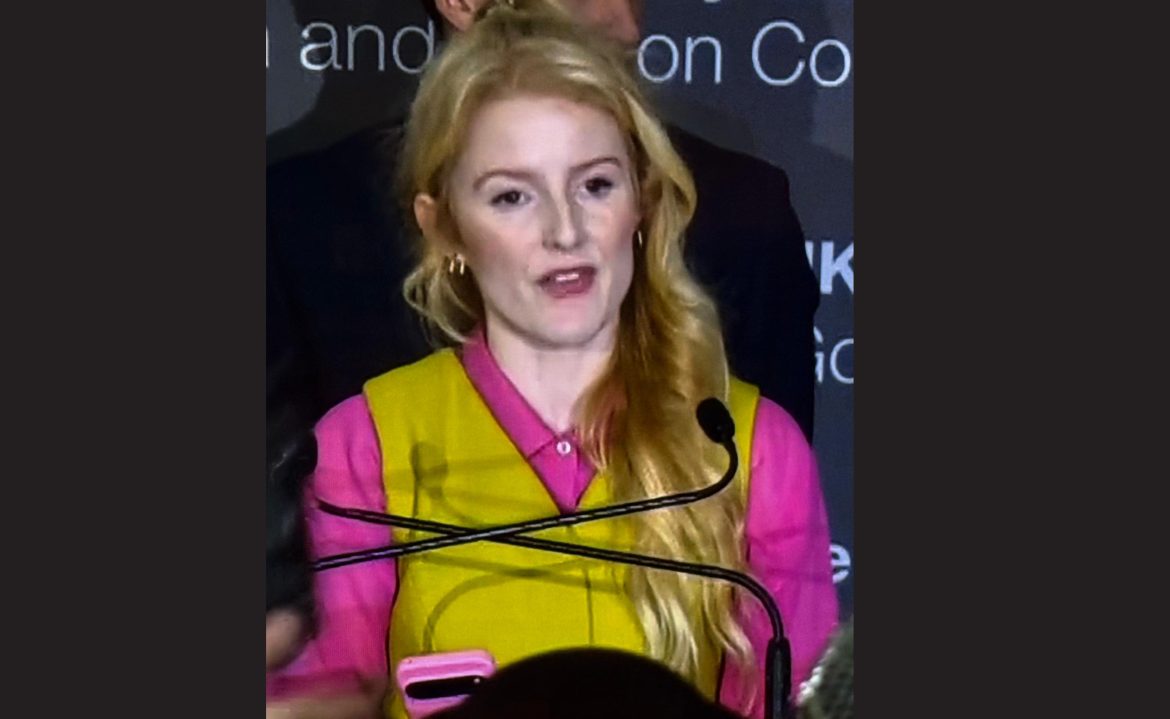
The Green Party has won the Gorton and Denton by-election, taking the seat from Labour. Green Party candidate Hannah Spencer has won the parliamentary by-election race in Manchester with a huge margin of 4,402 votes against Reform UK candidate Matt Goodwin, who secured 10,578 votes, while Labour Party candidate Angeliki Stogia stood in third place with 9,364 votes.
According to the official declaration of the result announced at the Central Convention Centre Manchester early on Friday morning by Tom Stannard, the Acting Returning Officer of the Gorton and Denton Constituency, the results were as follows: Hannah Spencer, Green Party 14,980, Matt Goodwin, Reform UK 10,578, Angeliki Stogia, Labour Party 9,364, Sir Onik A Lot, 159, Nick Buckley 154, Charlotte Anne 706, Dan Clarke 47, Sabastian Moore 46, Joseph Bernard O’Meachair 98, Jackie Pearcey, Liberal Democrats 653, and Hugo Wils 9 votes. The total number of votes cast was 36,840, and turnout was recorded at 47.6 per cent.
The by-election was held in the Gorton and Denton constituency after Labour MP Andrew Gwynne resigned due to health reasons. There were 45 polling stations set up. The total number of registered voters was 77,000, while 11 candidates representing 11 parties participated in this election. In this by-election, the two new parties, Green and Reform, replaced the two major parties, Conservative and Liberal Democrat, in the main contest. Before the election, Reform was leading in the opinion polls, but the final result overturned the surveys, and voters rejected the far-right policies.
Talking to The London Post, Cllr Shahbaz Sarwar of the Workers Party, who was supporting the Green Party, said that people placed their confidence in the Green Party because its policies were very favourable towards youth, the environment, immigration and the Palestine issue. Labour MP Afzal Khan said that it was difficult to believe that people had rejected the Labour government, adding that by-elections are always tough for the government. He said the Labour Party still exists, and that people refused the politics of hate and division in this election.

Pakistan High Commissioner to inaugurate new Consular Hall in Manchester
Manchester:
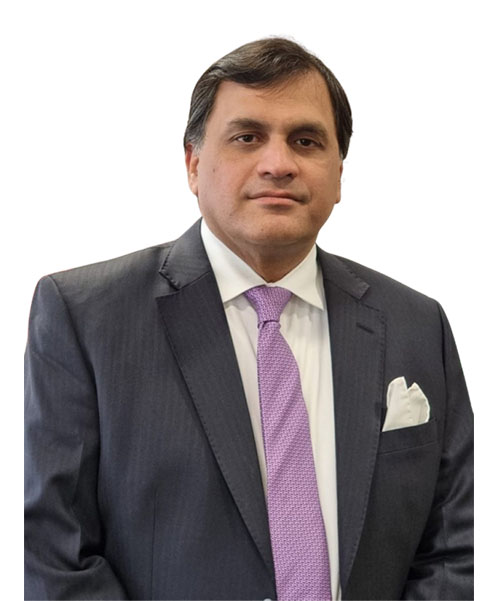
Muhammad Faisal, High Commissioner of Pakistan, will inaugurate the new Consular Hall of the Consulate General of Pakistan in Manchester on Friday, 27 February at 3pm.
The Consul General of Pakistan in Manchester, Imtiaz Feroz Gondal, said that the new hall has been constructed for visitors who come for passport and NICOP services. “The new hall will consist of new counters for staff and around 40 additional seats. It will be connected to the main hall where visitors will submit their applications. New furniture has also been installed and the online system has been improved. No stone will be left unturned for the betterment of the community,” he added.
By Wajahat Ali Khan:
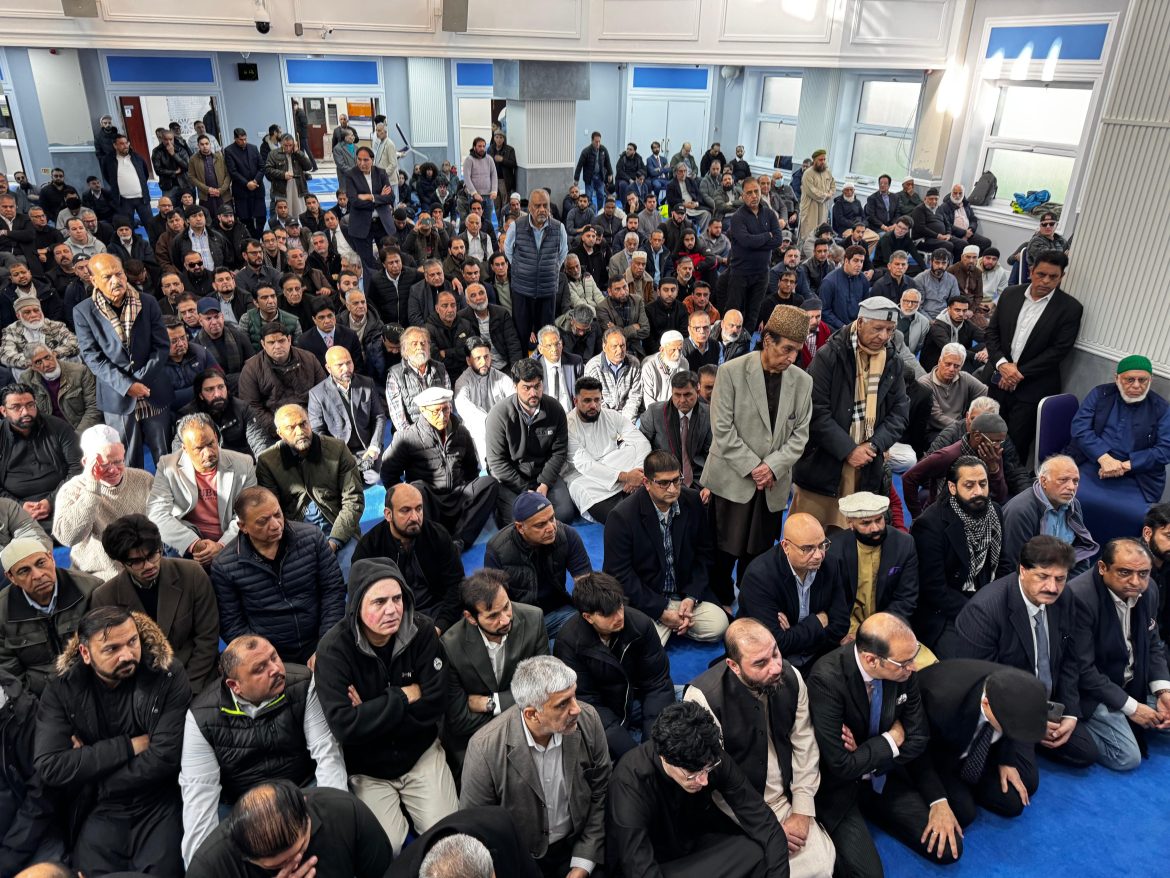
The funeral prayers of Hina Malik, wife of Pakistan Muslim League UK’s Information Secretary Iqbal Sandhu, leader of the Muslim League UK Women’s Wing and former councillor, who passed away last Saturday, were offered at Hounslow Jamia Masjid on last Tuesday. A large number of people, including the family of the deceased, her friends, many local leaders of the Muslim League, members of the Pakistan High Commission in the UK and large number of people from all walks of life, attended the funeral. Funeral was also attended by Chairman overseas Pakistanis commission Barrister Amjad Malik, Lord Qurban Hussain, Chairman of Al-Mustafa Welfare Trust Abdulrazzaq Sajid, social worker Sheikh Muslim Sarbuland, Chairman of Third World Solidarity Mushtaq Lasharie CBE, educationist Amanat Anjum, owner of Spice Village Restaurant Suleman Raza MBE, many journalists and political, social and religious leaders also attended in full and paying tribute to Hina Malik, they said that she was a good daughter, a capable teacher, an excellent mother and a graceful wife, as well as a beloved community figure, but rather the rose of London. She shared in every sorrow and joy of the community. always prioritize human service.
Al Mustafa Organises Large-Scale Sehar & Iftar Across Pakistan, Appeals for Donations
Bureau Report:
Lahore / Islamabad /
Mansehra / Cholistan:
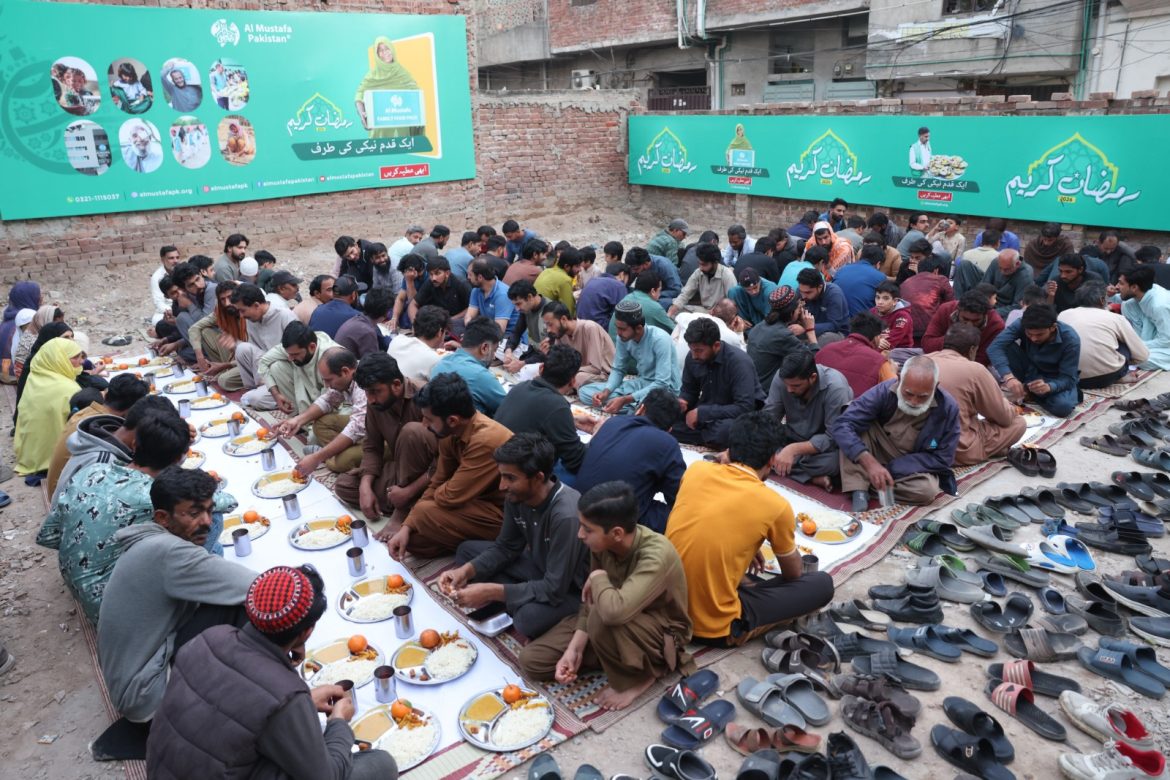
In the holy month of Ramadan, Al Mustafa Welfare Trust has organised large-scale Sehar and Iftar arrangements across multiple cities of Pakistan, providing free meals to thousands of deserving individuals every day.
In Lahore, daily Iftar is being served at Al Mustafa Dastarkhwan (84/10 Mozang Road – Head Office), Abid Market, Shaukat Khanum Chowk, Pakistan Association of the Blinds (Allama Iqbal Road, Garhi Shahu), and at Maa Ghar (orphanage). Hundreds of labourers, patients’ attendants, commuters, and underprivileged families benefit from these facilities.
In Islamabad, Iftar is arranged at Children Gate, Pakistan Institute of Medical Sciences (PIMS), where attendants of patients and daily wage workers gather in large numbers. In Khyber Pakhtunkhwa, free meals are also being provided at Almustafa Hospital in Dhodiyal, Mansehra.
Similarly, in South Punjab, Iftar arrangements are ongoing at Almustafa Community Centre in Ahmad Pur Sharqya, Bahawalpur, as well as in remote areas of Cholistan where access to food remains a serious challenge.
Outdoor teams of Al Mustafa are also organising Iftar in Bagh (Azad Kashmir) and Naran in Kaghan Valley this week, ensuring that support reaches even remote and mountainous regions.
According to a spokesperson for the Trust, rising inflation and widespread poverty in Pakistan have made it increasingly difficult for many families to manage Sehar and Iftar during Ramadan. “Thousands of people rely on community support to break their fast with dignity,” the spokesperson said.
Al Mustafa Welfare Trust has appealed to donors in the UK and around the world to extend their generous support so that this vital Ramadan initiative can be expanded to more cities and rural areas. The organisation emphasised that every donation can help provide food, dignity, and relief to those struggling in these challenging economic times.
As Ramadan continues, the Trust aims to scale up its efforts — ensuring that no one is left without Sehar or Iftar.
Interview:
Shokat Dar:
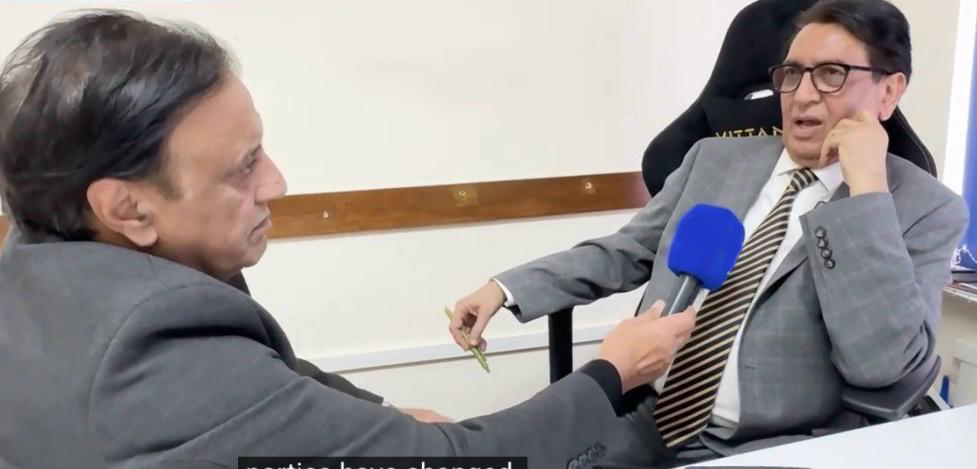
Former Mayor of Hounslow, senior political figure and businessman Nisar Malik said in an exclusive interview with “The London Post” that my former political party, Labour, is no longer what it used to be. It used to be a party of the common and middle class. Especially immigrants used to vote for this party because due to soft immigration, Labour was also considered a party of immigrants, which was true to some extent. He expressed regret and said that today the situation is that the Home Secretary of the Labour Party, Shabana Mahmood, is standing in Parliament and saying that those people who come to Britain from the Third World or Pakistan, those who sell their mothers and sisters’ jewellery, will not be treated as before, but now the British system will “play” with them. There will be no mercy for these people. Nisar Malik added that, guess what kind of talk is being made by a Pakistani-origin Home Secretary who is insulting Pakistanis and has also forgotten how her parents came to this country?
He said that is why I have now left the Labour Party. Anyway, like other countries in the world, large-scale political changes are taking place in Britain and world politics is changing. The people in the UK are now getting fed up with the two-party system.
Nisar Malik, while discussing the war situation in Gaza and Ukraine, said that the policies adopted by the ruling Labour Party on immigration, taxes, benefit cuts and Gaza have also been rejected by the British people, and these are also major reasons for the people’s distance from Labour. He said that the role of the British media in the Gaza issue has also remained one-sided because the media did not talk about Gaza in the way it is happening in Ukraine. Nisar Malik said that I have written a lot about it on my social media that the people of Gaza are being severely oppressed. He said that one example of distance from Labour is that many councillors in Hounslow have left Labour and joined the Tory Party.

Zain Ali Khan:
Metropolitan Police Service has stepped up its efforts to catch phone snatchers, especially in busy areas like the West End. Police are now using drones alongside other tech tools like live facial recognition and special e-bikes to spot, track and help arrest suspects involved in mobile phone theft. This is part of a year-long crackdown, described as the largest of its kind, which has seen hundreds of arrests and thousands fewer phone theft offences. A phone is stolen in the capital every seven to eight minutes – and the force warns that children as young as 14 are being targeted over social media and paid up to £100 to steal phones for organised crime gangs. New figures show that between 2017 and 27 February 2024, out of a total of 587,498 phones stolen in London, excluding the city, just 13,998 were recovered.
But the number of recorded mobile phone thefts in London fell to 71,391 last year, compared to 81,365 in 2024 – a drop of 12% – Met figures show.
Scotland Yard said 32 people had been arrested and 24 charged, in connection with one gang, and more than 1,000 phones and 200 laptops had been recovered. One suspect was arrested in connection with 20 offences of so-called “table surfing” over two months, where criminals distract customers to swipe their phone from their tabletop in bars or cafes. The force said 39 stolen phones had been recovered following a search of the suspect’s house.