Staff Reporter
Abbottabad
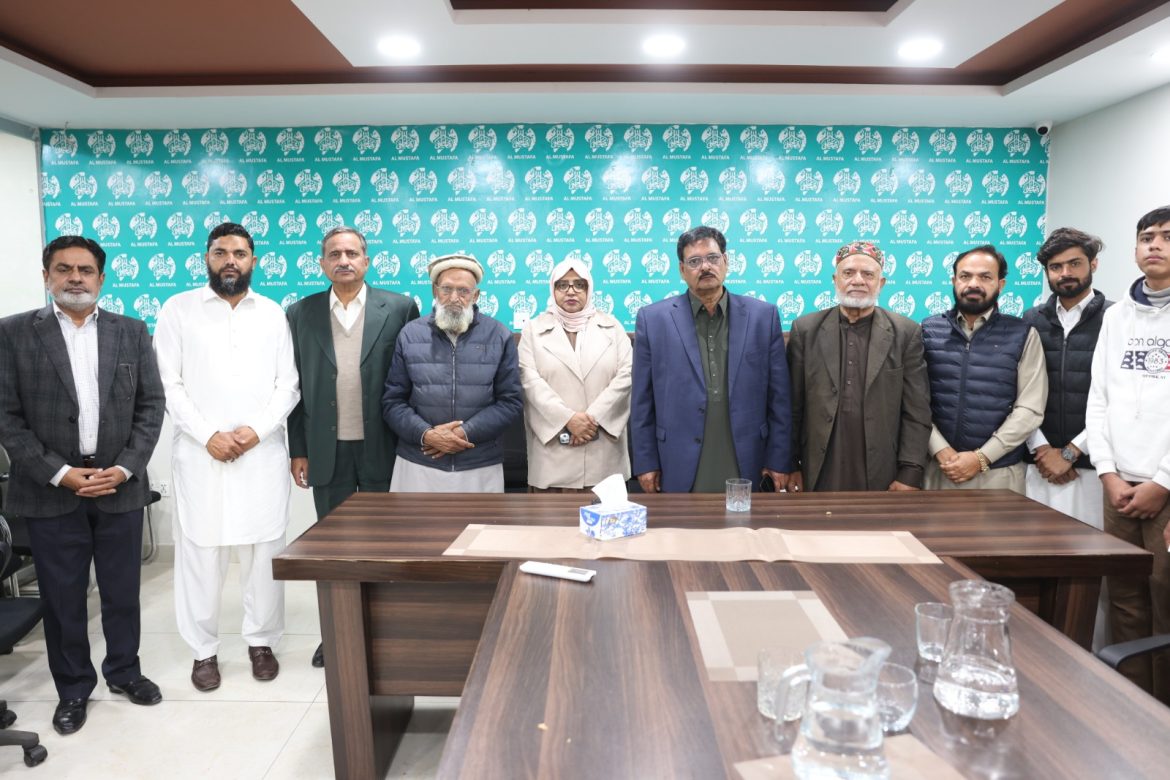
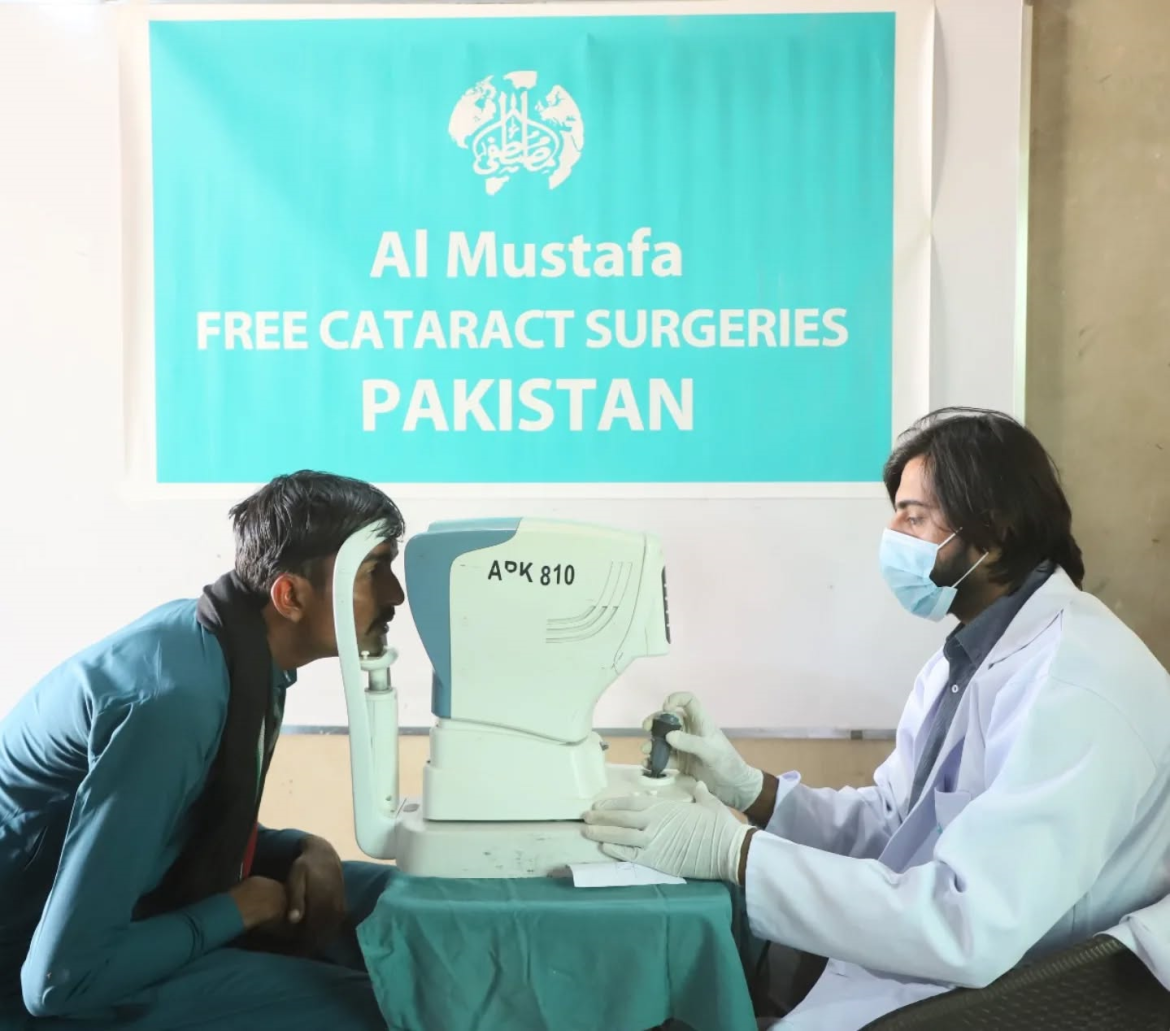
AlMustafa Welfare Trust continued its flagship humanitarian initiative aimed at the treatment of cataract (white eye disease) by successfully organizing a large-scale Free Cataract Eye Camp in Havelian, Abbottabad, bringing hope and restored vision to hundreds of underprivileged patients.
According to the official camp report, a total of 115 cataract surgeries were carried out, including 63 female and 52 male patients, enabling them to regain their eyesight and return to normal life. In addition, 1,513 patients were examined through the Outpatient Department (OPD), with women constituting the majority of beneficiaries.
Beyond eye treatment, Al Mustafa Welfare Trust also provided essential health screening services at the camp. 132 patients were tested for Hepatitis C (HCV), Hepatitis B (HBsAg), and HIV. Test results revealed three HCV-positive cases, while no cases of Hepatitis B or HIV were detected. The medical team also identified 15 diabetic patients, who were guided for further care and management.
As part of its vision care support, the organization distributed 298 free spectacles to patients suffering from refractive errors, further enhancing the impact of the camp. The eye camp was coordinated by Mr. Wahid Bakhsh, Eye Camp Coordinator of Al Mustafa Pakistan, who stated that cataract treatment remains one of the Trust’s flagship projects due to the high prevalence of preventable blindness in underserved communities. Al Mustafa Welfare Trust reaffirmed its commitment to expanding cataract treatment services across Pakistan, particularly in remote and marginalized areas, as part of its broader mission to deliver accessible and life-changing healthcare to those in need.
News
Ijaz Ahmed Malhi:
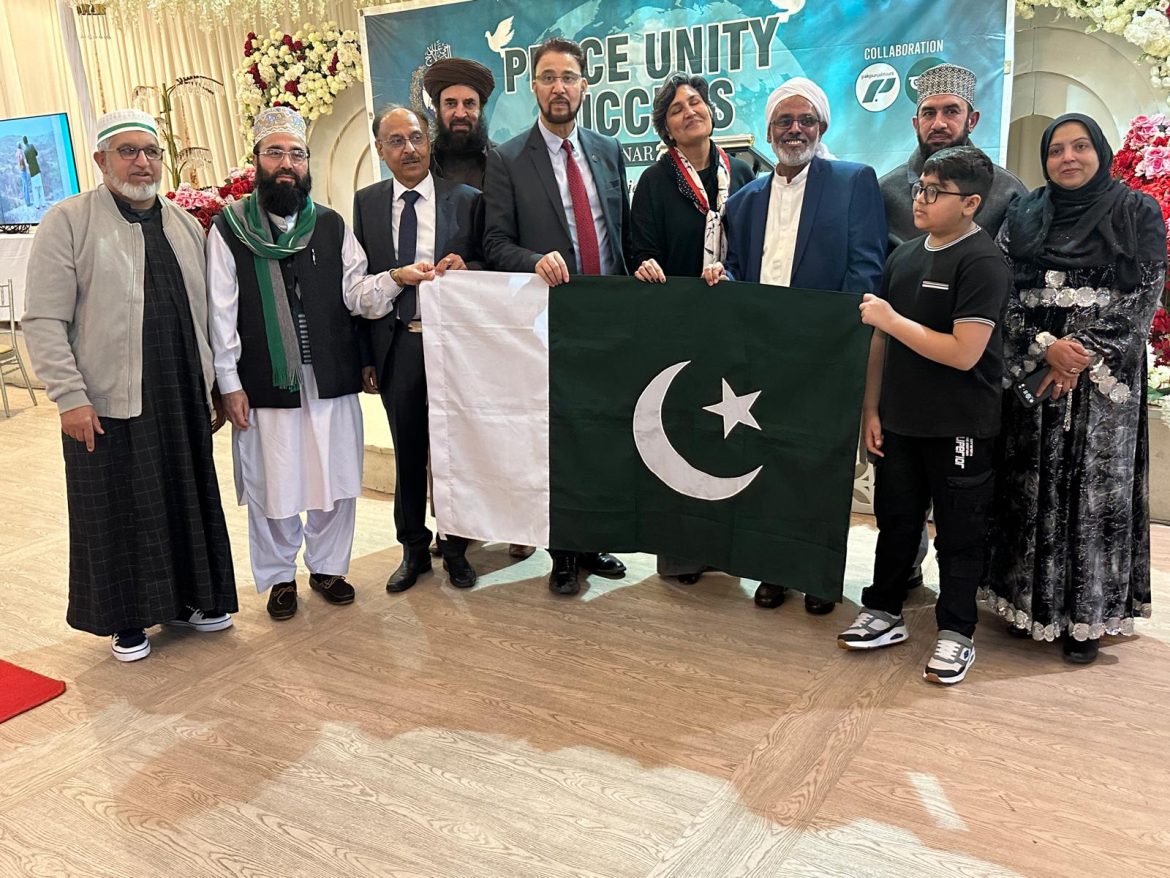
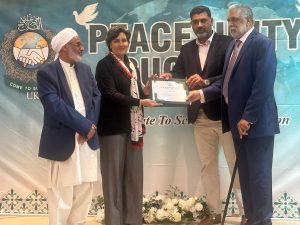
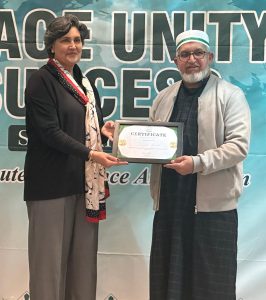
A local organisation, “Hayya Alal Falah Foundation” organised a seminar titled “Peace, Unity and Success” at My Nawab Restaurant on Stockport Road Manchester. The event was presided over by Sahibzada Sain Naeem Ahmed, Chairman of the foundation. Dr Dina Khan, daughter of renowned Pakistani nuclear scientist Dr Abdul Qadeer Khan and Chairperson of the Dr A Q Khan Foundation, attended as the chief guest. Other speakers included MP Afzal Khan, Cllr. Naeemul Hassan and Dr Mohammad Idrees Awan. During the event, Sain Naeem Ahmed presented special awards to Choudhry Maqsood Hussain, Dr Idrees Awan, Noor, Yasir, Azhar Ali, Saghir Ahmed, Raja Mohsin and Dr Dina Khan in recognition of their services to humanity. Addressing the audience, Dr Dina Khan emphasised the importance of education, community welfare and encouraging young minds. She paid tribute to her mother, describing her as the strength behind her father, Dr Abdul Qadeer Khan. She said her mother supported her father throughout his life, including difficult periods, and played a key role in his achievements. Dr Dina stressed the importance of valuing and educating women, including mothers, sisters and daughters, noting that they shape future generations. She said both her parents strongly influenced her values, and that service to humanity was a way of life for them. She highlighted the need to turn words into action by focusing on education, healthcare, social welfare and community development. Referring to the establishment of the Dr A Q Khan Foundation after her father’s death in 2021, she said the family felt a deep responsibility to continue his legacy of helping others, often without public recognition. MP Afzal Khan praised the national services of Dr Abdul Qadeer Khan and said the Pakistani nation would never forget his contributions. He also acknowledged the religious and social services of Sahibzada Sain Naeem Ahmed.

By Tajammul Gurmani
Manchester
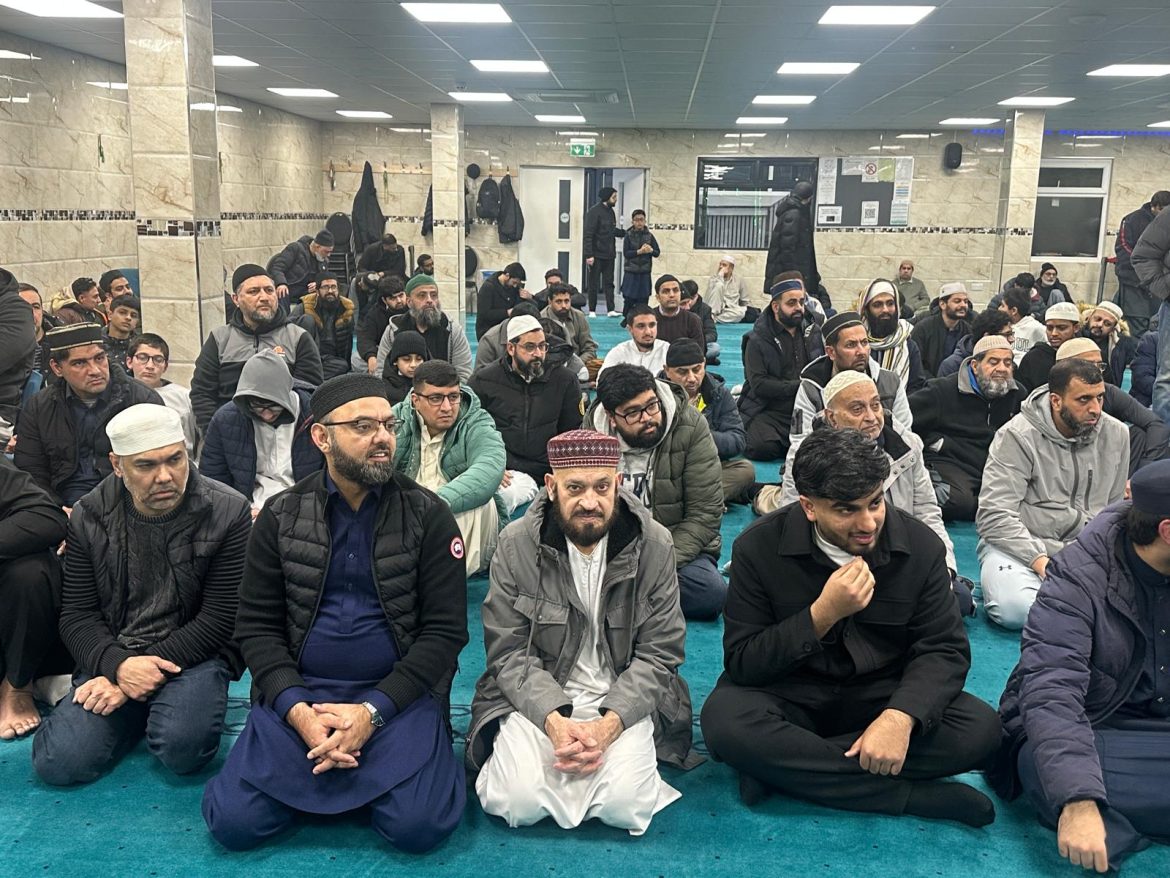
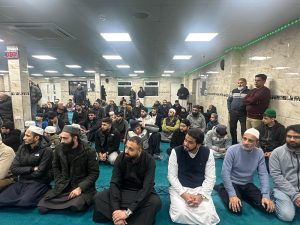
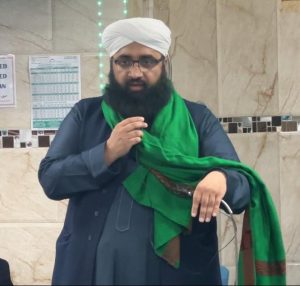
Shab-e-Miraj-ul-Nabi was celebrated with religious enthusiasm in Manchester. Local mosques and Islamic centres organised special prayers for the Muslim community on the occasion. A large number of Muslim women, men, and children attended the congregations in connection with Miraj-ul-Nabi, while religious clerics delivered special speeches highlighting the spiritual journey of the Holy Prophet (PBUH) and the blessings of this night. The Muslim community also offered Salat-o-Tasbih and participated in Dhikr mehfils. Mosque committees arranged special dinners (Langar) following the congregations. The South Manchester Muslim Community Association (SMCCA) also organized a special event on the night of Miraj-ul-Nabi, where Mulana Muhammad Umair Tayyab delivered a special speech and explained the details of Miraj-ul-Nabi. He prayed that may Allah accept their efforts. Nasir Aziz, Finance Secretary, said that about 300 people attended the religious event, while special food was also served among them. He added that they also continued food services during the holy month of Ramadan. “We served iftar dinner to more than 250 people during Ramadan, with an estimated cost of £40,000. We appeal to the Muslim community for financial support for this noble cause,” he concluded.

Alderman Mushtaq Lasharie hosted a dinner event in the honour of friends
By Saj Butt
London
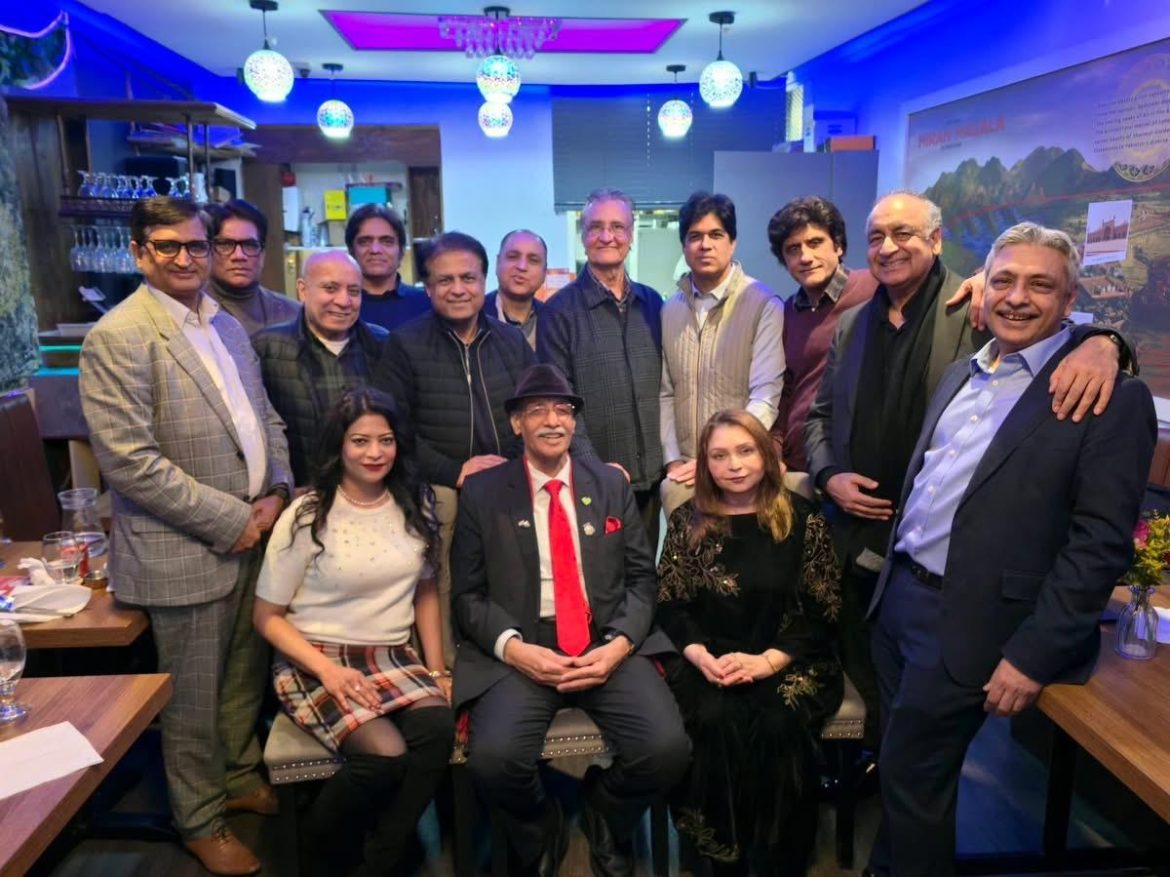
Alderman Mushtaq Lasharie CBE, chairman TWS, BPMA and LWRA hosted a dinner in the honour of a few of his close friend at Miran Masala Restaurant, Royal Oak, London. The evening brought together a distinguished gathering of guests, including Ali Nawaz Malik, Press Minister at the Pakistan High Commission London; Iftikhar Qaisar, renowned journalist, poet and author of Ibn Battuta; Cllr Shahid Nadeem of Pakistanis for Labour; Mian Saleem, President PPP Greater London and Co-Chair of the Pakistan Community Centre Reading; Mona Baig, journalist and Secretary General TWS-UK; Azhar Javed, Bureau Chief UK, Samaa TV; Nasim Siddiqui, television anchor; Wajahat Ali Khan, Executive editor of “The London Post”; legal expert Rana Mubashar, Sumera Qazilibash, Amanat Ali Anjum, Sajjad Butt, and senior journalist Mushtaq Mashraqi.
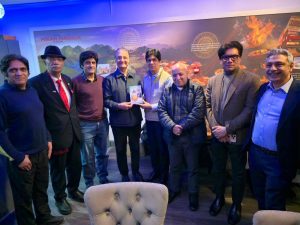
A special highlight of the evening was the presentation of Iftikhar Qaisar’s acclaimed book “Ibn Battuta” to Ali Nawaz Malik, symbolising cultural exchange and appreciation of literary excellence.

AlMustafa Delegation meets Pakistan Consul General in Manchester
Bureau Report
Manchester
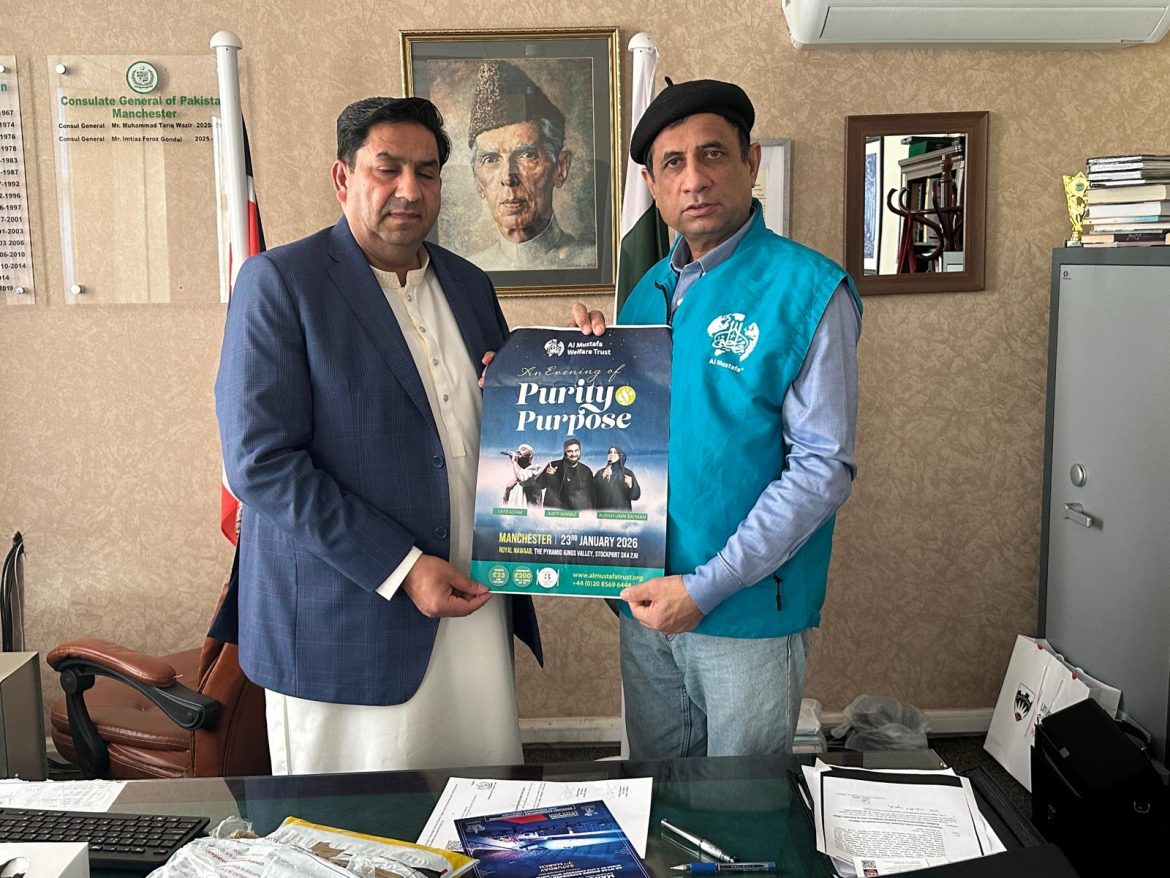
A two-member delegation of Al Mustafa Welfare Trust met with the Consul General of Pakistan in Manchester, Imtiaz Feroz Gondal, at his office. The delegation included Tajammul Gurmani and Ijaz Ahmed Malhi. They invited the Consul General to the annual charity dinner in Manchester and also discussed the facilities being provided at the consulate office. Mr Gondal said that a new hall is being constructed for visitors who come for passport and NICOP services. “The new hall will consist of new counters for staff and around 40 additional seats. It will be connected to the main hall where visitors will submit their applications. New furniture has also been ordered, and the online system has been improved. No stone will be left unturned for the betterment of the community,” he added. The delegation also visited different sections of the Consulate and appreciated the efforts being made by the Consul General. Senior Consulate Officer Aamir Raza welcomed the delegation on the occasion.

By Sajjad Azhar
As the World Economic Forum (WEF) convenes for its 56th annual meeting in Davos, Switzerland, world leaders, corporate titans, financiers, and policymakers once again gather under the banner of “global cooperation.” Pakistan’s Prime Minister Shehbaz Sharif is among the participants, alongside leaders from around 60 countries and executives from nearly 850 of the world’s most powerful corporations.
Yet the fundamental question remains unanswered: is Davos truly a forum for solving global problems, or an exclusive club where global elites align their interests?
Officially, the World Economic Forum is a non-governmental organization with no legal authority to make binding decisions. In practice, however, it functions as one of the most influential informal power hubs in the world. While speeches and panel discussions are broadcast publicly, the real influence of Davos lies in hundreds of closed-door side meetings—where governments, corporations, and financial institutions quietly coordinate policies beyond public scrutiny.
Founded in 1971 by Klaus Schwab, the WEF brings together a select group of corporations with annual revenues exceeding $5 billion, each paying substantial membership fees. This structure alone raises concerns about representation. Workers, farmers, teachers, and ordinary citizens—the very people most affected by global economic decisions—have little to no voice at Davos.
Supporters of the forum argue that no decisions are made there, only ideas exchanged. But history suggests otherwise. The narratives shaped in Davos repeatedly resurface in the policies of the IMF, World Bank, G7, and G20—often in the form of privatization, austerity, deregulation, and reduced state intervention in developing economies.
For countries like Pakistan, participation in Davos often becomes a ritual of seeking foreign investment, securing loans, and offering incentives to multinational corporations. The agenda, however, is largely set by those who control capital and technology, not by those struggling with poverty, inflation, and inequality.
Political theorist Samuel P. Huntington famously described the global elite as “Davos Man”—a class that views national borders as obstacles and nation-states as outdated institutions meant primarily to facilitate global capital. This mindset is increasingly visible in the forum’s promotion of “multi-stakeholder governance,” a model that sidelines democratic accountability in favor of corporate–political partnerships.
The contradictions of Davos are particularly evident in its discussions on climate change. While world leaders speak of sustainability, an estimated 1,500 private jets land in Davos during the forum—symbolizing the gap between elite rhetoric and lived reality.
Meanwhile, global inequality continues to widen. According to Oxfam, the richest one percent now controls nearly half of the world’s wealth, while billions face declining incomes and shrinking opportunities. This concentration of wealth is not accidental; it reflects a global economic system shaped by the very actors who dominate platforms like Davos.
The World Economic Forum presents itself as a space for dialogue and solutions. In reality, it often appears as a venue where the powerful design the future, while weaker nations and ordinary citizens are left to pay the price. Until global governance becomes more transparent, democratic, and inclusive, Davos will continue to be seen not as a forum for humanity—but as a club of global elites shaping the world in their own image.
City Reporter
Rochdale
Al Mahmood Foundation will establish a state-of art Cardiac Centre in Sahiwal, Pakistan. Land acquisition for the project has been completed, and construction will begin once the architectural drawings are approved, which are currently under review. This was stated by Tahir Mahmood, Chairman of the Foundation, during a discussion with a delegation from Al Mustafa Welfare Trust led by Chairman Abdul Razzaq Sajid. Tajammul Gurmani, Ijaz Malhi and Raja Faiz Sultan were also part of the delegation. Both leaders also discussed mutual interests. Tahir Mahmood, who is also Chairman of Golden Masjid Rochdale, said that Al Mahmood Foundation’s healthcare initiatives began at Civil Hospital Sahiwal, where they installed a CT scan machine, distributed free medicine, wheelchairs and food packages during Ramadan, serving the local poor and needy. The Foundation later moved to its own building and launched a welfare hospital last year.
A free eye camp was also recently organised in collaboration with Al Mustafa Welfare Trust, while the next camp scheduled in April 2026. Abdul Razzaq Sajid briefed about Al Mustafa Welfare Trust’s eye care activities in Pakistan. Both organisations committed to continuing their collaboration to serve the underprivileged in the healthcare sector.
Al Firdous Welfare Association Delegation Visits AlMustafa Welfare Hospital in Dodiyal
Staff Reporter
Dodiyal
A delegation from the Al Firdous Welfare Association, comprising its Chairman and a Board Member, paid an official visit to the Al Mustafa Welfare Hospital, Dodiyal, to review healthcare services being provided in the area.
The delegation was accompanied by AMWT UK Trustee Mrs. Rubina Khawaja, AMWT Pakistan Trustee Mr. Sajjad Azhar, and Operations Manager AMWT Mr. Syed Farrukh Zafar.
During the visit, the delegation expressed appreciation for the initiatives undertaken by Al Mustafa Welfare Trust (AMWT), particularly its healthcare interventions aimed at underserved and remote communities. The visiting members described the provision of quality medical facilities in difficult-to-access areas as a commendable contribution toward improving public health.
The delegation also visited the RO water filtration plant installed by AMWT at Hazara University, where they were briefed on its functionality and its role in providing clean drinking water to students and staff.
Hospital operations and ongoing medical services were explained in detail by Mr. Hamid Raza, who also introduced the hospital staff to the visiting delegation. The visitors noted the hospital’s organized management and its focus on delivering accessible healthcare services to local populations.
The visit concluded with positive remarks on AMWT’s welfare projects and its continued efforts to strengthen healthcare and community services in the region.
AlMustafa Welfare Trust USA Delegation Visits Eye Hospital and Community Kitchen
Nawaz Kharal
Lahore
A delegation of AlMustafa Welfare Trust USA, including prominent donor Chaudhry Munawar Iqbal Bhatti from New Jersey and Dr. Inam-ul-Haq, Director Al Mustafa USA, visited the Al Mustafa Eye Hospital and Al Mustafa Dastarkhwan to review ongoing humanitarian and healthcare initiatives.
During the visit, the delegation was briefed on various projects being run by Al Mustafa Welfare Trust for underprivileged communities. Managing Director Al Mustafa, Ms. Nusrat Saleem, provided an overview of the organization’s welfare activities, highlighting its focus on accessible healthcare, food security, and social support.
MS Al Mustafa Eye Hospital, Khalid bin Aslam, briefed the visitors on the hospital’s medical facilities, patient services, and achievements in eye care, particularly for low-income patients. The delegation also visited Al Mustafa Dastarkhwan, where In-charge Akbar Chaudhry shared details about the daily food distribution programme serving hundreds of needy individuals.
Head of Media and Public Relations Al Mustafa, Nawaz Kharl, informed the delegation about the organization’s communication and public awareness efforts aimed at promoting transparency and donor engagement.
Other participants accompanying the delegation included Chaudhry Asif Iqbal and Chaudhry Muhammad Ashraf Nambardar.
The visiting members appreciated the scale and impact of Al Mustafa Welfare Trust’s projects and expressed satisfaction over the effective utilization of donor contributions in healthcare and community welfare initiatives.
Trump’s new tariff threat: More than 100 countries, including Pakistan trade with Iran
By Staff Reporter
Of the 100-plus countries that trade with Iran, China is its biggest export partner. In the year to October 2025, it bought more than $14bn (£10.4bn) of products from Iran, according to figures from Trade Data Monitor which are based on statistics from the Islamic Republic of Iran Customs Administration. China is followed by Iraq, which received $10.5bn worth of goods from its neighbour. Iran also counts the United Arab Emirates and Turkey among its largest customers.
In fact, exports from Iran to Turkey jumped substantially from $4.7bn in 2024 to $7.3bn last year. Almost all of Iran’s top 10 exports are fuel-related – it is one of the world’s largest oil producers. It also ships food to other nations, including pistachios and tomatoes. But this is currently subject to legal challenge – with the US Supreme Court due to rule as soon as Wednesday. On Monday Trump said the US would be “screwed” if these tariffs aren’t upheld.
Although, according to sources, all countries except a few will continue to trade with Iran anyway.