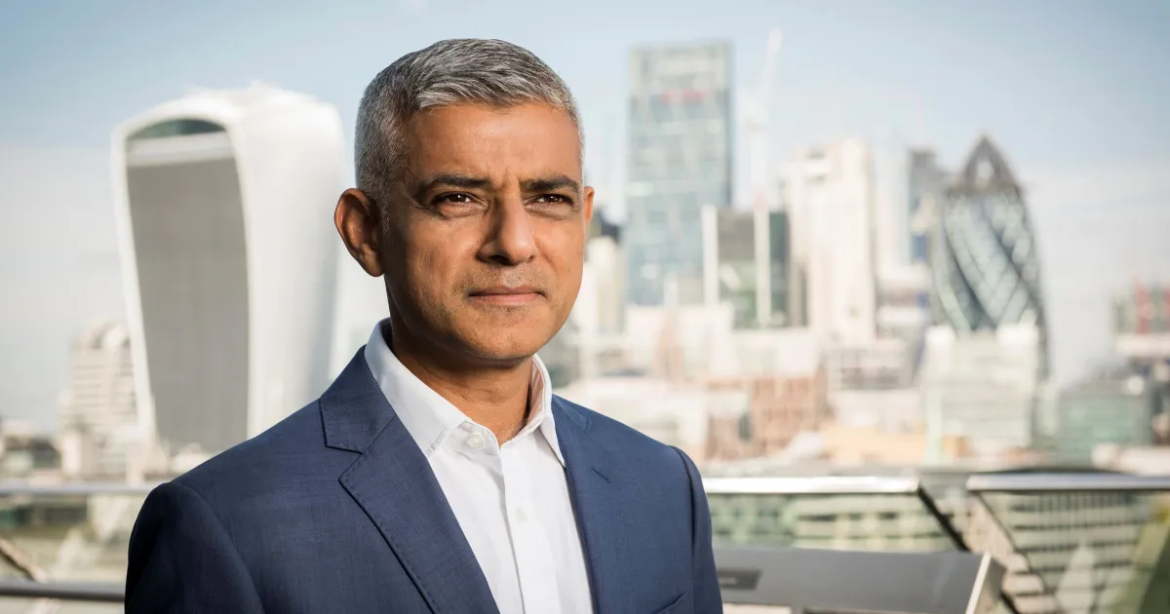
Homicide in London has fallen to its lowest level in more than a decade, new figures released by the Metropolitan Police show. The force said 97 homicides were recorded in 2025, the lowest figure since 2014, at a rate of 1.1 per 100,000 people, lower than New York (2.8), Berlin (3.2) and Milan (1.6). It is the lowest homicide figure in London on record, once population is considered, the Met said. Teenage homicide, which hit record levels in 2021 when 30 young people lost their lives, has also dropped to the lowest level since 2012, with eight teenagers killed last year. Mayor London Sir Sadiq Khan said many people had “been trying to talk London down. “Whether it’s President Donald Trump, whether it’s politicians concentrated in Europe, this country, or other parts of the world, I can understand why they hate London,” the mayor said. We are diverse, we are progressive, we are liberal, we are successful, but even the harshest critics of London would have to accept these figures are remarkable.”
News
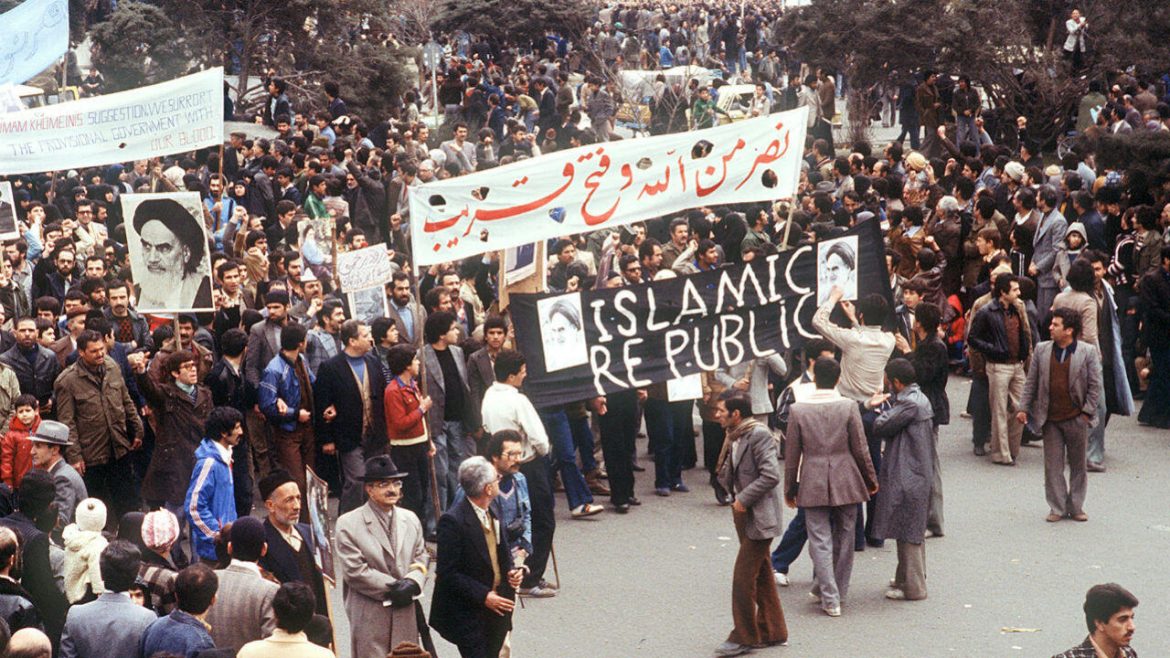
Was the Iranian Revolution Engineered with Washington’s Consent?

By Sajjad Azhar
For decades, Mohammad Reza Shah Pahlavi was regarded as Washington’s most reliable ally in the Middle East — a strategic guardian of American interests in a volatile region. Yet history took a dramatic turn. A popular uprising forced the Shah from power, and the very United States he had long served ultimately denied him refuge, raising enduring questions about America’s role in the Iranian Revolution of 1979.
On January 16, 1979, as the Shah’s aircraft took off from Tehran, it was widely believed that he would land in the United States. Preparations had reportedly been made for his stay at a vast estate in California. Instead, with no clear signal from Washington, the Shah diverted to Cairo, seeking refuge with Egyptian President Anwar Sadat. From there began a humiliating journey through Morocco, the Bahamas, Mexico, Panama, and back to Egypt — a journey marked by political isolation, illness, and rejection.
The Carter administration’s reluctance to host the Shah stemmed largely from fears for American personnel in Tehran. Following attacks on the US Embassy and rising revolutionary sentiment, Washington calculated that granting asylum could further endanger its diplomats. Even when the Shah was diagnosed with cancer — a condition requiring advanced treatment available only in the United States — President Jimmy Carter initially refused him entry. It was only after intense lobbying by influential American figures such as David Rockefeller and Henry Kissinger that the Shah was allowed into New York on October 22, 1979.
His arrival, however, proved catastrophic for US–Iran relations. On November 4, revolutionary students seized the American Embassy in Tehran, taking 66 US citizens hostage. Under mounting pressure, the Shah was forced to leave the United States in December 1979.
Beneath the political tensions lay a deeper economic conflict. The roots of US–Iran friction can be traced back to the 1973 oil price shock. As a leading figure within OPEC, the Shah strongly supported higher oil prices, arguing that Iran should not subsidise Western economies with cheap energy. For Washington, grappling with inflation and recession, this stance signalled a dangerous shift. Iran was no longer a compliant client state but an increasingly independent power. Yet prosperity came at a cost. Inflation surged, wealth inequality deepened, and social discontent intensified. While the richest 20 percent controlled half of the nation’s wealth, the poorest fifth held just five percent — a disparity that proved combustible.
Insight into the revolution’s final days comes from Pakistani writer and diplomat Mukhtar Masood, who was posted in Tehran in 1978. In his memoir Lauh-e-Ayyam, Masood recounts conversations with Wing Commander Afzal, a Pakistani pilot serving in the Shah’s private air fleet. Afzal claimed that long before the Shah’s fall, an American visitor had ominously predicted the destruction of Iran’s royal palaces within a year.
His conclusion was stark: the revolution, he believed, unfolded with American acquiescence.
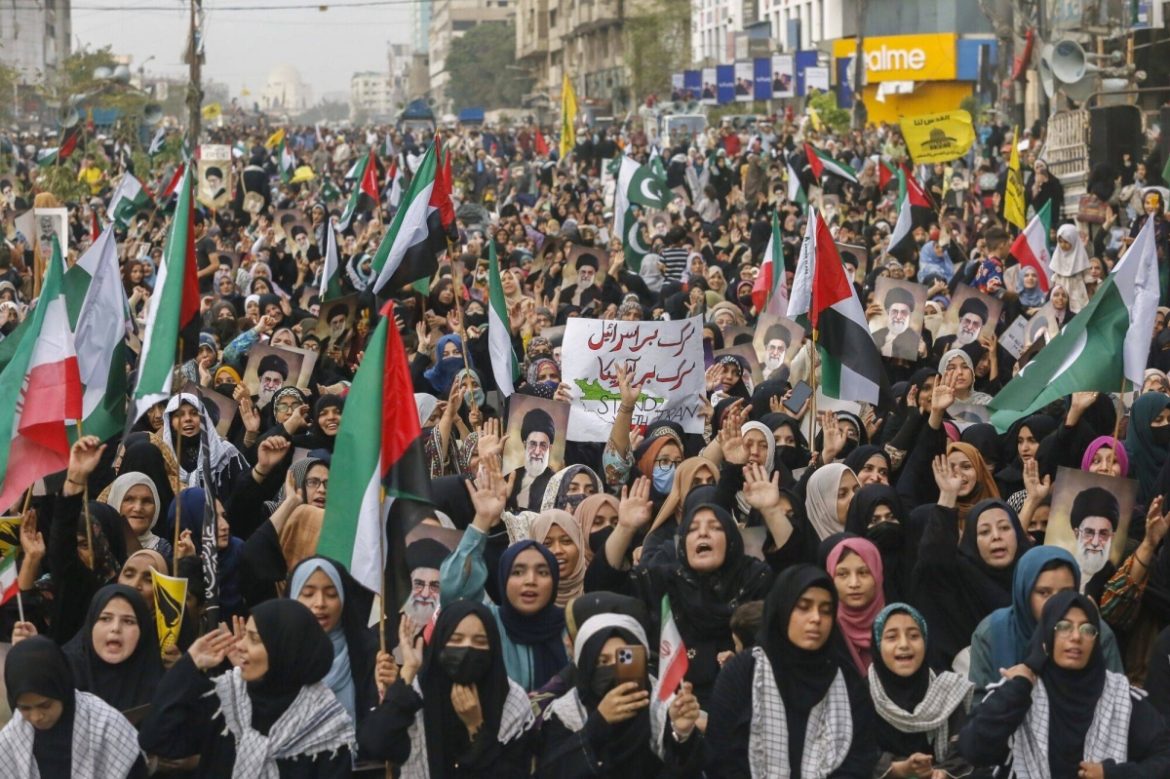
Today, Iran once again faces mass protests — this time against the Islamic Republic that replaced the monarchy 45 years ago. As then, eyes are fixed on Washington. Since the 1979 revolution and the imposition of sweeping US-led sanctions, Iran’s economy has suffered losses amounting to trillions of dollars. The collapse of the Iranian rial — which has lost around 20,000 percent of its value against the dollar — stands as a stark indicator of economic decline.
Whether the United States will once again play a decisive role in shaping Iran’s political future remains an open question. What is clear is that the legacy of 1979 continues to cast a long shadow over Tehran–Washington relations — a reminder that in the geopolitics of oil, power, and influence, regime change has often been viewed as an acceptable cost.
Al Mustafa Pakistan Holds Free Winter Eye Camp in Jandiali Bangla
Staff Reporter
Al Mustafa Pakistan organized a Free Winter Eye Camp in Jandiali Bangla as part of its Winter Eye Camp Campaign 2025, providing much-needed eye care services to underserved communities during the harsh winter season. The camp delivered comprehensive ophthalmic services under the supervision of renowned eye surgeon Dr. Felix Gill. A total of 60 successful eye surgeries were performed, restoring vision and improving the quality of life for patients suffering from various eye conditions. In addition, 410 patients received OPD consultations, ensuring access to essential eye healthcare.
Alongside eye treatment, the camp also focused on preventive healthcare. A total of 69 screening tests each for Hepatitis C (HCV), Hepatitis B (HBsAg), and HIV were conducted to promote early detection and disease prevention. To further support patients with visual impairments, 128 pairs of vision glasses were distributed free of cost.
Speaking on the occasion, Al Mustafa Pakistan officials said that the initiative reflects the organization’s ongoing commitment to serving humanity by providing free and quality healthcare to vulnerable populations. Community members and beneficiaries expressed gratitude for the timely medical support, particularly during winter when access to healthcare becomes more challenging.
The Free Winter Eye Camp at Jandiali Bangla stands as another milestone in Al Mustafa Pakistan’s efforts to bring healing, hope, and dignity to those in need.
How should Pakistanis and other Asians living “West” emerge in society?
By Zian Khan
To live successfully in the West, Asians need to navigate administrative tasks, build diverse social circles (both local and Asian), learn new communication styles (like directness and thanking service workers), adapt to different cultural norms (like individualism vs. collectivism), and balance preserving heritage with integrating new perspectives, especially regarding identity, family roles, and expressions of self, while leveraging their unique strengths like strong work ethics and global perspectives.
Practical Steps: Handle Logistics: Register with local authorities, get tax/health numbers, open bank accounts, and set up utilities.
Build Community: Join meet-up groups, hobby classes, and expat/cultural associations for support, but also make local friends for deeper integration.
Language & Communication: Focus on English proficiency, but also learn non-verbal cues and direct communication, as silence for “saving face” can be misinterpreted.
Embrace Cultural Differences: Be open to new foods, social interactions, and values, recognizing that Western norms often emphasize individualism and open disagreement more than some Asian cultures.
Cultural & Identity Shifts: Communication: Move from indirectness (saving face) to more direct speech, and learn to thank service staff like bus drivers.
Workplace: Adapt to calling supervisors by first names and expect flatter hierarchies.
Identity & Self-Worth: Challenge the deep-seated Asian focus on external validation and filial duty, learning to value oneself beyond achievements or parental approval.
Appearance & Expression: Feel comfortable expressing opinions, making personal choices (like who to marry), and redefining beauty standards.
Leveraging Strengths: Work Ethic: Use the strong drive for success and frugality common among many Asian immigrants.
Global Mindset: Utilize your cross-cultural experience and language skills in a globalized world.
Cultural Richness: Bring your heritage (food, ideas) and appreciate Western contributions like yoga or diverse cuisines.
Staff Reporter
The UK has seen a significant drop in net migration following the implementation of tougher rules, with figures falling sharply from record highs in 2023 to much lower levels by mid-2025, impacting work and study visas, and creating workforce challenges for employers, though debates continue the precise effectiveness and future trends.
Net Migration Decline: Net migration dropped to 204,000 in the year to June 2025, a substantial decrease from the peak of 944,000 in 2023, driven by stricter visa requirements, higher salary thresholds, and bans on dependants for many routes.
Work & Study Routes Affected: Skilled worker visas saw a 46% reduction, with the health and care sector experiencing a dramatic 94% drop in new arrivals in late 2025 compared to earlier peaks. Workforce Challenges: This decline presents significant issues for UK businesses, forcing HR and talent leaders to rethink workforce planning in tight labour markets.
New Restrictions: Recent government policies, including a major overhaul in late 2025, introduced longer waiting periods for settlement, tougher integration standards, and restrictions on benefits, aiming to control legal migration.
Government View: The current government claims these measures are working to restore order to the immigration system, reducing numbers significantly.
Criticism: Some critics, like Labour MP Kim Johnson, warn of a potential crisis in health and social care sectors due to these cuts, mimicking policies of other parties.
While overall migration is down, predicting the exact impact on asylum claims is complex, though Denmark saw asylum application falls after similar restrictions. There have also been periods with fewer small boat crossings, though overall numbers for 2025 still surpassed many past years, indicating ongoing challenges in managing irregular migration.
US promise to aid Iranian protesters is like sending a fleet to Pakistan in 1971
By Wajahat Ali Khan
Last Tuesday, the US President’s statement that “the protests in Iran have ended and I have been told that the Iranian regime will not execute the arrested protesters” makes it seem as if the US has abandoned its intention of an immediate attack on Iran for now. A major factor behind this, along with other factors, is the large number of people taking to the streets in support of the government in Iran.
On Monday, three million people took to the streets and made clear to the world the true face of Iran that they stand with the government and the Supreme Leader. After that, there is no rational or logical thing for people to object. The real protesters have also understood that our protest has been hijacked by the evildoers, so these matters have been brought under control. The protests were not as big as in the past, but the number of deaths this time is higher. This is true to a certain extent. Iranians are very civilised nation. It is in the DNA of the Iranian nation that no matter how much internal disagreement there is, they unite and fight against external forces. Therefore, Trump has limited options, but none of the options go as far as regime change.
In this situation, the promise of “American help is coming soon” to anti-government Iranian protesters seems like the promise that the United States made to Pakistan during the Indo-Pakistani war in 1971 that “the American 7th Fleet is coming soon to help Pakistan,” which has not come yet!
Tajammul Gurmani
Manchester
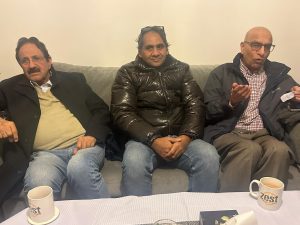
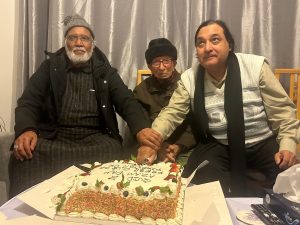
Press Club of Pakistan UK (PCP) celebrated Quaid-e-Azam Day in memory of the Father of the Nation of Pakistan in Manchester. A birthday cake was also cut on the occasion.
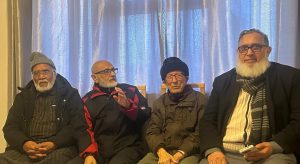
The President of PCP, Mehmood Khan, presided over the event, while Muhabat Hussain Awan was the chief guest. Prominent participants included Mahboob Elahi Butt, Nasrallah Khan Mughal, Cllr Muqdasa Bano, Shefta Khan, Saifur Rehman, Choudhry Rab Nawaz, Gulzar Khan, Sufi Muhammad Hussain and others.
Mehmood Khan paid rich tribute to Quaid-e-Azam and said that he always followed the rule of law and the Two-Nation Theory. Muhabat Hussain Awan said that Quaid-e-Azam never broke the law nor was he ever detained in his life.
Cllr Muqdasa Bano stressed that there is a need to educate the younger generation about the struggle of Quaid-e-Azam. She said that he was a true leader and that his vision must be promoted.
Nasrallah Khan Mughal said that Quaid-e-Azam believed in political struggle within the framework of state law and achieved the independence of Pakistan from the British Raj. He added that regional, religious and linguistic differences must be set aside to ensure unity in our ranks.
During the meeting, it was decided that the AGM would be held on 25 April, PCP elections would take place in May, and a delegation would also attend a Christmas event to be held in Newcastle.

Tariq Hassan
Lahore
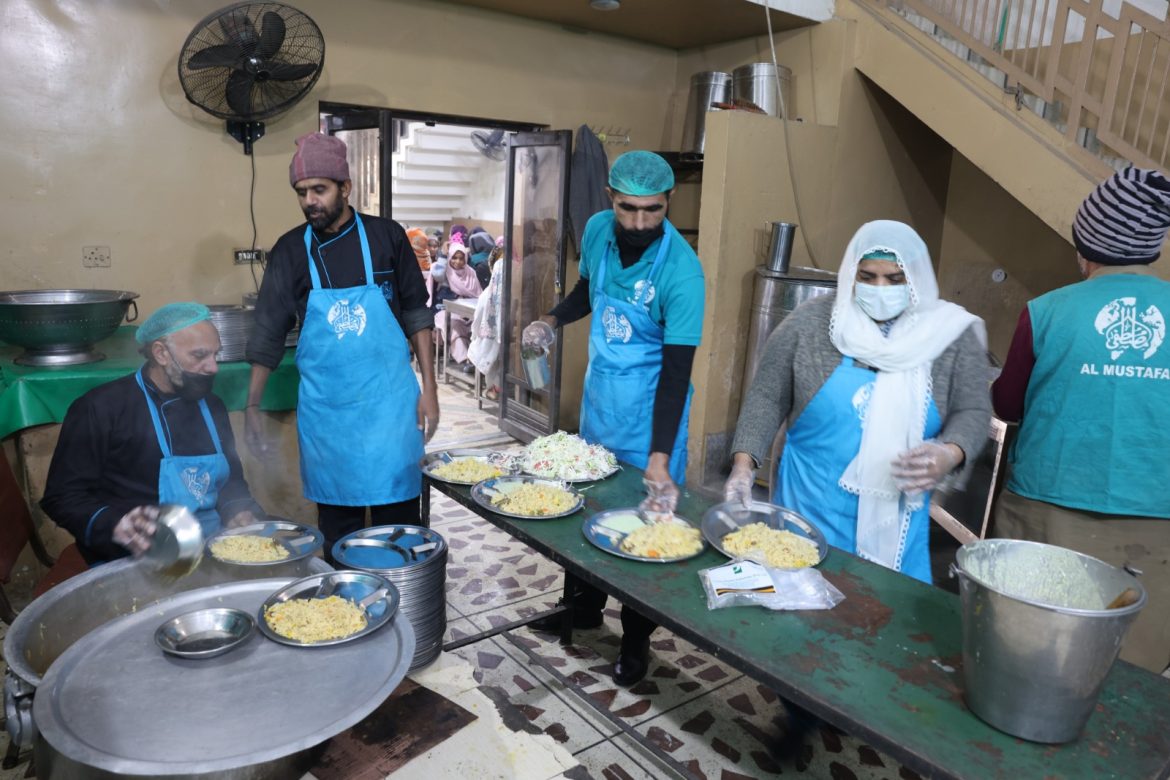
Hundreds of underprivileged individuals arriving daily from far-flung areas of Punjab are being provided freshly cooked, hygienic and warm meals twice a day at the Al Mustafa Dastarkhwan in Lahore, a humanitarian initiative that is fast becoming a lifeline for the city’s most vulnerable.
More than just a feeding facility, the Al Mustafa Dastarkhwan has emerged as a space where dignity, compassion and hope are served alongside food. Volunteers ensure that guests are treated with respect and care, reinforcing the belief that charity should uplift human dignity rather than merely address hunger.
According to organisers, the initiative reflects Al Mustafa’s broader mission of serving humanity without discrimination. “This dastarkhwan is not only about filling empty stomachs; it is about restoring hope and self-worth among those who have been pushed to the margins,” an official associated with the project said.
The programme relies heavily on public support and donations, enabling it to sustain daily operations and reach those travelling long distances in search of assistance. Supporters are encouraged to contribute and help expand the mission so that more lives can be touched through compassion and collective responsibility.
The initiative operates under the guiding philosophy, “Service to humanity is the path to the Creator,” a principle that continues to shape Al Mustafa’s welfare projects across Pakistan.
Al Mustafa Pakistan Inaugurates Water Filtration Plant in Sialkot
Nawaz Kharral
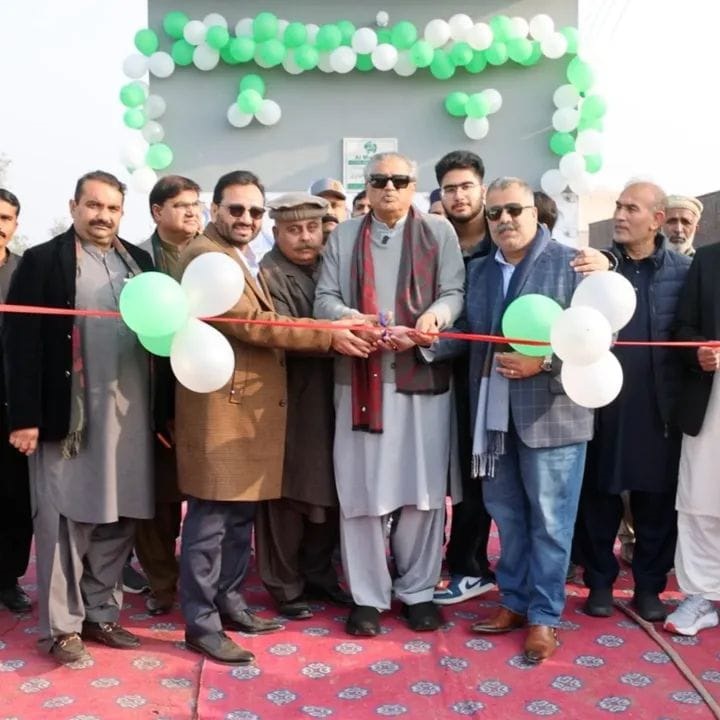
Al Mustafa Pakistan has inaugurated a new Water Filtration Plant in Kotli Dasu Singh, Tehsil Daska, District Sialkot, aimed at providing safe and clean drinking water to the local community. The project has been made possible through the generous support of donor Mr. Imtiaz Ahmed from Canada.
The facility was formally inaugurated by renowned anchor and columnist Mr. Sohail Warraich, who appreciated Al Mustafa Pakistan’s continued efforts in addressing basic humanitarian needs, particularly access to clean water in underserved areas.
The inauguration ceremony was attended by several notable figures, including Mr. Muhammad Nisar Kallu, Director of Al Mustafa Canada; Chaudhry Ehsan; Mr. Farooq Ghuman, Central Leader of Pakistan Muslim League-Nawaz (PML-N); Mr. Khalid Butt, Chairman of the Price Control Committee, District Sialkot; and Mr. Muhammad Nawaz Kharral, Head of Publications and Public Relations at Al Mustafa Pakistan. A large number of local residents and community members were also present on the occasion.
Speakers at the event highlighted the importance of clean drinking water for public health and praised the collaboration between overseas donors and local organizations. Al Mustafa Pakistan officials stated that the organization remains committed to improving living conditions through sustainable development projects across Pakistan. The newly inaugurated water filtration plant is expected to benefit hundreds of families in the area by ensuring access to safe and potable water.
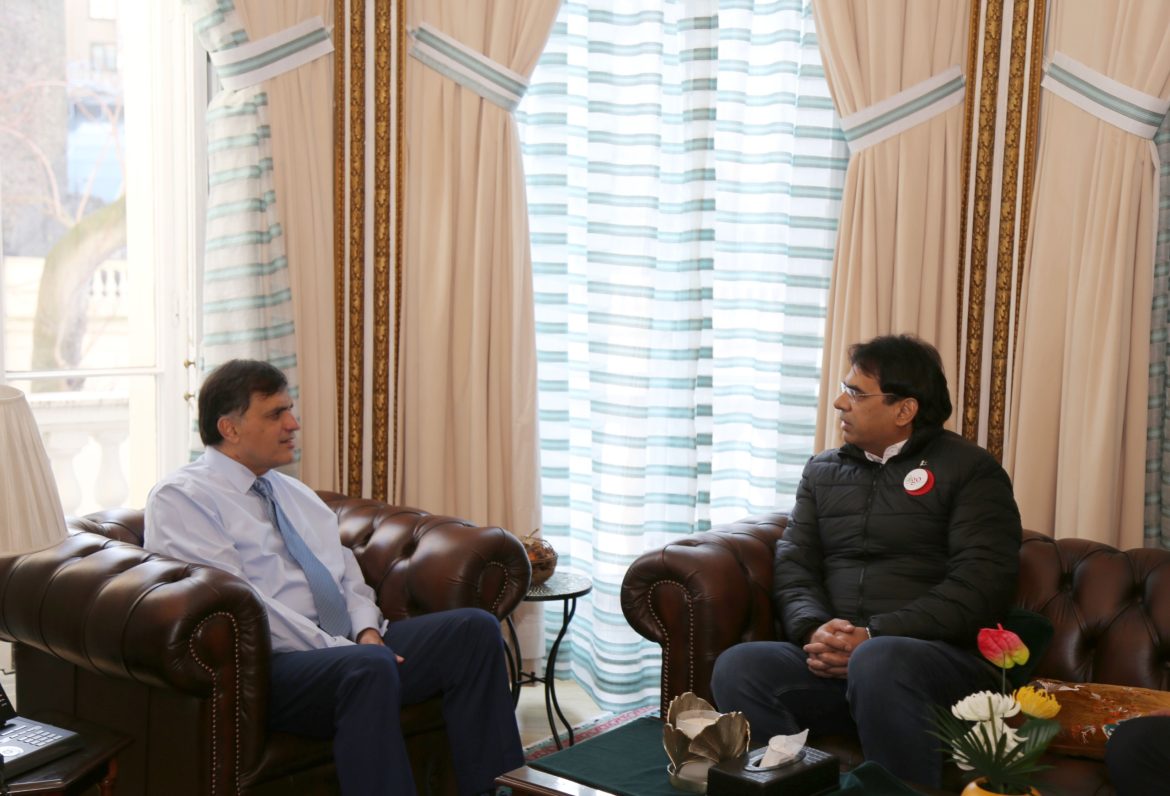
Talha Waheed called on Pakistan’s High Commissioner to the United Kingdom, Dr Mohammad Faisal
Press release
London
The High Commissioner congratulated Talha Waheed on his historic accomplishment and lauded his dedication, discipline, and perseverance. Dr Mohammad Faisal also acknowledged the pride his achievement has brought to Pakistan.
Talha Waheed was officially awarded the Guinness World Record certificate last year for executing the most successful tennis serves in one minute, completing 59 accurate serves surpassing the previous record of 42.High Commissioner Dr Mohammad Faisal remarked that Talha Waheed’s success is not only a personal milestone but also a significant boost for Pakistan’s sporting image internationally. He said, “Talha Waheed’s achievement highlights the immense potential and resilience of Pakistani athletes. His world record will inspire young players, promote tennis at the grassroots level, and contribute positively to the development of sports culture in Pakistan,” the High Commissioner said. He added, “Such accomplishments strengthen Pakistan’s soft image abroad and showcase the country’s talent on the global stage.”
Talha Waheed expressed his gratitude for the encouragement and support extended by the High Commissioner Dr Mohammad Faisal and reaffirmed his commitment to promoting tennis in Pakistan. He also reiterated his ambition to pursue further world records, aiming to elevate Pakistan’s profile in international tennis and inspire future generations.