By Tajammul Gurmani:
Rochdale:
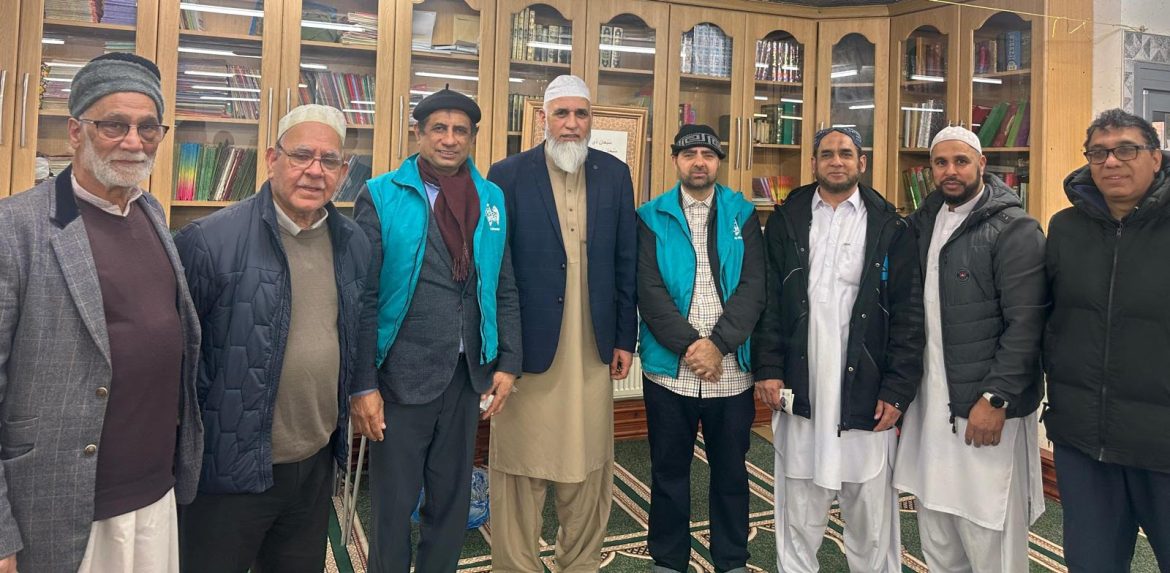
Al Mustafa Welfare Trust (AMWT) collected funds in connection with its Ramadan campaign at Al Quba Jamia Masjid, Rochdale. Volunteers raised funds during the Friday prayer for the construction of an Eye Hospital in Dadyal, Mirpur, Kashmir. The local community donated generously to support the project.
Al Mustafa Welfare Trust expressed special thanks to Muhammad Khalid, General Secretary of the mosque committee.
UK
Bureau report:
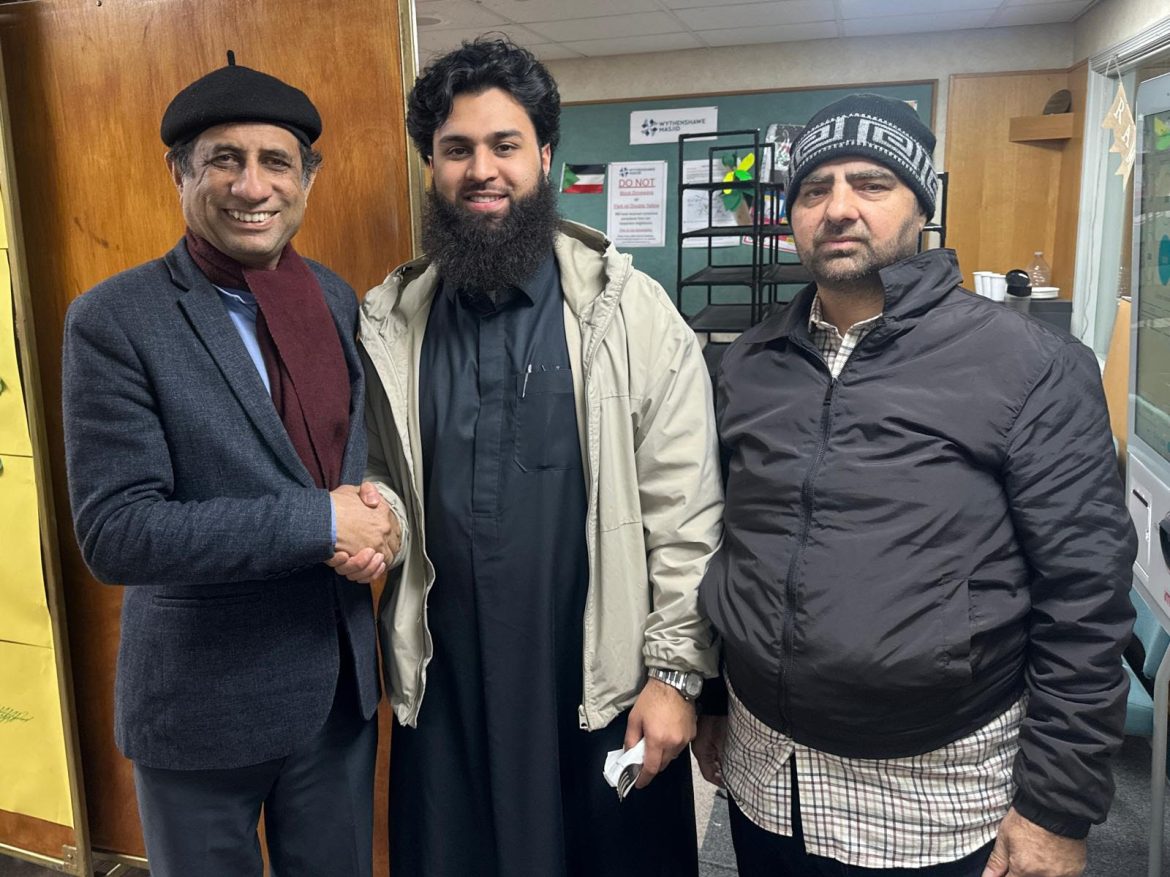
Al Mustafa Welfare Trust collected funds from Wythenshawe Mosque during the Taraweeh prayer. Local people donated generously for food aid for Yemen, Sudan and Gaza. Mosque trustee Yusuf Mirza, admin Zain Sarfraz and volunteers also supported Al Mustafa on the occasion.
Shiites are Muslims and it is not permissible to declare them infidels; Iran is defending itself
By Amr roshdy:
Egypt:
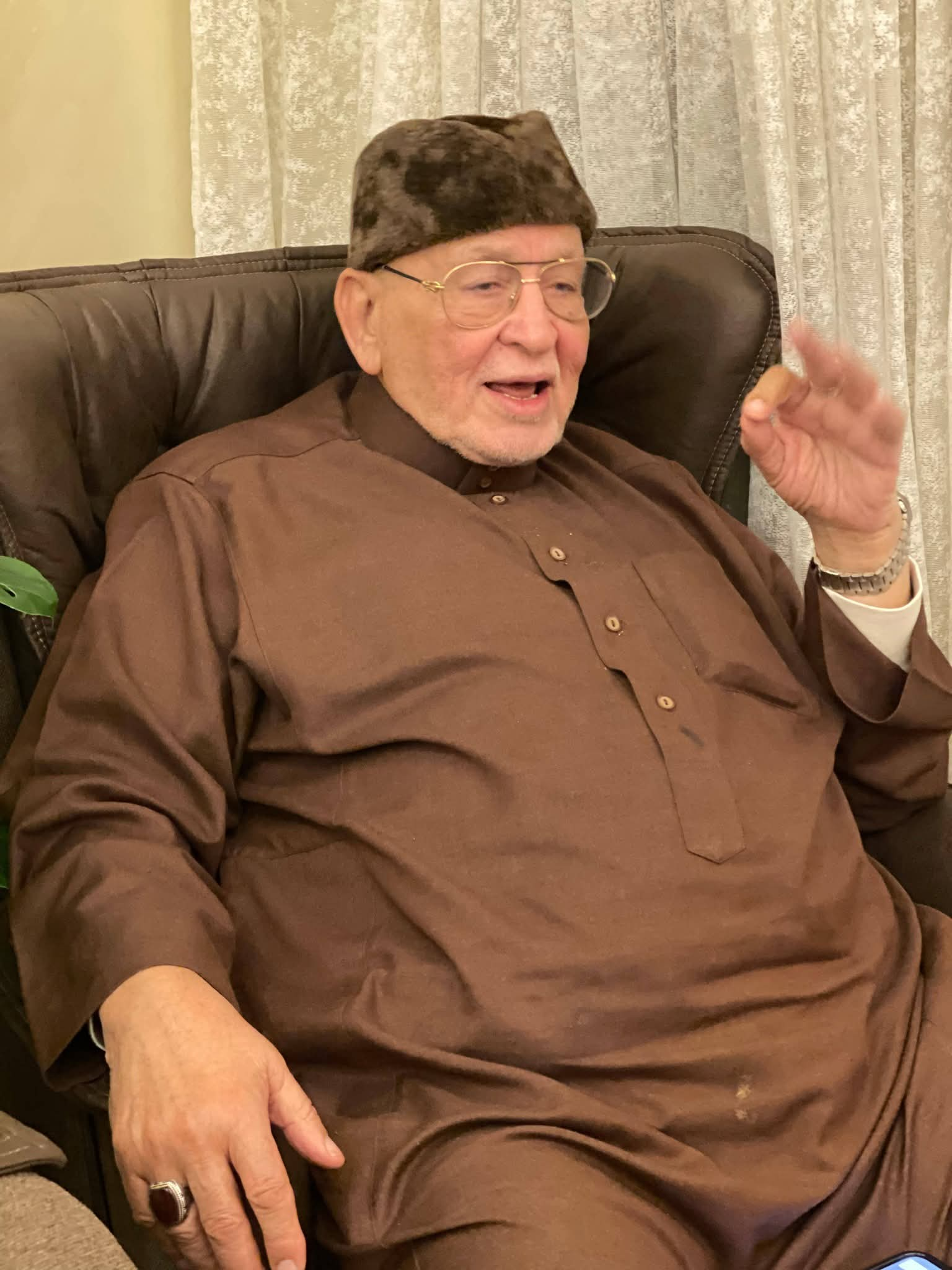
Dr. Alaa Abu Al-Azaem, President of the World Sufi Union in France, Sheikh of the Azmiya Order, and member of the Supreme Council of Sufism in Egypt, affirmed that the Sufi path is the most moderate and centrist of the Islamic paths, while simultaneously warning against joining extremist movements.
In an interview with the London Post, he revealed his rejection of aggression against Iran, urging America and Israel to refrain from war against Iran because it would inflict a heavy loss upon them.
What is your message to the Egyptian people, the Sufi orders, and the lovers of the Prophet’s family during the holy month of Ramadan?
I say to the Egyptian people: Preserve your homeland and do not listen to the currents of extremism and violence. We are a moderate country that loves saints and righteous people, and those who forbid this are not among us; this is a foreign ideology to our society. We are a country whose reference point is Al-Azhar. We pray that God grants President Abdel Fattah al-Sisi righteous advisors who will help him build a new Egypt and ensure the prosperity and progress of our nation.

Dr. Alaa Abu Al-Azaem, President of the World Sufi Union in France and Egypt, the largest Sufi authority in Egypt and the world
And I say to the followers of Sufi orders: Adhere to the path of your sheikhs, for therein lies all goodness. Not a single terrorist has emerged from among us, unlike what has happened in some other movements. This is by the grace of God and the grace of our Prophet Muhammad, peace and blessings be upon him. Sufism will remain so until God inherits the earth and all that is on it.
For Sufis, Ramadan is a month of worship, remembrance, fasting, prayer, and seclusion with God Almighty. All Sufi followers in Egypt wish that the entire year were Ramadan, so that they might draw ever closer to God Almighty. In this month, the Muslim distances himself from worldly affairs and draws closer to his Creator, the Exalted and Glorified, than at any other time.
Everyone relies on Sufi orders to confront extremist ideology. What prevents you from fulfilling this mission?
One of the positive aspects of Sufi orders is that followers look to the Sufi sheikh as a role model. These sheikhs often have limited financial resources and may therefore struggle to maintain a respectable appearance. The state should consider how to support Sufism in disseminating its teachings and educational approach, from which no terrorists have ever emerged.
This support could take the form of exempting Sufi sheikhs from paying any transportation fees, at least for domestic flights, buses, and trains, making them free for the sheikhs to travel and connect with their followers in different governorates.
We have 70 Sufi sheikhs, which is not a large number, and each sheikh has many followers throughout the country. Traveling from the north to the south is extremely expensive. We support the state in confronting extremism, and therefore we urge it to consider this proposal seriously and urgently, as it would enable these sheikhs to move around more easily, spread their teachings among the people, and protect their followers from extremist ideology.
Can it be said that Sufi orders have succeeded in combating extremism?
When we participated in television programs, we would have reasonable discussions with the presenters about Sufism. It was a very good idea for them to host some Sufi sheikhs to talk about Sufism and ethics, and to discuss issues such as: Is terrorism part of religion? What are its causes? And so on. This happened to me in an episode with Dr. Mohamed El-Baz, Chairman of the Board of Directors of the Al-Dustour Foundation, specifically on Al-Nahar TV. This was very positive, as people understood the meaning of Sufism, what terrorism is, and its causes. Certainly, there are sheikhs who are perhaps more knowledgeable than me in this field, but they haven’t been given the opportunity to speak.
And what about the efforts of the Azmiya Sufi order specifically in this regard?
When the Muslim Brotherhood raised the slogan “Islam is the solution,” Mr. Ezz El-Din Madi Abu El-Azaem published a book entitled “The Islam of the Sufis is the Solution, Not the Islam of the Kharijites.” He was among the first to describe the Muslim Brotherhood as Kharijites.
The Kharijites were the group that fought against Ali ibn Abi Talib and never treated him fairly, driven by their hatred for the Prophet’s family. This description applies to the Muslim Brotherhood and some extremist Salafist movements, as they show no love for the Prophet’s family or his parents, as if the matter only concerns the Prophet himself, after which they turn to other paths.
These groups claim that Sufism and Shi’ism are two sides of the same coin. What is your response to this?
The Grand Imam of Al-Azhar affirmed that Shi’ites are Muslims and brothers in faith. However, some Salafist movements object to this, arguing that the Grand Imam, being an Ash’ari, a Sufi, and an Azharite, does not represent their approach. Some even go so far as to attack the Ash’ari school of thought altogether.
In 2005, the Hashemite Kingdom of Jordan hosted a scholarly conference known as the “Amman Conference,” attended by a number of prominent scholars, including the then Grand Mufti of Egypt, Dr. Ali Gomaa. The conference endorsed what became known as the “Amman Message,” which recognized eight recognized schools of Islamic jurisprudence (madhhabs) that Muslims are permitted to follow: the four Sunni schools, the Twelver Ja’fari school, the Zaidi school, the Ibadi school, and the Zahiri school.
Therefore, the claim that followers of these schools are excluded from the fold of Islam contradicts the consensus of a group of leading scholars and cannot be considered merely another viewpoint. Rather, it is a claim lacking a sound scholarly basis.
What is your opinion of the scholarly councils organized by the General Directorate of Sufi Orders, and their role in combating extremism?
The scholarly councils organised by the Sheikhdom play a vital role in promoting moderation and balance. This is a commendable endeavor and a praiseworthy effort, credited to Sheikh Abdulhadi al-Qasabi, the Grand Sheikh of the Sufi Orders. We pray that God grants him success in this endeavor. This plan was developed jointly by Dr. Ali Gomaa and Dr. Muhammad Mahmoud Abu Hashim, and approved by the Supreme Council of Sufi Orders. These councils aim to introduce people to Sufism and its true essence, which is based on morality. The more virtuous a person is, the greater their share of Sufism.
These councils also emphasise their complete rejection of extremism, as the killing of Muslims, the seizure of their property, and the violation of their honor perpetrated by extremists are reprehensible.
By Tajammul Gurmani
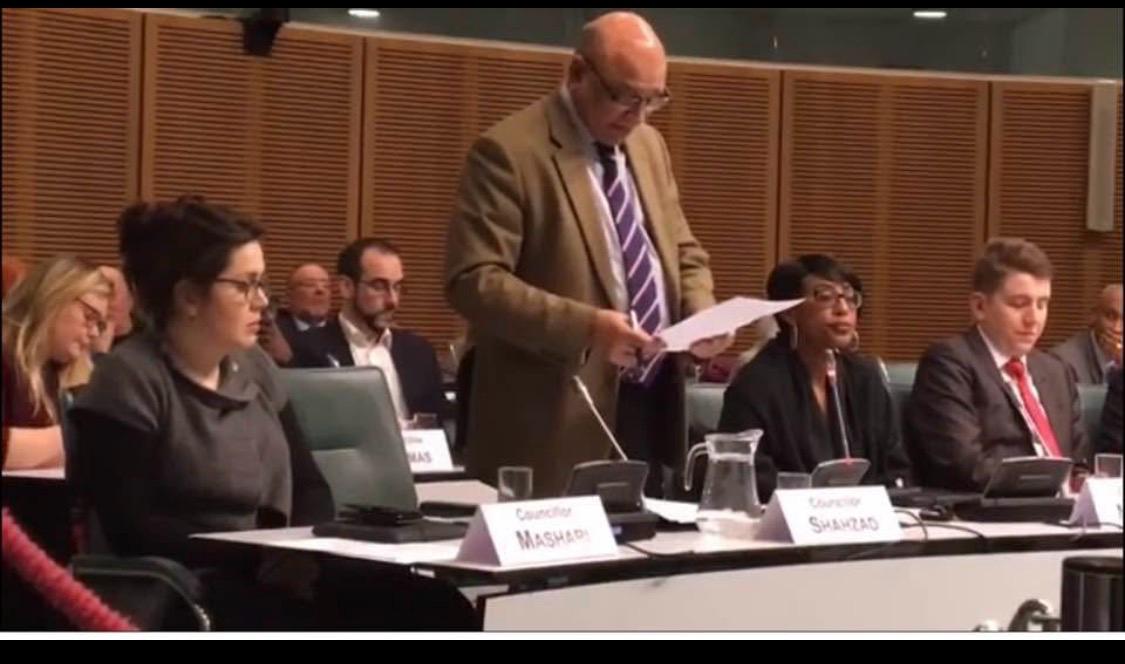
The local elections for Manchester City Council (MCC) will be held on 7 May. There are 32 wards, and voters will elect a councillor in each ward for the next four years.
According to sources, there are a total of 96 councillors in the City Council, of whom 32 councillors will retire, and people will elect their new representatives for the next four years.
Talking to this correspondent, Cllr Rab Nawaz Akbar said that the Labour Party has already announced its candidates, and almost all the sitting councillors have secured their party tickets for the forthcoming election. Renowned political observer and Labour Party leader Tahir Choudhry said that the local elections will be tough for Labour after losing the by-election in Manchester. “Labour will face the Green Party, Your Party of Jeremy Corbyn, and the Workers Party of George Galloway, who may make seat adjustments in the local elections,” Tahir Choudhry added.
By Wajahat Ali Khan:
A multi-faith Iftar dinner was jointly organised by the “AlMustafa Welfare Trust” Hounslow Friends of Faith and “West Thames College” at West Thames College London which hosted by Barrister Zubair Awan. The event was attended by Ruth Cadbury, Member of Parliament for Isleworth & Brentford, Mayor of Hounslow Amy Croft, Charanjit Kaur, Chair of Hounslow Friends of Faith, Marta Gajewska Principal of West Thames College, Abdulrzzaq Sajid, Chairman of AlMustafa Welfare Trust, Shamama Latif, Ahmed Nawaz and a large number of people from other communities and all walks of life attended the event. On the occasion, speakers highlighted the importance of Ramadan and said, this month teaches us a lesson in piety and abstinence, as it is stated in the Holy Quran that fasting was made obligatory so that humans can satisfy the hunger and thirst of other humans. The speakers said that fasting teaches us patience by controlling hunger, thirst and desires, a person learns to control his soul. Therefore, fasting is not just about abstaining from food and drink, but also teaches us to avoid lies, backbiting, fighting and sins. The speakers said that in a multicultural society like Britain, where people of different religions, cultures and nationalities live together, participating in each other’s festivals or at least respecting them promotes mutual harmony and brotherhood. These festivals bring people closer and joining in each other’s joys increases friendship and trust.

Pakistan Calls for a Bold, Practical and Reformed at 26th Commonwealth Foreign Affairs Ministers Meeting
PR:
London:
The 26th Commonwealth Foreign Affairs Ministers Meeting (CFAMM) was held on 8 Mach 2026 at Lancaster House, London, bringing together Foreign Ministers and senior representatives from across the Commonwealth, to set priorities ahead of CHOGM 2026 and explore transformative solutions for a stronger and more responsive Commonwealth.
High Commissioner Dr. Mohammad Faisal represented Pakistan on behalf of Deputy Prime Minister / Foreign Minister Senator Ishaq Dar, who could not participate because of the prevailing regional situation.
In his remarks, the High Commissioner highlighted the urgent need for a more agile, inclusive and result-oriented Commonwealth in an increasingly complex global environment. He observed that the current global context was marked by fragmentation, geopolitical rivalries and increasing strain on traditional multilateral institutions. He noted that this moment presented both a challenge and an opportunity for the Commonwealth to reaffirm its relevance and collective purpose. At the same time, the High Commissioner cautioned against creation of new power centres within organisations.
Emphasizing the importance of reforms, the High Commissioner stated that the Secretary General’s reform proposals merit serious and constructive engagement by member states. He underscored that Commonwealth Foreign Ministers and leaders must take a proactive role, not only in shaping institutional reforms but also in advancing meaningful cooperation among member states.
Highlighting Pakistan’s perspective, the High Commissioner stressed that the Commonwealth must focus on practical outcomes that directly benefit its peoples. These included strengthening economic resilience, facilitating trade, promoting investment flows, addressing debt sustainability and advancing sustainable development. He called on the member states to seize this moment of global transition to reposition the Commonwealth as a credible platform for action, solidarity and shared prosperity.
The High Commissioner reaffirmed Pakistan’s commitment to working closely with fellow Commonwealth members, to pursue meaningful reforms and practical initiatives to ensure the organisation remained modern, resilient and responsive to the needs of its citizens.
By our political correspondent
President Donald Trump has publicly expressed deep disappointment with British Prime Minister Sir Keir Starmer, criticising the United Kingdom’s cautious approach to the American‑led campaign against Iran. Trump said the UK hesitated too long in granting permission for U.S. forces to use British military bases in operations linked to the conflict, straining the “special relationship. In a highly unusual public rebuke, Trump accused Starmer of being overly cautious on legal grounds when initially refusing U.S. requests to deploy troops and aircraft from UK facilities including the strategic Indian Ocean base at Diego Garcia. “That’s probably never happened between our countries before,” Trump told The Telegraph, adding that he was “very disappointed” by the delay in authorising support.
Initially, the UK government declined to allow the U.S. to use British airbases for offensive operations, with ministers citing concerns about international law and the lack of a clear legal mandate for wider strikes on Iranian territory. Starmer’s government also made clear that Britain had no direct role in the USA Israeli strikes that killed Iran’s Supreme Leader, Ayatollah Ali Khamenei. However, amid an escalation of the conflict including Iranian retaliatory missile and drone attacks that struck allied positions and British personnel abroad Starmer reversed course. On Sunday night, the prime minister announced that the UK had agreed to let the United States use British bases for limited defensive strikes targeting Iranian missile depots and launchers in a bid to protect British lives and regional partners.
He stressed that this did not involve Britain joining offensive operations against Iran. Downing Street sources said the shift followed urgent consultations with U.S. officials after Iranian attacks intensified across the Middle East, although Starmer maintained a firm focus on international law and the importance of de‑escalation. Trump’s criticism comes amid broader international reaction to the ongoing conflict. European leaders including France and Germany have taken a cautious approach, expressing support for defence of regional interests while urging diplomatic solutions. In Britain, the row has sparked debate among political figures. Some have said the government’s stance reflects a responsible balance between supporting allies and upholding legal norms, while others including some former intelligence officials have complained of a lack of “full‑throated support” for U.S. action.
Both London and Washington continue to emphasise shared objectives: preventing Iran’s nuclear ambitions and ensuring the safety of allied forces and civilians across the region. But as the conflict persists, the diplomatic strain over military collaboration and the limit of British backing is likely to remain a key issue in transatlantic relations.
By Tajammul Gurmani
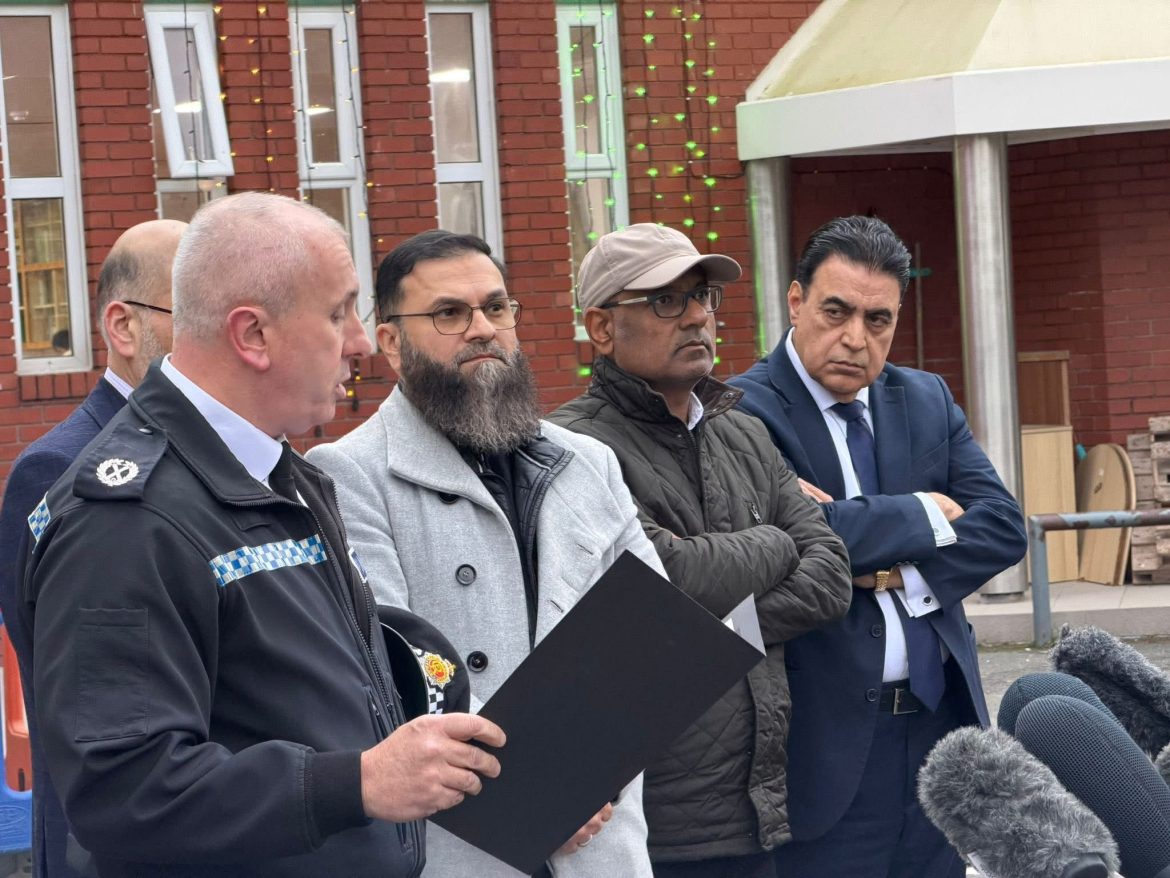
Police (GMP) has arrested the second suspect involved in the Central Mosque Victoria Park incident. While police officers deputed to the mosques during Taraweeh prayers were called back, police continue patrolling as part of the second phase of the security plan.
Speaking to The London Post, Chairman of the mosque committee Hamad Khan said that, according to the latest developments after the Victoria Mosque incident, both suspects have been remanded in custody. One of them has been charged with offences related to carrying weapons. The second suspect has a criminal behaviour order against him, and in breach of that order, both appeared in court last Friday and have been remanded in custody.
Talking about their criminal objectives, he said: “I am not privy to their statements, and I have not asked the police what their objectives were. For us, it is important that they are both off the streets. They will both be in custody, and once sentencing takes place, we will find out whether it was an individual act or whether some group or organisation was behind them. According to the information the police have given us, there are no groups behind them. The police will, however, continue their investigation. With the information currently available, they do not believe that any additional groups are involved.”
Regarding the security measures taken by the mosque committee, he said: “We always have security, which we will step up. We will have a greater number of volunteers present. The police have committed to a high presence around the mosques, especially around the Central Mosque in Manchester. We expect the police to be present, at least visibly, throughout the month of Ramadan and up to after Eid.”
China and Russia should play their role in preventing a US-Iran war
By Ahmad Shahzad OBE:
China and Russia must take urgent and decisive steps to prevent the United States from acting unilaterally in ways that threaten global peace, stability, and humanity.
Ahmad Shahzad OBE, Founder and Former Chairman of BAME Labour, has strongly commended Prime Minister Keir Starmer for refusing to support what he described as illegal military action against Iran.
President Donald Trump appears to be driven by deep-seated hostility towards Muslims and an approach shaped by his background in real estate one that prioritises destruction followed by reconstruction for gain. This dangerous mindset reflects outdated and exploitative practices reminiscent of colonial history.
He must recognise that the world has changed. This is 2026 — an era defined by rising global awareness, justice, and accountability.
As Commander-in-Chief, he wields extraordinary power unmatched by most nations. However, the United States has long claimed to stand as a defender of human rights, freedom, and democracy. Recent actions raise serious concerns about whether those principles are being upheld or abandoned.
The world cannot remain silent. Global powers must act responsibly and collectively to prevent reckless decisions that could endanger humanity and destabilise our shared beautiful world.