
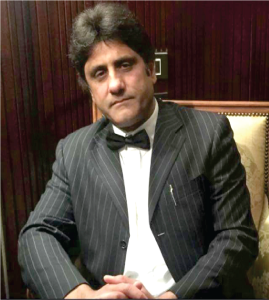
Wajahat Ali Khan
On the streets of Iran’s great cities and in markets from the Grand Bazaar to provincial towns, a wave of unrest has surged into the twelfth day, shaking the Islamic Republic from the inside out.
What began in late December 2025 as protests over a cratering economy has grown into the broadest popular challenge to the clerically-led government since the Woman, Life, Freedom movement of 2022–23. Thousands have taken to urban boulevards and rural squares across all 31 provinces, voicing not just anger at economic hardship but deeper frustration with political stagnation and an elite perceived to be out of touch with daily struggles. Iranians have endured a dramatic collapse of the national currency and soaring prices for food, fuel and basic goods. Shopkeepers shuttered their stalls in Tehran’s bazaar as they watched their livelihoods evaporate, a symbolic spark that soon ignited protests in cities from Mashhad to Isfahan.
Protesters’ chants — once focused on cost of living and jobs — now mix in broader themes: criticism of foreign policy, resentment toward entrenched elites, and for some, calls for systemic change. In many demonstrations, speakers have stressed unity and defiance, urging that “we are all together” even as the government tries to downplay the movement’s coherence, the Iranian state’s reaction has been sharp.
In the past week authorities-imposed a near-total internet and phone blackout, severing communications domestically and limiting outside reporting on the unrest. Telecom disruptions, including a collapse of mobile internet traffic, have isolated many cities and hindered news flow. Security forces, including the Revolutionary Guard, have clashed with crowds in major centres. Human rights organisations report lethal force, with dozens of demonstrators killed and hundreds wounded or detained. Hospitals treating the injured have been raided, and hundreds including minors have been arrested in overnight sweeps.
Supreme Leader Ayatollah Ali Khamenei has framed the unrest as the work of “rioters” and foreign interference, warning that authorities will not tolerate what he describes as destructive actions. Judicial figures have threatened harsh penalties for demonstrators, reflecting a renewed hardline posture. In this situation, a key question arises when looking at the behaviour of the United States, Israel, and other Western countries that can the monarchy be restored in the country through the son of the former Shah of Iran, Mohammad Reza Pahlavi?
Because, Reza Pahlavi, the exiled son of Iran’s last monarch, has appealed to people across the country to take to the streets to intensify ongoing protests inflation in Iran. Reza Pahlavi, the eldest son of the deposed Iranian emperor after the 1979 Islamic Revolution, said in a message on social media that the ongoing protests in Iran are “unprecedented.” He said that there have been reports that the government is deeply afraid of the protests and is once again trying to shut down the internet to stop the protests. In a statement, he said, “I thank President Trump for reiterating his commitment to holding the Iranian government accountable.”
Addressing leaders of Western countries, Reza Pahlavi said, “Now is the time for European leaders to break their silence and come out openly in support of the Iranian people.” “I appeal to all world leaders to use the available technical, financial and diplomatic resources to reconnect with the Iranian people, to make their voices heard and their aspirations realized. Do not let the voices of my brave compatriots be silenced.” Reza Pahlavi was seen as the successor to his father (the Shah of Iran) from birth. In 1979, he was training to fly fighter jets in the United States when the revolution overthrew his father, Reza Shah Pahlavi.
Reza Shah Pahlavi was supported by Western allies, including the United States, and struggled to find asylum in another country during the revolution. He died of cancer in Egypt in 1980.
After the Shah’s death, his family faced endless hardships, with even friendly countries refusing to grant them asylum, forcing them to seek refuge in the United States and Britain. Crown Prince Reza Pahlavi’s younger sister, Leila Pahlavi, committed suicide in exile in the UK at the age of 33, while one of his brothers, Ali Reza Pahlavi, also committed suicide by shooting himself in 2011.
After the deaths of his sister and brother, Reza Pahlavi came to be seen as the symbolic head of the Iranian royal family. Now, in the context of the current situation in Iran, Reza Pahlavi, 65, is determined to play a role in his country’s political future. Reza Pahlavi, who lives in a quiet suburb near Washington, D.C., is said to be a frequent visitor. He can often be seen chatting in nearby teahouses, where he expresses his political views.
Today, Pahlavi is presenting himself as a leader for national reconciliation rather than a monarch. He says he wants to help guide Iran toward free elections, the rule of law and equal rights for women. He has said that the final decision on whether to restore the monarchy or democracy should be left to voters. His supporters see him as the only opposition figure for peaceful change in Iran. But his critics say he has the backing of other countries. Critics also question whether Iranian citizens, weary of decades of political crisis, are ready to trust an exiled leader?
