
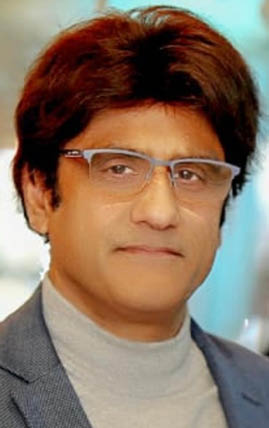
Wajahat Ali Khan
The United Arab Emirates, Kuwait, Bahrain, Qatar, Iraq and Saudi Arabia certainly have this complaint that, why is Iran firing missiles at them, but they do not understand why they all allowed the US to build military bases in their countries and now if missiles are raining down on Iran from these military bases, then which country should Iran fire missiles in response?
Today, when we witness the regular war between Iran, Israel and the United States and the instability in the Middle East, we realise that the Muslim world desperately needs a leader who is a politician like ZA Bhutto who is farsighted, courageous and believes in the welfare of the people. Zulfikar Ali Bhutto, a name that is much more than just a definition of a politician, is still alive in our consciousness like a symbol. Under his leadership, the priorities of public welfare and national interest were always higher than the flames of power. The secret of Bhutto’s politics was that he had the courage to raise the voice of the interests of Muslims at the global level and understand the public sentiments in domestic politics.
In the 1970s, Bhutto provided Pakistan with the basis for nuclear capability, strengthened popular democracy, and tried to promote relations between the countries of the Muslim world. His goal was not just to gain power, but to present a scenario where Muslim countries would unite to protect their interests and play an effective role at the global level. Of course, later as Prime Minister Mian Muhammad Nawaz Sharif, despite all the pressure to emulate Bhutto, played his part in making Pakistan a nuclear power in 1998.
In 1974, the Islamic Summit Conference (OIC) was held in Lahore, a historic occasion for the unity of the Muslim Ummah. Muslim leaders from all over the world attended the conference and took important decisions such as the Palestine issue, economic cooperation and the recognition of Bangladesh. This Islamic Summit was the moment when politics overturned all the scales of hostility and friendship, and the world witnessed a scene that was previously unimaginable.
In 1974 when the Islamic Summit Conference was to be held in Lahore. At the same time, the Jamaat-e-Islami was raising slogans of “Bangladesh is unacceptable” and was openly criticising Bhutto. In such an environment, Sheikh Mujibur Rahman apologised for coming to Pakistan and announced that he would not come himself but would send his Foreign Minister. However, at the request and wish of Zulfikar Ali Bhutto, the matter took a new direction. Egyptian President Anwar El Sadat and Yasser Arafat reached Dhaka on a special plane and brought Sheikh Mujibur Rahman with them to attend the conference. Thus, when Sheikh Mujibur Rahman, who had been considered an “enemy of Pakistan” in Pakistan for years, came to Lahore to attend the Islamic Summit Conference, the world witnessed a surprising scene. The same man called “traitor” shook hands with Bhutto and was seen laughing and smiling in pleasant conversations. Even the one who received Sheikh Mujib at the airport was the same General Tikka Khan whom Sheikh Mujib once called the “Butcher of Bengal” and later the founder of Bangladesh, Sheikh Mujibur Rahman, who was also called “Bangla Bandhu”, also gave a very emotional speech in the Punjab Assembly during the Lahore Summit.
In today’s world, we need a leader who can unite Muslim countries with economic, political and military acumen, a leader who can not only assure the people of solutions to local problems but also effectively defend Muslim interests at the global level. It is necessary to understand that a united Muslim world does not mean just gathering at ceremonies or shaking hands at international meetings. It means economic unity, common defence policies, and cooperation in the fields of education and technology. For example, if Islamic countries unite in energy, technology, and investment, not only will internal crises be reduced but their voices will also be heard at the global level. I think that the Muslim world still needs a new Bhutto, one who is also a politician, a friend of the people, and a voice of the Muslim world at the global level.
The recent war between the United States and Iran has once again put the Middle East in danger. This is not just a problem of two countries, but a warning for the peace, economy and political stability of the entire region. Are all Muslim countries not seeing that the ongoing crises in Palestine, Iran, Iraq, Syria, Libya, Yemen, Bahrain, Kuwait, Qatar, Oman, Dubai, Abu Dhabi and other Arab countries today is proof that when Islamic countries do not unite and prefer to be puppets in the hands of global powers, global powers make them easy targets in their games.
It is time for Islamic countries to put aside their internal politics and differences and take a united stand. Economic cooperation, joint defence, and a common position at the global level are the only ways that can protect the region from external pressure. This was the work of Zulfikar Ali Bhutto, which he laid the foundation for. Of course, he paid a heavy price for it by sacrificing his life, but his head still stands proudly in history.
If Bhutto were here today, perhaps the priorities of the Islamic world would have been decided in 1974 and the shape of the Islamic world would have been different. But Bhutto always said that Pakistan should adopt an independent foreign policy, free from the pressure of the big powers. Therefore, it is possible that he would not have stood completely with any one bloc but would have preferred Pakistan’s interests. Or he would have possibly taken the matter to the United Nations and increased global pressure for a ceasefire and negotiations.
In my opinion, analysing the Israel and American attacks on Iran and the situation that has followed it so far, is it not the right time for all Islamic countries, especially the Gulf countries and Saudi Arabia, to immediately hold an “Islamic Summit” like the one in 1974, and if 57 Islamic countries participate in it and declare a joint military and economic agenda, then they can certainly live a more prosperous, independent and dignified life than today, and Pakistan can also take the initiative to hold this Islamic conference!!
Shouldn’t Muslim countries hold any joint meeting or conference, especially in such a case, can’t an emergency meeting of the organisation of Islamic Cooperation (OIC) be called? This organisation consists of about 57 Muslim countries and its aim is to form a common position on the political, economic and diplomatic issues of the Muslim world.
If Bhutto were there, he would at least tweet about world politics all the time and would also send a “Bhutto-style remarks” to US President Trump every day.
