
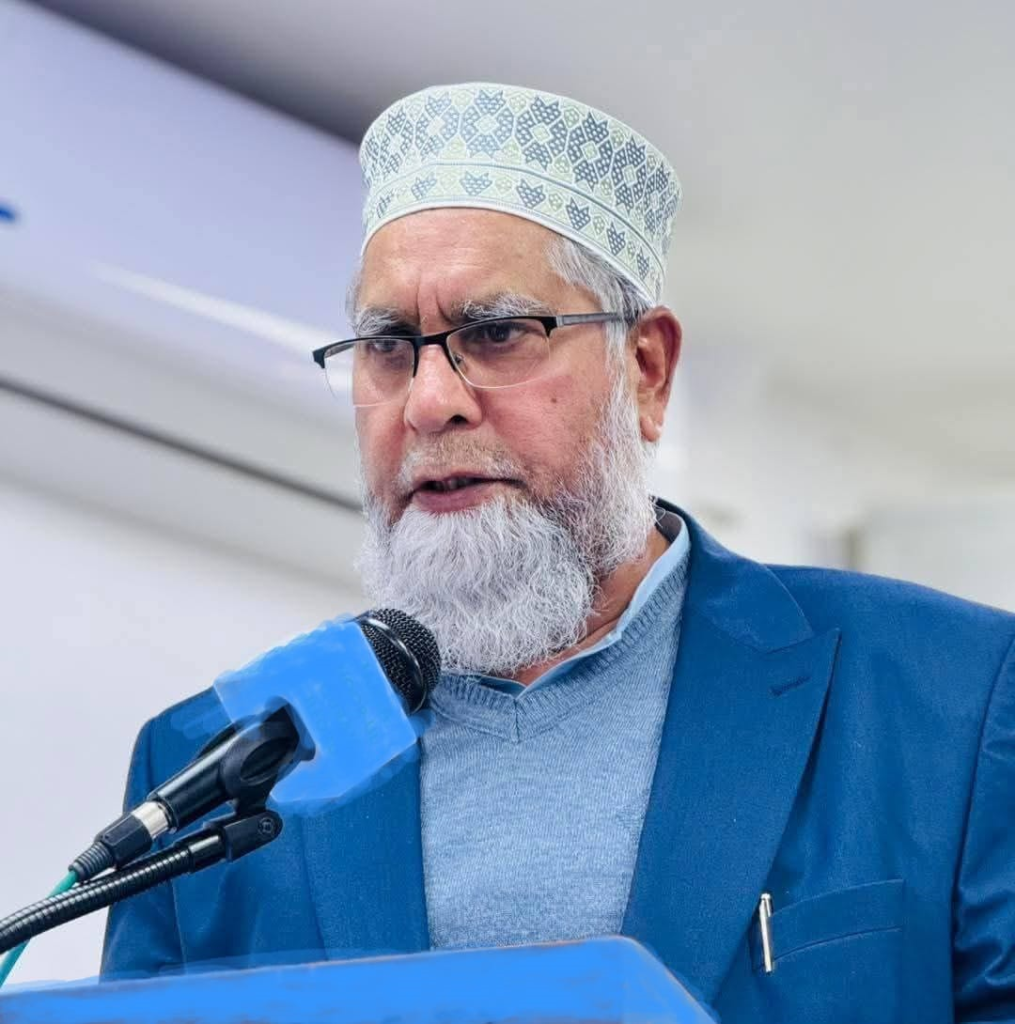
Masood Akhtar Hazarvi
Ramadan is about to depart with all its blessings and mercy. It was the sacred month that softened hearts, brought tears to our eyes, and gave us the opportunity to draw closer to our Lord. But at this moment of departure, the most important question is: what is Ramadan leaving behind for us? The answer lies within the Qur’an itself. Allah Almighty explains the purpose of fasting by stating that it has been prescribed so that you may attain taqwa (God-consciousness). Thus, the true objective of Ramadan is to cultivate taqwa within us, enabling us to shape our lives according to the pleasure of Allah.
Taqwa is, in essence, a spiritual قوة that protects a person from sin and guides them toward righteousness. It acts as a moral shield that enables an individual to stand firm amidst trials and temptations. This is why the Qur’an likens taqwa to a garment. Just as clothing protects a person from harsh weather, taqwa safeguards a person from moral storms and the turbulence of desires.
A long-standing weakness of الإنسان is that he often blames his moral decline on his environment. People commonly say that times are corrupt, society is deteriorating, and immorality is widespread—therefore they too have been influenced. However, the reality is that the environment does not compel a person; rather, a strong character can not only resist its influence but also transform it. The principle of life is simple: when the weather changes, a person adjusts their clothing. In cold conditions, one wears warm garments; in rain, one uses protection. Similarly, when moral فساد intensifies in society, a wise believer strengthens the garment of taqwa even more.
Islamic history is filled with powerful examples of this truth. Before the advent of the Prophet Muhammad (peace be upon him), Arabian society was steeped in moral decay. Yet, within that very environment, the Prophet demonstrated such impeccable character that even his enemies were compelled to call him truthful and trustworthy. This proves that a corrupt environment does not inevitably corrupt an individual; rather, a person rooted in taqwa and consciousness of Allah can influence and reform their surroundings.
The early Muslims in Makkah further exemplify this reality. Bilal ibn Rabah (may Allah be pleased with him) was laid upon the scorching sands with a heavy stone placed upon his chest, yet he continued to proclaim “Ahad, Ahad” (One, One). Sumayyah (may Allah be pleased with her) chose martyrdom over renouncing her faith. These individuals demonstrated that taqwa grants الإنسان the strength to remain steadfast even in the fiercest storms of oppression.
History also teaches that power and authority do not corrupt a person whose heart is anchored in taqwa. During the era of the Rightly Guided Caliphs, vast territories were under Muslim rule, yet their governance remains an enduring example of justice, integrity, and خدمت to humanity. It was taqwa that transformed power into a means of service rather than فساد.
Ramadan serves as a practical training ground for this very quality. Abstaining from food and drink throughout the day is a disciplined exercise in controlling one’s desires. When a person refrains from drinking even in complete solitude, it is solely due to the awareness that Allah is watching and listening. This consciousness forms the very foundation of taqwa and sincerity.
This message holds particular significance for Muslims living in Western societies. In regions such as Europe, the United Kingdom, and America, while there is no shortage of material comfort, moral permissiveness—under the banner of freedom—often normalizes practices such as alcohol consumption, immodesty, and promiscuity. In such an environment, one of the greatest challenges for Muslim families is the تربیت of the next generation.
Many parents express concern that the environment is too corrupt to protect their children. However, both religion and history affirm that environment is merely a test—and it is through tests that character is forged. If environment alone determined outcomes, the early Muslims of Makkah would never have remained steadfast. The need of the hour is not only to impart religious knowledge but to nurture a strong Islamic identity and resilient character. Homes should reflect an atmosphere of prayer, Qur’an, and the Prophetic example, so that love for the faith takes root in the hearts of children. Parents must build open, trusting relationships with their children, listen to their concerns, and guide them with wisdom so they can withstand external pressures.
Young people must also understand that freedom does not equate to indulgence. True freedom lies in living according to one’s conscience. A person who abandons their values under social pressure is not truly free, but rather a slave to that pressure.
As Ramadan comes to an end, we must ask ourselves honestly: has this month truly instilled taqwa within us? If it has, then we have attained the essence of Ramadan. If not, then we have merely endured hunger and thirst while missing its true purpose.
With Ramadan’s departure, we must make a firm commitment: we will not remove the garment of taqwa along with it. Instead, we will carry it forward as a lifelong companion. This is the true message of Ramadan—that amid the trials and temptations of the world, taqwa enables a person to safeguard themselves and illuminate society with the light of their character.
Farewell, Ramadan! You leave us with the treasure of taqwa. It is now our responsibility to preserve it and let it shine in our lives.
