
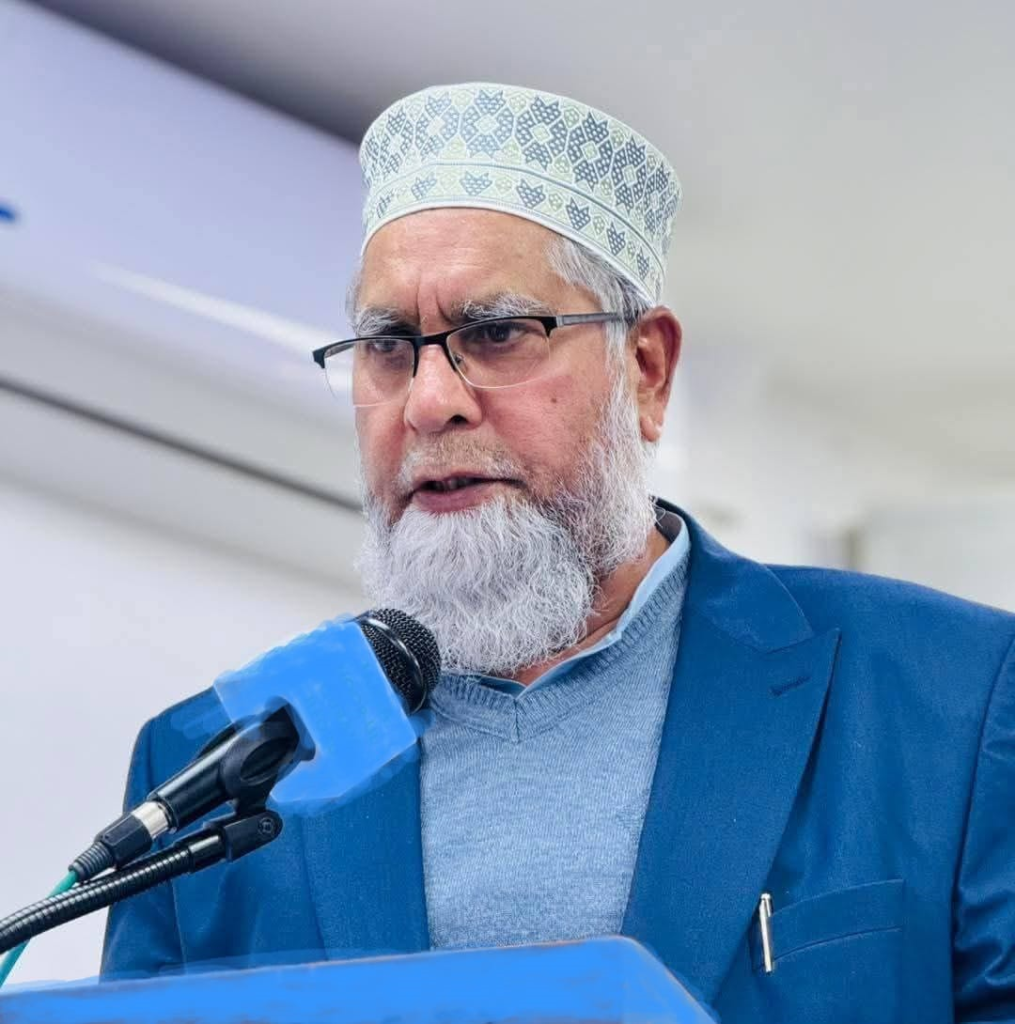
Prof Masood Akhtar Hazarvi
What happened in Srebrenica in July 1995 was not merely a massacre; it was one of the darkest stains on the conscience of humanity one that history can never erase. Within a matter of days, thousands of Bosnian Muslim men and boys were systematically murdered. Women were subjected to horrific abuses, families were torn apart, and an entire nation was targeted for destruction. Yet one important fact is often overlooked: the Srebrenica massacre was only one chapter in the broader campaign of persecution and genocide inflicted upon Bosnian Muslims between 1992 and 1995.
Anyone who studies the Bosnian genocide inevitably arrives at a fundamental truth: to the perpetrators, the internal differences among Muslims were completely irrelevant. They did not care who was more religious and who was less, who wore a beard and who did not, which women wore the hijab and which did not, who regularly attended the mosque and who stayed away from religion. In their eyes, they all shared one identity—and that identity was simply “Muslim.”
This reality compels us to reflect on our own societies. The crises facing the Muslim world today are not solely the result of external forces; internal weaknesses have also played a significant role. Sectarianism, ethnic and regional prejudice, and factional interests have fragmented the Muslim Ummah into countless divisions. Tragically, we have become so quick to judge one another’s faith, intentions, and loyalties that the space for mutual respect and brotherhood continues to shrink.
History repeatedly demonstrates that whenever a nation is targeted, its enemies first exploit its internal divisions. Bosnia was no exception. There, hatred was fuelled by ethnic nationalism, which denied people their basic right to live simply because of their identity. The same mindset continues to exist in different parts of the world today. Sometimes it manifests itself in the name of race, sometimes religion, and sometimes nationality. Sadly, it can also emerge within our own societies in the form of political and administrative divisions.
The situation in Gaza offers the same lesson. As Muslims around the world witness the suffering of the Palestinian people, they are reminded that, in the eyes of the oppressors, the internal differences among Muslims carry little significance. What stands out to them is only a shared identity. This raises an important question: if we continue to divide ourselves, question one another’s sincerity, and turn minor disagreements into hostility, what will remain of our collective strength?
It is equally important to acknowledge that merely chanting slogans of “unity” is not a solution. When people take to the streets, they usually do so because of genuine and substantive grievances—rising inflation, unemployment, inadequate public services, and the perception that decisions affecting their lives are being made elsewhere rather than by their own elected representatives. Governments, therefore, have a responsibility to address legitimate public concerns through dialogue rather than force, preventing tensions from escalating into confrontation. Unity does not require suppressing differences of opinion; rather, it means managing them with respect and patience, allowing room for constructive criticism and reform without letting disagreement descend into hatred and division.
Islam itself teaches this balance. The Qur’an calls believers to brotherhood, and the Prophet Muhammad (peace be upon him) described the Muslim Ummah as one body: when one part suffers, the whole body shares its pain. Unfortunately, we have too often transformed disagreement into enmity, criticism into humiliation, and sincere advice into contempt. As a result, we weaken our own collective strength—whether on the global level through the fragmentation of the Muslim world or locally through widening divisions between governments and their people.
The tragedy of Bosnia is not merely a historical event; it is a mirror in which we can examine our present condition. It reminds us that hatred, prejudice, and division ultimately lead only to destruction. Likewise, the tragedy of Gaza is not merely a humanitarian crisis; it is a profound moral lesson, reminding us that standing with the oppressed and fostering unity within our own communities are among the greatest responsibilities of our time.
Perhaps Bosnia’s greatest lesson is this: when times of hardship arrive, the divisions we ourselves have created lose all significance. What truly matters then are humanity, brotherhood, and loyalty to one another. If we fail to learn this lesson, history will continue to repeat itself in different forms, and each generation will once again ask why we learned nothing from the past.
Today, Muslims must rise above differences of creed, sect, ethnicity, region, and political affiliation, and instead build upon our shared human, national, and Islamic values. Differences of opinion will always exist, but respect, tolerance, dialogue, and unity are far more important. Governments should sincerely listen to the legitimate concerns of their people and choose dialogue over confrontation. Likewise, citizens should pursue their rightful demands while ensuring that internal divisions are not exploited by those who seek to weaken them.
If we truly understand the messages of Bosnia and Gaza, we may yet lay the foundations for a better future. Otherwise, the tragedies of history will not remain confined to the pages of books—they will continue to be reborn in the lives of future generations, sometimes in the streets of Srebrenica, and sometimes among the ruins of Gaza.
