Bureau Report
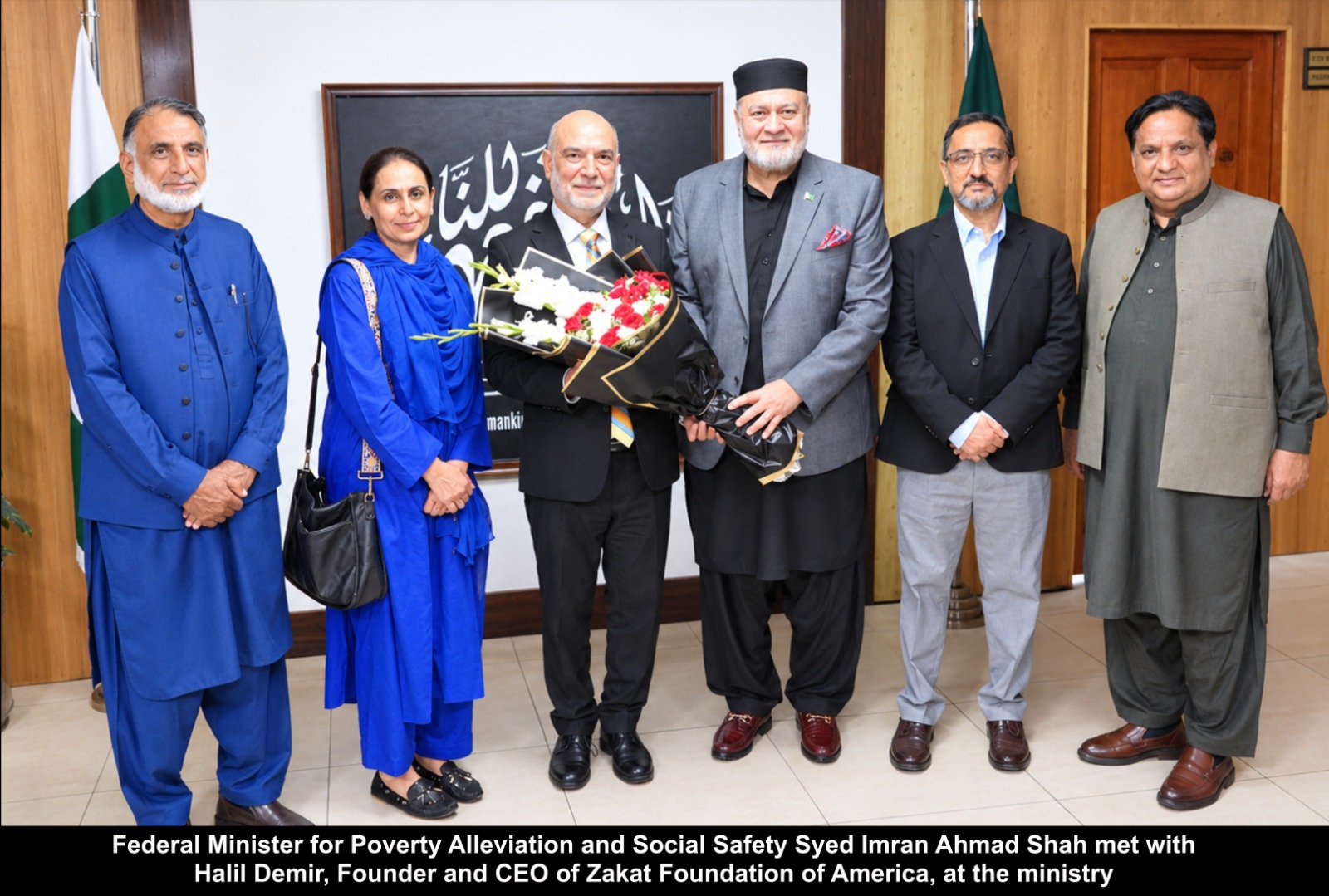
ISLAMABAD: Federal Minister for Poverty Alleviation and Social Safety Syed Imran Ahmad Shah met with Halil Demir, Founder and CEO of Zakat Foundation of America, at the ministry on October 17 to discuss opportunities for collaboration in poverty reduction, social protection and humanitarian assistance.
The meeting was attended by Pakistan Poverty Alleviation Fund (PPAF) CEO Nadir Gul Barech and representatives of Zakat Foundation Pakistan. The discussions focused on exploring joint initiatives to support vulnerable communities and improve access to essential services and sustainable livelihood opportunities for disadvantaged segments of society.
Both sides discussed potential initiatives for widows, orphaned children, persons with disabilities and deserving families facing economic hardship. The discussions highlighted the importance of coordinated efforts among government institutions, development organizations and humanitarian agencies to address the needs of vulnerable populations and strengthen community-level support systems.
The meeting also explored areas of possible cooperation in education, healthcare, women’s economic empowerment, skills development, employment generation and disaster relief. These areas were discussed as important components of a broader approach to poverty alleviation, aimed at helping individuals and families improve their living conditions and work towards greater economic stability.
Emphasizing the need for sustainable poverty reduction, Federal Minister Syed Imran Ahmad Shah stressed that financial assistance alone could not fully address the challenges faced by disadvantaged communities. He highlighted the importance of education, vocational skills, employment opportunities and access to economic resources in enabling people to improve their livelihoods and achieve long-term self-reliance.
The discussions also underscored the potential value of connecting vulnerable families with initiatives that address their immediate needs while supporting their longer-term social and economic development. Collaboration in education and healthcare could help address essential community needs, while skills training and livelihood support could create pathways towards improved household incomes and greater financial independence.
Women’s economic empowerment was another area identified for potential cooperation, particularly through opportunities that could help women develop marketable skills and strengthen their capacity to support their families. Similarly, cooperation in disaster relief could help improve the coordination of humanitarian support for communities affected by emergencies and natural disasters.
The participation of PPAF and Zakat Foundation Pakistan representatives provided an opportunity to discuss collaboration among relevant stakeholders working in poverty alleviation and community development. Greater coordination could help identify shared priorities, explore complementary programmes and direct assistance towards communities with significant needs.
Both sides agreed to strengthen coordination and explore further avenues of cooperation in poverty reduction, social protection and humanitarian welfare. The meeting reflected a shared interest in examining practical approaches to supporting vulnerable populations and expanding opportunities for disadvantaged families.
The discussions emphasized the importance of a comprehensive approach to poverty alleviation that combines immediate humanitarian assistance with education, healthcare, skills development and livelihood opportunities. Such an approach can help address urgent needs while creating conditions for more sustainable improvements in the well-being of vulnerable communities.
4