
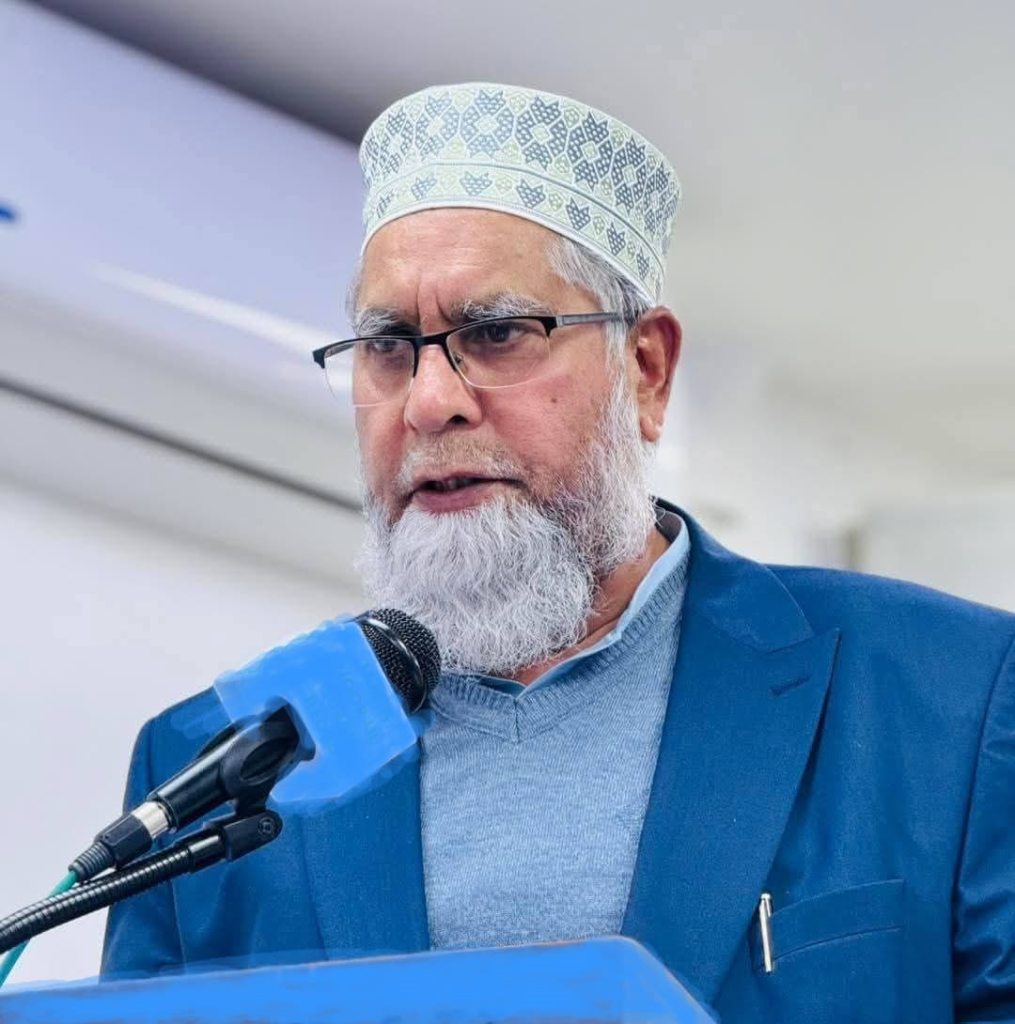
Prof. Masood Akhtar Hazarvi
After the World War II, when a new global order emerged, the United States presented itself as the champion of the rule of law, human rights, and freedom of expression. This narrative was disseminated throughout the world through university curricula, global media, and diplomatic channels. In practice, however, American policies often portrayed a very different picture. It is the same United States that takes pride in being a founding force behind the United Nations Charter, yet when its strategic interests are at stake, it frequently ignores and overrides those very principles. The same country that conducted the Nuremberg Trials to hold Nazi leaders accountable for their crimes now refuses to allow its own generals and presidents to be held accountable before international courts. This contradiction between power and morality has rendered many of its claims hollow and its justice system questionable in the eyes of many observers.
The central doctrine of Islam holds that true sovereignty over the universe belongs solely to Allah, the Lord of all worlds. The Qur’an proclaims that dominion belongs to Him alone and that honor and humiliation lie within His authority. Nations that embraced this conviction not merely as a slogan but as the foundation of their collective life and political decisions were historically able to challenge mighty empires and emerge victorious. Yet today, many rulers in the Muslim world proclaim “Allahu Akbar” verbally while treating Washington as their political qibla in practice, granting it a status that belongs only to God. In their perception, the “real superpower” is America—whose displeasure can topple governments and whose favor can sustain them. In pursuit of that favor, they often suppress their own populations and, at times, compromise even the fundamental demands of religion and national sovereignty. The greatest victims of this double standard have been the ordinary people of the Muslim world.
In 1953, Iran’s democratically elected prime minister, Mohammad Mosaddegh, decided to nationalize Iranian oil in order to end the monopoly of British companies. This move was unacceptable to the economic interests of the United Kingdom and the United States. Consequently, the Central Intelligence Agency and Britain’s MI6 orchestrated the Operation Ajax, overthrowing the democratic government and restoring Mohammad Reza Pahlavi as an absolute monarch. Subsequently, Iran’s secret police, SAVAK, was developed with the assistance of the CIA and Mossad. For years, SAVAK subjected Iranian citizens to torture, imprisonment, enforced disappearances, and political assassinations in order to maintain the Shah’s rule. Thus, the United States not only helped dismantle democracy in Iran but also supported that dictatorship for nearly twenty-five years.
During the Cold War between the United States and the Soviet Union, Afghanistan became a geopolitical battleground. The CIA funded and armed Afghan groups known as the Mujahideen with billions of dollars in weapons and training, presenting them as heroes of freedom. However, once Soviet forces withdrew from Afghanistan, the country was largely abandoned amid devastation and institutional collapse. In the absence of stable governance and political reconciliation, groups such as the Taliban and Al-Qaeda emerged. Later, after the September 11 attacks, the United States launched a twenty-year war in Afghanistan that resulted in the deaths of hundreds of thousands of people directly or indirectly. Many rural villages, wedding gatherings, and civilian convoys were struck by airstrikes. When innocent civilians were killed, the incidents were frequently described with the diplomatic phrase “collateral damage.”
Similarly, the 2003 invasion of Iraq was justified on the claim that Iraq possessed weapons of mass destruction. The evidence presented before the United Nations was later proven false, yet the cost of that deception was paid by millions of Iraqis through loss of life and the destruction of their society. The abuses revealed at Abu Ghraib Prison further exposed the contradictions between America’s human-rights rhetoric and its conduct on the ground. Out of the ruins of that chaos emerged extremist groups such as ISIS, which plunged the region into further bloodshed and instability.
In Pakistan, U.S. drone strikes in tribal areas also resulted in numerous civilian casualties. These deaths too were often categorized as collateral damage. In Libya, the overthrow of Muammar Gaddafi was carried out under the banner of protecting human rights, yet the country subsequently descended into prolonged civil war, poverty, and institutional collapse.
Perhaps the most tragic aspect of this story is the role played by many Muslim rulers themselves. In several Gulf states, governments maintain power through repression, imprisoning or silencing dissent while receiving diplomatic legitimacy from the very country that proclaims itself the global defender of human rights. Security guarantees, arms deals, and oil agreements have often been exchanged for political loyalty. In countries such as Egypt and Pakistan, military regimes have frequently benefited from American financial aid and diplomatic backing, opening their territories and airspace for U.S. strategic operations. While religious slogans are invoked domestically, the political orientation of these regimes remains directed toward Washington. When devastating violence occurs in Gaza Strip and Palestinian children are pulled from the rubble, these rulers often remain silent for fear of displeasing their powerful ally.
One of the most profound moral criticisms of U.S. policy within the Muslim world concerns its unwavering support for Israel. Since 1948, the United States has repeatedly used its veto power at the United Nations Security Council to block strong resolutions supporting Palestinian rights, while simultaneously providing Israel with extensive military and diplomatic protection. During the ongoing war in Gaza, reports from the Gaza Health Ministry by March 2026 indicated that more than 72,000 Palestinians had been killed, with some reports placing the figure above 75,000. Hospitals, schools, mosques, and humanitarian convoys were among the targets of attacks. Despite these realities, American leadership has continued to emphasize Israel’s “right to self-defense,” often disregarding warnings and legal considerations raised by international courts. For many Muslims around the world, this double standard has deepened mistrust toward American foreign policy.
Amid this atmosphere of crisis, Iran presents itself as a force of resistance against what it describes as global injustice. Iranian leadership asserts that it recognizes no earthly superpower but acknowledges only the supreme authority of God. The United States, in response, imposed sanctions, diplomatic isolation, and supported opposition during the eight-year Iran–Iraq War. Yet Iran maintained its stance. After the assassination of Qasem Soleimani, Iran demonstrated its willingness to retaliate directly. Following the confrontation of 28 February, Iranian forces reportedly launched ballistic missile strikes targeting Israeli positions and U.S. military bases in the Gulf region. Iran’s leadership maintains that it will not compromise on what it considers its sovereign right to nuclear technology and self-defense.
In reality, the general populations of the Muslim world largely support principles such as democracy, transparency, and human rights. However, they increasingly distrust American foreign policy. When a global power appears to ignore the suffering of innocent civilians while supporting oppressive forces, the erosion of trust becomes inevitable. Today the United States itself faces internal political polarization, economic inequality, and the rising challenge of emerging powers such as China. Ultimately, the true foundation of lasting power lies not in weapons, wealth, or media influence but in justice, moral integrity, and steadfast adherence to truth. The real superpower is the One whose authority is eternal and whose sovereignty never declines.
As the poet Muhammad Iqbal wrote:
“True sovereignty belongs only to the incomparable One;
He alone is the ruler, while all other idols fade away.”
Iran, from its perspective, presents this lesson in practice: if one must bow, it should be only before God; and if one must raise a sword, it should be against oppression. Unfortunately, many rulers in the Muslim world still hesitate to learn this lesson. Their heads remain bowed, and when force is used, it is often directed not against oppressors but against their own people.
For both the rulers and the peoples of the Muslim world, the essential lesson is clear: dignity, sovereignty, and resilience can only be achieved when societies move beyond the politics of fear and expediency and instead ground their collective lives in justice, truth, and principled integrity.
