
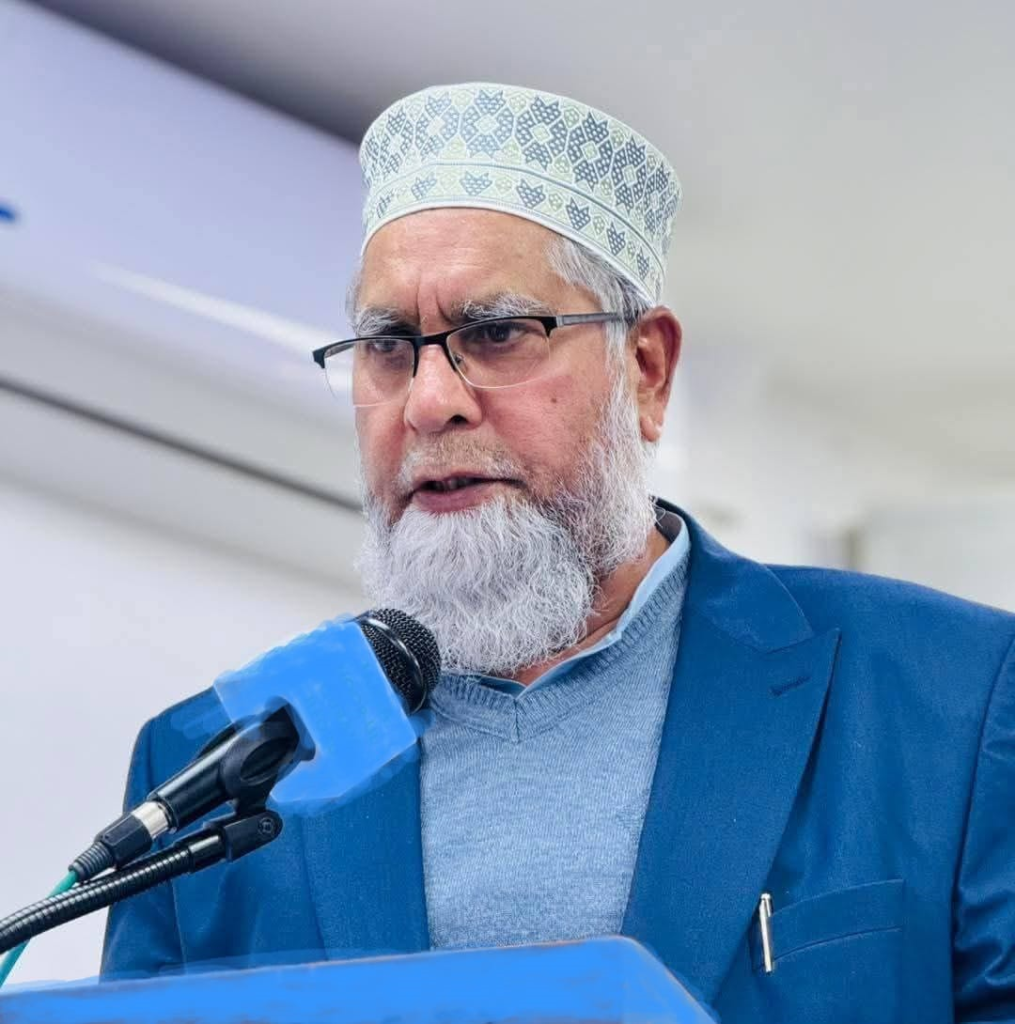
Prof Masood Akhtar Hazarvi
Certain events in history are not merely stories of the past; they serve as lessons for future generations. They help us understand how nations rise and prosper and what causes their decline. The true strength of a nation lies in knowledge, research, and collective organization.
In 711 CE, Muslims entered Al-Andalus (present-day Spain) under the leadership of Tariq ibn Ziyad. This was not merely a military conquest but the beginning of a new intellectual and cultural era. The Muslims defeated the Visigothic Kingdom, and thereafter Al-Andalus became a shining center of learning. At a time when much of Europe was experiencing intellectual stagnation, Muslims were making remarkable advances in medicine, philosophy, mathematics, and astronomy.
Cities such as Cordoba, Granada, and Toledo were not merely residential centers; they were great hubs of knowledge. Their libraries, scholars, and educational institutions testified that when a society values books and research, it not only progresses itself but also enlightens others. One of the greatest strengths of Al-Andalus was that Muslim, Christian, and Jewish scholars worked together, learned from one another, and advanced human knowledge collectively.
Europe greatly benefited from this intellectual heritage. Translation centers were established in Toledo, where Arabic works were translated into Latin. The algebra of Al-Khwarizmi, the medical writings of Ibn Sina, the optics of Ibn al-Haytham, and the philosophy of Ibn Rushd reached European universities. This knowledge later laid the foundations for the European Renaissance and the Scientific Revolution. It demonstrates that when knowledge crosses national boundaries, it becomes a treasure for all humanity.
An important question arises here: if Europe progressed by learning from Muslim scholarship, why cannot the Muslim world today benefit from modern science and technology to regain its lost glory? The difference is that Europe did not adopt knowledge blindly. It embraced ideas through observation, experimentation, and critical examination. The same approach remains relevant for the Muslim world today.
Unfortunately, the Muslim world today faces intellectual weakness. Universities have multiplied, but in many cases education has become a commercial enterprise, while genuine research remains limited. Instead of encouraging questions and critical thinking, there is an increasing tendency to accept everything without inquiry. As a result, we produce many degrees but relatively few innovations and distinguished scholars.
In the modern world, the meaning of power has changed. Power no longer depends solely on military strength or natural resources; it increasingly rests on knowledge, technology, and human talent. Fields such as artificial intelligence, biotechnology, quantum computing, and space exploration are shaping the future of humanity. The Gulf countries possess immense wealth, Pakistan is a nuclear power, and many Muslim nations occupy strategically important locations. The problem is not the lack of resources but the failure to use them wisely and honestly according to long-term priorities.
History shows that even abundant resources cannot guarantee progress if investment in knowledge and education is neglected. In contrast, Japan and South Korea, despite limited resources after the Second World War, invested heavily in education and technology and established themselves among the world’s leading nations.
As the poet Muhammad Iqbal wrote:
“Iqbal is not hopeless of his barren field;
If only a little moisture returns, this soil is exceedingly fertile.”
Muslim youth are intelligent and hardworking. The internet has made access to knowledge easier than ever before. Today, a young person in Pakistan, Turkey, or Indonesia can study courses from the world’s finest universities while sitting at home. If we combine modern knowledge with our own values and ethical principles, the path to progress can reopen.
Rather than imitating others blindly, we must adopt knowledge thoughtfully and creatively. Muslim youth must take responsibility for the future while taking pride in their past. Ibn Sina, Al-Khwarizmi, Ibn al-Haytham, and Ibn Rushd became great not merely because they inherited knowledge, but because they devoted their lives to learning and opened new intellectual horizons. We need the same spirit today.
Islam places immense importance on knowledge. The first revelation of the Qur’an was “Iqra” (“Read”), and the pursuit of knowledge has been regarded as a duty for every Muslim man and woman. Therefore, knowledge is not only a worldly necessity but also a religious responsibility.
If we truly wish to progress again, we must:
Treat education not merely as a means of obtaining degrees, but as a way to develop skills and critical thinking.
Prioritize research and innovation.
Encourage a culture of questioning, dialogue, and intellectual debate.
Invest substantially in science, technology, and artificial intelligence.
Ensure justice, transparency, and good governance.
Include young people in decision-making processes.
The ruins of Al-Andalus, the walls of Alhambra, and the streets of Cordoba still convey a message to the Muslim world: progress comes through knowledge, research, justice, and open-mindedness, while decline results from stagnation and blind imitation.
Today, Muslim youth have the opportunity to build a new Andalusia founded upon knowledge, ethics, technology, and service to humanity. The question is whether we will continue merely telling stories of the past, or whether we will find the courage to write a new history ourselves.
