
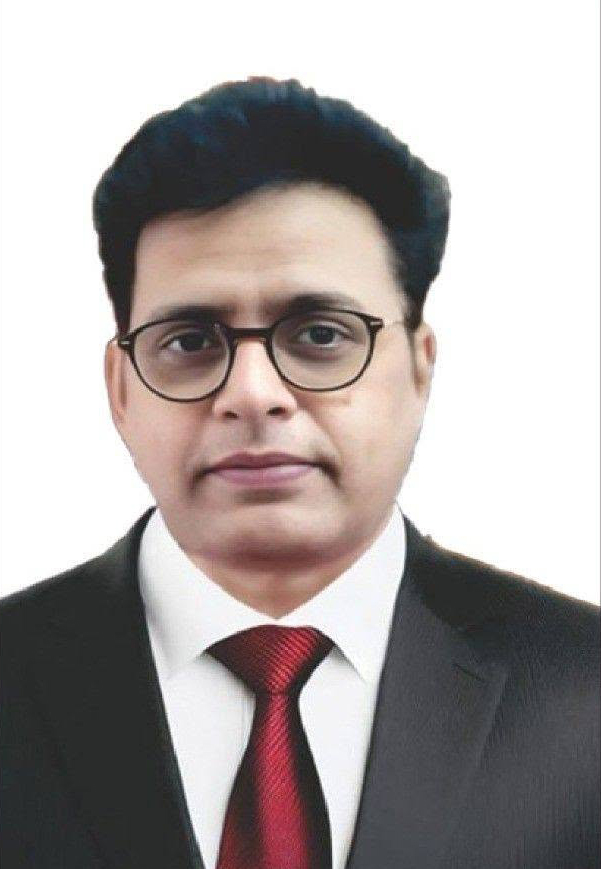
Asif Saleem Mitha Columnist | Editor, Nawa-e-Jang London
In the Pakistani journalistic community of London, the name Shaukat Dar needed no introduction. He was not merely a journalist; he was a warm-hearted, lively and politically astute man who possessed the rare gift of bringing people together. His sudden passing on 15 September 2026 has left a profound void in Britain’s journalistic and Pakistani community one that will not easily be filled.
Much of Shaukat Dar’s life revolved around journalism, politics and human relationships. He served with several prominent media organisations, including FM 100, DM Urdu, DM English, Dunya TV and Samaa TV. He also served as Director of News at DM English and played an active role in the journalistic community as President of the Pakistan Press Club UK International.
Throughout his career, he interviewed some of Pakistan’s most prominent political figures, including Benazir Bhutto, Bilawal Bhutto Zardari and Nawaz Sharif. His involvement in student politics during his younger years also led to his imprisonment, an experience that became part of the remarkable journey of his life. His political friendships extended across party lines. He maintained personal relationships with people belonging to different political parties, reflecting his ability to see beyond political differences and value people for who they were.
From Murree to London. Shaukat Dar was born in 1964 in Murree, to Abdul Jabbar, His mother belonged to Lahore’s distinguished Kakkezai family, and the family also had a connection with the renowned poet Qateel Shifai.
Shaukat was one of three brothers. Tragically, all three brothers eventually passed away after suffering from heart-related illnesses.
His elder brother, Zafar Dar, was a well-known artist, calligrapher and painter in Rawalpindi. Through his artistic talent and creative work, he earned a respected place in the city’s literary and cultural circles.
Three brothers, three distinct personalities, each pursuing their own paths and talents, yet fate ultimately brought them together in the same sorrowful manner. One by one, heart disease took them away from their family, friends and loved ones.
Shaukat Dar’s “White House”
Shaukat Dar had given his office the affectionate name “White House.” It was far more than an office. Over the years, it became an informal meeting place for Pakistani journalism, politics and community life in London.
Journalists, politicians, community leaders and friends would regularly gather there. Conversations ranged from the politics of Pakistan to British community affairs, journalism and everyday life.
But perhaps Shaukat’s greatest quality was his ability to connect people.
Today, that very “White House” carries a silence that is difficult to describe.
Waheed Ahmed still sits on the same sofa, almost as if waiting for Shaukat Dar to return the very place from which his friend departed on his final journey.
The sofa remains.
The office remains.
The walls remain.
The telephone remains.
But Shaukat is no longer there.
For a friend, perhaps there is no greater sorrow than returning to a place filled with years of shared memories, only to realise that the person who made those memories possible will never walk through the door again.
Our Last Meeting
Only a day before his death, Shaukat Dar attended a dinner hosted by Senator Nasir Butt and later returned to his office, where I had a detailed and memorable conversation with him.
We spoke at length about journalism, community affairs and several plans for the future. There were projects we hoped to pursue together and ideas that we intended to develop in the months ahead.
Neither of us could have imagined that evening would become our last substantial conversation.
Life rarely announces its final moments.
The Final Hours
Even in the final hours of his life, Shaukat Dar was living in his familiar way surrounded by friends, making telephone calls, preparing to welcome a guest and thinking about the days ahead.
He was with Sajjad Shauwal and, at 5:41pm, shared a post on TikTok.
Later, he asked Waqas to go to the market to buy lentils and other provisions. When the groceries arrived, Shaukat began preparing daal and rice for Waheed.
He also spoke on the telephone with Zameer Chaudhry, who was returning to London from Birmingham. Neither could have known that this would become one of their final conversations.
That same day, Shaukat was due to go to the airport to receive Faheem Farooqi. Only a few hours earlier, he had also invited Ahmed Ali Syed over for a chat.
Then, suddenly, his health deteriorated.
Waheed contacted Ahmed Ali Syed, who began calling out to Shaukat. Rauf Butt and Jeetu soon arrived as well.
Every possible effort was made to save him. Three ambulances attended the scene, but despite the determined efforts of those present and the emergency services, Shaukat could not be saved.
A heart attack brought his life to an abrupt end.
He left behind, without warning, the friends, colleagues and countless people who had grown accustomed to his presence.
As Zameer Chaudhry returned from Birmingham and approached Shaukat’s street, he found a large gathering of people. Only a few hours earlier they had been speaking on the telephone. Now that conversation had become a final memory one that time can never erase.
Thousands Gathered for His Funeral
Thousands of people attended Shaukat Dar’s funeral prayer. People travelled from different parts of Britain to pay their final respects, while some also came from Pakistan.
Journalists, politicians, community leaders, social workers, friends, relatives and people from many different walks of life gathered to bid farewell to a man whose life had touched so many.
He is survived by his wife, three daughters and a son. His children have completed their education and have moved forward in their respective fields.
A Friend, a Colleague, a Memory
After Shaukat Dar’s departure, his “White House” may never feel quite the same again.
The office is still there.
The sofa is still there.
The desk is still there.
The chair is still there.
The telephone is still there.
But the voice that once welcomed every visitor is gone.
And perhaps the most poignant image of all is that of Waheed Ahmed sitting on that same sofa, almost as though he is still waiting for his friend to return—the place where Shaukat’s final journey began.
Even on the last day of his life, Shaukat was surrounded by friends. He was making calls, preparing to receive a guest, cooking food and discussing plans for the future.
Perhaps that was the most beautiful characteristic of his life: until his final moments, he lived fully, generously and among the people he loved.
Many people enter journalism and eventually leave it. But there are some whose legacy extends far beyond the stories they write or the broadcasts they make. They leave behind friendships, affection, human connections and memories that continue long after their voices have fallen silent.
Shaukat Dar was one of those rare people.
His voice, his distinctive manner of conversation, his “White House,” his journalistic memories and the countless friendships he cultivated will remain part of the collective memory of the Pakistani community in Britain.
Shaukat Dar has left us. But the memories remain. The friendships remain.
And the chapter he wrote in the story of journalism will not easily be forgotten.
May Almighty Allah forgive the departed soul of Shaukat Dar, elevate his and grant patience and strength to his wife, three daughters, son, family, friends and the entire journalistic community.
