Wajahat Ali Khan
London
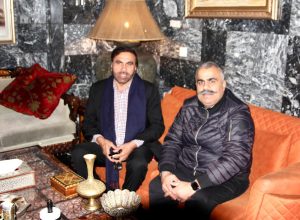
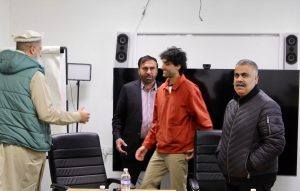
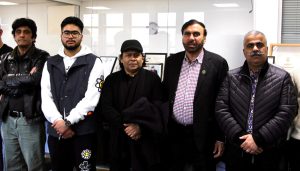
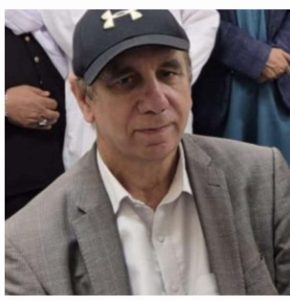
AlMustafa Welfare Trust’s Director of Alberta, in Canada Mr Imtiaz Ahmed visited the London head office of “AlMustafa”.
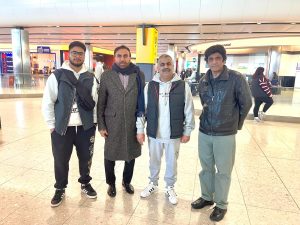
He arrived here last week on his two-day visit, where he was welcomed at airport by the Chairman of “AlMustafa Welfare Trust” Abdulrazzaq Sajid along with his team.
Later, during his visit to the offices of “Al-Mustafa”, he held a meeting with the staff and exchanged views on various projects
run under the institution. Chairman Abdulrazzaq Sajid also hosted a dinner in his honour. Mr Imtiaz Ahmed left for Pakistan on last Saturday.

London
General Secretary Quba Mosque, Chaudhry Muhammad Shabbir passed away
Tajammul Gurmani
Rochdale
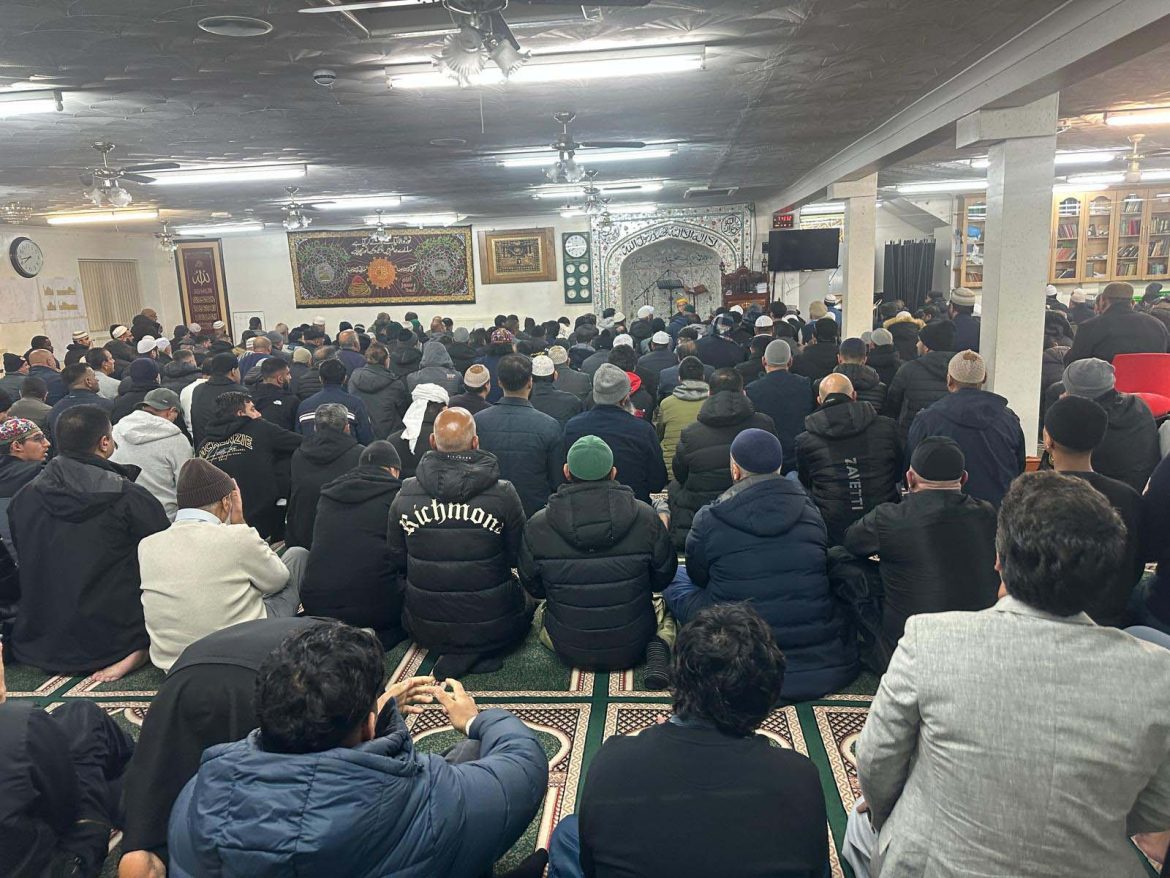
Chaudhry Muhammad Shabbir, General Secretary of Jamia Masjid Quba, Rochdale, passed away after a cardiac arrest. His funeral prayer was offered at Quba Mosque, and he was later laid to rest in a local graveyard. Among the bereaved are his brother Muhammad Nazir; his children, Makhdum Mustafa Shabbir, Tahira Shabbir, Sameera Shabbir, and Uzma Shabbir; his nephew, Aqib Nazir; and his brother-in-law, Chaudhry Muhammad Farooq.
Prominent attendees at the funeral included Chaudhry Tahir Mahmood, Chairman of Golden Mosque; Mushtaq Ahmed Raja, Chairman of Bilal Mosque; Haji Azeem, Haji Aftab Ahmed, Qari Abdul Rauf, Allama Ghulam Murtaza, and many others. Religious scholars paid tribute to the late Chaudhry Shabbir, stating that he served Quba Mosque with dedication for 13 years. They said that when he took responsibility, the mosque was under debt, which he cleared and also expanded. They added that serving the mosque was the main purpose of his life and would be a means of forgiveness for him.
He regularly offered prayers in the first row and devoted more time to the mosque than to personal matters.

PA News
London
Heavy snow showers are on the way across parts of the UK as a weather warning has been issued by the Met Office.A yellow warning for snow and ice has been issued for parts of Scotland from 6am on New Year’s Day until midnight on 2 January. An amber cold health alert has been issued for the north-east and north-west of England, which is due to remain in place until noon on 5 January, with temperatures expected to fall to 3-5C (37-41F). The Met Office said the yellow warning for snow and ice meant “frequent and heavy snow showers may lead to some travel disruption”. By Friday morning, the Met Office is predicting 2-5cm of snow, with 10cm in certain local areas and 10-20cm in some areas above 200 metres. On the highest routes and hills, 30cm or more may build through the period, the forecaster added.
The UK Health Security Agency (UKHSA) issued the amber alert and said it meant the weather was likely to cause significant impacts across health and social care services, including a rise in deaths among those with health conditions or aged 65 or over. Temperatures elsewhere are expected to be 4-6C from New year’s Day and there is a yellow health alert in place.
The Met Office said the final days of 2025 would not be “particularly fantastic”, with temperatures of 7-8C, but things would take a turn as 2026 arrived.
Northern parts of the UK are expected to bear the brunt of the chillier conditions from 1 January onwards, with brisk winds bringing increasingly wintry showers to the north as the week progresses. The Met Office forecaster Dan Stroud said: “We’re losing this sort of settled but chilly condition and bringing in something a little bit more showery with more wintry hazards in the forecast, particularly for the north of the country.” The UKHSA said the UK may also see impacts on younger people and there would probably be an increase in demand for health services across the regions.
It also warned of “temperatures inside places like hospitals and care homes dropping below the levels recommended for assessing health risks”, and “challenges keeping indoor temperatures at the recommended 18C leading to more risk to vulnerable people”. It said there may be staffing issues due to external factors such as travel delays, and that other sectors such as transport and energy could start to see the impacts. The agency has issued a yellow cold health alert for the East Midlands, West Midlands, south-east, south-west, east of England, Yorkshire and the Humber, and London. A yellow alert means there is potential for significant impacts.
Tories call EHRC chair’s comments a ‘disgrace’ after she warns ‘demonisation of migrants’ bad for UK
Political Reporter
Greens broadly welcome animal welfare strategy but urge PM to follow Wales in banning greyhound racing. The Green party has broadly welcomed the government’s animal welfare strategy. In a statement, the Green MP Adrian Ramsay said. There is much to welcome in the animal welfare strategy, but it must have real teeth to deliver for animals. Ministers must set clear timescales to phase out crates and cages, properly support farmers through the transition and not allow imports that don’t meet UK standards. I welcome the action on snares, hunting and puppy farming. Puppy legislation must end breeding for extreme, unhealthy traits in dogs. The strategy could go further for animals, particularly by ending greyhound racing, as the Welsh government is doing.
Ending the use of farrowing crates and cages – as we called for in the cross-party letter I organised – is particularly crucial for tackling cruelty, and the strategy must set out how and when this will happen.
Six UK immigration officers charged with money laundering offences
PA News
London
Six immigration officers have been charged with offences after an investigation into alleged thefts from migrants and money laundering.
Five of the officers are facing charges including conspiracy to steal and misconduct in public office, the Crown Prosecution Service (CPS) said on Tuesday. All six have been charged with money laundering offences.
Besmir Matera, 36, Lee-Ann Evanson, 42, John Bernthal, 53, Ben Edwardes, 45, Jack Mitchell, 33, and David Grundy, 43, will appear at Westminster magistrates court on 29 January.
Malcolm McHaffie, the head of the CPS special crime division, said the charges followed a Home Office investigation into alleged thefts from migrants and money laundering between August 2021 and November 2022.
“Our prosecutors have worked to establish that there is sufficient evidence to bring the case to court and that it is in the public interest to pursue criminal proceedings. We have worked closely with the Home Office’s anti-corruption criminal investigations unit as they carried out their investigation,” McHaffie said.
Matera, of Reigate, Surrey, is charged with conspiracy to steal; misconduct in public office; concealing, disguising, converting, transferring or removing criminal property; obtaining leave to enter to remain in the UK by deception; and three counts of possession of an identity document with improper intention.
Evanson, of Bracknell, Berkshire, Bernthal, of Welling, south-east London, Edwardes, of Bexleyheath, south-east London, and Mitchell, of Dover, Kent, are each charged with conspiracy to steal, misconduct in public office and concealing, disguising, converting, transferring or removing criminal property.
Grundy, of Croydon, south London, is charged with concealing, disguising, converting, transferring or removing criminal property.
When Sky News launched on February 5, 1989, no one in the UK had ever seen a news channel that never slept. No 6 PM bulletins. No waiting for the next update. Just live, rolling coverage – day and night. It was radical. And it changed everything.
How Sky News Changed British News Forever
Before Sky News, British viewers got their news in chunks: BBC at 6, ITV at 9, maybe a quick update at lunch. If something broke after 10 PM, you waited until morning. Sky News ended that. It was the first 24-hour news channel in the UK – and the first in Europe. No one thought it would last. CNN’s Ted Turner reportedly said, “Rupert will be haemorrhaging red ink for years.” He was wrong.
Sky News didn’t just fill airtime. It rewrote the rules. Reporters had to fight just to get into Westminster, because the BBC and ITV didn’t take them seriously. But Sky kept pushing – live from the House of Commons, even when officials tried to shut them down. That persistence paid off. Within years, even the BBC started doing live broadcasts, copying what Sky had been doing all along.
By 2025, Sky News has won the Royal Television Society’s News Channel of the Year award 18 times – eight in a row. It’s not just about quantity. It’s about impact. In 2025, it won an International Emmy for The Last Hospital: 30 Days in Myanmar, a harrowing look at a war-torn country’s final functioning medical facility. That’s not fluff. That’s journalism that changes how the world sees crises.
What’s On Sky News? The Real Schedule
Forget the idea that it’s just a loop of headlines. Sky News has a real, thought-out daily rhythm.
- Sunrise (6 AM – 10 AM): The morning anchor for politics, business, and weather. It’s the most-watched segment on weekdays, often simulcast on Channel 5.
- Sophy Ridge on Sunday (7 PM – 8 PM, Mon-Thu): Hard-hitting interviews with ministers, opposition leaders, and experts. No scripted answers allowed.
- Sarah-Jane Mee Show (8 PM – 9 PM, Mon-Thu): The channel’s flagship evening program. It covers breaking stories, deep dives, and live caller interactions.
- The World (9 PM – 10 PM, Mon-Thu): Global affairs with correspondents from over 40 countries. From Kyiv to Kinshasa, it’s not just headlines – it’s context.
- News at Ten (10 PM – 10:30 PM, daily): The only 30-minute nightly bulletin on a commercial channel. It’s the anchor point for the day’s biggest stories.
They don’t just report. They build. The “Science, Climate and Tech” section isn’t an afterthought – it’s staffed by specialists who track climate data, AI policy, and space missions. The “UK News” desk doesn’t just cover Parliament – it tracks local councils, hospitals, and schools. That’s why viewers trust it more than many national newspapers.
How Sky News Survived – and Thrived – Through Chaos
Sky News didn’t have a smooth ride. In 2005, it tried to become more like the BBC: scheduled bulletins, polished studio sets, formal anchors. It flopped. Viewers hated it. Ratings dropped. By 2006, new boss John Ryley scrapped it all. Back to live reporting. Back to speed. Back to the grit.
That decision saved the channel. It realized its strength wasn’t in polish – it was in agility. While BBC newsrooms waited for approvals, Sky News reporters were already live on the ground. When a protest broke out in Manchester at 2:17 AM, Sky was broadcasting within minutes. The BBC didn’t have a crew there until 4:30 AM.
It also survived corporate chaos. In 2011, the News of the World phone-hacking scandal rocked Rupert Murdoch’s empire. Sky News was never involved. But the public didn’t know that. People confused it with the tabloids. So Sky doubled down on transparency – publishing its editorial guidelines, naming its sources, admitting when it got something wrong. That trust built a shield.
Then came the move to Freeview in 2002. Suddenly, Sky News wasn’t just for satellite subscribers. It was in 10 million homes. Then came the app. Then streaming. Today, you can watch Sky News on your phone, tablet, smart TV, or even your car’s infotainment system. It’s everywhere – because it had to be.
Regent Street banned traffic for the first time since 2020 to free the road for Christmas shoppers and festive celebrations.
The central London street was pedestrianised between Oxford Circus and Piccadilly Circus from 14:00 to 21:00 GMT on Saturday and transformed into a “festive mile” of shopping, entertainment and refreshments, according to organisers.
There were three vintage, red buses parked along the street, with activities including a selfie station, gift-wrapping station and a disco hosted by refugee charity Choose Love featuring live music.
The street was last closed to traffic at weekends in the lead up to Christmas in 2020 in a bid to encourage shoppers.
“We want that festive cheer and having Regent Street closed to traffic enables that, so it does bring people back,” said Karen Baines, marketing director of The Crown Estate, who planned the traffic-free event.
“For retailers and restaurants, this is the golden quarter, this is so important to them,” she said.
Ms Baines estimated that about 73 million people a year visited the central shopping hub.
When asked if there would be more events throughout the year, she said “time will tell with this, but already it is very busy”.
Regent Street is home to Grade II listed architecture and several flagship stores like Burberry, Apple, and Armani.
Oxford Street went car-free for a day in September as part of a trial to see how the mayor of London’s plans for banning traffic on the stretch of road could work.
The mayor of London and Transport for London (TfL) have set out a pedestrianisation plan from Oxford Street between Orchard Street and Great Portland Street.
A consultation on the mayor’s plan was launched in November, and runs until January 2026.
The pedestrianisation of Regent Street on Saturday is a separate one-day event organised by The Crown Estate.
Chancellor Rachel Reeves has announced an increase in taxes in the Budget, which will raise the government’s fiscal headroom to £21.7bn and fund spending to bring down the cost of living for “working people”.
The statement, made in the House of Commons after the details were published early in error by the Office for Budget Responsibility, set out changes including a rise in the minimum wage and an electric vehicle (EV) mileage tax.
Here BBC London analyses what Reeves’s changes mean for the capital.
Working in the capital
Tens of thousands of workers in London will receive a pay rise from April due to an increase in the minimum wage, which the government announced ahead of the Budget.
The hourly rate for over-21s will rise by 50p to £12.71, with workers aged 18-20 seeing an 85p rise to £10.85, and under-18s and apprentices getting 45p more to £8 an hour.
In London, there are approximately 153,200 minimum wage workers aged 16 and over, according to the government’s 2024 statistics.
The highest number of those – 10,000 – work in Westminster.
London’s mayor Sir Sadiq Khan said the rise in minimum wage was “great news” for young people working in the capital.
Reeves argued the cost of living was still the biggest issue for working people but businesses warned that further increases to the minimum wages could result in hiring freezes.
She also said in her Budget that retail, hospitality and leisure businesses would see “permanently lower tax rates”, funded by higher rates on properties worth £500,000 or more.
Labour estimates this will benefit 111,000 business properties in the capital.
Budget 2025
BBC London’s work and money correspondent Meghan Owen said: “Businesses were nervous going into this Budget – particularly in the hospitality sector.
“Many are still reeling from last year’s national insurance contribution hikes and rise in national minimum wage – with smaller businesses telling me their profit margins are ‘razor thin’.
“While the blows to business are not quite the headlines we saw last year, this Budget still has not brought much comfort.
“Minimum wage will rise, particularly for younger people, and business rates will go up for businesses operating in properties valued higher than £500,000 – so a significant number of London’s West End businesses.
“As one café owner told me in central London: ‘It would be nice to have a break’.”
Michael Kill, chief executive of Night Time Industries Association, called the Budget a “hammer blow to the already fragile night-time economy”.
He said the rise in minimum wage would present a serious challenge for the sector and he was “deeply concerned” by direct and indirect tax increases.
London’s transport
BBC London’s transport and environment correspondent Tom Edwards says: “Reeves confirmed the government was backing plans to extend the Docklands Light Railway (DLR) to Thamesmead in the Budget.
“It would see a new line built from Gallions Reach to a new station at Beckton Riverside and then across the river to Thamesmead.
“The DLR extension is a significant infrastructure addition and will open up the area to redevelopment.
“It will be funded through Transport for London (TfL) and Greater London Authority borrowing.
“A new town of up to 25,000 new homes will emerge off the back of it, although it will take many years.”
Heathrow Airport has announced changes to passenger drop‑offs at its terminals, making it more expensive and enforcing a time limit for the first time.
From January, the west London airport will increase its terminal drop-off fee from £6 to £7 and will give travellers 10 minutes in the drop-off areas before issuing a Penalty Charge Notice (PCN).
Visitors to the drop-off zones can pre-pay online or by phone and must do before midnight the following day otherwise they could be charged an £80 fine.
A spokesperson for the airport, which is the busiest in the country, said the changes were aimed at “smoothing traffic flow and reducing congestion”.
They added: “It helps reduce congestion, encourages public transport use, and ensures our forecourts are used for their intended purpose.
“Free drop-off and pick-up options remain available for all terminals at all our Park and Ride car parks.”
They added that 95% of passenger visits to the terminal drop-off zones were under 10 minutes.
Gatwick, Luton, Stansted and Southend airports already charge a minimum of £7 for passenger drop-off. London City airport offers this for free.
London could halve the cost of major new transport projects by adopting a European model of planning and financing, a City Hall report has said.
Infrastructure projects in London are often more expensive than in other European cities, with the Jubilee line extension costing 10 times as much per mile compared to a similar project in Madrid.
The report, entitled Mind the Funding Gap, called on the mayor and TfL to restart work on Crossrail 2, which was paused after the government stopped funding during the Covid-19 pandemic.
It also said the capital needed to bring down delivery costs or face more projects getting stuck at the planning stage.