When Sky News launched on February 5, 1989, no one in the UK had ever seen a news channel that never slept. No 6 PM bulletins. No waiting for the next update. Just live, rolling coverage – day and night. It was radical. And it changed everything.
How Sky News Changed British News Forever
Before Sky News, British viewers got their news in chunks: BBC at 6, ITV at 9, maybe a quick update at lunch. If something broke after 10 PM, you waited until morning. Sky News ended that. It was the first 24-hour news channel in the UK – and the first in Europe. No one thought it would last. CNN’s Ted Turner reportedly said, “Rupert will be haemorrhaging red ink for years.” He was wrong.
Sky News didn’t just fill airtime. It rewrote the rules. Reporters had to fight just to get into Westminster, because the BBC and ITV didn’t take them seriously. But Sky kept pushing – live from the House of Commons, even when officials tried to shut them down. That persistence paid off. Within years, even the BBC started doing live broadcasts, copying what Sky had been doing all along.
By 2025, Sky News has won the Royal Television Society’s News Channel of the Year award 18 times – eight in a row. It’s not just about quantity. It’s about impact. In 2025, it won an International Emmy for The Last Hospital: 30 Days in Myanmar, a harrowing look at a war-torn country’s final functioning medical facility. That’s not fluff. That’s journalism that changes how the world sees crises.
What’s On Sky News? The Real Schedule
Forget the idea that it’s just a loop of headlines. Sky News has a real, thought-out daily rhythm.
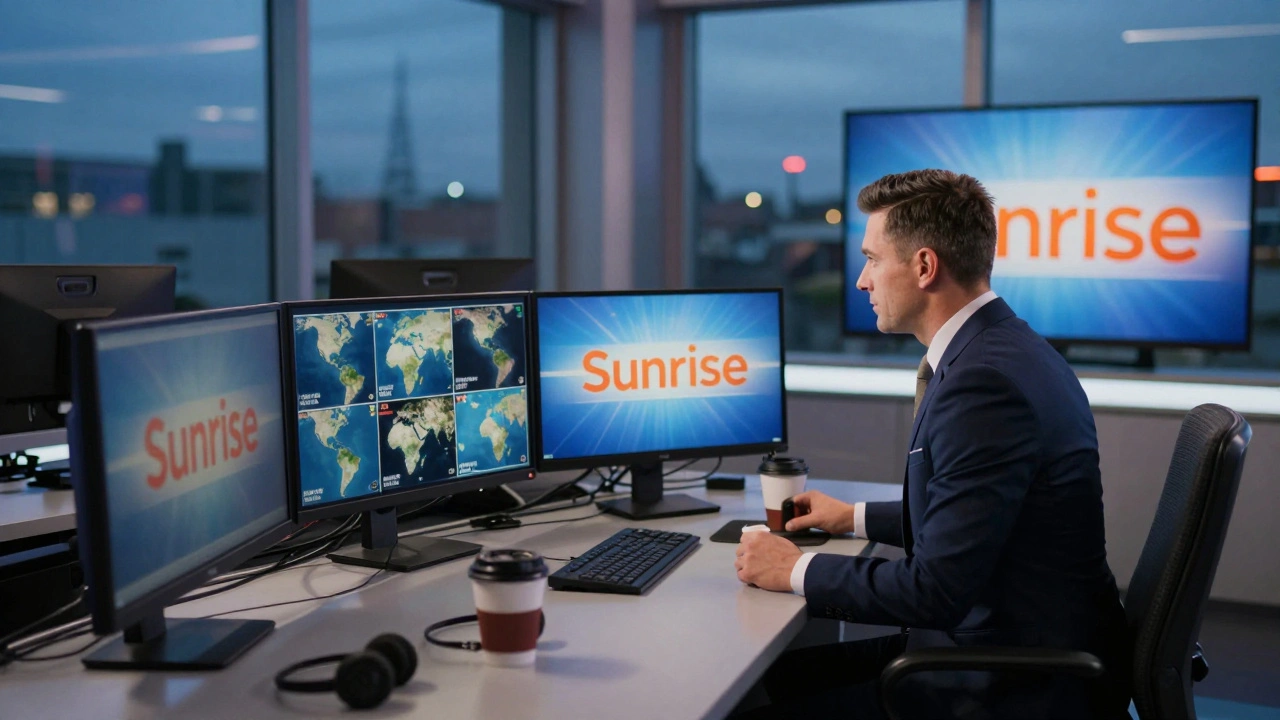
- Sunrise (6 AM – 10 AM): The morning anchor for politics, business, and weather. It’s the most-watched segment on weekdays, often simulcast on Channel 5.
- Sophy Ridge on Sunday (7 PM – 8 PM, Mon-Thu): Hard-hitting interviews with ministers, opposition leaders, and experts. No scripted answers allowed.
- Sarah-Jane Mee Show (8 PM – 9 PM, Mon-Thu): The channel’s flagship evening program. It covers breaking stories, deep dives, and live caller interactions.
- The World (9 PM – 10 PM, Mon-Thu): Global affairs with correspondents from over 40 countries. From Kyiv to Kinshasa, it’s not just headlines – it’s context.
- News at Ten (10 PM – 10:30 PM, daily): The only 30-minute nightly bulletin on a commercial channel. It’s the anchor point for the day’s biggest stories.
They don’t just report. They build. The “Science, Climate and Tech” section isn’t an afterthought – it’s staffed by specialists who track climate data, AI policy, and space missions. The “UK News” desk doesn’t just cover Parliament – it tracks local councils, hospitals, and schools. That’s why viewers trust it more than many national newspapers.
How Sky News Survived – and Thrived – Through Chaos
Sky News didn’t have a smooth ride. In 2005, it tried to become more like the BBC: scheduled bulletins, polished studio sets, formal anchors. It flopped. Viewers hated it. Ratings dropped. By 2006, new boss John Ryley scrapped it all. Back to live reporting. Back to speed. Back to the grit.
That decision saved the channel. It realized its strength wasn’t in polish – it was in agility. While BBC newsrooms waited for approvals, Sky News reporters were already live on the ground. When a protest broke out in Manchester at 2:17 AM, Sky was broadcasting within minutes. The BBC didn’t have a crew there until 4:30 AM.
It also survived corporate chaos. In 2011, the News of the World phone-hacking scandal rocked Rupert Murdoch’s empire. Sky News was never involved. But the public didn’t know that. People confused it with the tabloids. So Sky doubled down on transparency – publishing its editorial guidelines, naming its sources, admitting when it got something wrong. That trust built a shield.
Then came the move to Freeview in 2002. Suddenly, Sky News wasn’t just for satellite subscribers. It was in 10 million homes. Then came the app. Then streaming. Today, you can watch Sky News on your phone, tablet, smart TV, or even your car’s infotainment system. It’s everywhere – because it had to be.