Political reporter
LIVERPOOL: The Labour Party’s annual conference has concluded after several days of debate, political speeches and policy discussions, with the government seeking to demonstrate progress on its domestic priorities and restore public confidence. Prime Minister Andy Burnham used his keynote speech to announce a series of major policy proposals, including the creation of a National Care Service, greater public control of water companies and reforms to the housing market. Key outcomes included:
Social care: Plans for an NHS-style National Care Service offering free personal care for older people.
Pensions: Changes to the state pension triple lock from 2030 to help finance social care.
Housing: Further council house-building, restrictions on Right to Buy for newly built social housing and assistance for first-time buyers.
Water industry: Plans to remove legal barriers to public ownership of water companies.
Brexit: Burnham said Brexit had done more harm than good and called for a fresh discussion about Britain’s long-term relationship with the European Union.
Electoral reform: A national commission will examine alternatives to the first-past-the-post voting system.
Public transport: A £2 cap on single bus fares across England throughout 2027.
The conference also heard Foreign Secretary Ed Miliband acknowledge public anger over the suffering of Palestinians, signalling a change in the government’s tone on the Middle East.
However, questions remain over the cost, funding and timetable for implementing several of the proposals. Business representatives and political observers have called for greater clarity on how the ambitious programme will be delivered.
The conference closed with Burnham’s message of national renewal under the slogan “Hope Again”, as Labour sought to establish a new political direction

News
Staff reporter
LONDON: Prime Minister Andy Burnham is to introduce a new “Your First Home” scheme aimed at helping first-time buyers in England who struggle to save a large deposit or cannot rely on financial support from their families.
Under the proposal, eligible buyers will be able to receive an equity loan worth 20% of the purchase price of a new-build home. The scheme will require buyers to provide a minimum deposit of 2.5%, with the government loan making up part of the remaining cost. The loan will initially be interest-free.
The programme is specifically designed for people with regular incomes who can afford mortgage repayments but have been unable to build up a substantial deposit. Household-income and deposit limits, along with regional property-price caps, are expected to prevent the scheme from being used by higher earners or buyers purchasing expensive properties.
The government says the scheme will be announced by Housing Secretary John Healey in the Budget, with registration expected to open by the end of 2026. Funding is expected to come from reallocating existing government budgets rather than additional borrowing.
Burnham said the policy was intended to help young people who have been priced out of home ownership and do not have access to the so-called “bank of mum and dad”. He also argued that giving buyers additional support would provide developers with greater confidence to build new homes.
The announcement comes after a government review of the previous Help to Buy programme, which supported more than 387,000 home purchases. The earlier scheme was criticised by some economists and campaigners for benefiting people who might have been able to buy without government assistance and for potentially contributing to higher house prices.
Burnham’s new proposal therefore represents a modified return to government-backed assistance for first-time buyers, with tighter eligibility rules intended to focus support on households facing the biggest deposit barriers.
Ghulam Hussain Awan
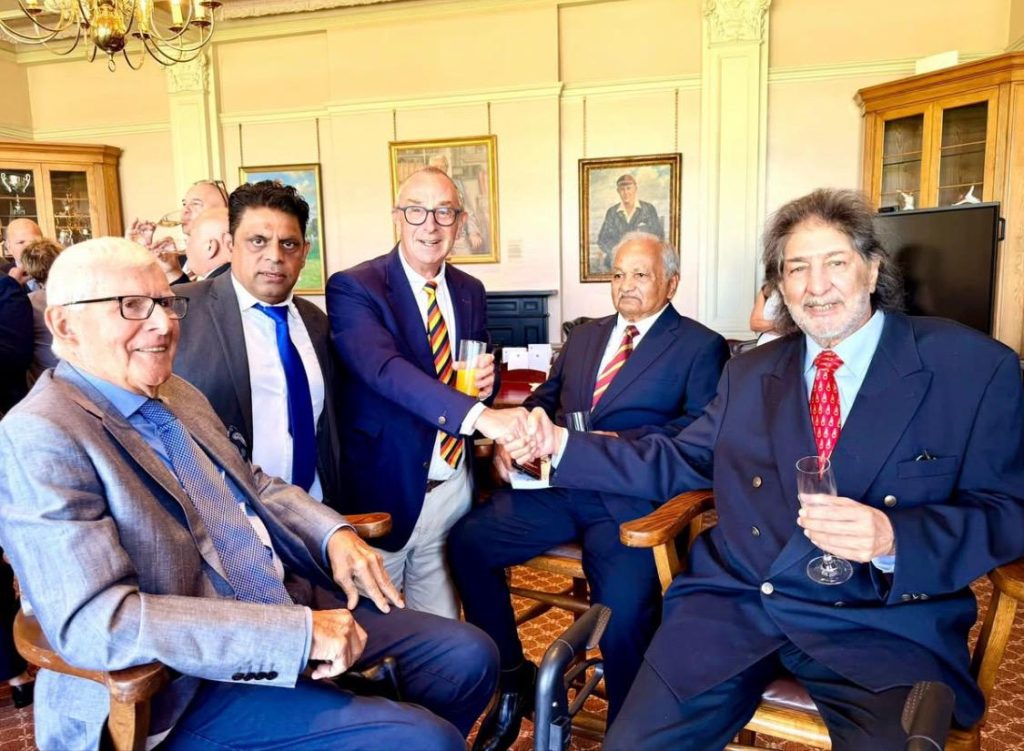
LONDON: Former Pakistan fast bowler Sarfraz Nawaz has launched his autobiography, “Reverse Swing”, last week at the historic Lord’s Cricket Ground, bringing together cricket fans, former players and members of the Pakistani British communities and media personnel.
The book signing attracted a sizeable gathering, with fans queuing to buy copies and meet the former Pakistan paceman. Nawaz described Reverse Swing as more than a cricket book, saying it contains personal experiences, behind the scenes stories and the “sweet and bitter” moments of his career.

Sarfraz Nawaz with former English cricketers, former Pakistan captains Mushtaq Mohammad and Journalist Ghulam Hussain Awan at Lord’s Cricket Ground.

Sarfraz Nawaz with former Deputy Mayor of Chelsea and Kensington alderman Mushtaq Lasharie and renowned British educationist Amanat Ali Anjum
Nawaz’s name is closely associated with the development of reverse swing. He has previously described how experimentation with an old cricket ball helped him discover the technique, which he subsequently refined through practice in Lahore. Cricket historians regard him as one of the leading early exponents of reverse swing.
The autobiography also offers an insight into Pakistan cricket’s golden era and Nawaz’s experiences alongside some of the country’s most celebrated players. In earlier interviews, he recalled teaching a young Imran Khan the principles of swing bowling during Pakistan’s 1974 tour of England and later unofficial matches in the West Indies.
At the London launch, Nawaz said he hoped his experiences would provide useful guidance to a new generation of fast bowlers. For cricket followers, Reverse Swing promises a personal account from one of the bowlers who helped transform the art of pace bowling and make reverse swing a defining weapon in international cricket.
Sarfraz Nawaz also has revealed that his outspoken campaign against match-fixing and cricket gamblers came at a personal cost, claiming that he was threatened by people connected with the betting world.
He speaking about his autobiography Reverse Swing, recalled how his efforts to expose what he regarded as corruption in cricket made him a target. He has previously said that armed men threatened him because of his public criticism of gamblers and match-fixers.
At the conclusion of the event, a dinner was also held in honour of Sarfraz Nawaz at the prestigious “Mumtaz Restaurant” on Baker Street, London, attended by journalists and other members of the community.

Sarfaraz Nawaz is presenting signed copies of his book to various individuals at Lord’s Cricket Ground and the Mumtaz Restaurant London
Inam Sehgal
LONDON: The use of fake and cloned vehicle number plates is increasing across England, prompting the Government and police to step up efforts to identify drivers using false registrations to evade enforcement and conceal criminal activity.
Official figures show that the number of people contacting the Driver and Vehicle Licensing Agency (DVLA) after receiving correspondence or penalties relating to vehicles they did not recognise rose from 7,377 cases in 2020 to 10,461 in 2024. There were a further 9,385 reports in the first ten months of 2025. The figures can include cases caused by registration errors, so they do not represent confirmed cases of cloning alone.
The problem includes cloned plates, where criminals copy the registration of a legitimate vehicle, and so-called “ghost plates”, designed to prevent automatic number plate recognition (ANPR) cameras from reading a vehicle’s registration. Police say such plates can be used to evade fines and facilitate more serious offences.
In September, the Government announced a new National Roads Policing Coordination Centre, bringing police forces across England together to share intelligence and improve the use of technology against illegal number plates and organised crime.
The Government is also considering tougher penalties, including penalty points and vehicle seizure for drivers caught using incorrect, altered or false number plates. The DVLA is reviewing its system for regulating number-plate suppliers, with tighter checks also under consideration.
Police forces have reported the impact locally. Avon and Somerset Police said cases of cloned vehicles seized in its area had doubled compared with 2023, while a recent West Yorkshire operation resulted in six cloned vehicles being seized during a week-long crackdown.
For innocent motorists, number-plate cloning can lead to unexpected speeding, parking or clean-air-zone penalties. The DVLA can issue a replacement registration number where cloning is established, while motorists may be asked to provide evidence showing that their vehicle was elsewhere when an alleged offence occurred.
The use of fake and cloned vehicle number plates is increasing across England, prompting the Government and police to step up efforts to identify drivers using false registrations to evade enforcement and conceal criminal activity.
Official figures show that the number of people contacting the Driver and Vehicle Licensing Agency (DVLA) after receiving correspondence or penalties relating to vehicles they did not recognise rose from 7,377 cases in 2020 to 10,461 in 2024. There were a further 9,385 reports in the first ten months of 2025. The figures can include cases caused by registration errors, so they do not represent confirmed cases of cloning alone.
The problem includes cloned plates, where criminals copy the registration of a legitimate vehicle, and so-called “ghost plates”, designed to prevent automatic number plate recognition (ANPR) cameras from reading a vehicle’s registration. Police say such plates can be used to evade fines and facilitate more serious offences.
In September, the Government announced a new National Roads Policing Coordination Centre, bringing police forces across England together to share intelligence and improve the use of technology against illegal number plates and organised crime.
The Government is also considering tougher penalties, including penalty points and vehicle seizure for drivers caught using incorrect, altered or false number plates. The DVLA is reviewing its system for regulating number-plate suppliers, with tighter checks also under consideration.
Police forces have reported the impact locally. Avon and Somerset Police said cases of cloned vehicles seized in its area had doubled compared with 2023, while a recent West Yorkshire operation resulted in six cloned vehicles being seized during a week-long crackdown.
For innocent motorists, number-plate cloning can lead to unexpected speeding, parking or clean-air-zone penalties. The DVLA can issue a replacement registration number where cloning is established, while motorists may be asked to provide evidence showing that their vehicle was elsewhere when an alleged offence occurred.
Al Mustafa Pakistan Conducts Free Eye Camp in Kamoki, Providing Treatment to More Than 1,500 Patients
Bureau Report
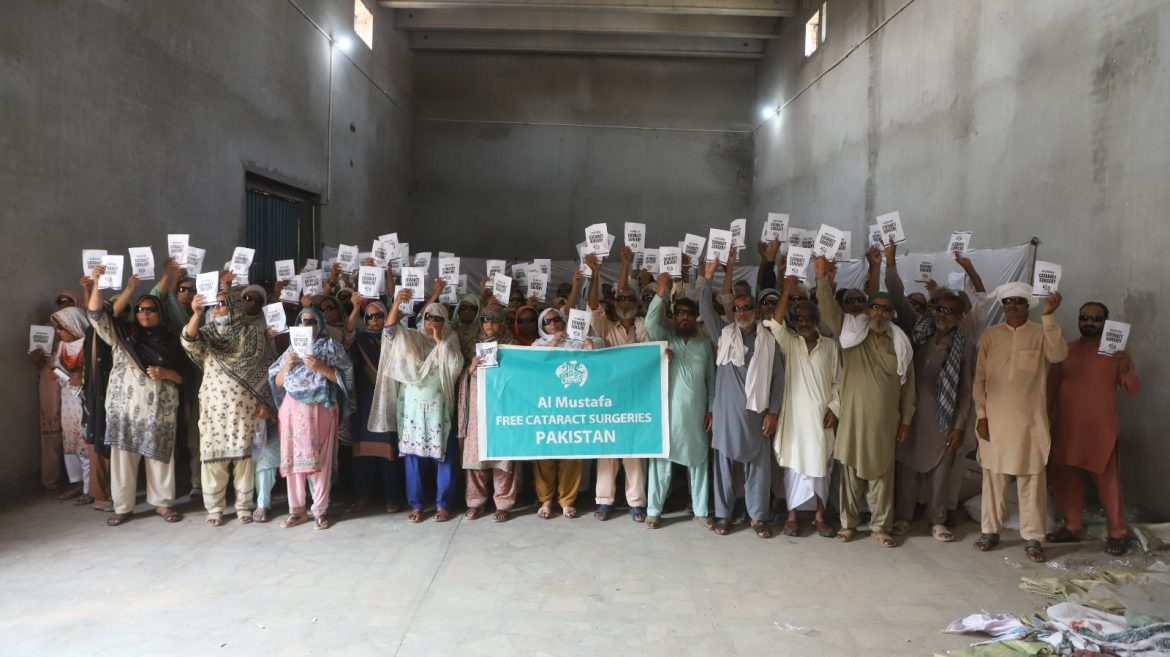
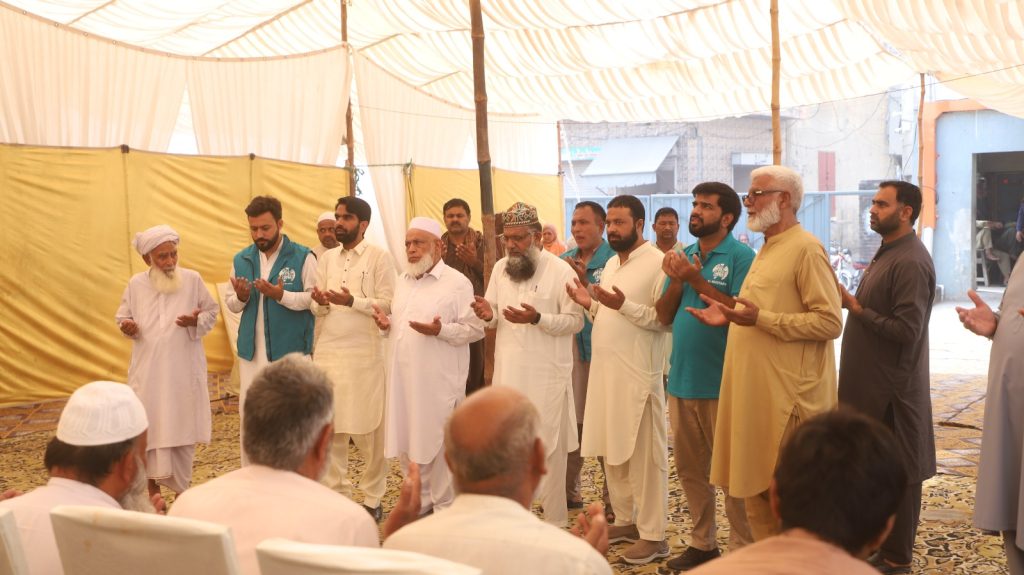
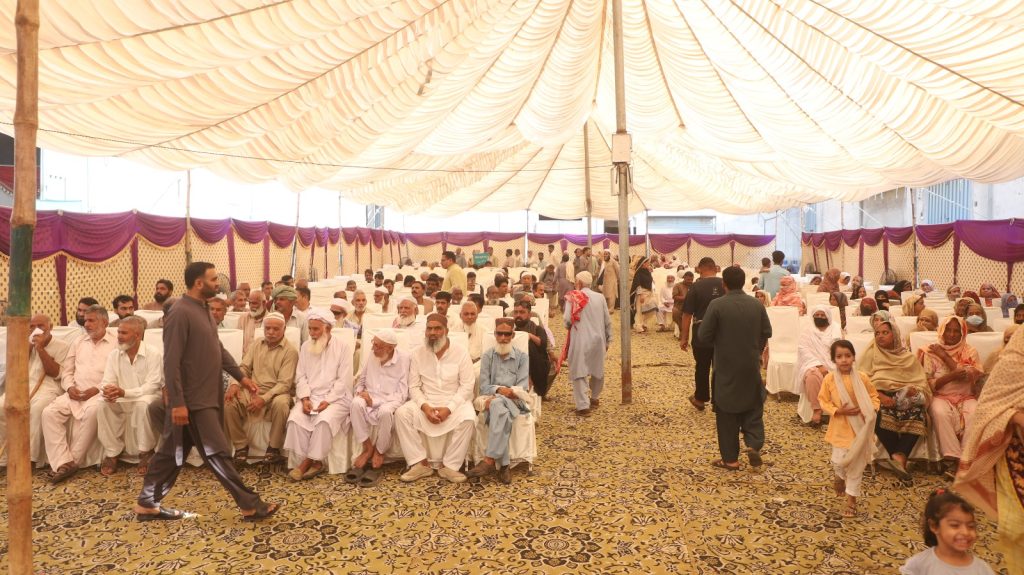
GUJRANWALA, Pakistan: Al Mustafa Pakistan organised a two-day free eye camp at Chisti Rice Mill in Kamoki, Tehsil Kamoki, District Gujranwala, on September 21–22, providing eye care and medical screening services to thousands of local residents.
According to the camp’s final report, 1,571 patients received outpatient consultations, including 703 women and 868 men. Medical teams also performed 262 eye surgeries, comprising 115 women and 147 men.
The camp provided diagnostic screening alongside eye treatment. A total of 327 patients were tested for hepatitis C (HCV), hepatitis B (HBsAg) and HIV. Seven patients tested positive for HCV, while no positive cases were recorded for HBsAg or HIV.
The medical team also identified 104 diabetic patients and carried out refraction tests for 27 patients.
As part of the campaign, 834 patients received vision glasses/spectacles to help improve their eyesight and daily functioning.
The free eye camp was coordinated by Wahid Bakhsh, Eye Camp Coordinator, Al Mustafa Pakistan, according to the camp report.
The initiative forms part of Al Mustafa Pakistan’s wider programme of providing free medical and eye-care services to communities with limited access to healthcare.

Al Mustafa Pakistan launches Freedom Campaign to help brick-kiln families break free from debt
Bureau Report
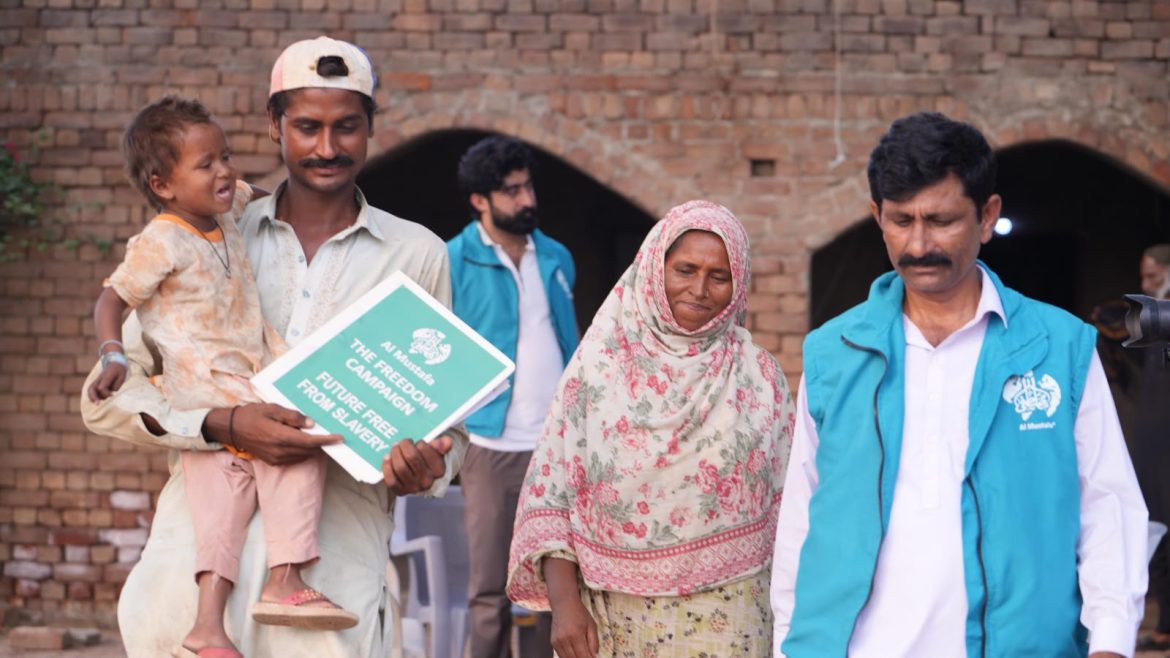
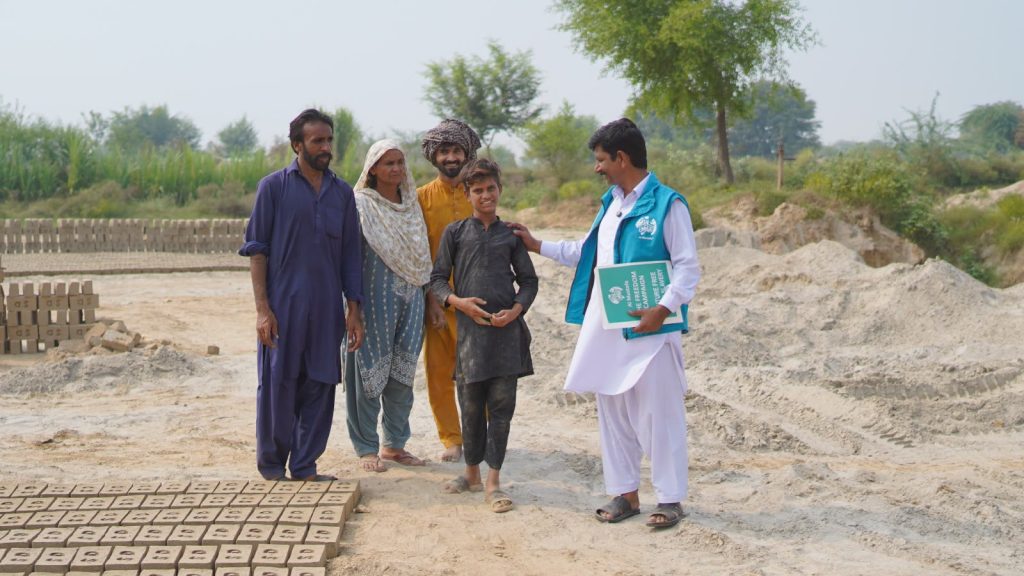
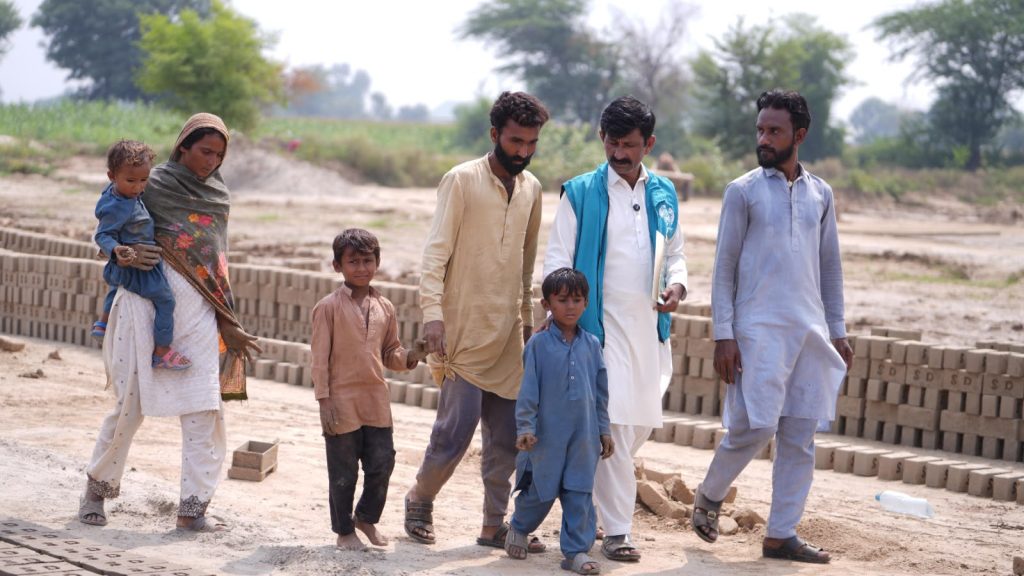
Lahore : Al Mustafa Pakistan has launched a fundraising appeal under its “Freedom Campaign” to help vulnerable families working at brick kilns escape a cycle of debt that can continue from one generation to the next.
According to the organisation, many brick-kiln workers and their families spend years working to repay loans, with the financial burden sometimes continuing to affect subsequent generations.
Under the Freedom Campaign, Al Mustafa Pakistan is raising funds to pay off the outstanding debts of deserving families and help them move away from the cycle of debt associated with brick-kiln work.
The organisation says the initiative is intended not only to clear financial liabilities but also to give families an opportunity to rebuild their lives with greater dignity, security and hope for the future.
The campaign particularly focuses on the impact of debt on children, whose education and future opportunities can be affected when families remain trapped in long-term financial obligations.
Al Mustafa Pakistan has appealed to donors and supporters to contribute to the Freedom Campaign and help more families achieve freedom from debt.
The organisation says that every contribution can help towards settling the debt of a family and opening the way to a new beginning.
The campaign carries the message that ending one family’s debt can help change the future of an entire generation.

Filming: Nasir Iqbal
Bureau Report
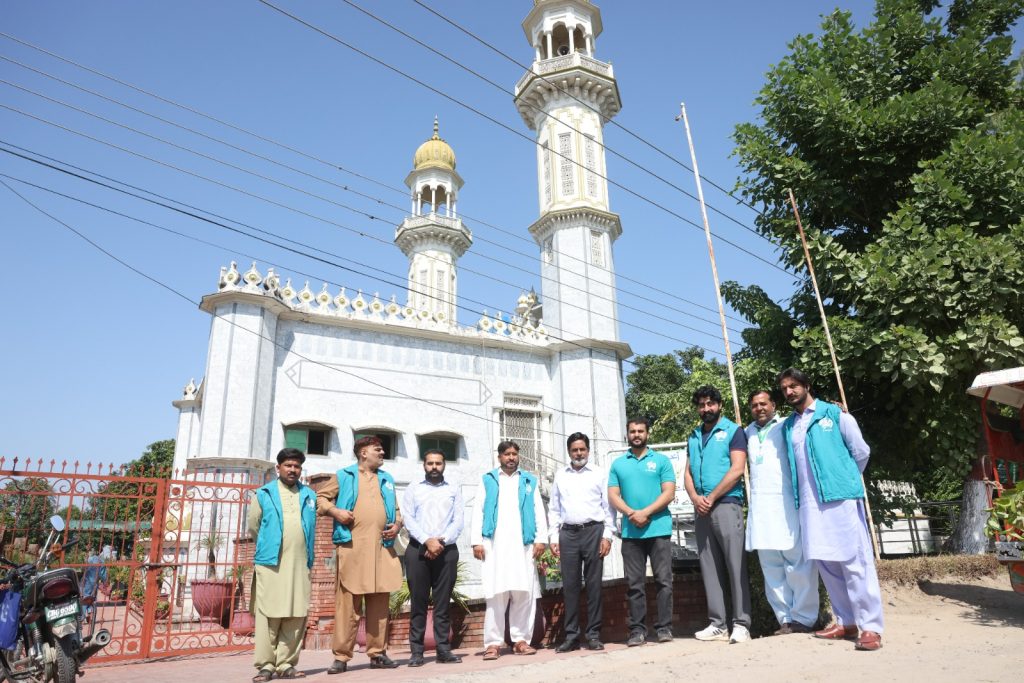
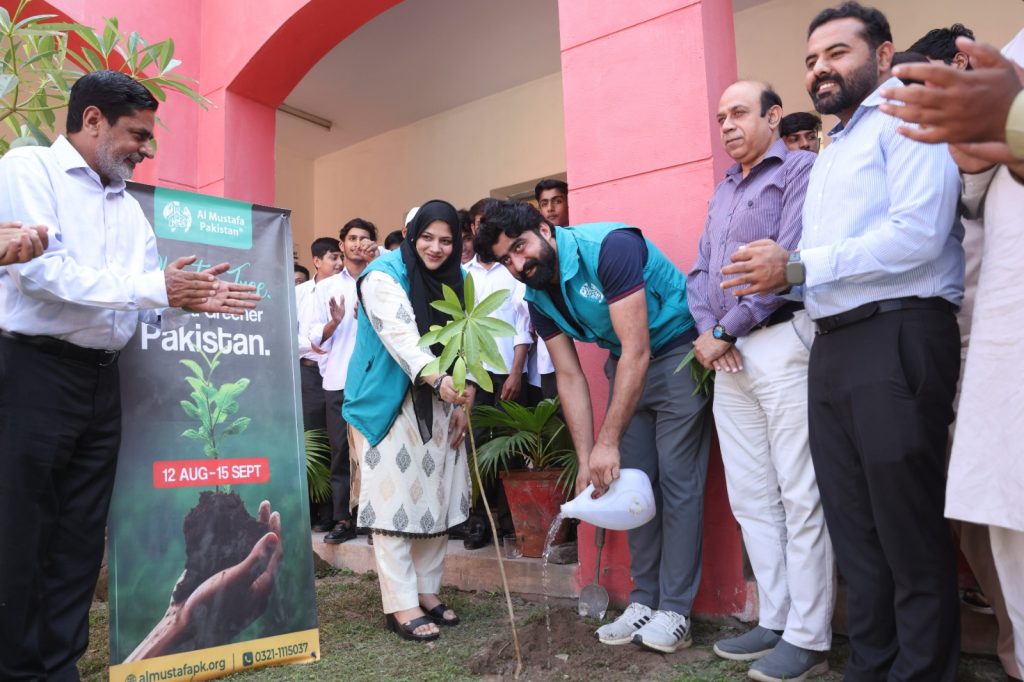
WAZIRABAD: The plantation caravan of Al Mustafa Welfare Trust reached Wazirabad as part of its ongoing campaign to promote a greener and healthier Pakistan.
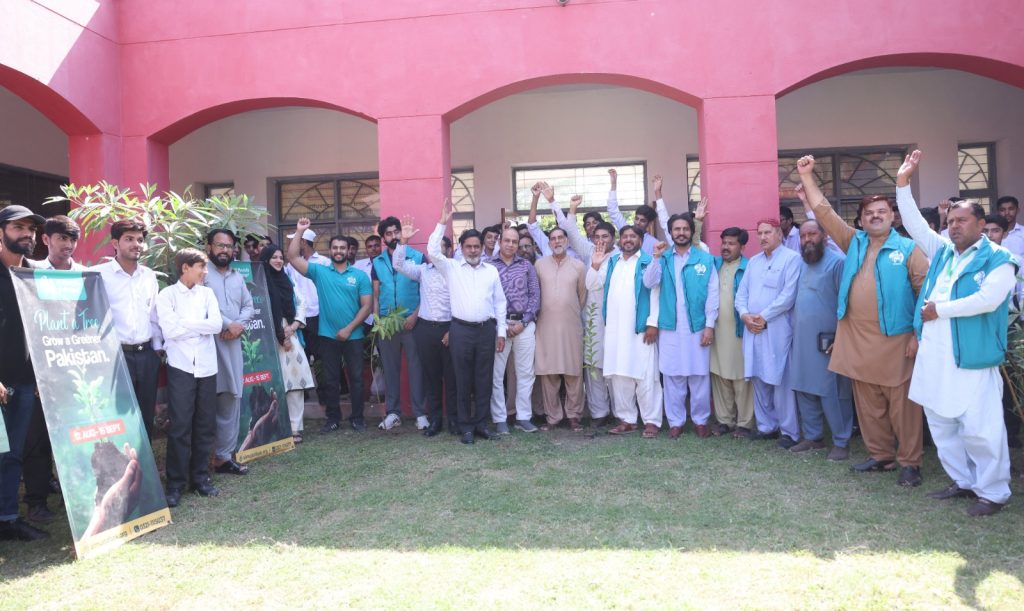
A plantation drive was organised at Government Maulana Zafar Ali Khan Graduate College, Wazirabad, where trees were planted at different locations across the college premises. College Principal Professor Dr Iftikhar Ahmed, faculty members and prominent citizens participated in the plantation activity.
The planting and distribution of saplings continued for several hours, with students, teachers and local community members taking part in the campaign.
Speaking on the occasion, College Principal Professor Dr Iftikhar Ahmed said that Al Mustafa’s plantation campaign was an important step towards making Pakistan greener. He appreciated the organisation’s humanitarian services and said its continued efforts for the welfare of communities were commendable.
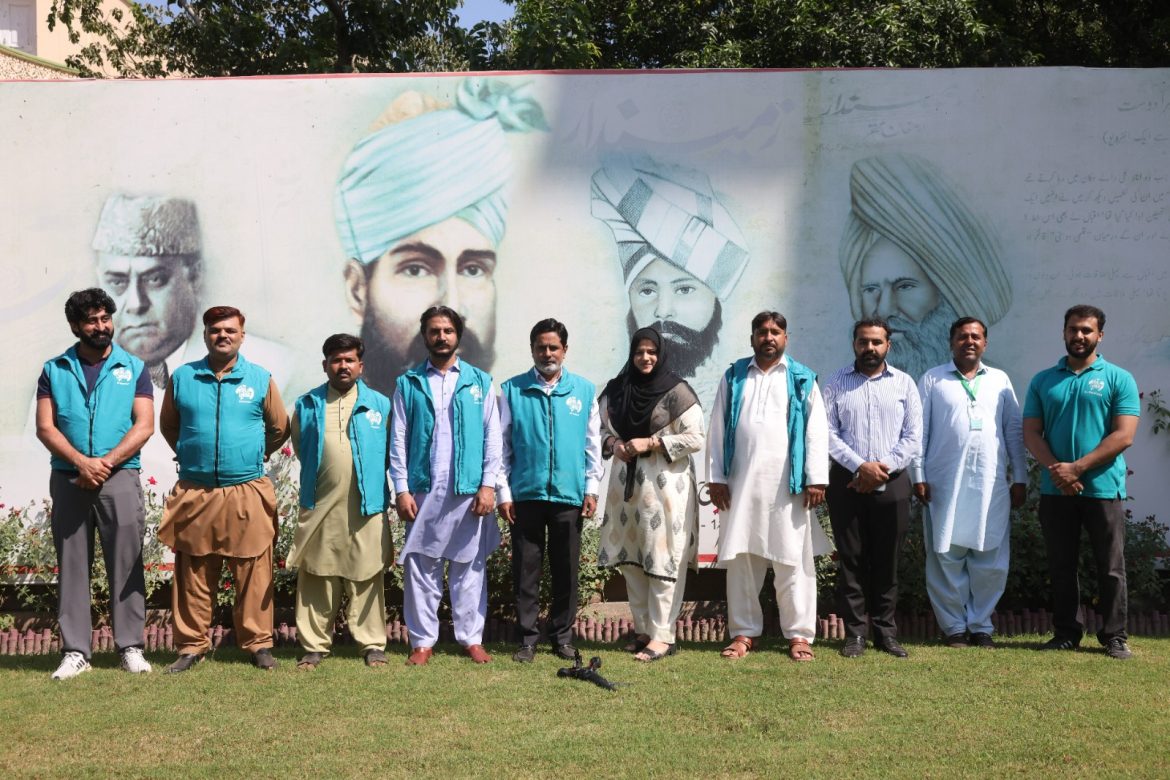
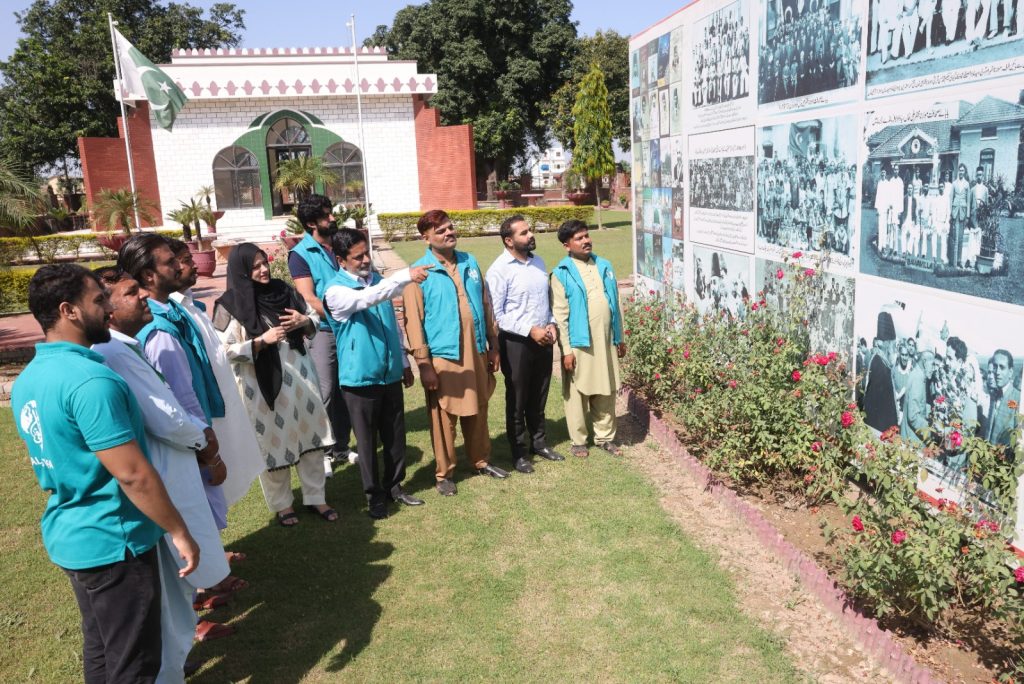
The Al Mustafa team also carried out plantation activities at the premises of the tomb of Maulana Zafar Ali Khan, the renowned leader of the Pakistan Movement, in Wazirabad. The team visited the mausoleum and paid tribute to Maulana Zafar Ali Khan for his historic contributions and services.
Local residents also participated in the plantation activity, turning the initiative into a community-based effort to promote environmental awareness and increase green spaces in the area.
Photography: Tariq Hassan Bhatti

Al Mustafa Welfare Trust explores collaboration with Latter-day Saints organisation on student eye screening
Bureau Report
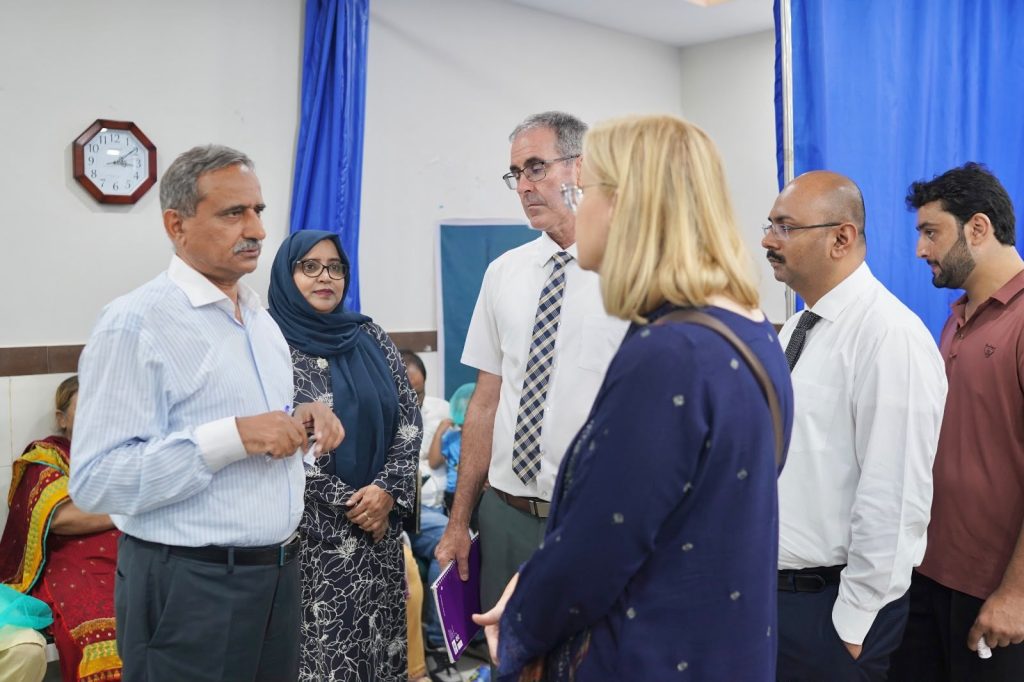
LAHORE: Al Mustafa Welfare Trust hosted a delegation from The Church of Jesus Christ of Latter-day Saints, including humanitarian specialists Mr Mark and Ms Shelly and Country Manager Mr Zumran James, to explore opportunities for collaboration in providing free eye screening to students across Punjab.
During the visit, the delegation discussed potential areas of cooperation aimed at expanding access to eye-care services for schoolchildren, particularly those from vulnerable and underserved communities.
The visiting representatives also reviewed Al Mustafa Welfare Trust’s systems and procedures and appreciated the organisation’s work and commitment to making eye-care services more accessible.
The meeting highlighted the potential for closer cooperation between the two organisations in extending preventive eye screening and related services to communities across Punjab. Both sides expressed their intention to strengthen the partnership and explore initiatives that could help provide quality eye-care services to a larger number of children and other vulnerable groups.

Al Mustafa Welfare Trust appeals for support for Clean Water Project
Bureau Report
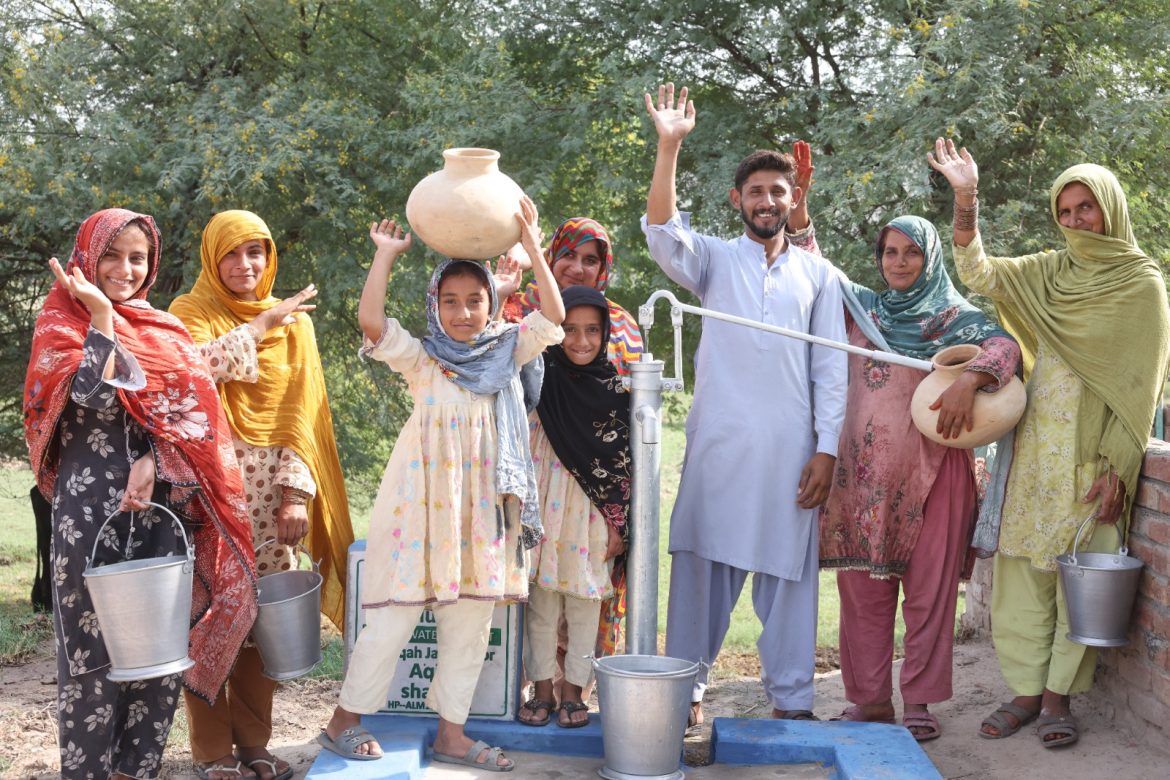
ISLAMABAD: Al Mustafa Welfare Trust has launched an appeal for public support for its Clean Water Project, aimed at improving access to safe and clean drinking water for communities facing water shortages across Pakistan.
The welfare organisation says access to clean water remains a major challenge for many communities, particularly in areas where people have to travel long distances to collect water for their daily needs.
Under the project, Al Mustafa Welfare Trust is installing hand pumps and developing other clean-water facilities to help provide communities with a more reliable source of drinking water.
According to the organisation, a hand pump can make a significant difference to families by reducing the need for women, children and elderly people to walk long distances in search of water.
The Trust is appealing to donors and members of the public to support the Clean Water Project and help extend its reach to more communities facing water scarcity.
The organisation says contributions towards clean-water projects can provide a lasting benefit to communities, with access to safe drinking water helping families meet one of their most basic daily needs.
Al Mustafa Welfare Trust has urged supporters to join its efforts to address water shortages and make clean drinking water accessible to people in need.
“Every drop of water can become a source of lasting charity,” the campaign says, highlighting the long-term humanitarian impact of providing clean water to a community.
Photography: Tariq Hassan
Al Mustafa Plantation Drive Held at Government College for Women in Wazirabad
Bureau Report
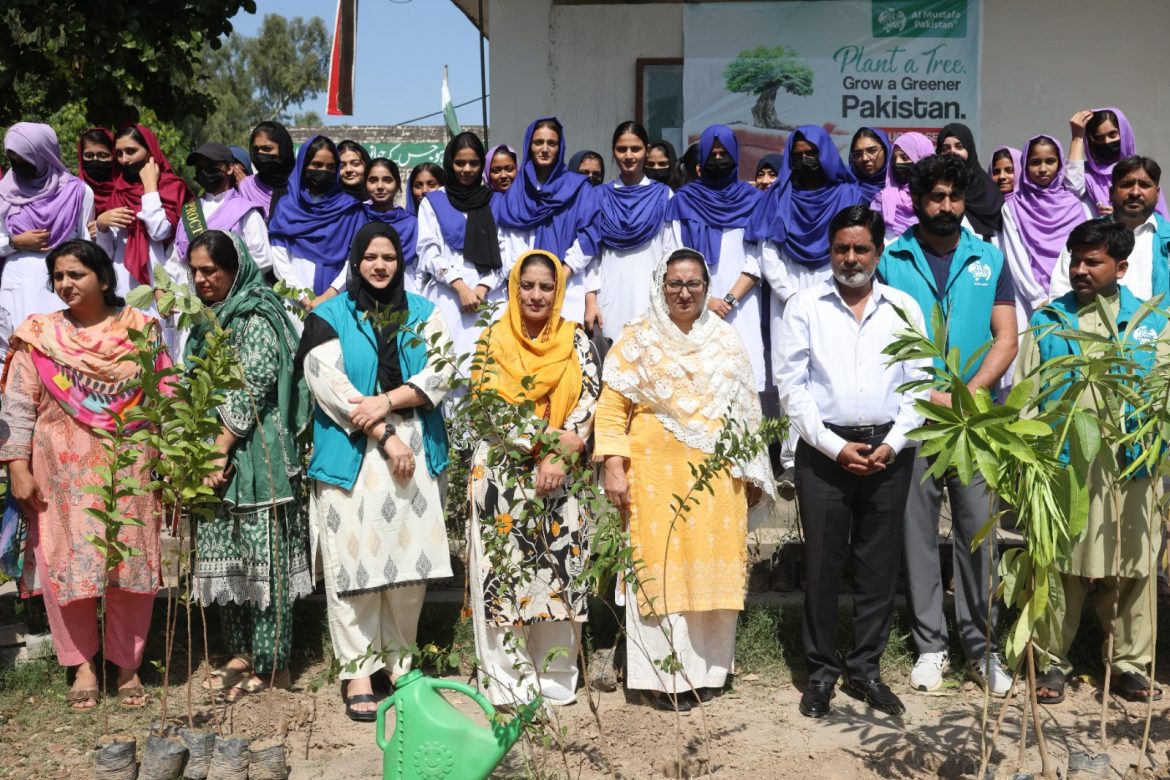
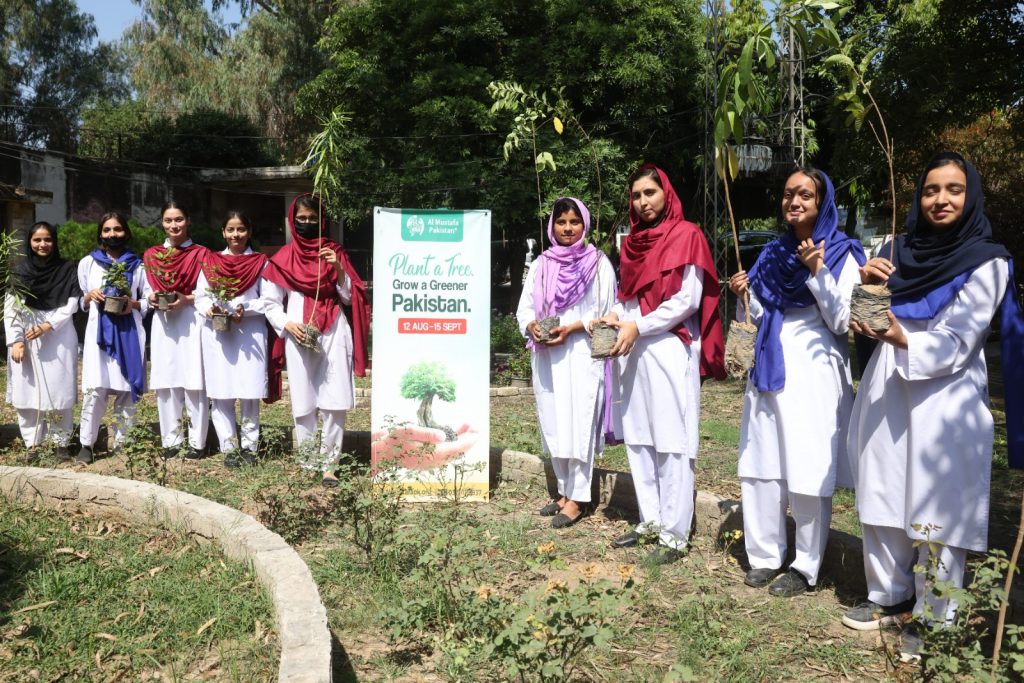
WAZIRABAD: Al Mustafa Welfare Trust continued its nationwide plantation campaign with a tree-planting drive at the Government College for Women, Wazirabad, as part of its ongoing efforts to promote a greener and healthier Pakistan.
Members of the Al Mustafa team, college teachers and students planted hundreds of saplings at different locations across the college grounds. Saplings were also distributed among students to encourage them to take an active role in protecting the environment and increasing green cover.
College Principal Ms Samina Younis, Al Mustafa Head of Media and Public Relations Muhammad Nawaz Kharl, Manager Programmes Department Ms Amberin Shafiq, and Ali Hashmi attended the plantation activity.
The nationwide Plantation Drive of Al Mustafa Welfare Trust has been continuing for several months, with thousands of saplings planted across different parts of Pakistan.
The Trust has urged citizens to join hands in planting trees to help reduce air pollution, mitigate the adverse effects of climate change, improve the quality of the air and create a healthier and more attractive environment for future generations.
Al Mustafa’s plantation campaign carries the message:
“Plant trees, beautify the country, make the air fragrant, save lives and secure the future.”
Photography: Tariq Hassan