Education Correspondent
Children who experience physical punishment at home may be more likely to achieve lower GCSE results, according to new research that adds to growing evidence linking childhood experiences with educational outcomes.
The study found an association between being hit during childhood and reduced academic performance in adolescence, with researchers suggesting that stress, anxiety and difficulties with concentration could play a role.
Education experts say a child’s home environment is an important factor in learning and development. They argue that positive discipline strategies, such as setting clear boundaries and consistent consequences, are more effective in supporting both behaviour and long-term academic success.
Researchers cautioned that the findings show a correlation rather than proving that physical punishment directly causes lower GCSE grades. They noted that other factors, including family income, parental education and access to support services, can also influence academic achievement.
Child welfare organisations have welcomed the findings, saying they reinforce the importance of creating safe and supportive environments for young people. They argue that reducing physical punishment could benefit children’s emotional wellbeing as well as their educational progress.
Teachers have also highlighted the impact of emotional security on classroom performance, pointing out that students who feel safe and supported are often better able to concentrate, participate and achieve their potential. The researchers called for further studies to better understand the relationship between parenting practices and educational outcomes, while encouraging families to consider non-violent approaches to discipline. The findings contribute to an ongoing debate about child development and education, with experts continuing to examine how experiences at home can shape a young person’s learning and future opportunities.

News
Saif Ali Khan
The UK government has announced plans to ban children under the age of 16 from using major social media platforms, describing the move as a landmark effort to improve online safety and protect young people’s mental health.
Prime Minister Keir Starmer said the new policy is designed to give children a safer environment by reducing their exposure to harmful content, cyberbullying, and addictive online features. The proposed legislation is expected to place responsibility on technology companies to prevent under-16s from accessing their platforms rather than punishing young users themselves.
Under the plans, popular services including TikTok, Instagram, Snapchat, YouTube, Facebook, and X would be covered by the ban. Messaging applications such as WhatsApp and Signal are expected to remain available because they primarily provide private communication rather than algorithm-driven social feeds.
The government also intends to introduce stricter online safety measures, including limits on livestreaming and preventing under-16s from receiving messages from strangers on certain platforms. Additional proposals, such as digital curfews and restrictions on endless scrolling for teenagers, are also being considered.
The announcement follows a nationwide consultation that received more than 116,000 responses, with around 90% of parents supporting a minimum age of 16 for social media access. Campaigners and child safety organisations have largely welcomed the decision, arguing that it could help reduce online harms affecting young people.
However, critics have questioned whether the ban will be effective, warning that determined teenagers may find ways to bypass age-verification systems. Others have raised concerns about privacy, free speech, and the potential for children to migrate to less regulated online spaces.
If approved by Parliament, the measures are expected to come into force from next year, making the UK one of a growing number of countries introducing strict age limits for social media use.
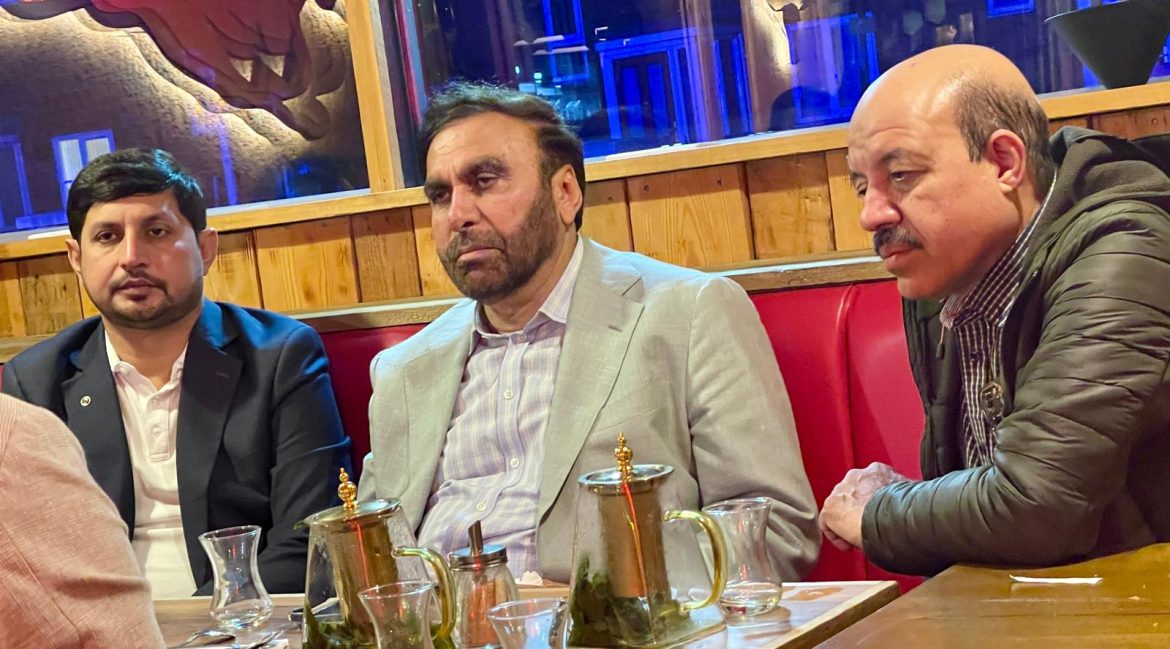
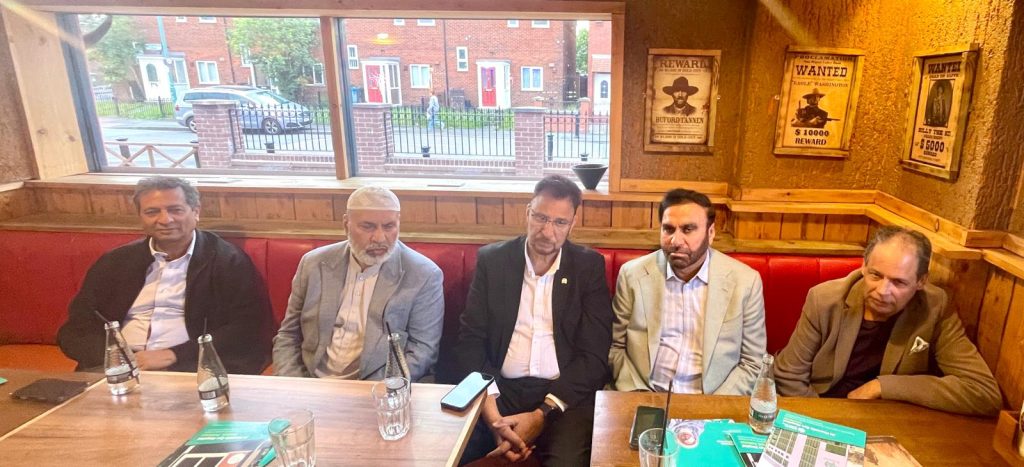
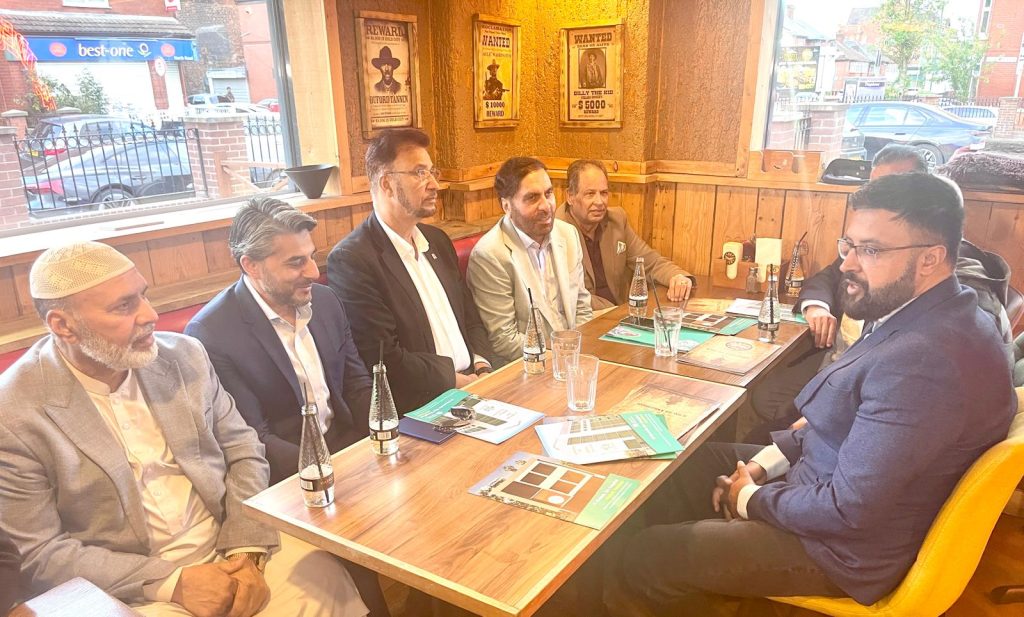
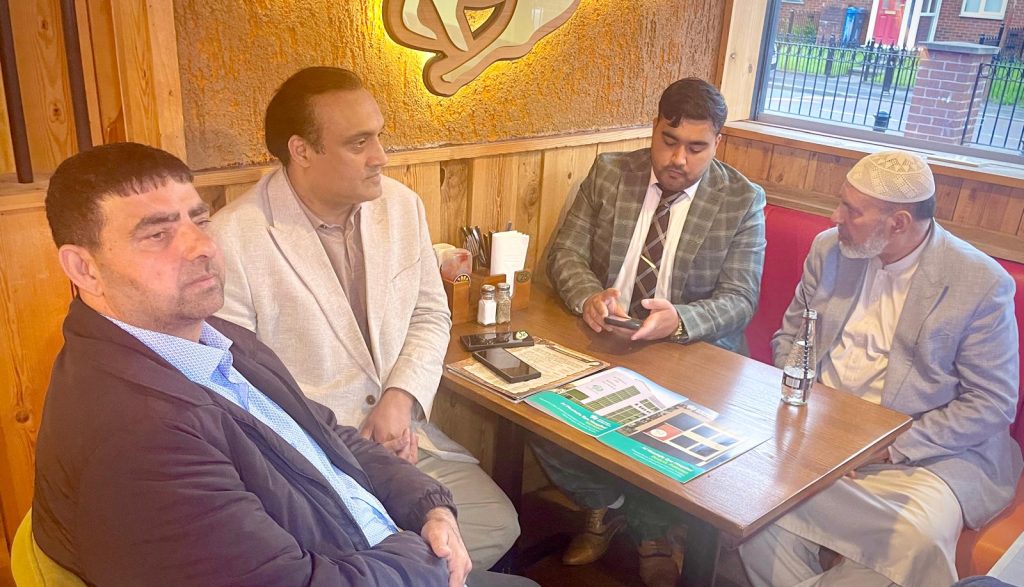
A dinner was hosted by prominent businessman Shafa Hussain Butt, in honor of Abdulrazzaq Sajid, Chairman of Al Mustafa Welfare Trust
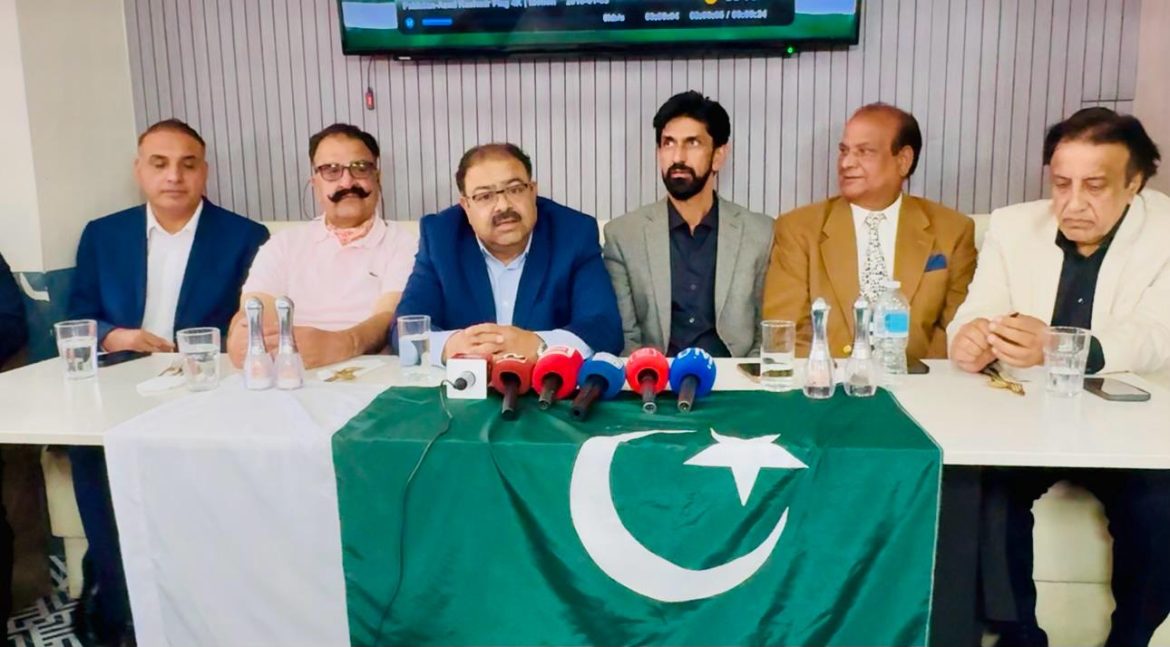
Manchester: A dinner was hosted by prominent businessman Shafa Hussain Butt, in honor of Abdulrazzaq Sajid, Chairman of Al Mustafa Welfare Trust, in which member of parliament Afzal Khan, Councillor Basit Sheikh, Abdul Qadir, Solicitor Muhammad Shahid, Prominent businessman Bilal Ghafoor, Journalists and prominent figures of the city also attended the event. On this occasion, Afzal Khan MP and other speakers expressed their views and said that under the leadership of Abdulrazzaq Sajid, this charity is providing excellent humanitarian services, especially more than three hundred thousand eye surgeries, which is a great and commendable work.

Shaukat Dar
There is a need to raise the slogan of Pakistan in Azad Kashmir at this time, Prime Minister Faisal Rathore’s efforts for reconciliation are commendable, these views were expressed by Pakistan People’s Party UK President Mohsin Bari and Azad Kashmir Commissioner for Overseas Azhar Barralvi at a press conference in Hounslow, London, along with Special Assistants to the Prime Minister of Azad Kashmir for Overseas Raja Mazhar Hayat.
Pakistan People’s Party UK President Mohsin Bari and Azhar Iqbal Barralvi addressed a press conference in London in the presence of Special Assistant to the Prime Minister of Azad Kashmir Raja Mazhar Hayat, Kashmiri leaders Chaudhry Shaban, Aftab Baghi, Adviser to the Prime Minister of Azad Kashmir on Media Shaukat Dar, PPP Vice President London Amanat Ali Anjum, Agha Tanveer Iqbal and Chaudhry Waheed Iqbal. They said that at this time Pakistan in Azad Kashmir It is necessary to raise the slogan of ‘Khappay’. They said that when Benazir Bhutto was martyred, there was a lot of chaos in Pakistan, but President Asif Ali Zardari silenced those who spread chaos by raising the slogan of ‘Khappay’. Overseas Commissioner Azhar Iqbal Badralvi and Raja Mazhar Hayat said that both sides should resolve the issues through understanding because the protesters are also Kashmiris and did not come from outside, but the protesters also need to record their protest peacefully instead of using violent means.
Currant conditions are not conducive for elections in Azad Kashmir: President PPP AJK
Staff reporter
In line with the vision of Chairman Bilawal Bhutto Zardari, who believes in dialogue and negotiations, the election schedule in Azad Kashmir has been announced in haste. The current conditions are not conducive for elections; the Election Commission should postpone the schedule!”
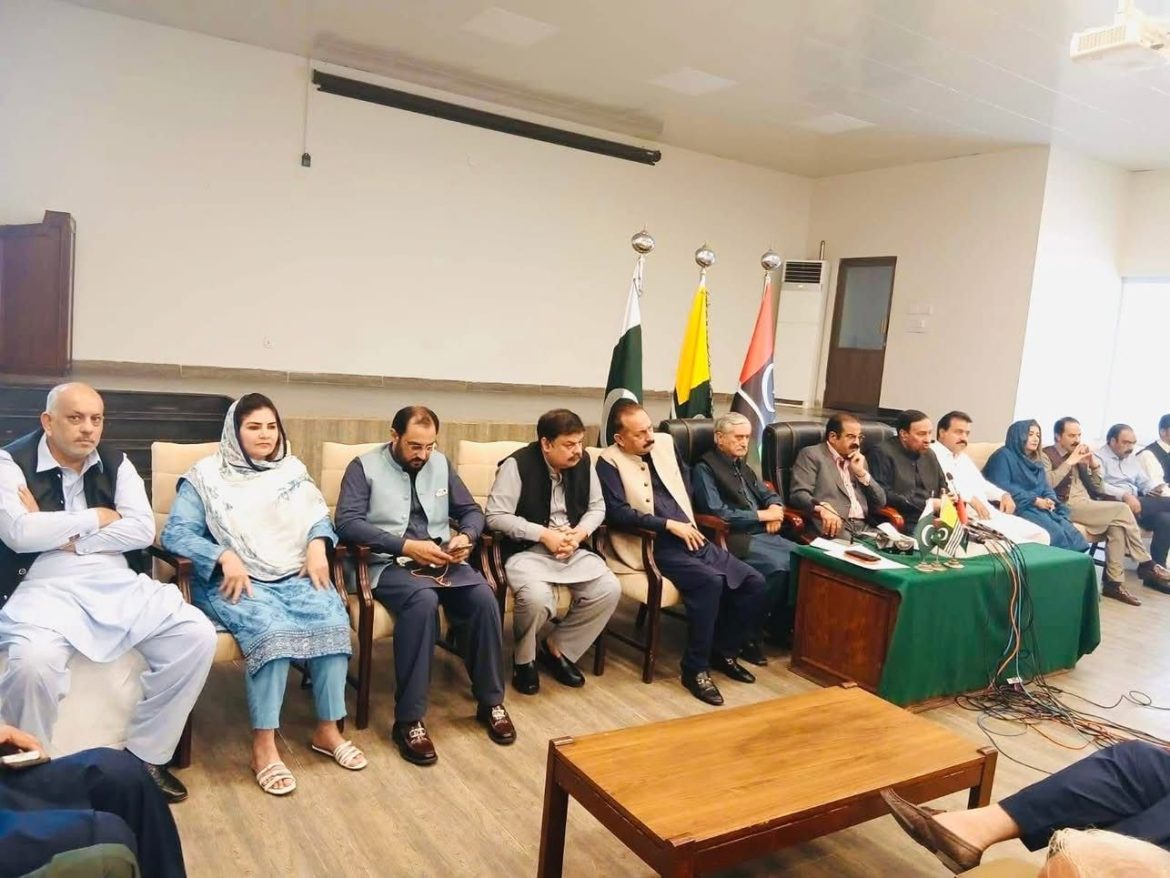
This was stated by Chaudhry Muhammad Yasin, President of PPP Azad Kashmir, alongside Sardar Yaqoob Khan, former Prime Minister, Mian Abdul Waheed, Sardar Javed Ayub, Sardar Zia-ul-Qamar, Chaudhry Qasim Majeed, Javed Iqbal Budhanvi, Chaudhry Yasir Sultan, Shaheen Kosar Dar, Shaukat Javed Mir, Amir Zeeshan Jaral, Sahibzada Zulfiqar Ali, Syed Azadar Shah, and others, during a press conference held after a meeting of the PPP Azad Kashmir Core Committee.
It was said that the current political and law-and-order situation is a matter of serious concern. “For us, 12 seats hold no significance. The federal government should speak with patience and tolerance, and efforts should be made to restore normalcy to the situation.”
This is the demand of the PPP leadership. “We take pride in the Pakistan Armed Forces and in Pakistan.”
Chaudhry Muhammad Yasin, President of PPP Azad Kashmir, further stated: “Under the present circumstances, saving the state and its people and maintaining stability is our topmost priority.”
Labour & Pakistani origin loses in Hounslow politics, local elections and why?
Internal differences were seen in the Hounslow Labour Party, where several councillors including Riyaz Gul, Gurvinder Sidhu and former mayor Afzaal Kiani left the Labour Party

Analysis Wajahat Ali Khan
The recent local elections in England have not only changed the balance of power of political parties but have also raised several important questions for British Pakistani politics. The political landscape has changed in areas that were considered strongholds of the Pakistani or Muslim vote bank for decades. On the other hand, in some areas, candidates of Pakistani origin maintained their presence, making it clear that the issue is not only about ethnic identity but also about local politics, party affiliation and public trust. However, in several boroughs, especially the Labour Party candidates faced many defeats,
The biggest losers were those councillors of Pakistani origin who were contesting elections on the Labour Party ticket from wards that were traditionally considered safe. In several areas of London, the West Midlands, Yorkshire and the Northwest, Labour’s vote fell significantly and independent candidates, especially the Green Party and the Reform Party, performed better in various seats. In some areas, Reform’s extraordinary progress also harmed candidates from traditional parties, including politicians of Pakistani origin. The party won a significant number of seats in several councils and changed the landscape of local politics.
Now the million-dollar question is what are the real reasons for this loss?
1. Dissatisfaction with the Labour Party. A large number of British Pakistani voters have long been supporters of Labour, but in recent times, some of the government’s policies, immigration, cuts in benefits, economic issues and the party’s stance on international affairs, especially the Gaza issue, have disappointed many voters, resulting in the party’s traditional vote bank being divided.
2. Muslim voter fragmentation. This time in many constituencies Muslim voters did not remain with just one party but also went towards independent candidates, the Green Party and other political forces. This division reduced the chances of victory of many Pakistani-origin Labour candidates.
3. Local rather than national issues. Such as inflation, housing, council tax, sanitation, transport and local services, influenced voters’ decisions more. The tendency to vote solely based on community or ethnic identity was less than before.
4. The emergence of new political forces, for example, the strong performance of the Green Party, challenged the traditional two-party system. This change also affected those Pakistani candidates who relied solely on Labour’s strong vote bank.
But the question is, is this just a story of loss?
Interestingly, the overall picture is not one-sided. According to various analyses, a record number of Muslim councillors were also elected in these elections in England, including many candidates of Pakistani origin. The difference is that many of these candidates won as independents or on platforms of other parties rather than Labour.
The recent local elections in England have made it clear that British Pakistani politics has entered a new phase. Community or traditional party affiliation alone is no longer a guarantee of success. Voters are more informed, more demanding and are placing more importance on local performance.
If politicians of Pakistani origin want to maintain their political power, they will have to offer better local governance, transparent performance and practical solutions to public problems, rather than just claiming to represent the community. This is the path that can bring them back to a strong political position in the future.
In the London borough of Hounslow, which was considered a stronghold of the Labour Party, the Labour Party managed to retain its government in the recent 2026 local elections, but its political power decreased significantly, and it suffered a major setback compared to the previous elections.
The total seats here are 62, the Labour Party won 32 seats, the Conservative Party 17 seats, Reform 8 seats, the Greens 3 seats, the Liberal Democrats 1 seat and an independent candidate won.
Thus, Labour retained its control of the council with a narrow majority of only one seat, while in 2022 it had a strong majority of 52 seats. Thus, Labour had to suffer a loss of almost 20 seats, which is being considered a major setback in Hounslow’s recent political history.
While Reform gained 8 seats for the first time and established its strong presence in West Hounslow. The Conservative Party also increased its seats, while the Green Party also made progress. A major reason for the loss of many seats by the Hounslow Council Labour Party was internal differences, including the differences over Hounslow Jamia Mosque. Before the election, internal differences were seen in the Hounslow Labour Party, where several councillors including Riyaz Gul, Gurvinder Sidhu and former mayor Afzal Kayani left the Labour Party and became independents or joined another party, which created organisational weakness. However, based on political analysis, it can be said that the Muslim vote was divided. Differences within the mosque and the community weakened political unity in some areas.
Different groups supported different candidates or parties, which did not give Labour the traditional one-sided support because if a dispute arose in a religious or social institution, it could also affect local political figures, especially if their name or affiliation came into the discussion. All these figures clearly point to the fact that Hounslow politics has entered a new era, where voters are more informed than ever and their decisions seem to be based on performance, trust and public service rather than just community or traditional affiliation.
In the future, Hounslow politics will not be enough to rely on traditional community votes alone, but local performance, public relations and strong organisational structures will play a more important role.
Therefore, it can be said with great certainty that internal divisions and pointless fights will clearly harm not only Hounslow but also Muslims and most Pakistanis across the UK because the right and far-right thinking is being strengthened in this country, which is now openly opposing those who come from outside!!
British Parliament Praises Pakistan and Prime Minister Shahbaz Sharif’s Role in US-Iran Ceasefire Efforts
Staff reporter
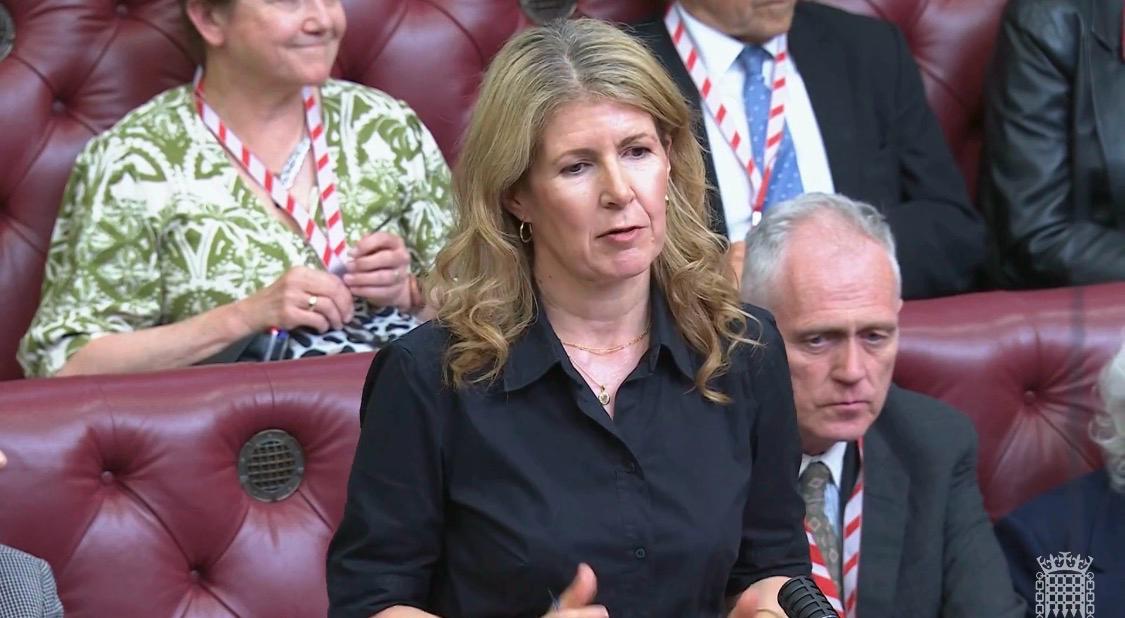
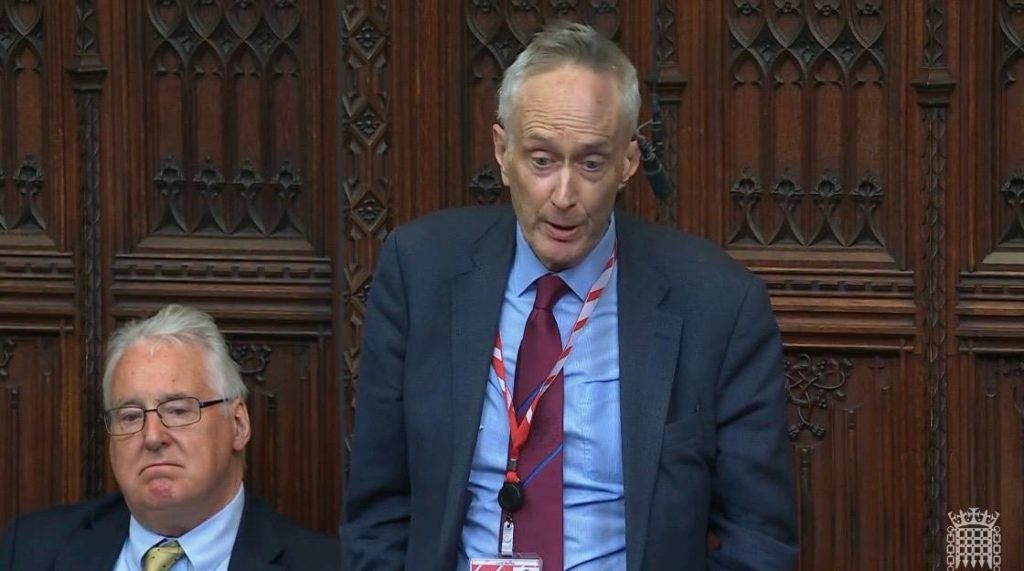
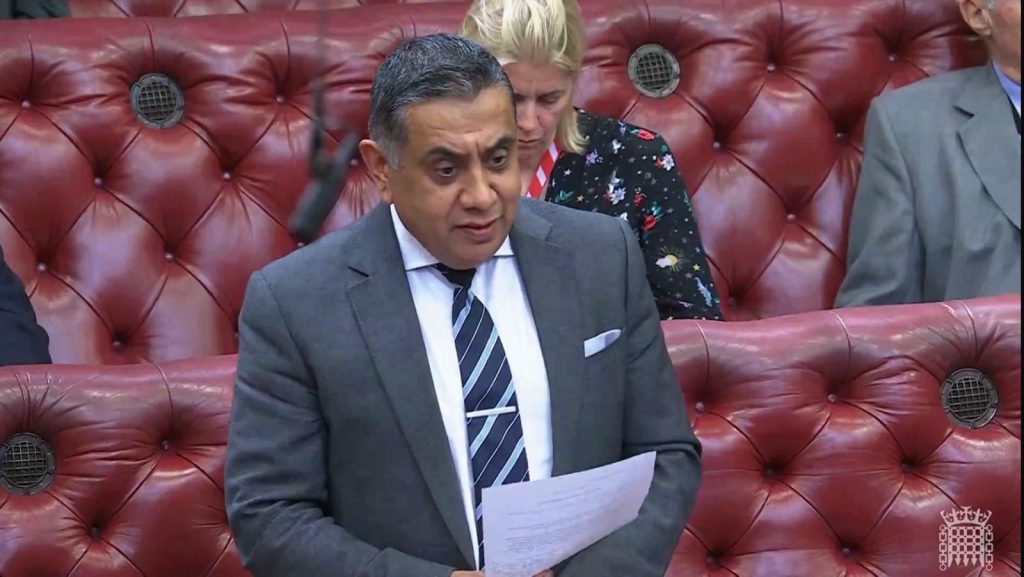
During the debate on the Middle East situation in the House of Lords on June 15, 2026, Pakistan’s constructive role in the efforts for a ceasefire and peace between Iran and the United States and the diplomatic efforts of Prime Minister Muhammad Shahbaz Sharif were highly appreciated.
During the debate, several members of the House of Lords praised Pakistan’s positive role in reducing tensions in the region and advancing negotiations.
Lord Ahmad of Wimbledon, while paying tribute to Pakistan’s services, said that I am sure that the Minister and all the esteemed members present in the House will recognize the important role of Pakistan. Many thanks to Pakistan, and to Qatar, whose effective support has helped us reach this important point.
Lord Ahmed of Wimbledon said in Urdu, “Thank you very much to Pakistan.”

Responding on behalf of the British government, Baroness Chapman of Darlington also appreciated Pakistan’s role and said that Pakistan played a significant role in bringing the US and Iran to this point.
The discussion also highlighted Prime Minister Muhammad Shehbaz Sharif’s continuous diplomatic efforts for peace.
Lord Barber of Chittlehampton called on the British government to congratulate Prime Minister Shehbaz Sharif on this achievement and appreciated his commitment and efforts to establish lasting peace.
Responding to this, Baroness Chapman of Darlington said that Mr. Shehbaz Sharif of Pakistan has done a great job, and he deserves praise and admiration.
These remarks in the House of Lords reflect global recognition of Pakistan’s responsible and constructive diplomacy to promote regional peace, stability, and dialogue.
Pakistan Hosting Second Round of Peace Talks, Reinforcing Its role as a Global Peacemaker
Ahmad Shahzad OBE
Former Mayor of Brent, London, Chairman of the Human Rights Society of Pakistan UK
Pakistan is successfully hosting the second round of crucial peace talks involving the United States, Iran, and other affected nations, further strengthening its position as a trusted mediator on the global stage. This significant development reflects the confidence of major world powers in Pakistan’s commitment to peace, stability, and constructive diplomacy.
At a time when rising inflation and economic uncertainty continue to impact countries worldwide, Pakistan’s proactive engagement has provided a vital platform for dialogue and de-escalation.
By bringing all parties back to the negotiating table, Pakistan has once again demonstrated its dedication to preventing further conflict and promoting peaceful resolutions.
The international community has widely acknowledged and appreciated Pakistan’s sincere and timely efforts to ease tensions and avert the risk of a broader regional or global confrontation. Such initiatives highlight Pakistan’s growing stature as a responsible and peace-loving nation.
Tajammul Gurmani
Diplomatic efforts between the United States and Iran continued was ongoing until yesterday, despite a second day of military exchanges that have further strained an already fragile ceasefire.
Officials familiar with the negotiations said indirect talks are progressing toward an interim agreement aimed at reducing tensions and preventing a wider regional conflict. The discussions reportedly focus on the phased release of billions of dollars in frozen Iranian oil revenues and measures to restore stability in the Gulf.
The diplomatic push comes as both sides traded strikes following the downing of a U.S. military helicopter and retaliatory attacks on American facilities in the region. Despite the violence, neither government has formally withdrawn from negotiations.
According to sources involved in the talks, negotiators have reached broad political understandings, but disagreements remain over how frozen funds would be released and what security guarantees each side would provide.
Analysts say the parallel tracks of military action and diplomacy reflect an attempt by both countries to strengthen their bargaining positions while avoiding a full-scale war. However, continued exchanges of fire increase the risk that negotiations could collapse if hostilities intensify further.
Global markets remain on alert, with energy traders closely watching developments around the Strait of Hormuz, a vital shipping route for the world’s oil supplies.